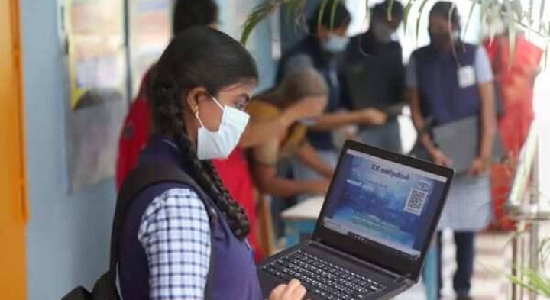
New national education policy: Here are some of the key highlights

Agencies
July 29, 2020

New Delhi, Jul 29: The new National Education Policy (NEP) approved by the Union Cabinet on Wednesday is set to usher in a slew of changes with the vision of creating an education system that contributes directly to transforming the country, providing high-quality education to all, and making India a global knowledge superpower.

The draft of the NEP by a panel headed by former Indian Space Research Organisation (ISRO) chief Kasturirangan and submitted to the Union Human Resource Development Minister Ramesh Pokhriyal when he took charge last year. The new NEP replaces the one formulated in 1986.

Some of the key highlights of the New Education Policy are:-

The policy aims to enable an individual to study one or more specialized areas of interest at a deep level, and also develop character, scientific temper, creativity, spirit of service, and 21st century capabilities across a range of disciplines including sciences, social sciences, arts, humanities, among others.

It identified the major problems facing the higher education system in the country and suggested changes such as moving towards multidisciplinary universities and colleges, with more institutions across India that offer medium of instruction in local/Indian languages, a more multidisciplinary undergraduate education, among others. 

The governance of such institutions by independent boards having academic and administrative autonomy has also been suggested.

Under the suggestions for institutional restructuring and consolidation, it has suggested that by 2040, all higher education institutions (HEIs) shall aim to become multidisciplinary institutions, each of which will aim to have 3,000 or more students, and by 2030 each or near every district in the country there will be at least one HEI.

The aim will be to increase the Gross Enrolment Ratio in HEIs including vocational education from 26.3 per cent (2018) to 50 per cent by 2035.

Single-stream HEIs will be phased out over time, and all will move towards becoming vibrant multidisciplinary institutions or parts of vibrant multidisciplinary HEI clusters.

It also pushes for more holistic and multidisciplinary education to be provided to the students.

Comments

Add new comment

  • Coastaldigest.com reserves the right to delete or block any comments.
  • Coastaldigset.com is not responsible for its readers’ comments.
  • Comments that are abusive, incendiary or irrelevant are strictly prohibited.
  • Please use a genuine email ID and provide your name to avoid reject.
News Network
July 10,2020

London, Jul 10: India's Reliance will load its first cargo of Venezuelan crude in three months this week in exchange for diesel under a swap deal the parties say is permitted under the US sanctions regime on the Latin American country, according to a Reliance source and a shipping document from state oil firm PDVSA.

Washington has exempted some Venezuelan oil trade from sanctions when transactions are in exchange for fuel and food or to repay debts rather than for cash. But that trade slowed as the US tightened restrictions and refiners, shippers and insurers have been steering clear of Venezuela to avoid any risk they may fall foul of sanctions.

Washington aims to deprive Venezuelan socialist President Nicolas Maduro of his main source of revenue with the sanctions, which have driven Venezuelan oil exports to their lowest level since the 1940s.

Reliance gave the US State Department and the Office of Foreign Assets Control (OFAC) notice of the diesel swap and received word back that the policies that allowed the transaction were still in place, the Reliance source told Reuters.

Reliance has previously said that its supplies of fuel to PDVSA in exchange for crude were permitted under sanctions.

An oil tanker named Commodore would load the cargo of crude in Venezuela and ship it to India, the tanker's manager NGM Energy said.

"All details of the transaction and transportation were shared with US authorities, who confirmed that the U.S. policy authorizing such transactions remained in place," NGM Energy said in a statement to Reuters.

"The shipment is made in connection with the humanitarian exchange of oil for diesel fuel."

The Commodore is loading a 1.9-million barrel cargo of crude for Reliance at Venezuela's main oil port of Jose, according to an internal PDVSA cargo schedule seen by Reuters.

The Liberian-flagged Commodore was at the Jose Terminal on Thursday, ship tracking data on Refinitiv Eikon showed.

The US State Department, Treasury's enforcement arm OFAC, and PDVSA did not immediately respond to a request for comment.

Reliance has a swap deal to provide diesel to Venezuela in exchange for fuel but has not received a cargo of crude since April. Sources at Indian refiners told Reuters earlier this year they planned to wind down their purchases of Venezuelan oil to avoid any problems with supply due to sanctions.

Other long-time customers of PDVSA, including Italy's Eni and Spain's Repsol, have continued taking cargoes of Venezuelan crude this year under permission granted by the US Treasury Department to exchange the oil for diesel supply as part of debt repayment deals, according to sources from the companies.

NGM Energy also manages the Voyager I tanker, which the United States removed from its list of sanctioned vessels last week after NGM and the ship's owner Sanibel Shiptrade said they would increase measures to ensure vessels complied with international sanctions.

"Last month, NGM Energy SA adopted a firm policy of not allowing vessels under its commercial management to trade to Venezuela, or to carry Venezuelan petroleum cargoes, absent US government authorization," NGM said.

"NGM continues to stand by that pledge."

Comments

Add new comment

  • Coastaldigest.com reserves the right to delete or block any comments.
  • Coastaldigset.com is not responsible for its readers’ comments.
  • Comments that are abusive, incendiary or irrelevant are strictly prohibited.
  • Please use a genuine email ID and provide your name to avoid reject.
Agencies
February 17,2020

New Delhi, Feb 17: The Supreme Court said on Monday that people have a fundamental right to protest against a law but the blocking of public roads is a matter of concern and there has to be a balancing factor.

Hearing pleas over the road blocks due to the ongoing protests at Shaheen Bagh against the Citizenship Amendment Act (CAA), a bench comprising Justices S K Kaul and K M Joseph said its concern is about what will happen if people start protesting on roads.

Democracy works on expressing views but there are lines and boundaries for it, the bench said.

It asked senior advocate Sanjay Hegde and advocate Sadhana Ramachandran to talk to Shaheen Bagh protestors and persuade them to move to an alternative site where no public place is blocked.

The matter has been posted for next hearing on February 24.

People have a fundamental right to protest but the thing which is troubling us is the blocking of public roads, the bench said.

Solicitor General Tushar Mehta said Shaheen Bagh protestors should not be given a message that every institution is on its knees trying to persuade them on this issue.

The apex court said that if nothing works, we will leave it to the authorities to deal with the situation.

Protestors have made their made their point and the protests have gone on for quite some time, it said.

Restrictions have been imposed on the Kalindi Kunj-Shaheen Bagh stretch and the Okhla underpass, which were closed on December 15 last year due to the protests against CAA and Register of Citizens.

The top court had earlier said the anti-CAA protesters at Delhi's Shaheen Bagh cannot block public roads and create inconvenience for others.

The apex court was hearing an appeal filed by advocate Amit Sahni, who had approached the Delhi high court seeking directions to the Delhi Police to ensure smooth traffic flow on the Kalindi Kunj-Shaheen Bagh stretch, which was blocked by anti-CAA protesters on December 15.

While dealing with Sahni's plea, the high court had asked local authorities to deal with the situation keeping in mind law and order.

Separately, former BJP MLA Nand Kishore Garg has filed a petition in the apex court seeking directions to the authorities to remove the protestors from Shaheen Bagh.

One of the pleas has sought laying down of comprehensive and exhaustive guidelines relating to outright restrictions for holding protests or agitations leading to obstruction of public place.

In his plea, Garg has said that law enforcement machinery was being "held hostage to the whims and fancies of the protesters" who have blocked vehicular and pedestrian movement from the road connecting Delhi to Noida.

State has the duty to protect fundamental rights of citizen who were continuously being harassed by the blockage of arterial road, it said.

"It is disappointing that the state machinery is muted and a silent spectator to hooliganism and vandalism of the protesters who are threatening the existential efficacy of the democracy and the rule of law and had already taken the law and order situation in their own hand," the plea had said.

In his appeal, Sahni had sought supervision of the situation in Shaheen Bagh, where several women are sitting on protest, by a retired Supreme Court judge or a sitting judge of the Delhi High Court.

Sahni has said in his plea that protests in Shaheen Bagh has inspired similar demonstrations in other cities and to allow it to continue would set a wrong precedent.

Comments

Add new comment

  • Coastaldigest.com reserves the right to delete or block any comments.
  • Coastaldigset.com is not responsible for its readers’ comments.
  • Comments that are abusive, incendiary or irrelevant are strictly prohibited.
  • Please use a genuine email ID and provide your name to avoid reject.
News Network
April 23,2020

Apr 23: Mukesh Ambani is again Asia's richest person after a deal with Mark Zuckerberg's Facebook Inc. sent his conglomerate's stock surging.

Ambani's fortune rose about $4.7 billion to $49.2 billion on Wednesday, after Reliance Industries Ltd. gained 10%. The jump put Ambani about $3.2 billion ahead of China's Jack Ma, according to the Bloomberg Billionaires Index. The ranking updates after the close of each trading day in the U.S.

Facebook Inc. will invest $5.7 billion in the U.S. social-networking giant's biggest deal since the 2014 purchase of WhatsApp as it seeks a broader foothold in its biggest global market. The U.S. company will buy about 10% of Jio Platforms, which brings together digital apps and a wireless platform under one umbrella, the Mumbai-based company said in a statement Wednesday.

Before Wednesday, Ambani -- who owns the world's largest oil refinery -- had declined by $14 billion on the index in 2020, the biggest dollar fall of anyone in Asia. Alibaba Group Holding Ltd.'s Ma, whose foundation this week donated 100 million masks to the World Health Organization to fight the Covid-19 pandemic, had lost almost $1 billion through Tuesday.

"At the core of our partnership is the commitment that Mark Zuckerberg, founder of Facebook, and I share for the all-around digital transformation of India," Ambani said in a web video posted on Jio's Facebook page, adding that Facebook's brands have become household names in India. "WhatsApp in particular, has entered our people's daily vocabulary in all the 23 official languages of India."

The partnership with Jio would allow Zuckerberg to step up his expansion in a country that is rapidly embracing online payment and e-commerce as more people get smartphones. Jio Infocomm quickly moved into a position of dominance by offering free plans and undercutting wireless market rivals.

With its half-billion internet users, the South Asian country is a key market for the world's largest technology companies, including Amazon.com Inc., Apple Inc., Microsoft Corp. and Alphabet Inc.'s Google. In India, Facebook has about 250 million users, while WhatsApp has more than 400 million.

That should help Jio bolster its reach, according to James Crabtree, author of 'The Billionaire Raj,' a book on the country's wealthiest people. But the transaction also shows the extent of Ambani's own influence, he said.

"This deal clearly shows that if you want to play big in Indian tech, you need to play nice with Mukesh Ambani."


Ambani's fortune rose about $4.7 billion to $49.2 billion on Wednesday, after Reliance Industries Ltd. gained 10%. The jump put Ambani about $3.2 billion ahead of China's Jack Ma, according to the Bloomberg Billionaires Index. The ranking updates after the close of each trading day in the U.S.

Facebook Inc. will invest $5.7 billion in the U.S. social-networking giant's biggest deal since the 2014 purchase of WhatsApp as it seeks a broader foothold in its biggest global market. The U.S. company will buy about 10% of Jio Platforms, which brings together digital apps and a wireless platform under one umbrella, the Mumbai-based company said in a statement Wednesday.

Before Wednesday, Ambani -- who owns the world's largest oil refinery -- had declined by $14 billion on the index in 2020, the biggest dollar fall of anyone in Asia. Alibaba Group Holding Ltd.'s Ma, whose foundation this week donated 100 million masks to the World Health Organization to fight the Covid-19 pandemic, had lost almost $1 billion through Tuesday.

"At the core of our partnership is the commitment that Mark Zuckerberg, founder of Facebook, and I share for the all-around digital transformation of India," Ambani said in a web video posted on Jio's Facebook page, adding that Facebook's brands have become household names in India. "WhatsApp in particular, has entered our people's daily vocabulary in all the 23 official languages of India."

The partnership with Jio would allow Zuckerberg to step up his expansion in a country that is rapidly embracing online payment and e-commerce as more people get smartphones. Jio Infocomm quickly moved into a position of dominance by offering free plans and undercutting wireless market rivals.

With its half-billion internet users, the South Asian country is a key market for the world's largest technology companies, including Amazon.com Inc., Apple Inc., Microsoft Corp. and Alphabet Inc.'s Google. In India, Facebook has about 250 million users, while WhatsApp has more than 400 million.

That should help Jio bolster its reach, according to James Crabtree, author of 'The Billionaire Raj,' a book on the country's wealthiest people. But the transaction also shows the extent of Ambani's own influence, he said.

"This deal clearly shows that if you want to play big in Indian tech, you need to play nice with Mukesh Ambani."

Comments

Add new comment

  • Coastaldigest.com reserves the right to delete or block any comments.
  • Coastaldigset.com is not responsible for its readers’ comments.
  • Comments that are abusive, incendiary or irrelevant are strictly prohibited.
  • Please use a genuine email ID and provide your name to avoid reject.