


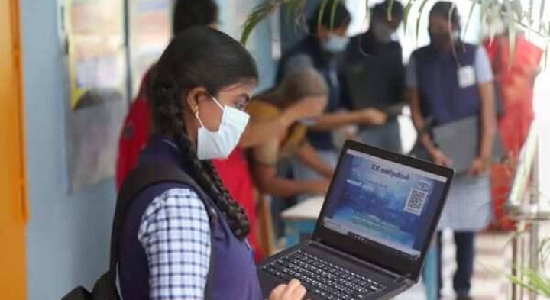
New national education policy: Here are some of the key highlights

Agencies
July 29, 2020

New Delhi, Jul 29: The new National Education Policy (NEP) approved by the Union Cabinet on Wednesday is set to usher in a slew of changes with the vision of creating an education system that contributes directly to transforming the country, providing high-quality education to all, and making India a global knowledge superpower.

The draft of the NEP by a panel headed by former Indian Space Research Organisation (ISRO) chief Kasturirangan and submitted to the Union Human Resource Development Minister Ramesh Pokhriyal when he took charge last year. The new NEP replaces the one formulated in 1986.

Some of the key highlights of the New Education Policy are:-

The policy aims to enable an individual to study one or more specialized areas of interest at a deep level, and also develop character, scientific temper, creativity, spirit of service, and 21st century capabilities across a range of disciplines including sciences, social sciences, arts, humanities, among others.

It identified the major problems facing the higher education system in the country and suggested changes such as moving towards multidisciplinary universities and colleges, with more institutions across India that offer medium of instruction in local/Indian languages, a more multidisciplinary undergraduate education, among others. 

The governance of such institutions by independent boards having academic and administrative autonomy has also been suggested.

Under the suggestions for institutional restructuring and consolidation, it has suggested that by 2040, all higher education institutions (HEIs) shall aim to become multidisciplinary institutions, each of which will aim to have 3,000 or more students, and by 2030 each or near every district in the country there will be at least one HEI.

The aim will be to increase the Gross Enrolment Ratio in HEIs including vocational education from 26.3 per cent (2018) to 50 per cent by 2035.

Single-stream HEIs will be phased out over time, and all will move towards becoming vibrant multidisciplinary institutions or parts of vibrant multidisciplinary HEI clusters.

It also pushes for more holistic and multidisciplinary education to be provided to the students.

Comments

Add new comment

  • Coastaldigest.com reserves the right to delete or block any comments.
  • Coastaldigset.com is not responsible for its readers’ comments.
  • Comments that are abusive, incendiary or irrelevant are strictly prohibited.
  • Please use a genuine email ID and provide your name to avoid reject.
Agencies
May 21,2020

Eminent river engineer and former professor of civil engineering at IIT in the Banaras Hindu University (BHU) Prof. U.K. Choudhary has said that the judicious use of river technology can help resolve the Coronavirus crisis as well as the plight of Ganga river.

Choudhary, who is also founder of Ganga Research Centre at IIT (BHU), said: "The Ganga water contains a significantly higher proportion of bacteriophages - a kind of virus that kill bacteria. Our ancient scriptures like Vedas, Puranas and Upanishads say that Ganga jal is medicinal water. Scientists later found that Ganga water has bacteriophages capable of killing pathogens."

Explaining further, he said, "Let us analyze the source of bacteriophages. If we take three rivers of Himalayan origin having sources at different heights -the Ganga (Gomukh), Yamuna (Yamunotri) and the Sone river, we find the colours of waters are different. The whitish colour of Ganga water, greenish colour of Yamuna water and the brownish colour of Sone water is also indicative. As Gomukh is the highest among the three, its water comes from lowest depth of aquifer as compared to Yamunotri and Sone river," he explained.

Thus, the quality of river water is proportional to height of origin point. This defines the genetic character of Ganga water. The balanced flow of this water in entire length of the Ganga defines the medicinal property of Ganga water," he stated.

Prof Chaudhary said that the bacteriophages in the Ganga can curb the spread of coronavirus through soil, water and air.
He suggested that the idea is to preserve the medicinal value of Ganga water and to use it to fight Corona. He said that this can be done by opening the gates of all the dams and barrages in a way that the discharge through each is similar to the water at Gomukh. In this way, the concentration of bacteriophage will be enhanced in Ganga water making it more effective against pathogens.

"With increasing diffusion of bacteriophages in water and soil, the spread of Coronavirus will be impacted and reduced. This methodology and technique can also help maintain the quality of Ganga water later when the problem of Corona ends," he said.

Comments

Add new comment

  • Coastaldigest.com reserves the right to delete or block any comments.
  • Coastaldigset.com is not responsible for its readers’ comments.
  • Comments that are abusive, incendiary or irrelevant are strictly prohibited.
  • Please use a genuine email ID and provide your name to avoid reject.
News Network
January 31,2020

New Delhi, Jan 31: Chief Economic Adviser K V Subramanian on Friday said India's GDP is expected to grow at 6-6.5 per cent next fiscal as the economic slowdown has bottomed out.

As per the first advance estimates released by the National Statistical Organisation (NSO), the country's economic growth is likely to hit an 11-year low of 5 per cent in the current fiscal ending March 2020.

The Economic Survey 2019-20, prepared by a team lead by Subramanian, has projected the GDP to expand in the range of 6-6.5 per cent during 2020-21.

The Indian economy has hit the bottom and it will see an uptick from here, he said in a media briefing post the Economic Survey.

Amidst a weak environment for global manufacturing, trade and demand, the Indian economy slowed down with GDP growth moderating to 4.8 per cent in the first half of 2019-20, lower than 6.2 per cent in H2 of 2018-19.

Based on NSO's first advance estimates of GDP growth for 2019-20 at 5 per cent, an uptick in GDP growth is expected in the second half of the fiscal, it said.

According to it, the uptick in second half of 2019-20 would be mainly due to ten positive factors like picking up of Nifty India Consumption Index for the first time this year, an upbeat secondary market, higher FDI flows, build-up of demand pressure, positive outlook for rural consumption, rebound of industrial activity, steady improvement in manufacturing, growth in merchandise exports, higher build-up of foreign exchange reserves and positive growth rate of GST revenue collection.

The survey also emphasised that merger of public sector banks may increase the financial strength of the merged entities, lower the risk aversion and result in lowering of lending rates.

Further, as the implementation of GST further settles down, the increased unification of the domestic market may reduce business costs and facilitate fresh investment.

Reforms in land and labour market may further reduce business costs, said the survey, presented a day before Sitharaman's Union Budget 2020-21.

Comments

Add new comment

  • Coastaldigest.com reserves the right to delete or block any comments.
  • Coastaldigset.com is not responsible for its readers’ comments.
  • Comments that are abusive, incendiary or irrelevant are strictly prohibited.
  • Please use a genuine email ID and provide your name to avoid reject.
News Network
January 13,2020

New Delhi, Jan 13: The Delhi High Court on Monday sought response of the city police, Delhi government, WhatsApp Inc, Google Inc and Apple Inc on a plea of three JNU professors to preserve data, CCTV footage and other evidence relating to the January 5 violence on the varsity campus.

The Delhi Police informed the court that it has asked the JNU administration to preserve and hand over CCTV footage of the violence.

Justice Brijesh Sethi listed the matter for further hearing on Tuesday.

The court was told by Delhi government Standing Counsel (criminal) Rahul Mehra that the police has not yet received any response from the university administration.

The counsel said police has also written to WhatsApp to preserve data of two groups "Unity Against Left" and "Friends of RSS" including messages, pictures and videos and phone numbers of members, related to JNU violence incident.

The petition was filed by JNU professors Ameet Parameswaran, Atul Sood and Shukla Vinayak Sawant seeking necessary directions to the Delhi Police Commissioner and Delhi government.

The petition also sought direction to the Delhi Police to retrieve all CCTV footage of JNU campus.

Comments

Add new comment

  • Coastaldigest.com reserves the right to delete or block any comments.
  • Coastaldigset.com is not responsible for its readers’ comments.
  • Comments that are abusive, incendiary or irrelevant are strictly prohibited.
  • Please use a genuine email ID and provide your name to avoid reject.