



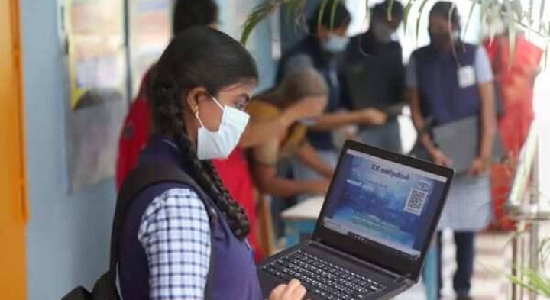
New national education policy: Here are some of the key highlights

Agencies
July 29, 2020

New Delhi, Jul 29: The new National Education Policy (NEP) approved by the Union Cabinet on Wednesday is set to usher in a slew of changes with the vision of creating an education system that contributes directly to transforming the country, providing high-quality education to all, and making India a global knowledge superpower.

The draft of the NEP by a panel headed by former Indian Space Research Organisation (ISRO) chief Kasturirangan and submitted to the Union Human Resource Development Minister Ramesh Pokhriyal when he took charge last year. The new NEP replaces the one formulated in 1986.

Some of the key highlights of the New Education Policy are:-

The policy aims to enable an individual to study one or more specialized areas of interest at a deep level, and also develop character, scientific temper, creativity, spirit of service, and 21st century capabilities across a range of disciplines including sciences, social sciences, arts, humanities, among others.

It identified the major problems facing the higher education system in the country and suggested changes such as moving towards multidisciplinary universities and colleges, with more institutions across India that offer medium of instruction in local/Indian languages, a more multidisciplinary undergraduate education, among others. 

The governance of such institutions by independent boards having academic and administrative autonomy has also been suggested.

Under the suggestions for institutional restructuring and consolidation, it has suggested that by 2040, all higher education institutions (HEIs) shall aim to become multidisciplinary institutions, each of which will aim to have 3,000 or more students, and by 2030 each or near every district in the country there will be at least one HEI.

The aim will be to increase the Gross Enrolment Ratio in HEIs including vocational education from 26.3 per cent (2018) to 50 per cent by 2035.

Single-stream HEIs will be phased out over time, and all will move towards becoming vibrant multidisciplinary institutions or parts of vibrant multidisciplinary HEI clusters.

It also pushes for more holistic and multidisciplinary education to be provided to the students.

Comments

Add new comment

  • Coastaldigest.com reserves the right to delete or block any comments.
  • Coastaldigset.com is not responsible for its readers’ comments.
  • Comments that are abusive, incendiary or irrelevant are strictly prohibited.
  • Please use a genuine email ID and provide your name to avoid reject.
News Network
January 13,2020

New Delhi, Jan 13: The Supreme Court on Monday commenced hearing on issues related to discrimination against women in various religions and at religious places including Kerala's Sabarimala Temple.

A nine-judge bench headed by Chief Justice S A Bobde said that it was not considering review pleas in the Sabarimala case.

“We are not hearing review pleas of Sabarimala case. We are considering issues referred to by a 5-judge bench earlier,” the bench said.

The apex court had on November 14 asked a larger bench to re-examine various religious issues, including the entry of women into the Sabarimala Temple and mosques and the practice of female genital mutilation in the Dawoodi Bohra community.

While the five-judge bench unanimously agreed to refer religious issues to a larger bench, it gave a 3:2 split decision on petitions seeking a review of the apex court's September 2018 decision allowing women of all ages to enter the Sabarimala shrine in Kerala.

A majority verdict by then Chief Justice Ranjan Gogoi and Justices A M Khanwilkar and Indu Malhotra decided to keep pending pleas seeking a review of its decision regarding entry of women into the shrine, and said restrictions on women in religious places was not restricted to Sabarimala alone and was prevalent in other religions as well.

The minority verdict by Justices R F Nariman and D Y Chandrachud gave a dissenting view by dismissing all review pleas and directing compliance of its September 28 decision.

Comments

Add new comment

  • Coastaldigest.com reserves the right to delete or block any comments.
  • Coastaldigset.com is not responsible for its readers’ comments.
  • Comments that are abusive, incendiary or irrelevant are strictly prohibited.
  • Please use a genuine email ID and provide your name to avoid reject.
News Network
March 2,2020

New Delhi, Mar 2: Senior Congress leader P Chidambaram on Sunday hit out at Union Home Minister Amit Shah for his comments that no one from the minority community will be affected by amended Citizenship Act and asked why then was the community excluded from the law in the first place.

Addressing a rally in Kolkata, Shah assured people of the minority community that not a single person will lose citizenship due to the Citizenship (Amendment) Act (CAA).

"The Home Minister says that no minority will be affected by CAA. If this is correct, they should tell the country who would be affected by CAA. If no one would be affected by CAA, as it currently is, why did the government pass the law?

"If the CAA aims to benefit all minorities (no one will be affected, says HM), then why are Muslims excluded from the list of minorities mentioned in the Act?," the former finance minister asked in a post on Twitter.

At his first public rally in Kolkata after the 2019 general elections, Shah said, "The opposition is terrorising the minorities. I assure every person from the minority community that the CAA only provides citizenship, does not take it away. It won't affect your citizenship."

"The opposition parties are spreading canards that refugees will have to show papers but this is absolutely false. You don't have to show any paper. We will not stop until all refugees are granted citizenship," Shah told the public.

Comments

Add new comment

  • Coastaldigest.com reserves the right to delete or block any comments.
  • Coastaldigset.com is not responsible for its readers’ comments.
  • Comments that are abusive, incendiary or irrelevant are strictly prohibited.
  • Please use a genuine email ID and provide your name to avoid reject.
News Network
June 4,2020

New Delhi, Jun 4: India's Defence Secretary Ajay Kumar tested positive for COVID-19 on Wednesday, following which the defence ministry carried out a massive contact-tracing exercise, official sources said.

Kumar's condition is stable and he is currently under home-quarantine, they said.

At least 35 officials working at the ministry's headquarters in South Block in the Raisina Hills have been sent on home quarantine after reports of Kumar testing positive for the infection emerged on Wednesday morning.

There was no official comment on Kumar's health condition. The defence ministry spokesperson refused to comment on the issue.

It is learnt that Defence Minister Rajnath Singh did not attend office as part of a precautionary measure.

The offices of the defence minister, the defence secretary, the Army Chief and the Navy Chief are on the first floor of the South Block.

The sources said all laid down protocols on contact-tracing and quarantining of people are being scrupulously followed.

Comments

Add new comment

  • Coastaldigest.com reserves the right to delete or block any comments.
  • Coastaldigset.com is not responsible for its readers’ comments.
  • Comments that are abusive, incendiary or irrelevant are strictly prohibited.
  • Please use a genuine email ID and provide your name to avoid reject.