



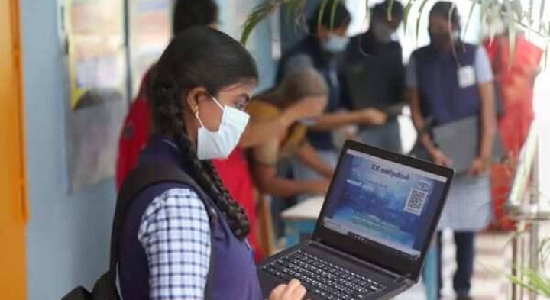
New national education policy: Here are some of the key highlights

Agencies
July 29, 2020

New Delhi, Jul 29: The new National Education Policy (NEP) approved by the Union Cabinet on Wednesday is set to usher in a slew of changes with the vision of creating an education system that contributes directly to transforming the country, providing high-quality education to all, and making India a global knowledge superpower.

The draft of the NEP by a panel headed by former Indian Space Research Organisation (ISRO) chief Kasturirangan and submitted to the Union Human Resource Development Minister Ramesh Pokhriyal when he took charge last year. The new NEP replaces the one formulated in 1986.

Some of the key highlights of the New Education Policy are:-

The policy aims to enable an individual to study one or more specialized areas of interest at a deep level, and also develop character, scientific temper, creativity, spirit of service, and 21st century capabilities across a range of disciplines including sciences, social sciences, arts, humanities, among others.

It identified the major problems facing the higher education system in the country and suggested changes such as moving towards multidisciplinary universities and colleges, with more institutions across India that offer medium of instruction in local/Indian languages, a more multidisciplinary undergraduate education, among others. 

The governance of such institutions by independent boards having academic and administrative autonomy has also been suggested.

Under the suggestions for institutional restructuring and consolidation, it has suggested that by 2040, all higher education institutions (HEIs) shall aim to become multidisciplinary institutions, each of which will aim to have 3,000 or more students, and by 2030 each or near every district in the country there will be at least one HEI.

The aim will be to increase the Gross Enrolment Ratio in HEIs including vocational education from 26.3 per cent (2018) to 50 per cent by 2035.

Single-stream HEIs will be phased out over time, and all will move towards becoming vibrant multidisciplinary institutions or parts of vibrant multidisciplinary HEI clusters.

It also pushes for more holistic and multidisciplinary education to be provided to the students.

Comments

Add new comment

  • Coastaldigest.com reserves the right to delete or block any comments.
  • Coastaldigset.com is not responsible for its readers’ comments.
  • Comments that are abusive, incendiary or irrelevant are strictly prohibited.
  • Please use a genuine email ID and provide your name to avoid reject.
News Network
May 19,2020

New Delhi, May 19: Spitting at workplace will be punishable with fine, the Personnel Ministry has said, citing the national directives for COVID-19 management.

In an order issued to all central government departments, it has asked their heads to ensure strict compliance of this and other directives in this regard.

This order is likely to bring about changes in and around government and private work places, where one can easily spot stains of 'pan' and 'gutka' spitted at some of the corners of walls or areas not frequented by many employees/public.

"Spitting in public and work places shall be punishable with fine, as may be prescribed in accordance with its laws, rules and regulations by the state/union territory local authority," said the national directives issued by the Home Ministry and shared by the Personnel Ministry with all central government departments.

It said wearing 'face cover' is compulsory in all public and work places.

In additional directives for the work places, the ministry said as far as possible, the practice from work from home should be followed.

"Staggering of work/business hours shall be followed in offices, work places, shops, markets and industrial and commercial establishments. Provision for thermal scanning, hand wash and sanitiser will be made at all entry and exit points and common areas," the directives said.

Frequent sanitization of the entire workplace, common facilities and all points which come into human contact e.g. door handles etc., shall be ensured, including between shifts, it said.

"All persons in charge of work places shall ensure social distancing through adequate distance between workers, adequate gaps between shifts, staggering the lunch breaks of staff, etc," the directive said.

The Centre on Monday asked 50 per cent of its junior employees, below the level of deputy secretary, to join work in office.

Till now, only 33 per cent of such employees were asked to attend office due to the novel coronavirus lockdown.

Central government employees were asked to work from home due to the lockdown that came into force from March 25.

All officers of the level of deputy secretary and above have already been asked to attend office on all working days.

Comments

Add new comment

  • Coastaldigest.com reserves the right to delete or block any comments.
  • Coastaldigset.com is not responsible for its readers’ comments.
  • Comments that are abusive, incendiary or irrelevant are strictly prohibited.
  • Please use a genuine email ID and provide your name to avoid reject.
Agencies
May 19,2020

New Delhi, May 19: Former Union Minister P Chidambaram said that as the fourth phase of the nationwide lockdown amid the coronavirus scare began from Monday, his thoughts were with the people of Kashmir who were in a "terrible lockdown within a lockdown."

The senior Congress leader said that at least now, the people in the rest of India will understand that he dubbed the "enormity of the injustice" done to those who were detained in Kashmir and those still under detention" immediately before and after the abrogation of Article 370 of the Indian Constitution on August 5, 2019.

Chidambaram said that former Jammu and Kashmir Chief Minister Mehbooba Mufti was the "worst sufferer" of preventive detention and even courts had shirked their constitutional duty with respect to detainees.

"The worst sufferers are Mehbooba Mufti and her senior party colleagues who are still in custody in a locked-down state in a locked-down country. They are deprived of every human right," he said in a statement.

"I cannot believe that for nearly 10 months, the courts will shirk their constitutional duty to protect the human rights of citizens," he added.

The detention on Mehbooba Mufti under the Public Safety Act (PSA) had been extended for three more months on May 5. Booked under the stringent PSA, she was initially kept at the Hari Niwas guesthouse in Srinagar but later shifted to a Tourism Department hut in the Chashma Shahi area.

She was shifted to her Gupkar Road official residence on April 7.

Besides Mehbooba Mufti, two other former Chief Ministers -- Omar Abdullah and his father Farooq Abdullah -- were also detained under the PSA but later released.

Comments

Add new comment

  • Coastaldigest.com reserves the right to delete or block any comments.
  • Coastaldigset.com is not responsible for its readers’ comments.
  • Comments that are abusive, incendiary or irrelevant are strictly prohibited.
  • Please use a genuine email ID and provide your name to avoid reject.
News Network
February 26,2020

Feb 26: In a midnight hearing, the Delhi High Court directed police to ensure safe passage to government hospitals and emergency treatment for those injured in the communal violence erupted in northeast Delhi over the amended citizenship law.

The court held a special hearing, which started at 12:30 am, at the residence of Justice S Muralidhar after receiving a call from an advocate explaining the dire circumstances under which the victims were unable to be removed from a small hospital to the GTB Hospital.

A bench of Justices S Muralidhar and Anup J Bhambhani directed the Delhi Police to ensure safe passage of the injured victims by deploying all resources at its command and on the strength of this order as well as to make sure they receive immediate emergency treatment if not at the Guru Teg Bahadur Hospital then at the Lok Nayak Jai Prakash Narayan Hospital (LNJP) or Maulana Azad or any other hospital.

The bench also called for a status report of compliance, including information about the injured victims and the treatment offered to them, and the matter will be heard during the day at 2:15 pm.

It said the order be communicated to the medical superintendents of the GTB and the LNJP Hospitals.

The urgent hearing was conducted after advocate Suroor Mander called the judge and sought urgent orders for safe passage of ambulances for the injured.

The Delhi Police and the government were represented through additional standing counsel Sanjoy Ghose.

During the hearing, the bench spoke over phone to doctor Anwar of the Al-hind Hospital in New Mustafabad who told the court that there were two bodies and 22 injured persons there and he had been trying to seek police assistance since 4 pm on Tuesday without success.

The court then directed the senior officials to reach to the hospital forthwith, following which they started the process of evacuating the injured to the nearest hospitals.

It also said this order be brought to the knowledge of the Delhi Police Commissioner.

Communal violence over the amended citizenship law in northeast Delhi claimed at least 18 lives till Wednesday.

On Tuesday, the violence escalated in northeast Delhi as police struggled to check the rioters who ran amok on streets, burning and looting shops, pelting stones and thrashing people.

Comments

Add new comment

  • Coastaldigest.com reserves the right to delete or block any comments.
  • Coastaldigset.com is not responsible for its readers’ comments.
  • Comments that are abusive, incendiary or irrelevant are strictly prohibited.
  • Please use a genuine email ID and provide your name to avoid reject.