


Indian-origin loses job for posting torn Singapore flag

Agencies
August 29, 2018

Singapore, Aug 29: An Indian-origin employee of Singapore's DBS Bank has lost his job after he posted on Facebook an image of the country's torn flag to reveal the Indian flag underneath on the eve of India's Independence Day.

Avijit Das Patnaik had on August 14 posted a picture on the Facebook page of the Singapore Indians & Expats group, showing the Singapore flag on a T-shirt being ripped up to reveal the Indian flag underneath. The group has 11,000 members, according to a Channel News Asia report.

Patnaik, who had been living in Singapore for a decade, had posted the image along with the caption -- Phir Bhi dil hai (Still my heart is Indian)and alludes to a popular bollywood song.

The post had caused outrage in the city-state, with many netizens terming it "offensive" and "insulting to Singapore". The post has since been taken down.

Singapore-headquartered DBS Bank, in a comment to complaints on its Facebook page on August 19, had said that Patnaik had posted the image because he "wanted to show that even as he is in Singapore, he remains Indian at heart".

"Upon realising the graphic was offensive, he took it down immediately," DBS said, adding that it had counselled Patnaik.

Today, the Bank released a statement on its Facebook page, saying that Patnaik was no longer its employee.

"Since the incident, a disciplinary committee has been convened and as of August 24, he (Patnaik) is no longer with the bank," the DBS Bank said in the post.

"DBS strongly disapproves of such actions by our employees. At the same time, it is fair and right that all employees are given the benefit of due process," it said.

When asked about the circumstances surrounding Patnaik's departure, including whether he resigned or was sacked, a DBS spokesman declined to elaborate, according to the report.

"We have nothing further to share beyond the post," it said quoting the bank as saying.

According to the Singapore Arms and Flag National Anthem Act, any person that treats the flag with disrespect may be fined a maximum of 1,000 Singapore dollar.

Meanwhile, according to the Channel NewsAsia report, police have confirmed that a report has been made and investigations are underway.

Comments

Kumarrane
 - 
Wednesday, 29 Aug 2018

FEKU effect...now all the majority DOGS think that they can do anything...

Add new comment

  • Coastaldigest.com reserves the right to delete or block any comments.
  • Coastaldigset.com is not responsible for its readers’ comments.
  • Comments that are abusive, incendiary or irrelevant are strictly prohibited.
  • Please use a genuine email ID and provide your name to avoid reject.
Agencies
July 30,2020

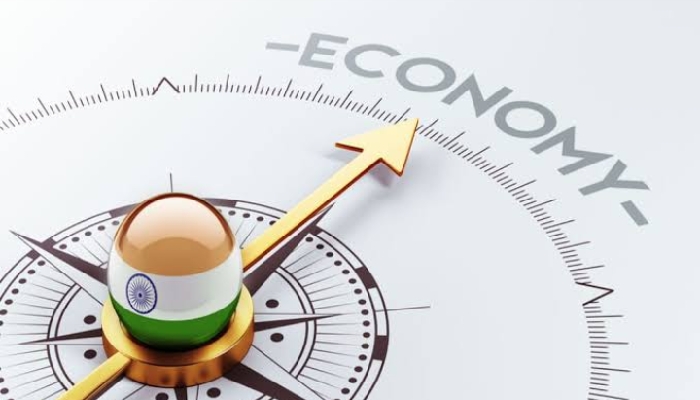
Mumbai, Jul 30: Counterfeiting incidents have increased 24 per cent in the country in 2019 over the previous year, creating an over Rs 1 lakh crore hole in the economy, according to a report.

The report also said counterfeiters are having a free run due to the pandemic-driven disruptions to organised supply chains and the resultant spike in consumer demand.

According to the report by ASPA, a self-regulated industry body of anti-counterfeiting and traceability solutions providers, counterfeiting has risen steadily in the last few years, and exploiting the pandemic as a cover for their activities.

Between February and April 2020, over 150 incidents of counterfeiting cases were reported, mostly about fake PPE kits, sanitisers and masks taking advantage of the high demand for these products, it noted.

"There was a 24 per cent increase in counterfeiting in 2019 over 2018, leading to the loss of more than Rs 1 lakh crore to the overall economy," said Nakul Pasricha, president of Authentication Solution Providers Association.

The association works with global authorities like the International Hologram Manufacturers Association, Counterfeit Intelligence Bureau of the Interpol, and domestic industry lobbies like Ficci, he said.

Counterfeiting is a universal issue and is 3.3 per cent of global trade, according to the OECD data, impacting social and economic development across the world.

The report lists the currency, FMCG, alcohol, pharma, documents, agriculture, infrastructure, automotive, tobacco, lifestyle and apparel, as the 10 sectors impacted most by counterfeiting.

Among these, currency, alcohol and FMCG continue to be the top three sectors with the highest counterfeiting in the last two years. The FMCG sector is most vulnerable, as counterfeit incidents rose 63 per cent between 2018 (79) and 2019 when the reported cases jumped to 129.

Within the states, the fakers have a free run in Uttar Pradesh, Bihar, Rajasthan, Madhya Pradesh, Bengal, Punjab, Jharkhand, Delhi, Gujarat, and Uttarakhand, calling for urgent actions to frame anti-counterfeiting policy measures.

According to the report, UP continues to be on top followed by Bihar, Rajasthan, and together these three states represent almost 45 per cent of all counterfeiting reported in the last two years.

What is more alarming is that counterfeiting is not limited to high-end luxury items today, as common everyday items as fake cumin seeds, mustard cooking oil, ghee, hair oils, soaps, baby care vaccines and medicines are aplenty in the markets.

"There is an urgent need for building and nurturing authentication ecosystems in the country with the active involvement and active participation of all stakeholders," said Pasricha.

Comments

Add new comment

  • Coastaldigest.com reserves the right to delete or block any comments.
  • Coastaldigset.com is not responsible for its readers’ comments.
  • Comments that are abusive, incendiary or irrelevant are strictly prohibited.
  • Please use a genuine email ID and provide your name to avoid reject.
News Network
March 5,2020

Washington, Feb 5: Experts warned a US government panel last night that India's Muslims face risks of expulsion and persecution under the country’s new Citizenship Amendment Act (CAA) which has triggered major protests.

The hearing held inside Congress was called by the US Commission on International Freedom, which has been denounced by the Indian government as biased.

Ashutosh Varshney, a prominent scholar of sectarian violence in India, told the panel that the law championed by prime minister Narendra Modi's government amounted to a move to narrow the democracy's historically inclusive and secular definition of citizenship.

"The threat is serious, and the implications quite horrendous," said Varshney, a professor at Brown University.

"Something deeply injurious to the Muslim minority can happen once their citizenship rights are taken away," he said.

Varshney warned that the law could ultimately lead to expulsion or detention -- but, even if not, contributes to marginalization.

"It creates an enabling atmosphere for violence once you say that a particular community is not fully Indian or its Indianness in grave doubt," he said.

India's parliament in December passed a law that fast-tracks citizenship for persecuted non-Muslim minorities from neighboring countries.

Responding to criticism at the time from the US commission, which advises but does not set policy, India's External Affairs Ministry said the law does not strip anyone's citizenship and "should be welcomed, not criticized, by those who are genuinely committed to religious freedom."

Fears are particularly acute in Assam, where a citizens' register finalized last year left 1.9 million people, many of them Muslims, facing possible statelessness.

Aman Wadud, a human rights lawyer from Assam who traveled to Washington for the hearing, said that many Indians lacked birth certificates or other documentation to prove citizenship and were only seeking "a dignified life."

The hearing did not exclusively focus on India, with commissioners and witnesses voicing grave concern over Myanmar's refusal to grant citizenship to the Rohingya, the mostly Muslim minority that has faced widespread violence.

Gayle Manchin, the vice chair of the commission, also voiced concern over Bahrain's stripping of citizenship from activists of the Shiite majority as well as a new digital ID system in Kenya that she said risks excluding minorities.

More than 40 people were killed last week in New Delhi in sectarian violence sparked by the citizenship law.

India on Tuesday lodged another protest after the UN human rights chief, Michele Bachelet, sought to join a lawsuit in India that challenges the citizenship law's constitutionality.

Comments

Add new comment

  • Coastaldigest.com reserves the right to delete or block any comments.
  • Coastaldigset.com is not responsible for its readers’ comments.
  • Comments that are abusive, incendiary or irrelevant are strictly prohibited.
  • Please use a genuine email ID and provide your name to avoid reject.
News Network
January 7,2020

Mumbai, Jan 7: Against the backdrop of the attack on JNU students, the Shiv Sena on Tuesday hit out at Prime Minister Narendra Modi and Union Home Minister Amit Shah, alleging that what they wanted was happening, and said such "brutal politics" was never seen before in the country.

An editorial in Shiv Sena mouthpiece 'Saamana' further alleged that the BJP wanted to see "Hindu-Muslim riots" over the Citizenship Amendment Act, but that did not happen.

Since the BJP has been cornered over the issue of CAA, several things are happening out of "revenge", it said.

Comparing the attack on Jawaharlal Nehru University (JNU) students to the 26/11 Mumbai terror strikes, the Shiv Sena said: "divisive politics" was dangerous for the country.

It said the Union Home Ministry's decision to file cases against "unknown" attackers at JNU was laughable. "Those who entered JNU with masks are not unknown," it claimed.

On Sunday, a mob of masked young people stormed the Jawaharlal Nehru University (JNU) campus in south Delhi and targeted students in three hostels, unleashing mayhem with sticks, stones and iron rods, hitting inmates and breaking windows, furniture and personal belongings.

Nearly 34 people were injured in the violence.

"The fallout of JNU attack is being seen elsewhere in the country...what Modi and Shah want is happening. The country is in danger. Divisive politics is dangerous for the country," the Uddhav Thackeray-led party said.

Terrorists who attacked Mumbai on November 26, 2008, were also masked and the same was seen at JNU. Such elements need to be exposed, it said.

"Allowing blood stains in universities, colleges and beating up of students and indulging in politics over the burning situation...such brutal politics was never seen before," the Marathi publication said while terming the attack on JNU students as a "blot" on the law and order situation.

Lashing out at Amit Shah, the Sena said he his in Delhi and busy distributing official pamphlets door-to-door to promote the Citizenship Amendment Act.

There is "confusion and unrest" in the country over the new citizenship law, it pointed out.

"The BJP wanted to see Hindu-Muslim riots over the issue, but that did not happen. The nationwide protests are not being done by Muslims alone. Hindus will also be affected due to the new Act," the Shiv Sena said.

It said the BJP has been cornered over the CAA issue.

Since the prevailing situation is "BJP versus the rest", hence "out of revenge", several things are happening, the Marathi daily said, adding that "there is room for doubt if the JNU attack was part of the revenge."

The BJP has condemned the violence and said universities should stay away from politics, it noted.

"Who brought violence and politics in universities in the last five years? Who is implementing the policy of destroying those who don't agree with your ideology by use of power?" it asked.

Without taking any name, the Sena said those who call students opposing the CAA as anti-nationals, are themselves anti-national.

"When Amit Shah accuses Congress leaders Rahul Gandhi and Priyanka Gandhi of inciting violence, he admits that the Gandhi siblings have that much power to create mass awareness against a law brought in by the Centre and bring people to streets," the Sena said.

One cannot say if the Gandhi siblings incited violence, but one thing is sure that the Union Home Minister and his party are forced to distribute pamphlets to "clarify" on the new citizenship law, it said in sarcastic comments.

Comments

Add new comment

  • Coastaldigest.com reserves the right to delete or block any comments.
  • Coastaldigset.com is not responsible for its readers’ comments.
  • Comments that are abusive, incendiary or irrelevant are strictly prohibited.
  • Please use a genuine email ID and provide your name to avoid reject.