


India's bid to join US alliance could irk China, Pak: media

August 30, 2016

Beijing, Aug 30: Attempts by India to join US' alliance could "irritate" China, Pakistan or even Russia and bring "strategic troubles" to New Delhi while making it a centre of geopolitical rivalries in Asia, China's state-run media commented today.
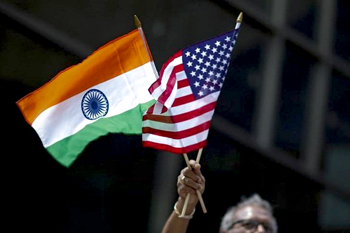
indusIn an editorial written ahead of Defence Minister Manohar Parrikar and US Defence Secretary Ashton Carter signing a logistics agreement, state-run Global Times said India may loose strategic independence if it leans towards the US.

The Logistics Exchange Memorandum of Agreement (LEMOA) allows India and US militaries to access each other's military facilities for refuelling and replenishment.

"This is undoubtedly a leap forward in US-India military cooperation. US media highly applauded this deal, with Forbes hailing it as a 'war pact' and believing that India is shifting away from Russia, its Cold War ally, toward a new alliance with the US," the editorial said.

"If India hastily joins the US alliance system, it may irritate China, Pakistan or even Russia. It may not make India feel safer, but will bring strategic troubles to itself and make itself a centre of geopolitical rivalries in Asia," it said.

"India holds dear its independence and sovereignty after squeezing out of the UK's colonialism. It views itself as a major power and is developing on the wave of the emerging countries," the editorial said.

While India has adopted a prudent attitude so far refraining from joining US alliance, some defence analysts expressed worries that India may lose strategic independence and warned that the pact may render New Delhi a "follower" of Washington, it said.

Observing that India attaches high importance to national security, the editorial said, "It feels it is an urgent task because its defence levels are a necessary condition of being a major power, rather than out of a sense of crisis that requires an intimacy to the US."

Due to its non-alignment policy, India has been given attention from all the major powers such as the US, Japan, China and Russia in recent years, it noted.

"However, in recent years, Washington has deliberately wooed New Delhi to become its quasi ally so as to impose geopolitical pressure on China. It is possible that the (Narendra) Modi administration is trying an unconventional way to lean toward the US with the logistics agreement," the editorial said.

Comments

REALITY
 - 
Tuesday, 30 Aug 2016

Liars will join hand with Liars...
Cheaters with cheaters
The world knows now that USA cheated its own people in 9/11..
The world knows now that USA cheated its own people on Iraq war..
Our indian politician are digging our own grave by joining the LIARS masters Club..

Add new comment

  • Coastaldigest.com reserves the right to delete or block any comments.
  • Coastaldigset.com is not responsible for its readers’ comments.
  • Comments that are abusive, incendiary or irrelevant are strictly prohibited.
  • Please use a genuine email ID and provide your name to avoid reject.
News Network
February 19,2020

New Delhi, Feb 19: India will switch to the world's cleanest petrol and diesel from April 1 as it leapfrogs straight to Euro-VI emission compliant fuels from Euro-IV grades now - a feat achieved in just three years and not seen in any of the large economies around the globe.

India will join the select league of nations using petrol and diesel containing just 10 parts per million of sulphur as it looks to cut vehicular emissions that are said to be one of the reasons for the choking pollution in major cities.

Sanjiv Singh, Chairman of Indian Oil Corp (IOC) - the firm that controls roughly half of the country's fuel market, said almost all refineries began producing ultra-low sulphur BS-VI (equivalent to Euro-VI grade) petrol and diesel by the end of 2019 and oil companies have now undertaken the tedious task of replacing every drop of fuel in the country with the new one.

"We are absolutely on track for supplying BS-VI fuel from April 1. Almost all refineries have begun supplying BS-VI fuel and the same has reached storage depots across the country," he said.

From storage depots, the fuel has started travelling to petrol pumps and in the next few weeks all of them will only have BS-VI grade petrol and diesel, he said. "We are 100 per cent confident that fuel that will flow from nozzles at all the petrol pumps in the country on April 1 will be BS-VI emission compliant fuel."

India adopted Euro-III equivalent (or Bharat Stage-III) fuel with a sulphur content of 350 ppm in 2010 and then took seven years to move to BS-IV that had a sulphur content of 50 ppm. From BS-IV to BS-VI it took just three years.

"It was a conscious decision to leapfrog to BS-VI as first upgrading to BS-V and then shifting to BS-VI would have prolonged the journey to 4 to 6 years. Besides, oil refineries, as well as automobile manufacturers, would have had to make investments twice - first to producing BS-V grade fuel and engines and then BS-VI ones," he said.

State-owned oil refineries spent about Rs 35,000 crore to upgrade plants that could produce ultra-low sulphur fuel. This investment is on top of Rs 60,000 crore they spent on refinery upgrades in the previous switchovers.

BS-VI has a sulphur content of just 10 ppm and emission standards are as good as CNG.

Originally, Delhi and its adjoining towns were to have BS-VI fuel supplies by April 2019 and the rest of the country was to get same supplies from April 2020.

But oil marketing companies switched over to supply of BS-VI grade fuels in the national capital territory of Delhi on April 1, 2018.

The supply of BS-VI fuels was further extended to four contiguous districts of Rajasthan and eight of Uttar Pradesh in the National Capital Region (NCR) on April 1, 2019, together with the city of Agra.

BS-VI grade fuels were made available in 7 districts of Haryana from October 1, 2019.

Singh said the new fuel will result in a reduction in NOx in BS-VI compliant vehicles by 25 per cent in petrol cars and by 70 per cent in diesel cars.

The switchover, he said, is a tedious task as every drop of old, higher-sulphur content fuel has to be flushed out in depots, pipelines and tanks before being replaced by BS-VI.

"We are confident of disruption-free switchover to BS-VI supplies across the country," he said. "What we will be supplying is the best quality available anywhere in the world. You don't have any better fuel that is supplied in any part of the world. Perhaps our BS-VI fuel will be better than equivalent fuel in some parts of the US and Europe."

India adopted a fuel upgradation programme in the early 1990s. Low lead gasoline (petrol) was introduced in 1994 in Delhi, Mumbai, Kolkata and Chennai. On February 1, 2000, unleaded gasoline was mandated nationwide.

Similarly, BS-2000 (Euro-I equivalent, BS-1) vehicle emission norms were introduced for new vehicles from April 2000. BS-II (Euro-II equivalent) emission norms for new cars were introduced in Delhi from 2000 and extended to the other metro cities in 2001.

Benzene limits have been reduced progressively from 5 per cent in 2000 to 1 per cent nationwide. Lead content in gasoline was removed in phases and only unleaded gasoline is being produced and sold from February 1, 2000.

The octane number of gasoline signifies the improved performance of the engine. Loss in octane number due to phasing out of lead was made up by installing new facilities in the refinery and changes in refinery operation. RON (Research Octane Number) of gasoline for BS-2000 spec was increased to 88. This has over time been increased to 91.

Singh said sulphur reduction will reduce Particulate Matter (PM) emissions even in the in-use older generation diesel vehicles.

Comments

Add new comment

  • Coastaldigest.com reserves the right to delete or block any comments.
  • Coastaldigset.com is not responsible for its readers’ comments.
  • Comments that are abusive, incendiary or irrelevant are strictly prohibited.
  • Please use a genuine email ID and provide your name to avoid reject.
Agencies
June 8,2020

New Delhi, Jun 8: Abortion access to around 1.85 million women was compromised across the country due to the nationwide restrictions imposed in response to the COVID-19 outbreak, a study conducted by Ipas Development Foundation (IDF) revealed.

These abortions were compromised at all points of care, including public and private sector facilities and chemist outlets during 68-day lockdown and the first week of Unlock 0.1 period. The study assesses the near-term impact of COVID-19 on abortion access in India since March 25 when the lockdown was imposed across the country with the announcement of Prime Minister Narendra Modi to contain the spread of novel coronavirus of COVID-19 pandemic.

It also highlights the need for a specially designed and integrated recovery plan for improving abortion services at facilities. The study estimates that access to abortion was highly compromised during lockdown 1 and 2 ( between March 25 and May 3) in which around 59 per cent of women seeking an abortion could not access the services.

However, with the Unlock phase or the recovery period as mentioned in the study starting on June 1, the situation is expected to improve - with 33 per cent abortions being compromised in 24 days. A huge number of women could not access safe abortion services during the lockdown, therefore it is extremely important that the healthcare system, public and private, is prepared to meet the needs of these women, the Ipas foundation says.

The model of the study strives to quantify the reduced access to abortions across three different points of care -public health facilities, private health facilities, and chemist outlets, said Vinoj Manning, CEO, Ipas Development Foundation in a statement.

"Majority of public health facilities and their staff are now focused on COVID-19 treatments and closures of private health facilities have compromised the access to safe abortions, which is a time-sensitive procedure."

He said that the study conducted by his foundation was to get a clearer picture of how COVID-19 restrictions have affected women seeking safe abortion services and what are the areas that would need focused efforts in the days to come.

Speaking on the methodology, Dr Sushanta Kumar Banerjee from Ipas Development Foundation said: "We conducted telephonic surveys and consulted with several experts from FOGSI leadership and social marketing organizations like PSI India Private Limited."

"After careful analysis of the data received from them, we have concluded that of the 3.9 million abortions that would have taken place in 3 months, access to around 1.85 million was compromised due to COVID-19 restrictions."

To facilitate the process Ipas Development Foundation has issued some initial recommendations which include: rapid mapping of facilities for first and second trimester abortions, assessing facilities' preparedness especially for second-trimester abortions, improving referral linkage and spread the word about the availability of the service, streamlining the supply chain for medical abortion drugs, and lastly including mechanisms to offset additional travel and out of pocket expenditures.

Ipas Development Foundation will be holding consultations with other partners and key stakeholders to facilitate meaningful collaborations to ensure access to safe abortions and ensure that no woman suffers long-term harm to her health due to lack of services.

Comments

Add new comment

  • Coastaldigest.com reserves the right to delete or block any comments.
  • Coastaldigset.com is not responsible for its readers’ comments.
  • Comments that are abusive, incendiary or irrelevant are strictly prohibited.
  • Please use a genuine email ID and provide your name to avoid reject.
News Network
March 6,2020

Mumbai, Mar 6: A Rolls Royce car, paintings of famous artists M F Hussain and Amrita Sher-Gil, designer handbags and other luxury items belonging to fugitive diamond jeweller Nirav Modi garnered over Rs 51 crore in the second auction conducted on Thursday.

As many as 40 items went under the hammer on Thursday, which marks the completion of auction of assets seized by the Enforcement Directorate.

The auction was conducted by Saffronart on behalf of the deputy director, Enforcement Directorate, and was expected to garner a minimum of Rs 40 crore in proceeds.

A collection of 112 prized assets of Modi were put up for live and online auctions from March 3 to 5, which included major artworks by contemporary and modern Indian artists, designer handbags, luxury watches and cars.

While the online auction on March 3-4 garnered Rs 2.04 crore against the expected proceeds of Rs 52 lakh, the live auction on Thursday garnered Rs 51.41 crore more.

These assets, seized by the ED, were put on auction in an attempt to recover a part of the dues Modi owes to various banks.

According to officials from Saffronart, the ED would get Rs 53.45 crore from the proceeds of these two auctions.

The lots that went under the hammer included legendary painter MF Hussain's painting of 'Battle of Ganga and Jamuna- Mahabharata 12' which went for a record 12 crore, the highest price received so far for the painter's work.

Amrita Sher-Gil's rare 1935 painting 'Boys with Lemons', which was auctioned for the first time, sold for Rs 15.7 crore ($2.24 million).

V S Gaitonde's tranquil 1972 painting was sold for Rs 9.52 crore while Manjit Bawa's Untitled 1992 sold for Rs 6.16 crore. Modi's Rolls Royce Ghost witnessed a high demand, selling for twice its estimate at Rs 1.68 crore ($240,000).

Comments

Add new comment

  • Coastaldigest.com reserves the right to delete or block any comments.
  • Coastaldigset.com is not responsible for its readers’ comments.
  • Comments that are abusive, incendiary or irrelevant are strictly prohibited.
  • Please use a genuine email ID and provide your name to avoid reject.