


India's unemployment highest since 2016, climbs to 7.2% in Feb

Agencies
March 6, 2019

New Delhi, Mar 6: The unemployment rate in India rose to 7.2 percent in February 2019, the highest since September 2016, and up from 5.9 percent in February 2018, according to data compiled by the Centre for Monitoring Indian Economy (CMIE) that was released on Tuesday.

The unemployment rate has climbed despite a fall in the number of job seekers, Mahesh Vyas, head of the Mumbai-based think-tank said, citing an estimated fall in the labour force participation rate. The number of employed persons in India was estimated at 400 million in February compared with 406 million a year ago, he said.

The CMIE numbers are based on a survey of tens of thousands of households across the country. The figures are regarded by many economists as more credible than the jobless data produced by the government.

The figures will be unwelcome news for Prime Minister Narendra Modi ahead of the Lok Sabha elections due to be held by early May. Concerns about weak farm prices and low jobs growth are often brought up as election issues by opposition parties.

When the government has released official data for the jobless rate in the past it has tended to be out-of-date. But recently it withheld a batch of data because officials said they needed to check its veracity.

The figures that were withheld in December were leaked to a local newspaper a few weeks ago, and showed that India’s unemployment rate rose to its highest level in at least 45 years in 2017/18.

A CMIE report released in January said nearly 11 million people lost jobs in 2018 after the demonetisation of high value notes in late 2016 and the chaotic launch of a new goods and services tax in 2017, hit millions of small businesses.

The government told Parliament last month that it did not have data on the impact of demonetisation on jobs in small businesses.

Comments

Well Wisher
 - 
Wednesday, 6 Mar 2019

Hahaha. effects of Achche din.

Add new comment

  • Coastaldigest.com reserves the right to delete or block any comments.
  • Coastaldigset.com is not responsible for its readers’ comments.
  • Comments that are abusive, incendiary or irrelevant are strictly prohibited.
  • Please use a genuine email ID and provide your name to avoid reject.
News Network
March 24,2020

Udupi, Mar 24: Four people, including two women, suspected to have infected with Coron were admitted to the hospitals in Udupi district

According to the District Administration, in all, 51 samples were sent to the laboratory for test and 40 samples have been tested negative.

The result of remaining 11 swabs were awaited.

At least 21 people had been admitted to the isolation wards of hospitals in the district. Nine had been discharged from the isolation wards after they recovered from the health complications on Monday, it further said.

Comments

Add new comment

  • Coastaldigest.com reserves the right to delete or block any comments.
  • Coastaldigset.com is not responsible for its readers’ comments.
  • Comments that are abusive, incendiary or irrelevant are strictly prohibited.
  • Please use a genuine email ID and provide your name to avoid reject.
coastaldigest.com news network
February 20,2020

Bengaluru, Feb 20: German software group SAP said on Thursday that it had temporarily shut down its offices across India for sanitisation after two employees in its Bengaluru Ecoworld office tested positive for H1N1 virus.

"Two SAP India employees based in Bangalore (RMZ Ecoworld office) have tested positive for the H1N1 virus. Detailed contact tracing that the infected colleagues may have come into contact with is underway," SAP India said in an emailed statement.

The company said its offices across Bengaluru, Gurugram and Mumbai have been closed for extensive sanitisation. All employees based in these locations have been asked to work from home till further notice

SAP India also advised its employees to seek medical advice if they or their family members have any symptoms of cold, cough with fever.

H1N1 or swine flu can spread through air. Its symptoms are cough, fever, sore throat, running nose, body ache, headache, chills and fatigue.

Comments

Add new comment

  • Coastaldigest.com reserves the right to delete or block any comments.
  • Coastaldigset.com is not responsible for its readers’ comments.
  • Comments that are abusive, incendiary or irrelevant are strictly prohibited.
  • Please use a genuine email ID and provide your name to avoid reject.
News Network
July 28,2020

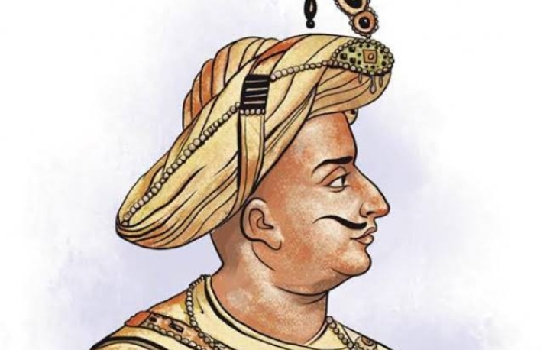
Bengaluru, Jul 28: After the Central Board of Secondary Education (CBSE) reduced the syllabi for Classes 9 to 12 due to COVID-19 pandemic, the Karnataka government has followed the suit. The Department of Public Instruction has omitted the chapters on legendary south Indian rulers Hyder Ali and Tipu Sultan from the textbooks of Class 7 in their attempt to reduce syllabus for state board schools by 30 per cent. 

The department, however, has decided to retain similar chapters on Tipu Sultan in 6th and 10th Classes, though the syllabus in text books for all classes from 1 to 10th has been trimmed. 

The trimmed textbooks uploaded on the website of the Department of State Education Research and Training (DSERT) by Karnataka state Textbook Society revealed removal of chapters on Tipu Sultan for the seventh grade.

Justifying the decision, officials said, "students study similar chapters in Class 6 and more in the 10th grade." Yet another senior official from the Text Book Society said, "Trimming does not mean we have removed half of the syllabus from textbooks. It is only keeping in mind the repetition we have condensed the chapters. In case students study about a particular dynasty in higher grades, then the same had been removed from lower grades."

A few months ago, there was an uproar over dropping of content on Tipu Sultan and MLAs from the ruling BJP also demanded the same and petitioned to the Chief Minister. Even an expert committee led by Prof Baraguru Ramachandrappa suggested to not drop any content on the historic figure. However, the department still decided to drop lessons from one of the classes while keeping the syllabus short for the next 120 active academic days.

Earlier this month, a controversy had erupted over the CBSE's decision to omit topics like federalism, secularism, citizenship, etc while reducing the syllabus for Classes 9 to 12. The education board had issued a detailed clarification later, stating that topics claimed to be dropped "are either being covered by the rationalised syllabus or in the Alternative Academic Calendar of NCERT".

"The rationalisation of syllabus up to 30 per cent has been undertaken by the Board for nearly 190 subjects of class 9 to 12 for the academic session 2020-21 as a one-time measure only. The objective is to reduce the exam stress of students due to the prevailing health emergency situation and prevent learning gaps," it said.

Last week, the Congress in Uttar Pradesh expressed its concern over 'deliberate and systematic' deletions of chapters related to the freedom struggle and the party's role in it from the Class 10-12 syllabi of the Secondary Education Board.

Comments

Add new comment

  • Coastaldigest.com reserves the right to delete or block any comments.
  • Coastaldigset.com is not responsible for its readers’ comments.
  • Comments that are abusive, incendiary or irrelevant are strictly prohibited.
  • Please use a genuine email ID and provide your name to avoid reject.