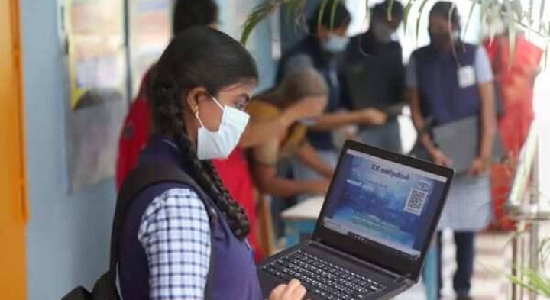
Intentions pure: Pune school issues diktat on girl students' innerwear colour'

Agencies
July 5, 2018

Pune, Jul 5: Parents and student of Pune’s Maeer's MIT School on Wednesday staged a protest against the school’s diktat asking the girls student to wear specific colour innerwear.

The school authority has even specified the length of the skirt to be worn by the girl students.

Apart from this, the school has restricted the students from using the washroom other than the specified time.

"The girls are asked to wear either white or skin colour innerwear. They have even mentioned the length of the skirt to be worn by them. They have all these things in the school diary and have asked us to sign it," a parent said.

The school has even mentioned about the actions to be taken against the student and parents if they failed to abide by them.

Meanwhile, Dr Suchitra Karad Nagare, Executive director of MIT Group of Institute said the intention behind taking such steps were 'very pure' and was not to trouble the parents and the students.

"The intention to give such specific directives in the school diary was very pure. We had some experiences in the past which made us take this decision. We did not have any hidden agenda," Dr Nagare said.

Comments

Ashi
 - 
Thursday, 5 Jul 2018

Now what is skin color? Whose skin color managements? Are these realy education centres to get education, thier minds have gone mad.

ayes p.
 - 
Thursday, 5 Jul 2018

Now school authorities interfear innerwear too.


What an idea sirji?

ahmed ali k
 - 
Thursday, 5 Jul 2018

Due to many school authorities torture what to wear and what not - Better to come to school with minimum dress only.

Add new comment

  • Coastaldigest.com reserves the right to delete or block any comments.
  • Coastaldigset.com is not responsible for its readers’ comments.
  • Comments that are abusive, incendiary or irrelevant are strictly prohibited.
  • Please use a genuine email ID and provide your name to avoid reject.
News Network
May 21,2020

Bengaluru, May 21: The COVID-19-induced lockdown saw a spurt in crybercrimes in India with Kerala recording the highest number during the period, according to an analysis of IT security solutions provider K7 Computing.

The report analyses various cyberattacks within India during the pandemic and reveals that threat actors targeted the States with COVID-19-themed attacks aimed at exploiting user trust.

The sudden surge in the frequency of attacks witnessed from February 2020 to mid-April 2020 indicates that scamsters across the world were exploiting the widespread panic around coronavirus at both the individual and corporate level, the company said in a statement.

These attacks aimed to compromise computers and mobile devices to gain access to users confidential data, banking details and cryptocurrency accounts.

The key threats seen during this period ranged from phishing attacks to rogue apps disguised as COVID-19 information apps that targeted users sensitive data.

Phishing attacks were noticed more in Tier-II and Tier-III cities while the metros fared better.

Smaller cities saw over 250 attacks being blocked per 10,000 users.

Users from Ghaziabad and Lucknow seem to have faced almost six and four times the number of attacks, respectively, as Bengaluru users.

In Kerala, regions like Kottayam, Kannur, Kollam, and Kochi saw the highest hits with 462, 374, 236, and 147 attacks respectively, while the state as a whole saw around 2,000 attacks during the period, the highest thus far in the country.

This was followed by Punjab with 207 attacks and Tamil Nadu at 184 attacks, the statement said.

A majority of the recorded attacks were phishing attacks with sophisticated campaigns that could easily snare even the most educated users, it said.

These attacks were aimed at heightening users fears and creating a sense of urgency to take action.

The report noted phishing attacks where scamsters posed as representatives of the United States Department of the Treasury, the World Health Organisation, and the Centres for Disease Control and Prevention.

Users were encouraged to visit links that would automatically download malware on the host computer such as the Agent Tesla keylogger or Lokibot information-stealing malware, infamous banking Trojans such as Trickbot or Zeus Sphinx, and even disastrous ransomware.

Other attacks included infected COVID-19 Android apps like CoronaSafetyMask that scam users with promises of masks for an upfront payment; the spyware app Project Spy; and seemingly genuine apps that are infected with dangerous malware like banking Trojans such as Ginp, Anubis and Cerberus, it was stated.

Comments

Add new comment

  • Coastaldigest.com reserves the right to delete or block any comments.
  • Coastaldigset.com is not responsible for its readers’ comments.
  • Comments that are abusive, incendiary or irrelevant are strictly prohibited.
  • Please use a genuine email ID and provide your name to avoid reject.
News Network
January 2,2020

United Nations, Jan 2: Nearly 400,000 babies were born around the world on New Year's Day with India recording the highest number of these births worldwide at 67,385, the UN children's agency said.

An estimated 392,078 babies were born around the world on New Year's Day, according to UNICEF. Of this, an estimated 67,385 babies were born in India, the most globally. China comes in second with 46,299 births.

The beginning of a new year and a new decade is an opportunity to reflect on our hopes and aspirations not only for our future, but the future of those who will come after us,” UNICEF Executive Director Henrietta Fore said.

As the calendar flips each January, we are reminded of all the possibility and potential of each child embarking on her or his life's journey—if they are just given that chance.”

Fiji in the Pacific most likely delivered 2020's first baby, while the US, the last of the New Year's Day. Globally, over half of these births were estimated to have taken place in eight countries - India (67,385), China (46,299), Nigeria (26,039), Pakistan (16,787), Indonesia (13,020), United States of America (10,452), Democratic Republic of Congo (10,247) and Ethiopia (8,493).

Each January, UNICEF celebrates babies born on New Year's Day, an auspicious day for child birth around the world, it said. However, for millions of newborns around the world, the day of their birth is far less auspicious.

In 2018, 2.5 million newborns died in just their first month of life; about a third of them on the first day of life. Among those children, most died from preventable causes such as premature birth, complications during delivery, and infections like sepsis. In addition, more than 2.5 million babies are born dead each year.

UNICEF said over the past three decades, the world has seen remarkable progress in child survival, cutting the number of children worldwide who die before their fifth birthday by more than half. But there has been slower progress for newborns. Babies dying in the first month accounted for 47 per cent of all deaths among children under five in 2018, up from 40 per cent in 1990.

UNICEF's Every Child Alive campaign calls for immediate investment in health workers with the right training, who are equipped with the right medicines to ensure every mother and newborn is cared for by a safe pair of hands to prevent and treat complications during pregnancy, delivery and birth.

Too many mothers and newborns are not being cared for by a trained and equipped midwife or nurse, and the results are devastating,” said Fore. “We can ensure that millions of babies survive their first day and live into this decade and beyond if every one of them is born into a safe pair of hands.”

India is projected to surpass China as the world's most populous country around 2027. According to UN estimates, India is expected to add nearly 273 million people between 2019 and 2050, while the population of Nigeria is projected to grow by 200 million. Together, these two countries could account for 23 per cent of the global population increase to 2050.

China, with 1.43 billion people in 2019, and India, with 1.37 billion, have long been the two most populous countries of the world, comprising 19 and 18 per cent, respectively, of the global total in 2019. Through the end of the century, India is estimated to remain the world's most populous country with nearly 1.5 billion inhabitants, followed by China with just under 1.1 billion, Nigeria with 733 million, the US with 434 million, and Pakistan with 403 million inhabitants.


Comments

Add new comment

  • Coastaldigest.com reserves the right to delete or block any comments.
  • Coastaldigset.com is not responsible for its readers’ comments.
  • Comments that are abusive, incendiary or irrelevant are strictly prohibited.
  • Please use a genuine email ID and provide your name to avoid reject.
Agencies
July 29,2020

New Delhi, Jul 29: The new National Education Policy (NEP) approved by the Union Cabinet on Wednesday is set to usher in a slew of changes with the vision of creating an education system that contributes directly to transforming the country, providing high-quality education to all, and making India a global knowledge superpower.

The draft of the NEP by a panel headed by former Indian Space Research Organisation (ISRO) chief Kasturirangan and submitted to the Union Human Resource Development Minister Ramesh Pokhriyal when he took charge last year. The new NEP replaces the one formulated in 1986.

Some of the key highlights of the New Education Policy are:-

The policy aims to enable an individual to study one or more specialized areas of interest at a deep level, and also develop character, scientific temper, creativity, spirit of service, and 21st century capabilities across a range of disciplines including sciences, social sciences, arts, humanities, among others.

It identified the major problems facing the higher education system in the country and suggested changes such as moving towards multidisciplinary universities and colleges, with more institutions across India that offer medium of instruction in local/Indian languages, a more multidisciplinary undergraduate education, among others. 

The governance of such institutions by independent boards having academic and administrative autonomy has also been suggested.

Under the suggestions for institutional restructuring and consolidation, it has suggested that by 2040, all higher education institutions (HEIs) shall aim to become multidisciplinary institutions, each of which will aim to have 3,000 or more students, and by 2030 each or near every district in the country there will be at least one HEI.

The aim will be to increase the Gross Enrolment Ratio in HEIs including vocational education from 26.3 per cent (2018) to 50 per cent by 2035.

Single-stream HEIs will be phased out over time, and all will move towards becoming vibrant multidisciplinary institutions or parts of vibrant multidisciplinary HEI clusters.

It also pushes for more holistic and multidisciplinary education to be provided to the students.

Comments

Add new comment

  • Coastaldigest.com reserves the right to delete or block any comments.
  • Coastaldigset.com is not responsible for its readers’ comments.
  • Comments that are abusive, incendiary or irrelevant are strictly prohibited.
  • Please use a genuine email ID and provide your name to avoid reject.