


Iraq crackdown kills nearly 40 after Iran mission torched

Agencies
November 29, 2019

Nasiriyah, Nov 29: Iraq crackdown kills nearly 40 after Iran mission torched Nasiriyah (Iraq), Nov 29 (AFP) Iraq's protest-hit cities saw one of their bloodiest days yet as a government crackdown killed nearly 40 demonstrators following the dramatic torching of an Iranian consulate.

The country's capital and south have been rocked by the worst street unrest since the 2003 US-led invasion that toppled Saddam Hussein, with a protest movement venting fury at the government and its backers in neighbouring Iran.

Thursday's violence brought the total death toll since early October to more than 390, with more than 15,000 wounded, according to an AFP tally.

The highest toll was in the flashpoint southern city of Nasiriyah, where 25 people were killed when security forces used "excessive force" to break up rallies, according to the Iraqi Human Rights Commission.

Another two protesters were killed in Baghdad and ten died in the Shiite shrine city of Najaf, where demonstrators had torched the Iranian consulate late on Wednesday.

Crowds outraged at Tehran's political influence in Iraq had stormed and burned down the mission, yelling "Victory to Iraq!" and "Iran out!" In response, Prime Minister Adel Abdel Mahdi early on Thursday ordered military chiefs to deploy in several restive provinces to "impose security and restore order", the army said.

But by the afternoon, following the bloody crackdown in the restive southern city of Nasiriyah, the premier had already sacked one commander, General Jamil Shummary.

The governor of Dhi Qar province, of which Nasiriyah is the capital, resigned later on that evening. More than 200 people were also wounded as security forces cleared sit-ins with live fire, medics and security sources said.

Medics in Nasiriyah said they had to carry out more than 80 life-saving surgeries in hospitals crowded with casualties.

Dhi Qar announced three days of mourning as thousands attended funeral processions there in defiance of a curfew announced earlier in the day.

"We're staying until the regime falls and our demand are met!" they chanted.

Demonstrators, dispersed by security forces, regrouped at Nasiriyah's main police station, setting it on fire. They then surrounded its main military headquarters as armed members of the area's powerful tribes deployed along main highways to block military reinforcements trying to reach the city.

"The scenes from Nasiriyah this morning more closely resemble a war zone than city streets and bridges," said Lynn Maalouf of rights group Amnesty International. "This bloodbath must stop now." The new phase of unrest in southern Iraq was unleashed after protesters had late on Wednesday stormed the Iranian consulate in Najaf, apparently evacuated by its staff.

An AFP correspondent saw them setting tyres ablaze around the site, sending flames and thick smoke into the night sky. Demonstrators have blamed powerful eastern neighbour Iran for propping up the Baghdad government which they are seeking to topple.

Tehran has demanded Iraq take decisive action against the protesters, with foreign ministry spokesman Abbas Mousavi condemning the consulate attack.

"Iran has officially communicated its disgust to the Iraq ambassador in Tehran," he told Iran's state news agency IRNA.

Later Thursday, ten protesters were shot dead close to the burnt consulate, medics said.

AFP's correspondent said clashes went on into the night between protesters and armed men in civilian clothes.

Many expected Iraq's highest Shiite authority Grand Ayatollah Ali Sistani, who lives in Najaf, to address the violence in his weekly sermon on Friday. He has backed the protests and repeatedly called for restraint in dealing with them.

Iran's consulate in Iraq's other holy city of Karbala was targeted earlier this month, with security forces shooting four demonstrators dead. The two countries have close but complex ties and Tehran holds significant sway among Iraqi political and military leaders.

Top Iranian commander Qasem Soleimani has held several meetings in Baghdad and Najaf to convince political factions to close ranks around Abdel Mahdi.

Those meetings, sources told AFP, brought firebrand cleric Moqtada Sadr back into the fold after he called on Abdel Mahdi to resign.

But on Thursday, Sadr reverted course, saying it would "be the beginning of the end for Iraq" if the government did not step down.

Sit-ins, road closures and street marches have shuttered public offices and schools for weeks in many southern cities.

On Thursday, clashes flared near Karbala's provincial headquarters between some 200 protesters and riot police using tear gas and flash bangs.

Protesters kept up sit-ins in Kut, Amara and Hilla, all south of the capital, despite an increased security presence.

In the oil-rich port city of Basra, most government offices reopened but schools remained closed as security forces deployed in the streets.

Iraq is OPEC's second-largest crude producer and the oil exported through Basra's offshore terminals makes up more than 90 percent of the government's budget.

Protesters have accused the ruling elite of embezzling state funds, desperately needed to restore failing public services and fix schools.

Corruption is rampant in Iraq, ranked the world's 12th most graft-ridden country by Transparency International. The World Bank says one in five Iraqis lives in poverty and youth unemployment stands at 25 percent.

Comments

Add new comment

  • Coastaldigest.com reserves the right to delete or block any comments.
  • Coastaldigset.com is not responsible for its readers’ comments.
  • Comments that are abusive, incendiary or irrelevant are strictly prohibited.
  • Please use a genuine email ID and provide your name to avoid reject.
News Network
May 4,2020

Dubai, May 4: An Indian salesman in the UAE has won a whopping 10 million dirhams at an Abu Dhabi draw, a media report said.

Dileep Kumar Ellikkottil Parameswaran, from Kerala’s Thrissur, works with an auto spare parts company in Ajman and earns 5,000 dirhams (USD 1,361) a month, Gulf News reported on Sunday.

Parameswaran, who won the 10 million dirhams (USD 2.7 million) prize at the Big Ticket draw in Abu Dhabi, will spend a big part of the money to repay a loan of 700,000 dirhams (USD 190,574 ), according to the report.

He said that a good part of the prize money will be spent on the education of his two children.

Parameswaran, who has been a resident of the UAE for 17 years, lives in Ajman along with his family.

Big Ticket is the largest and longest-running monthly raffle draw for cash prizes and dream luxury cars in Abu Dhabi.

A live monthly draw is organized at the Abu Dhabi International Airport on 3rd of each month.

Tickets are sold for 500 dirhams (USD 136).

Comments

Add new comment

  • Coastaldigest.com reserves the right to delete or block any comments.
  • Coastaldigset.com is not responsible for its readers’ comments.
  • Comments that are abusive, incendiary or irrelevant are strictly prohibited.
  • Please use a genuine email ID and provide your name to avoid reject.
Agencies
August 2,2020

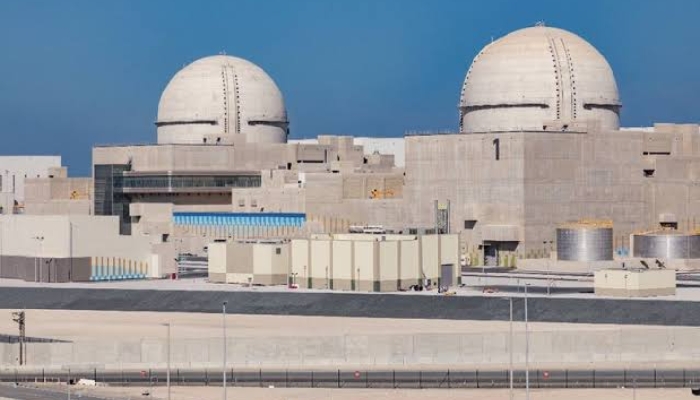
Dubai, Aug 2: The United Arab Emirates (UAE) announced on Saturday that it has started operations in the first of four reactors at the Barakah nuclear power station - the first nuclear power plant in the Arab world.

Emirates Nuclear Energy Corporation (ENEC), which is building and operating the plant with Korea Electric Power Corporation (KEPCO) said in a press release that its subsidiary Nawah Energy Company "has successfully started up Unit 1 of the Barakah Nuclear Energy Plant, located in the Al Dhafrah Region of Abu Dhabi".

That signals that Unit 1, which had fuel rods loaded in March, has achieved "criticality" - a sustained fission chain reaction.

"The start-up of Unit 1 marks the first time that the reactor safely produces heat, which is used to create steam, turning a turbine to generate electricity," said ENEC.

Barakah, which was originally scheduled to open in 2017, has been dogged by delays and is billions of dollars over budget. It has also raised myriad concerns among nuclear energy veterans who are concerned about the potential risks Barakah could visit upon the Arabian Peninsula, from an environmental catastrophe to a nuclear arms race.

Paul Dorfman, an honorary senior research fellow at the Energy Institute, University College London and founder and chair of the Nuclear Consulting Group, has criticised the Barakah reactors' "cheap and cheerful" design that he says cuts corners on safety.

Dorfman authored a report (PDF) last year detailing key safety features Barakah's reactors lack, such as a "core catcher" to literally stop the core of a reactor from breaching the containment building in the event of a meltdown. The reactors are also missing so-called Generation III Defence-In-Depth reinforcements to the containment building to shield against a radiological release resulting from a missile or fighter jet attack.

Both of these engineering features are standard on new reactors built in Europe, says Dorfman.

There have been at least 13 aerial attacks on nuclear facilities in the Middle East - more than any other region on earth.

The vulnerability of critical infrastructure in the Arabian Peninsula was further laid bare last year after Saudi Arabia's oil facilities at Abqaiq and Khurais were attacked by 18 drones and seven cruise missiles - an assault that temporarily knocked out more than half of the kingdom's oil production.

On Saturday, Dorfman reiterated his concern that there is no regional protocol in place to determine liability should an accident or incident at Barakah result in radioactive contamination spreading from the UAE to its neighbours. 

"Given Barakah has started up, because of all the well-rehearsed nuclear safety and security problems, it may be critically important that the Gulf states collectively evolve a Nuclear Accident Liability Convention, so that if anything does go wrong, victim states may have some sort of redress," Dorfman told Al Jazeera. 

The UAE has substantial oil and gas reserves, but it has made huge investments in developing alternative energy sources, including nuclear and solar.

Experts though have questioned why the UAE - which is bathed in sunlight and wind - has pushed ahead with nuclear energy - a far more expensive and riskier option than renewable energy sources.

When the UAE first announced Barakah in 2009, nuclear power was cheaper than solar and wind. But by 2012 - when the Emirates started breaking ground to build the reactors - solar and wind costs had plummeted dramatically.

Between 2009 and 2019, utility-scale average solar photovoltaic costs fell 89 percent and wind fell 43 percent, while nuclear jumped 26 percent, according to an analysis by the financial advisory and asset manager Lazard.

There are also concerns about the potential for Barakah to foment nuclear proliferation in the Middle East - a region rife with geopolitical fault lines and well-documented history of nuclear secrecy.

The UAE has sought to distance itself from the region's bad behaviour by agreeing not to enrich its own uranium or reprocess spent fuel. It has also signed up to the United Nation's nuclear watchdog's Additional Protocol, significantly enhancing inspection capabilities, and secured a 123 Agreement with the United States that allows bilateral civilian nuclear cooperation.

Comments

Add new comment

  • Coastaldigest.com reserves the right to delete or block any comments.
  • Coastaldigset.com is not responsible for its readers’ comments.
  • Comments that are abusive, incendiary or irrelevant are strictly prohibited.
  • Please use a genuine email ID and provide your name to avoid reject.
Agencies
July 28,2020

Dubai, Jul 28: Abu Dhabi Commercial Bank (ADCB) (ADCB.AD) is letting go hundreds of employees, sources said, the latest in a round of lay-offs by regional banks as pressure mounts to cut costs amid lower oil prices and the coronavirus crisis.

The UAE’s third-biggest lender is laying off 400 employees, two sources familiar with the matter said, after it had committed to not cutting staff because of the crisis.

In a statement, a spokesman said ADCB had pursued efficiency over the last decade by managing out its lowest underachievers after regular reviews, while ensuring talent was deployed in high-growth areas, such as digital banking.

“A certain number of redundancies are therefore expected every year in the normal course of business,” the bank spokesman added.

The sources said the cuts would involve ADCB’s consumer business and several in top management were among those being let go. One source said the bank was looking to close 20 branches.

In March, ADCB had declared, “No employee will be made redundant during 2020 as a result of the COVID-19 pandemic.”

UAE banks have been hit by government measures to rein in the spread of the virus, forcing many businesses to shut temporarily.

Last week, Dubai’s largest bank, Emirates NBD, reported a slump of 58% in profits. In June, sources told Reuters the bank started a new round of hundreds of lay-offs.

In May, ADCB reported a fall of 84% in first-quarter net profit as it took impairments of $292 million on debt exposure to troubled hospital operator NMC Health and payments group Finablr.

It was a major lender, with an exposure of about $981 million, to NMC Health, which went into administration this year after months of turmoil following questions over financial reporting.

Comments

Add new comment

  • Coastaldigest.com reserves the right to delete or block any comments.
  • Coastaldigset.com is not responsible for its readers’ comments.
  • Comments that are abusive, incendiary or irrelevant are strictly prohibited.
  • Please use a genuine email ID and provide your name to avoid reject.