Jaya's situation 'extremely grave', says London specialist

December 5, 2016

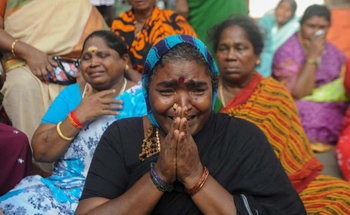
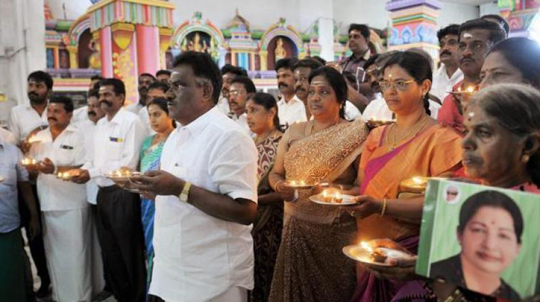
Chennai, Dec 5: The condition of Tamil Nadu Chief Minister J Jayalalithaa is "extremely grave", the London doctor who is being consulted for her treatment said today.

jayagravem"Unfortunately, and in spite of the progress she had made, her underlying health conditions inevitably meant that the risk of further problems always remained," Dr Richard Beale said in a statement.

"The situation is extremely grave, but I can confirm that everything possible is being done to give her the best chance of surviving this shocking event. She is being cared for by a highly multi-disciplinary team and is now on extra corporeal life support.

"This is the most advanced level of support available and is the approach the best centres internationally would take in this situation. That this technology is available in Apollo Chennai reflects the high degree of expertise of this centre and, that at all times, Madam has received exceptional care from Apollo and AIIMS care team, which are equal of any in the world," he said.

He said his prayers and thoughts were with the Chief Minister, her family, her carers and the people of Tamil Nadu "at this very difficult time".

jayagrave

Comments

A. Mangalore
 - 
Monday, 5 Dec 2016

Neera Melana gulle nijawalla hariye......

Sherief
 - 
Monday, 5 Dec 2016

Our thoughts and prayers are with you as we wish for a complete and fast recovery. Get well soon.

Kannadiga
 - 
Monday, 5 Dec 2016

kannadigara sapa thattade erutha!

Add new comment

  • Coastaldigest.com reserves the right to delete or block any comments.
  • Coastaldigset.com is not responsible for its readers’ comments.
  • Comments that are abusive, incendiary or irrelevant are strictly prohibited.
  • Please use a genuine email ID and provide your name to avoid reject.
News Network
May 15,2020

New Delhi, May 15: A group of doctors from the AIIMS, Raipur has recommended restrictions on the use of mobile phones in healthcare institutions amid the COVID-19 pandemic, warning that such devices can be a potential carrier of the virus and lead to infection among healthcare workers.

In a commentary published in the BMJ Global Health journal, the doctors stated that mobile phone surfaces are a peculiar 'high-risk' surface, which can directly come in contact with the face or mouth, even if hands are properly washed and one study indicates that some healthcare workers use phones every 15 minutes to two hours.

Though there have been many significant guidelines from various health organisations like the WHO and CDC focusing on prevention and control of disease, the commentary highlighted "there is no mention of or focus on mobile phones in these guidelines, including the WHO infection control and prevention guidelines, which recommends the use of handwashing".

In healthcare facilities, phones are used to communicate with other health care workers, look up recent medical guidelines, research drug interactions, understand adverse events and side effects, conduct telemedicine appointments and track patients among others, stated the document.

The document has been authored by Dr Vineet Kumar Pathak, Dr Sunil Kumar Panigrahi, Dr M Mohan Kumar, Dr Utsav Raj and Dr Karpaga Priya P from the Department of Community and Family Medicine.

"In their tendency to come in direct contact with the face, nose or eyes in healthcare settings, mobile phones are perhaps second only to masks, caps or goggles," the authors said.

"However, they are neither disposable nor washable like these other three, thus warranting disinfection. Mobile phones can effectively negate hand hygiene... There is growing evidence that mobile phones are a potential vector for pathogenic organisms," they said.

It is the need of the hour to address proper hygienic use of mobile phones in healthcare settings. In a study in India, almost 100 per cent of health workers of a tertiary care hospital used mobile phones in the hospital, but only 10 per cent of them had at any time wiped their mobile phones clean, the commentary published on April 22 said.

"The safest thing to do is to consider your phone as an extension of your hand, so remember you are transferring whatever is on your phone to your hand," Dr Pathak said.

Amidst the ongoing pandemic, two biggest mobile phone companies have uploaded their user support guidelines, saying that 70 pc isopropyl alcohol or Clorox Disinfecting Wipes can be used to gently wipe the exterior surface of phones in switched-off mode.

However, in doing so, the use of bleach or entry of moisture through any of the openings must be avoided, and any harsh chemical may damage the oleophobic screen, leading to damage in the touch screen sensitivity of the phone, the article stated.

Mobile phones are one of the most highly touched surfaces according to the Centers for Disease Control and Prevention (CDC), along with counters, tabletops, doorknobs, bathroom fixtures, toilets, keyboards, tablets and bedside tables.

The doctors recommended restriction on mobile phone usage in healthcare settings like hospital wards, ICUs and operation theatres, while advocating the use of headphones to prevent contact with the face while talking.

There should be no sharing of mobile phones, headphones or headsets of any kind. In addition, where available, the use of interdepartmental intercom facility may be promoted.

"Although hand hygiene and mobile phone use by a person are not mutually exclusive, it is high time to acknowledge the potential role of mobile phones in disease transmission cascade and to take evidence-based appropriate actions. This is especially important, given the ongoing COVID-19 pandemic," the authors said.

They said it is necessary for government agencies and the WHO to generate public awareness and to formulate suitable information, education and communication material on mobile phone hygiene, especially in healthcare settings.

AIIMS, New Delhi, Resident Doctors' Association (RDA) General Secretary, Dr Srinivas Rajkumar T said even outside health care settings, people should pay special attention to the usage of mobile phones as they carry them to all places.

"Phone and computer peripherals like keyboard, mouse, etc. should be covered with transparent plastic covers which can be cleaned without interfering with their function. Cleaning hands by soap or alcohol-based hand sanitizer before and after contact with phone and between contact with other surfaces can decrease the risk of potential transmission.

"Using a handsfree headset, dedicated operator/assistant per ward handling the communication via common line in hospitals while on duty can enable communication without compromising safety," Dr Srinivas said.


Comments

Add new comment

  • Coastaldigest.com reserves the right to delete or block any comments.
  • Coastaldigset.com is not responsible for its readers’ comments.
  • Comments that are abusive, incendiary or irrelevant are strictly prohibited.
  • Please use a genuine email ID and provide your name to avoid reject.
News Network
August 8,2020

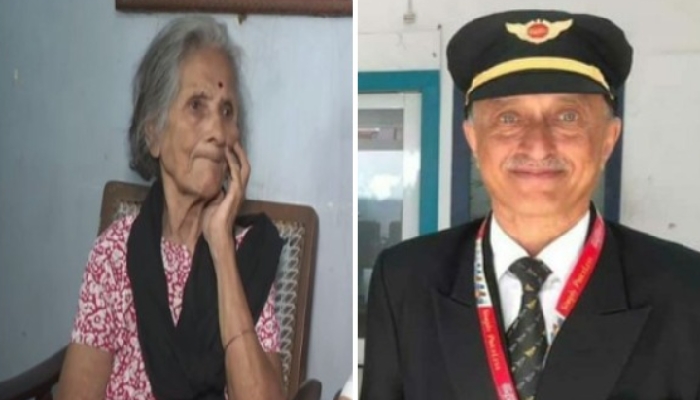
Nagpur, Aug 8: "He was a great son and always the first one to help others in need. He sacrificed his life for the country," said Neela Sathe, the mother of late captain DV Sathe, who was flying the Air India flight that crash-landed at Kozhikode airport on Friday, claiming 18 lives.

Indian Army Retired Colonel Vasant Sathe and his wife Neela lost both their sons in line of duty. The couple is originally from Nagpur, Maharashtra.

Speaking to news agency, Neela broke into tears and said, "He was a great son and always the first one to help others in need. 

His teachers still appreciate him. During the Ahmedabad floods, he saved the children of the soldiers by lifting them in his arms. I wish God would have called us instead of him."

"Both our children sacrificed their lives for the country," she added.

Remembering DV Sathe's childhood, Neela talked about every that moment when he made his parents proud.

Neela told with great pride that Captain DV Sathe had received the Sword of Honor and had also won eight medals in the Air Force.

Neela last talked to DV Sathe over phone call a few days ago during which captain told her mother not to go out of the house amid COVID-19 crisis as if something happens to her, he won't be able to bear that.

Vasant, captain's father retired as a colonel after serving in the Army for 30 years, following the footsteps of their father, both his sons joined too the Army.

Their elder son Vikas, was in the Army, and at the age of 22, he was martyred in an accident in Ferozepur in 1981. Their younger son Deepak (DV Sathe), who served as a pilot in Air India after serving in the Indian Air Force, died in the plane crash on Friday.

An Air India Express plane carrying 190 passengers including 10 infants skidded while landing at Karipur Airport in Kozhikode on Friday evening.

Comments

Add new comment

  • Coastaldigest.com reserves the right to delete or block any comments.
  • Coastaldigset.com is not responsible for its readers’ comments.
  • Comments that are abusive, incendiary or irrelevant are strictly prohibited.
  • Please use a genuine email ID and provide your name to avoid reject.
News Network
May 15,2020

New Delhi, May 15: Union Health Minister Harsh Vardhan has appealed to all states and Union Territories to ban the sale of smokeless tobacco products and spitting in public places in line with the orders of the Rajasthan and Jharkhand governments to prevent the spread of coronavirus infection.

In a letter to all state health ministers, Vardhan said smokeless tobacco users have a tendency to spit in public places or otherwise and therefore, increase health risks especially those of spreading contagious diseases like COVID-19, tuberculosis, swine flu, encephalitis and others.

"Use of smokeless tobacco also creates an unhygienic environment which further spreads the diseases. The large gathering at the retail outlets where smokeless tobacco products are sold, also pose the risk of spread of COVID-19," he said.

In the letter dated May 11, the Union minister underlined that tobacco use is a major threat to public health globally. He also mentioned the Indian Council of Medical Research's (ICMR) appeal to the public not to consume and spit smokeless tobacco products in public places.

Chewing tobacco products and areca nut increases the production of saliva followed by a very strong urge to spit. Spitting in public places could enhance the spread of the COVID-19, Vardhan said.

"By banning spitting in public places, states and UTs can help in achieving not only Swachh Bharat but also Swasth Bharat (Clean India and Healthy India)," he said.

Vardhan also mentioned the May 1 guidelines issued by the Union Home Ministry under the National Disaster Management Act, 2005, which stipulate that "spitting in public places shall be punishable with fine as may be prescribed by the state/UT local authority and consumption of liquor, pan, gutkha, tobacco etc in public places is not allowed".

Appreciating the efforts of Rajasthan and Jharkhand in this direction, the Union Health Minister urged all states to take similar measures and create widespread awareness regarding the harm of spitting in public places.

The Rajasthan government had by an ordinance banned spinning in public places and sale of paan, gutka and tobacco in the wake of the coronavirus outbreak. The Jharkhand too has imposed a complete ban on all types of tobacco products to prevent spitting in public places that could increase the spread of coronavirus infection.

"I am happy to note that the governments of Jharkhand and Rajasthan have already completely banned the sale of tobacco products and spitting in public places. Therefore, I urge upon you to take similar measures and also create widespread awareness in your state/ UT regarding harms of spitting in public places.

"It is also requested that the directions of Ministry of Home Affairs in this regard may be implemented scrupulously and effectively," Vardhan said in the letter.

Tobacco smoking is a known risk factor for many respiratory infections and increases the severity of related diseases. A review of studies by public health experts convened by WHO on April 29 found that smokers are more likely to develop severe diseases, compared to non-smokers, said Binoy Mathew, senior programme officer of Voluntary Health Association of India.

It is one of the main risk factors for a number of chronic ailments, including cancer, lung and cardiovascular diseases, he said, adding that according to the Global Adult Tobacco Survey, with 268 million or 28.6 per cent of all adults in India, the country has the second largest number of tobacco users in the world.

At least 12 lakh die from tobacco-related diseases every year, Mathew said.

Those keen to quit smoking and smokeless products can avail of free of charge telephone-based services launched by the government. The Ministry of Health has set up a National Tobacco Quit Line Services to provide counselling services to help tobacco consumers quit the habit.

Comments

Add new comment

  • Coastaldigest.com reserves the right to delete or block any comments.
  • Coastaldigset.com is not responsible for its readers’ comments.
  • Comments that are abusive, incendiary or irrelevant are strictly prohibited.
  • Please use a genuine email ID and provide your name to avoid reject.