Jaya's situation 'extremely grave', says London specialist

December 5, 2016

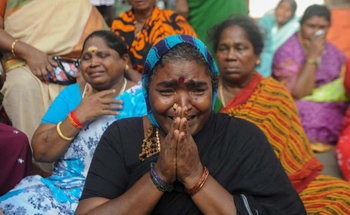
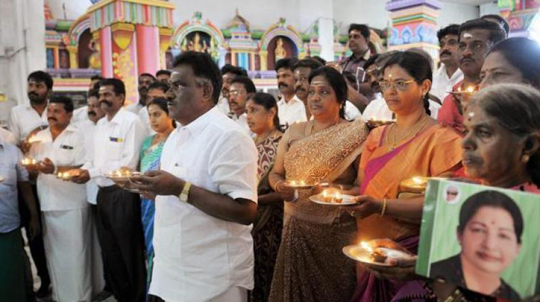
Chennai, Dec 5: The condition of Tamil Nadu Chief Minister J Jayalalithaa is "extremely grave", the London doctor who is being consulted for her treatment said today.

jayagravem"Unfortunately, and in spite of the progress she had made, her underlying health conditions inevitably meant that the risk of further problems always remained," Dr Richard Beale said in a statement.

"The situation is extremely grave, but I can confirm that everything possible is being done to give her the best chance of surviving this shocking event. She is being cared for by a highly multi-disciplinary team and is now on extra corporeal life support.

"This is the most advanced level of support available and is the approach the best centres internationally would take in this situation. That this technology is available in Apollo Chennai reflects the high degree of expertise of this centre and, that at all times, Madam has received exceptional care from Apollo and AIIMS care team, which are equal of any in the world," he said.

He said his prayers and thoughts were with the Chief Minister, her family, her carers and the people of Tamil Nadu "at this very difficult time".

jayagrave

Comments

A. Mangalore
 - 
Monday, 5 Dec 2016

Neera Melana gulle nijawalla hariye......

Sherief
 - 
Monday, 5 Dec 2016

Our thoughts and prayers are with you as we wish for a complete and fast recovery. Get well soon.

Kannadiga
 - 
Monday, 5 Dec 2016

kannadigara sapa thattade erutha!

Add new comment

  • Coastaldigest.com reserves the right to delete or block any comments.
  • Coastaldigset.com is not responsible for its readers’ comments.
  • Comments that are abusive, incendiary or irrelevant are strictly prohibited.
  • Please use a genuine email ID and provide your name to avoid reject.
News Network
April 23,2020

Washington, Apr 23: Air pollution over northern India has plummeted to a 20-year-low for this time of the year, according to satellite data published by US space agency National Aeronautics and Space Administration (NASA).
The US space agency's satellite sensors observed aerosol levels at a 20-year low post the countrywide lockdown, implemented to slow the spread of the novel coronavirus.

"We knew we would see changes in atmospheric composition in many places during the lockdown," said Pawan Gupta, a Universities Space Research Association (USRA) scientist at NASA''s Marshall Space Flight Center. "But I have never seen aerosol values so low in the Indo-Gangetic Plain at this time of year," added Mr Gupta.

Acting Assistant Secretary of State for South and Central Asia Alice G Wells tweeted, "These images from NASA were taken each spring starting in 2016 and show a 20-year low in airborne particle levels over India. When India and the world are ready to work and travel again, let's not forget that collaborative action can result in cleaner air."

The data published with maps show aerosol optical depth (AOD) in 2020 compared to the average for 2016-2019. Aerosol optical depth is a measure of how light is absorbed or reflected by airborne particles as it travels through the atmosphere.

If aerosols are concentrated near the surface, an optical depth of 1 or above indicates very hazy conditions. An optical depth, or thickness, of less than 0.1 over the entire atmospheric vertical column is considered "clean." The data were retrieved by the Moderate Resolution Imaging Spectroradiometer (MODIS) on NASA's Terra satellite.

In the first few days of the lockdown, it was difficult to observe a change in the pollution signature. "We saw an aerosol decrease in the first week of the shutdown, but that was due to a combination of rain and the lockdown," said Mr Gupta.

Around March 27, heavy rain poured over vast areas of northern India and helped clear the air of aerosols. Aerosol concentrations usually increase again after such heavy precipitation.

"After the rainfall, I was really impressed that aerosol levels did not go up and return to normal. We saw a gradual decrease and things have been staying at the level we might expect without anthropogenic emissions," Mr Gupta said.

On March 25, the Indian government placed its 1.3 billion citizens under a strict lockdown to reduce the spread of COVID-19. The countrywide mandate decreased activity at factories and severely reduced car, bus, truck and airplane traffic. Every year, aerosols from anthropogenic (human-made) sources contribute to unhealthy levels of air pollution in many Indian cities.

Aerosols are tiny solid and liquid particles suspended in the air that reduce visibility and can damage the human lungs and heart.

In southern India though, the story is a little hazier. Satellite data show aerosol levels have not yet decreased to the same extent. In fact, levels seem to be slightly higher than in the past four years. The reasons are unclear but could be related to recent weather patterns, agricultural fires, winds or other factors.

"This a model scientific experiment," Robert Levy, program leader for NASA's MODIS aerosol products, said about the lockdown and its effects on pollution.

"We have a unique opportunity to learn how the atmosphere reacts to sharp and sudden reductions in emissions from certain sectors. This can help us separate how natural and human sources of aerosols affect the atmosphere," Mr Levy added.


Comments

Add new comment

  • Coastaldigest.com reserves the right to delete or block any comments.
  • Coastaldigset.com is not responsible for its readers’ comments.
  • Comments that are abusive, incendiary or irrelevant are strictly prohibited.
  • Please use a genuine email ID and provide your name to avoid reject.
Agencies
February 11,2020

New Delhi, Feb 11: With Election Commission">Election Commission's trends indicating a landslide victory for the Aam Aadmi Party (AAP), party chief Arvind Kejriwal expressed his gratitude towards the people of the national capital and said that this is the victory of the people who consider him as their son.

Making his first public appearance after the day's results, Kejriwal made a brief address to supporters in which, AAP chief thanked supporters, outlined his personal connection with citizens and party workers as well as credited his family for their continued support.

"I thank people of Delhi for reposing their faith in AAP for the third time. This is not my personal victory, this is the victory of Delhiites. This the victory of the people who consider me as their son and voted for us," Kejriwal said at party office here.

He also referred to the trends of the assembly polls, as the beginning of a new kind of politics.

"This is the beginning of a new kind of politics. This is a new sign. Only the party will get vote who will built mohalla clinics and good schools... This is the victory of mother India and India. Today is Tuesday, Hanuman-ji's day. Hanumanji ji blessed Delhi today, I thank him. We pray that Hanuman Ji keeps showing the right path to us so that we continue to serve people for the next five years," he said.

According to Election Commission", AAP won 5 seats while the party is leading on 58 seats in 70-member Delhi Assembly. 

Comments

Add new comment

  • Coastaldigest.com reserves the right to delete or block any comments.
  • Coastaldigset.com is not responsible for its readers’ comments.
  • Comments that are abusive, incendiary or irrelevant are strictly prohibited.
  • Please use a genuine email ID and provide your name to avoid reject.
News Network
May 25,2020

Domestic flights resumed operations on a truncated schedule on Monday with the first aircraft departing from the Delhi Airport for Pune, more than two months after a nationwide lockdown was announced to combat COVID-19.

The first flight to take off was an IndiGo aircraft to Pune, flying passengers stranded in the national capital since the lockdown was announced on March 24.

Passengers were screened at the airport with electronic thermometers, and revised protocol for air travel that included santisation of luggage through ultra-violent scanners, and maintaining physical distancing.

Only asymptomatic passengers were allowed to enter the airport.

Passengers were also seen wearing face masks and face shields given to them at the embarkation point by the airline to minimise the chances of infection while onboard.

The first flight arrived at Delhi Airport from Ahmedabad – a SpiceJet aircraft – at around 8:00 am.

BJD Lok Sabha member Anubhav Mohanty was among those who took the Air Vistara flight to Bhubaneshwar that departed Delhi airport at 6:50 am.

The first flight to take off from Mumbai was an IndiGo aircraft that departed for Patna at 6:45 am, while passengers from Lucknow were the first to reach the financial capital on an IndiGo aircraft that touched down at 8:20 am.

The food & beverage and retail outlets, which were closed for the past 63 days, opened at Terminal 3 of Delhi’s Indira Gandhi International (IGI) Airport.

The flight services resumed after a day of long and hard negotiations between the Centre and the states on Sunday.

All states finally agreed to accept at least some flights but announced different quarantine and self-isolation rules for arriving passengers to address apprehension about infections being brought in from other cities.

The Centre had issued guidelines for all modes of domestic travel that advised all asymptomatic passengers to self-monitor their health parameters for 14 days on completion of the journey and report to health authorities if they displayed any symptoms for COVID-19.

However, the Centre had allowed state governments to prescribe their own health protocols for disembarking passengers which led to differential guidelines across the country.

Comments

Add new comment

  • Coastaldigest.com reserves the right to delete or block any comments.
  • Coastaldigset.com is not responsible for its readers’ comments.
  • Comments that are abusive, incendiary or irrelevant are strictly prohibited.
  • Please use a genuine email ID and provide your name to avoid reject.