


Jethmalani quits as Kejriwal's counsel, seeks Rs 2 crore fee

TNN
July 26, 2017

New Delhi, Jul 26: Ram Jethmalani has quit as chief minister Arvind Kejriwal's counsel in the civil and criminal defamation cases filed by Union finance minister Arun Jaitley against the CM.jethmalani

Following Kejriwal's denial of having instructed the lawyer to use derogatory language against Jaitley during court proceedings on May 17, the lawyer has written a letter to the CM, accusing him of using even more offensive language against Jaitley during private discussions on the case.

Jethmalani has asked Kejriwal to settle his legal fees amounting to more than Rs 2 cro5re. The lawyer used an offensive word, amounting to accusing Jaitley of being a criminal, during proceedings of the Rs 10-crore defamation case against Kejriwal and five other AAP leaders.

Jaitley asked Jethmalani if the word was spoken on his client's instruction. The lawyer replied in the affirmative and Jaitley filed another Rs 10-crore defamation suit against the CM.

Stung by the fresh defamation suit, Kejriwal filed an affidavit in Delhi high court and wrote a letter to Jethmalani saying he had not given any instructions for use of the derogatory word.

In his affidavit, Kejriwal said it was " inconceivable that he would even think of instructing the senior counsel to use such objectionable words". "Neither the defendant (Kejriwal) nor the counsel (Anupam Srivastava) briefing the senior counsel (Jethmalani) gave instructions to the senior counsel to use the objectionable words on May 17, 2017," Kejriwal said in the affidavit.

In response, after conveying his decision to quit as the CM's advocate, Jethmalani also told the CM to settle his legal fee, which, by a conservative estimate, would be over Rs 2 crore. The Delhi government had, this February, cleared a payment of Rs 3.5 crore to Jethmalani, which included Rs 1 crore as retainer and Rs 22 lakh as fee for each appearance in court.

However, the chief minister's office refused to comment on the matter, saying they "have no intimation on Jethmalani withdrawing from the case so far".

Jethmalani said, "Kejriwal has written a letter to me. I have replied to that. I am not going to divulge the details of either of the letters. You ask Kejriwal to make public both the letters. I have promised him not to make it public."

Sources said, in his letter, Jethmalani reminded Kejriwal about many conferences they had at the lawyer's residence and during which he had informed the CM about how PM Narendra Modi, impressed by his relentless fight against black money, had asked him to join BJP in 2010.

The letter also said the CM had shared the lawyer's anguish about BJP doing nothing to keep its election-eve promise to get back black money and deposit Rs 15 lakh in every Indian's bank account and how Jethmalani held Modi and Jaitley responsible for this.

During such conversations, Jethmalani alleged in his letter, Kejriwal had used even more objectionable words against Jaitley. The alleged use of derogatory words by Kejriwal during the conference appeared to have made Jethmalani repeat them during the May 17 proceedings before the HC registrar in the first defamation suit.

Jaitley had filed an application for expediting the recording of evidence in an orderly and fair manner in the first Rs 10-crore defamation suit against Kejriwal and the five AAP leaders for making allegations of corruption against him by them.

Comments

Rajarama Shetty
 - 
Thursday, 27 Jul 2017

Mr. Ramanath Rai is able & experienced .six time MLA..!! MOST SENIOR .dedicated CONGRESS MAN for more than 40 years?

Are there better candidates than him?

Add new comment

  • Coastaldigest.com reserves the right to delete or block any comments.
  • Coastaldigset.com is not responsible for its readers’ comments.
  • Comments that are abusive, incendiary or irrelevant are strictly prohibited.
  • Please use a genuine email ID and provide your name to avoid reject.
Agencies
May 19,2020

Ahmedabad, Nay 19: Over 2,200 Indian nationals stranded in the UK due to the coronavirus related international travel restrictions have been flown back home during the first phase of India's biggest ever repatriation exercise, according to official figures.

Since the first special Air India flight took off from London’s Heathrow Airport for Mumbai on May 8, there have been eight routes to different Indian cities from the UK for Indian students and tourists.

Indian nationals were flown home to the cities of Mumbai, New Delhi, Bengaluru, Chennai and Ahmedabad.

“We have facilitated repatriation of 2,288 Indians stranded in the UK through eight Air India flights till 17 May. Vande Bharat Mission continues to get Indians home,” said the Indian High Commission in London.

The Vande Bharat Mission is India’s biggest ever repatriation exercise to bring back Indians from abroad who are unable to travel home due to COVID-19 related international travel restrictions.

As the second phase of the repatriation process gets underway, retired Indian High Commissioner to the UK Ruchi Ghanashyam will be among the Indians flying back to New Delhi on Thursday.

“It has been such a hectic period, but I hope to return to the UK to say goodbyes in person sometime in the future,” Ghanashyam said during a virtual farewell organised by the Indian Journalists’ Association (IJA UK) on Monday.

As the packed flights take off daily, there are some still desperately waiting their turn, including those wanting to fly to some cities that are yet to be scheduled, including Kolkata.

“I have two young daughters, elderly parents, and a wife back at home. There is no way to return to Kolkata. I am worried for my parents,” says Suvendu, who came to the UK for work but recently lost his job.

“I am really surprised there are no Kolkata flights yet, but I am hoping they will be announced in the future,” adds Dr Arpita Ray, whose father needs to fly back home.

Another group waiting their turn to return home to their families in India includes students in the Overseas Citizen of India (OCI) category, which remains suspended in India’s extended COVID-19 lockdown.

According to the regulations issued by the Indian government last month and updated last week, visas of foreign nationals and OCI cards, that provide visa-free travel privileges to the people of Indian-origin, have been suspended as part of the new international travel restrictions following the COVID-19 pandemic.

“Our plight is no different from the struggles being faced by Indian students who hold Indian passports – India is home for all us,” says Tridip, an undergraduate at SOAS University of London.

“Yes, air travel at this point of time may be a risk but we are of course ready to take all precautionary measures and undergo the mandatory quarantine period upon arrival in India," adds the 18-year-old.

“Having lived in India for the greater part of my life, India is home to me as much as it is to an Indian citizen, and just as any Indian citizen wishes for the comfort of home and family, so do I. I can only hope that the government reviews its policy on OCI holders and appeal to them to include us in their repatriation plans," says Atulit, an under-graduate student at Imperial College London.

Bianta, a student at Bangor University in Wales, adds: “Along with all of the mental stress, financially the UK is too expensive. In the coming weeks my rental agreement will expire, after which I will have nowhere to go.

“I cannot continue funding myself here in the UK as I only planned to be here till May marking the end of my course. Please help us get home. The colour of my passport does not define where my home is."

As all commercial international flights continue to be grounded, the second phase of the Vande Bharat Mission with a total of 149 flights is aimed at bringing back Indians from 40 countries. On landing in India, these travellers have a 14-day quarantine requirement at venues organised by the respective state governments. 

Comments

Add new comment

  • Coastaldigest.com reserves the right to delete or block any comments.
  • Coastaldigset.com is not responsible for its readers’ comments.
  • Comments that are abusive, incendiary or irrelevant are strictly prohibited.
  • Please use a genuine email ID and provide your name to avoid reject.
Agencies
July 30,2020

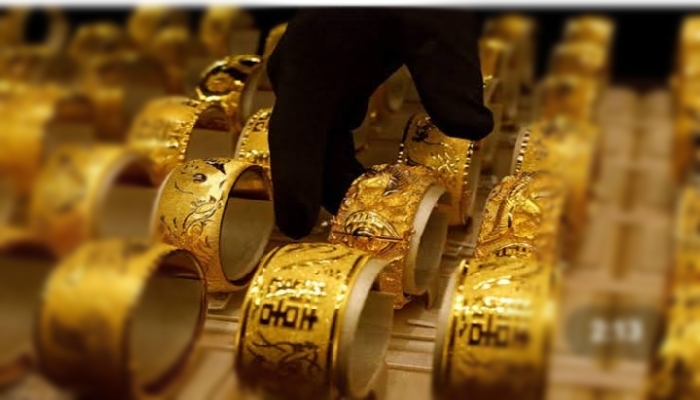
New Delhi, Jul 30: India's gold demand in 2020 is expected to fall to the lowest level in 26 years with domestic bullion prices hitting a record high and as falling disposable incomes could curtail retail purchases, the World Gold Council (WGC) said on Thursday.

Lower demand by the world's second-biggest bullion consumer could limit a rally in global prices, which hit a record high earlier this month, although it could also reduce India's trade deficit and support the ailing rupee.

"Fast rising gold prices could act as headwinds," said Somasundaram PR, the managing director of WGC's Indian operations.

Local gold futures have jumped 35% so far this year after rising a quarter in 2019.

India's gold consumption in the first half of 2020 plunged 56% on-year to 165.6 tonnes. Meanwhile, the coronavirus-triggered lockdown also slashed demand by 70% in the June quarter to 63.7 tonnes, the lowest in more than a decade, the WGC said in a report published on Thursday.

Millions of Indians have lost their jobs or taken a pay cut after the country imposed a lockdown on its 1.3 billion people to curb the spread of the virus that has infected more than 1.5 million Indians.

Consumption is generally high during the June quarter due to weddings and key festivals such as Akshaya Tritiya, but lockdown restrictions kept shoppers indoors this year.

The weak demand in the first half could drag down India's gold consumption in 2020 to the lowest since 1994, when demand stood at 415 tonnes, Somasundaram said, adding that it is still difficult to provide an estimate for full-year demand as the coronavirus crisis is still unfolding.

"Indian demand has previously jumped as much as 300 tonnes in a quarter. Latent demand could come out in the second half," Somasundaram said.

Comments

Add new comment

  • Coastaldigest.com reserves the right to delete or block any comments.
  • Coastaldigset.com is not responsible for its readers’ comments.
  • Comments that are abusive, incendiary or irrelevant are strictly prohibited.
  • Please use a genuine email ID and provide your name to avoid reject.
News Network
April 23,2020

Washington, Apr 23: Air pollution over northern India has plummeted to a 20-year-low for this time of the year, according to satellite data published by US space agency National Aeronautics and Space Administration (NASA).
The US space agency's satellite sensors observed aerosol levels at a 20-year low post the countrywide lockdown, implemented to slow the spread of the novel coronavirus.

"We knew we would see changes in atmospheric composition in many places during the lockdown," said Pawan Gupta, a Universities Space Research Association (USRA) scientist at NASA''s Marshall Space Flight Center. "But I have never seen aerosol values so low in the Indo-Gangetic Plain at this time of year," added Mr Gupta.

Acting Assistant Secretary of State for South and Central Asia Alice G Wells tweeted, "These images from NASA were taken each spring starting in 2016 and show a 20-year low in airborne particle levels over India. When India and the world are ready to work and travel again, let's not forget that collaborative action can result in cleaner air."

The data published with maps show aerosol optical depth (AOD) in 2020 compared to the average for 2016-2019. Aerosol optical depth is a measure of how light is absorbed or reflected by airborne particles as it travels through the atmosphere.

If aerosols are concentrated near the surface, an optical depth of 1 or above indicates very hazy conditions. An optical depth, or thickness, of less than 0.1 over the entire atmospheric vertical column is considered "clean." The data were retrieved by the Moderate Resolution Imaging Spectroradiometer (MODIS) on NASA's Terra satellite.

In the first few days of the lockdown, it was difficult to observe a change in the pollution signature. "We saw an aerosol decrease in the first week of the shutdown, but that was due to a combination of rain and the lockdown," said Mr Gupta.

Around March 27, heavy rain poured over vast areas of northern India and helped clear the air of aerosols. Aerosol concentrations usually increase again after such heavy precipitation.

"After the rainfall, I was really impressed that aerosol levels did not go up and return to normal. We saw a gradual decrease and things have been staying at the level we might expect without anthropogenic emissions," Mr Gupta said.

On March 25, the Indian government placed its 1.3 billion citizens under a strict lockdown to reduce the spread of COVID-19. The countrywide mandate decreased activity at factories and severely reduced car, bus, truck and airplane traffic. Every year, aerosols from anthropogenic (human-made) sources contribute to unhealthy levels of air pollution in many Indian cities.

Aerosols are tiny solid and liquid particles suspended in the air that reduce visibility and can damage the human lungs and heart.

In southern India though, the story is a little hazier. Satellite data show aerosol levels have not yet decreased to the same extent. In fact, levels seem to be slightly higher than in the past four years. The reasons are unclear but could be related to recent weather patterns, agricultural fires, winds or other factors.

"This a model scientific experiment," Robert Levy, program leader for NASA's MODIS aerosol products, said about the lockdown and its effects on pollution.

"We have a unique opportunity to learn how the atmosphere reacts to sharp and sudden reductions in emissions from certain sectors. This can help us separate how natural and human sources of aerosols affect the atmosphere," Mr Levy added.

Comments

Add new comment

  • Coastaldigest.com reserves the right to delete or block any comments.
  • Coastaldigset.com is not responsible for its readers’ comments.
  • Comments that are abusive, incendiary or irrelevant are strictly prohibited.
  • Please use a genuine email ID and provide your name to avoid reject.