Jignesh Mevani's rally cancelled, triggers massive protests in Delhi

Agencies
January 9, 2018

New Delhi, Jan 9: Delhi Police have tightened security fearing law and order problem in the national capital, a day after it denied permission to a public meeting that was scheduled to be addressed by newly-elected Gujarat MLA and Dalit leader Jignesh Mevani here on Tuesday.

The cancellation of the 'Yuva Hunkar Rally' has triggered massive protests in the national capital.

According to ANI, the supporters of the Gujarat Dalit leader have assembled in large numbers and are protesting in the Parliament Street.

Meanwhile, several posters criticising Mevani have also come up across Delhi.

In the posters, Mevani has been described as an absconder 'bhagoda' and accused of making provocative speeches aimed at dividing the society on the caste lines.

The Gujarat Dalit leader has also been accused of having links with the Naxalites.

This comes a day after Delhi Police denied the permission for the rally under Section 144 and claimed that the decision was taken to maintain law and order in the national capital ahead of the Republic Day.

Jignesh was likely to raise issues like land, dignity and education in his public meet today.

Earlier on January 4, the Mumbai Police had denied permission to a summit that was to be addressed by Mevani and JNU student Umar Khalid.

Several students were detained who had gathered outside a hall for the event and protested against the police for not giving permission for the programme.

The authorities also detained the organisers of the event - Sachin Bansode, president of Chhatra Bharati, his deputy Sagar Bhalerao and an MLC  Kapil.

The Pune Police had earlier said that they had received a complaint against Mevani and Khalid for their 'provocative' speeches at an event in Pune on December 31.

Mevani and Khalid had attended the 'Elgar Parishad', an event organised to commemorate the 200th anniversary of the battle of Bhima-Koregaon, at Shaniwar Wada in Pune.

Violence erupted in Pune district when Dalit groups were celebrating the bicentenary of the Bhima-Koregaon battle in which the forces of the British East India Company defeated the Peshwa’s Army.

Several towns and cities in Maharashtra were on edge on Tuesday as Dalit protests against Monday's deadly violence in Pune spilled over to capital Mumbai, with agitators damaging scores of buses, and disrupting road and rail traffic.

Over 160 buses were damaged in Mumbai by rampaging protesters, of which 100 were detained.

Comments

mark sebastin
 - 
Tuesday, 9 Jan 2018

300 people is a masssive crowd for pakistani and jihadists funded medias :):)

Add new comment

  • Coastaldigest.com reserves the right to delete or block any comments.
  • Coastaldigset.com is not responsible for its readers’ comments.
  • Comments that are abusive, incendiary or irrelevant are strictly prohibited.
  • Please use a genuine email ID and provide your name to avoid reject.
News Network
March 19,2020

Attari, Mar 19: At least 29 Indians, who had gone to Dubai to watch a cricket match which was called off later, on Wednesday night returned to India through the land transit route of Attari-Wagah border here.

Earlier, when they entered India after being cleared by the Pakistan Immigration Authority, they were detained at Attari border, as they were not having requisite permission on their passport to return to India through Pakistan.

According to officials, they had earlier flown to Dubai from New Delhi to watch a Pakistan League Cricket match there.

The match, however, was aborted and they decided to return India via Pakistan. They took a flight to Pakistan and after landing there, they took land route to reach Attari-Wagah border.

All were cleared by Indian immigration authority after being allowed by the Union Ministry of Home Affairs.

Amritsar Civil Surgeon Dr Prabdeep Kaur Johal said that by 9.30 PM all the Indian nationals were not handed over to the medical team for checkup.

She said if anyone of them are found with any symptoms of the virus, they would be admitted to Amritsar Government Hospital or else they would be allowed to continue their journey to Delhi or elsewhere.

Comments

Add new comment

  • Coastaldigest.com reserves the right to delete or block any comments.
  • Coastaldigset.com is not responsible for its readers’ comments.
  • Comments that are abusive, incendiary or irrelevant are strictly prohibited.
  • Please use a genuine email ID and provide your name to avoid reject.
coastaldigest.com news network
July 27,2020

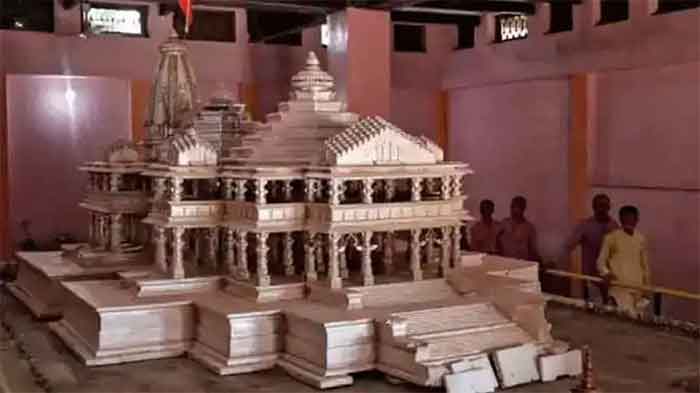
Ayodhya, Jul 27: With days to go for the August 5 "bhoomi pujan" ceremony of the Ram temple in Ayodhya, the mosques adjacent to the demolished Babri Masjid premises are spreading the message of a peaceful coexistence of Hindus and Muslims.

There are eight mosques and two mausoleums located close to the 70-acre Babri Masjid premises mandated by the Supreme Court for a temple of Sri Ram.

Azaan and namaaz are offered in the mosques and the annual "Urs" is held at the mausoleums without any objection from the local Hindus.

The eight mosques located near the upcoming Ram temple premises are Masjid Dorahikuan, Masjid Mali Mandir ke Bagal, Masjid Kaziyana Achchan ke Bagal, Masjid Imambara, Masjid Riyaz ke Bagal, Masjid Badar Paanjitola, Masjid Madaar Shah and Masjid Tehribazar Jogiyon ki.

The two mausoleums are Khanqaahe Muzaffariya and Imambara.

"It is the greatness of Ayodhya that the mosques surrounding the Ram temple are giving a strong message of communal harmony to the rest of the world," Haji Asad Ahmad, the corporator of the Ram Kot ward, said. The Ram temple area is situated in Ahmad's ward.

"Muslims take out the 'juloos' of Barawafaat that goes through the periphery of Ram Janmabhoomi. All religious functions and rituals of Muslims are respected by their fellow citizens," the corporator said.

Asked for a comment on the presence of mosques near the upcoming Ram temple premises, the chief priest of the temple, Acharya Satyendra Das, said, "We had a dispute only with the structure that was connected to the name of (Mughal emperor) Babur. We have never had any issue with the other mosques and mausoleums in Ayodhya. This is a town where Hindus and Muslims live in peace."

"Muslims offer namaaz, we perform our puja. The mosques around us will strengthen Ayodhya's communal harmony and peace will prevail," he added.

Both Hindus and Muslims have accepted the Supreme Court verdict over Ram Janmabhoomi, Das said, adding, "We have no dispute with each other."

Sayyad Akhlaq Ahmad Latifi, the "sajjada nasheen" and "pir" of the 500-year-old Khanqaahe Muzaffariya mausoleum, said Muslims in Ayodhya are performing all religious practices freely.

"We offer prayers five times a day in the mosque at Khanqaah and hold the yearly 'Urs'," he added.

"What a scene would it be -- a grand Ram temple surrounded by small mosques and mausoleums and everyone offering prayers according to their beliefs. That will be representative of the true culture of India," Mahant Yugal Kishore Sharan Shastri, the chief priest of the Sarayu Kunj temple adjacent to the Ram Janmabhoomi premises, said.

Reacting to the presence of mosques and mausoleums near the Ram Janmabhoomi premises, Triloki Nath Pandey, the decree holder of the land as the "first friend of Ram Lalla" as mandated by the Supreme Court, said, "We do not have any objection to either those mosques or any other mosques. We will not trigger a dispute regarding any structure, Ayodhya must live in peace and communal harmony."

Mahant Raju Das, the priest of the Hanumangarhi temple, said, "The presence of the mosques tells the story of Ayodhya's communal harmony. A Ram mandir will be built and there will be no objection to the mosques or religious practices of Muslims."

Comments

Add new comment

  • Coastaldigest.com reserves the right to delete or block any comments.
  • Coastaldigset.com is not responsible for its readers’ comments.
  • Comments that are abusive, incendiary or irrelevant are strictly prohibited.
  • Please use a genuine email ID and provide your name to avoid reject.
News Network
July 24,2020

New Delhi, Jul 24: The Delhi High Court on Friday asked the ICMR to come out with a clarification that mobile number, government-issued identity card, photographs or even a residential proof ought not to be insisted upon for Covid-19 test of mentally ill homeless persons.

According to an Indian Council of Medical Research (ICMR) advisory of June 19, every person who was to be tested for Covid-19 has to provide a government-issued identity proof and should have a valid phone number for tracing and tracking the individual and his/her contacts.

A bench of Chief Justice D N Patel and Justice Prateek Jalan said that ICMR should issue a clarification by way of a circular or an official order that the identity proof, address proof and mobile number are not required for testing mentally ill homeless persons.

The high court said a camp can be organised for testing such persons as is being done across Delhi for others.

"Guidelines have to be given by you (ICMR). You put it in black and white for the states'' benefit. You only need to clarify in two-three lines that mobile number, address proof and identity cards are not required for testing mentally ill homeless persons," it said.

"Use your powers for the public at large. Once you do so (issue the clarification), all states will comply," the bench added.

Additional Solicitor General Chetan Sharma, appearing for ICMR, sought time to take instructions from the government regarding the observations made by the bench.

The high court, thereafter, listed the matter for further hearing on August 7.

The bench was hearing a PIL moved by advocate Gaurav Kumar Bansal seeking directions to ICMR and Delhi government to issue guidelines for Covid-19 testing of mentally ill homeless persons in the national capital.

Coronavirus India update: State-wise total number of confirmed cases, deaths on July 24

The high court on July 9 had asked the ICMR to consider the plight of the mentally ill homeless persons and see whether they can be tested without insisting upon a mobile number, government issue identity card and residential address proof.

The bench had said to ICMR that many homeless mentally ill persons are institutionalised or in shelter homes and therefore, traceable, so there was no need for their identity proof or phone numbers to test them for Covid-19.

In response to the court''s query, ICMR has filed an affidavit stating that the purpose behind the submission of government identity card and telephone number was to ensure proper tracking and treatment of positive cases and their contacts as ''Test/Track/Treat'' is the best strategy for control of Covid-19 pandemic. 

It further said that since health was a state subject, the concerned state health authority may consider adopting a suitable protocol to ensure that the strategy of ''Test/Track/Treat'' is followed and the grievance raised in the PIL is also addressed.

ICMR, in its affidavit, has said that it has only advised facilitating contact tracing as well as tracking of the Covid-19 infected patients.

"The modalities regarding the contact tracing as well as tracking of the Covid-19 infected patients completely falls under the domain of IDSP. NCDC and state health authorities. 

"ICMR is a research organization and the contact tracing, as well as tracking of the Covid-19 infected patients, is not under the domain of ICMR," it has said in its affidavit.

Bansal has claimed in his petition that the Delhi government has not taken seriously the lack of guidelines with respect to Covid-19 testing of mentally ill homeless persons.

Coronavirus Worldometer | 15 countries with the highest number of cases, deaths due to the Covid-19 pandemic

He has said the high court had on June 9 directed it to address the grievances raised by him in another PIL with regard to mentally ill homeless persons in accordance with law, rules, regulations and government policy.

He said that on June 13 he also sent a representation to the Chief Secretary of Delhi government for providing treatment to mentally ill homeless persons in the national capital who have no residence proof. 

However, nothing was done by the Delhi government, he had told the court.

Comments

Add new comment

  • Coastaldigest.com reserves the right to delete or block any comments.
  • Coastaldigset.com is not responsible for its readers’ comments.
  • Comments that are abusive, incendiary or irrelevant are strictly prohibited.
  • Please use a genuine email ID and provide your name to avoid reject.