Jignesh Mevani's rally cancelled, triggers massive protests in Delhi

Agencies
January 9, 2018

New Delhi, Jan 9: Delhi Police have tightened security fearing law and order problem in the national capital, a day after it denied permission to a public meeting that was scheduled to be addressed by newly-elected Gujarat MLA and Dalit leader Jignesh Mevani here on Tuesday.

The cancellation of the 'Yuva Hunkar Rally' has triggered massive protests in the national capital.

According to ANI, the supporters of the Gujarat Dalit leader have assembled in large numbers and are protesting in the Parliament Street.

Meanwhile, several posters criticising Mevani have also come up across Delhi.

In the posters, Mevani has been described as an absconder 'bhagoda' and accused of making provocative speeches aimed at dividing the society on the caste lines.

The Gujarat Dalit leader has also been accused of having links with the Naxalites.

This comes a day after Delhi Police denied the permission for the rally under Section 144 and claimed that the decision was taken to maintain law and order in the national capital ahead of the Republic Day.

Jignesh was likely to raise issues like land, dignity and education in his public meet today.

Earlier on January 4, the Mumbai Police had denied permission to a summit that was to be addressed by Mevani and JNU student Umar Khalid.

Several students were detained who had gathered outside a hall for the event and protested against the police for not giving permission for the programme.

The authorities also detained the organisers of the event - Sachin Bansode, president of Chhatra Bharati, his deputy Sagar Bhalerao and an MLC  Kapil.

The Pune Police had earlier said that they had received a complaint against Mevani and Khalid for their 'provocative' speeches at an event in Pune on December 31.

Mevani and Khalid had attended the 'Elgar Parishad', an event organised to commemorate the 200th anniversary of the battle of Bhima-Koregaon, at Shaniwar Wada in Pune.

Violence erupted in Pune district when Dalit groups were celebrating the bicentenary of the Bhima-Koregaon battle in which the forces of the British East India Company defeated the Peshwa’s Army.

Several towns and cities in Maharashtra were on edge on Tuesday as Dalit protests against Monday's deadly violence in Pune spilled over to capital Mumbai, with agitators damaging scores of buses, and disrupting road and rail traffic.

Over 160 buses were damaged in Mumbai by rampaging protesters, of which 100 were detained.

Comments

mark sebastin
 - 
Tuesday, 9 Jan 2018

300 people is a masssive crowd for pakistani and jihadists funded medias :):)

Add new comment

  • Coastaldigest.com reserves the right to delete or block any comments.
  • Coastaldigset.com is not responsible for its readers’ comments.
  • Comments that are abusive, incendiary or irrelevant are strictly prohibited.
  • Please use a genuine email ID and provide your name to avoid reject.
News Network
January 15,2020

Srinagar, Jan 15: The Jammu and Kashmir administration on Tuesday evening allowed mobile Internet in parts of Jammu region and broadband in establishments providing essential services, days after the Supreme Court ordered a review of the curbs imposed in the Union Territory.

The order comes into effect from January 15 and shall remain in force for seven days, a government communication said.

In a three-page order, the administration asked Internet service providers to offer broadband facility (with Mac binding) to all institutions dealing with essential services such as hospitals, banks and government offices.

In order to facilitate tourism, the broadband Internet services would be provided to hotels and tour and travel establishments, the order said.

Mac Binding essentially means to enforce a client machine to work from a particular Internet Protocol address.

"Prior to giving such facility, the service providers have been asked to install necessary firewalls and carry out white-listing of sites that would enable government websites and website dealing with essential services like e-banking," the order said.

However, all social media sites remain out of bounds. "There shall be complete restrictions on social media applications allowing peer-to-peer communication and virtual private network applications for the time being," the order said.

The institutions and government offices that are being provided Internet access shall be responsible to prevent misuse, according to the order.

It said the 2G mobile connectivity on post-paid mobiles for accessing white-listed websites including e-banking will be allowed in districts of Jammu, Samba, Kathua, Udhampur and Reasi -- all in the Jammu region.

The order said that the police has brought material relating to the terror modules operating in Jammu and Kashmir including handlers from across the border who are attempting to aid and incite people by transmission of fake news and targeted messages through use of Internet.

The relaxation came days after the Supreme Court said access to the Internet is a fundamental right under Article 19 of the Constitution.

The SC verdict had come on Friday on a batch of pleas challenging the curbs imposed in Jammu and Kashmir after the Centre's abrogation of provisions of Article 370 on August 5 last year.

The court had also asked the Jammu and Kashmir administration to review within a week all orders imposing curbs in the Union Territory.

It had asked the J-K administration to restore Internet services in institutions such as hospitals and educational places providing essential services.

The J-K administration's Tuesday communication said that in view of the Supreme Court directions, the situation has been reviewed and Internet has been opened whereever it was possible keeping in view the security consideration.

In Kashmir, 400 additional Internet kiosks will be established, besides the 900 terminals which are already operational in the Valley.

Comments

Add new comment

  • Coastaldigest.com reserves the right to delete or block any comments.
  • Coastaldigset.com is not responsible for its readers’ comments.
  • Comments that are abusive, incendiary or irrelevant are strictly prohibited.
  • Please use a genuine email ID and provide your name to avoid reject.
Agencies
July 30,2020

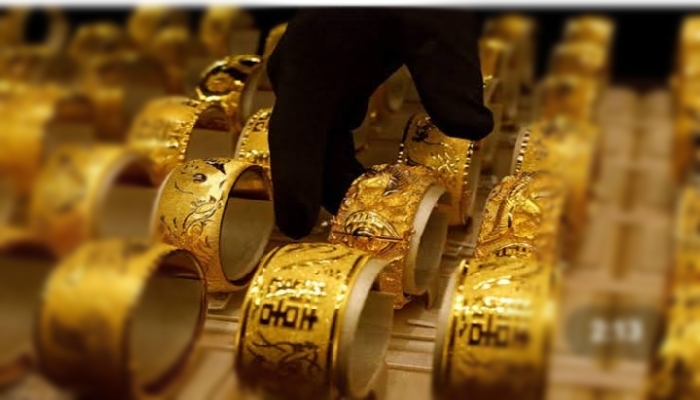
New Delhi, Jul 30: India's gold demand in 2020 is expected to fall to the lowest level in 26 years with domestic bullion prices hitting a record high and as falling disposable incomes could curtail retail purchases, the World Gold Council (WGC) said on Thursday.

Lower demand by the world's second-biggest bullion consumer could limit a rally in global prices, which hit a record high earlier this month, although it could also reduce India's trade deficit and support the ailing rupee.

"Fast rising gold prices could act as headwinds," said Somasundaram PR, the managing director of WGC's Indian operations.

Local gold futures have jumped 35% so far this year after rising a quarter in 2019.

India's gold consumption in the first half of 2020 plunged 56% on-year to 165.6 tonnes. Meanwhile, the coronavirus-triggered lockdown also slashed demand by 70% in the June quarter to 63.7 tonnes, the lowest in more than a decade, the WGC said in a report published on Thursday.

Millions of Indians have lost their jobs or taken a pay cut after the country imposed a lockdown on its 1.3 billion people to curb the spread of the virus that has infected more than 1.5 million Indians.

Consumption is generally high during the June quarter due to weddings and key festivals such as Akshaya Tritiya, but lockdown restrictions kept shoppers indoors this year.

The weak demand in the first half could drag down India's gold consumption in 2020 to the lowest since 1994, when demand stood at 415 tonnes, Somasundaram said, adding that it is still difficult to provide an estimate for full-year demand as the coronavirus crisis is still unfolding.

"Indian demand has previously jumped as much as 300 tonnes in a quarter. Latent demand could come out in the second half," Somasundaram said.

Comments

Add new comment

  • Coastaldigest.com reserves the right to delete or block any comments.
  • Coastaldigset.com is not responsible for its readers’ comments.
  • Comments that are abusive, incendiary or irrelevant are strictly prohibited.
  • Please use a genuine email ID and provide your name to avoid reject.
News Network
January 27,2020

Jan 27: Bidders for Air India Ltd. will need to absorb $3.26 billion of its debt, as Prime Minister Narendra Modi’s administration tries once again to sell the national carrier.

The entire company will be sold but effective control needs to stay with Indian nationals, according to preliminary terms published Monday. Bids are invited by March 17 with Ernst & Young LLP India as transaction adviser.

Air India, which started in 1932 as a mail carrier before winning commercial popularity, saw its fortunes fade with the emergence of cutthroat low-cost competition. The state-run airline has been unprofitable for over a decade and is saddled with more than $8 billion in debt.

Indian regulations allow a foreign airline to buy as much as 49% of a local carrier, while overseas investors other than airlines can buy an entire carrier. The government didn’t find a single bidder when it tried to sell Air India in 2018.

Comments

Add new comment

  • Coastaldigest.com reserves the right to delete or block any comments.
  • Coastaldigset.com is not responsible for its readers’ comments.
  • Comments that are abusive, incendiary or irrelevant are strictly prohibited.
  • Please use a genuine email ID and provide your name to avoid reject.