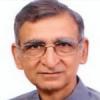
Journalist Gauri Lankesh, who led crusade against communalism, shot dead

coastaldigest.com news network
September 5, 2017

Bengaluru, Sept 5: Veteran journalist and peace activist Gauri Lankesh (55) who led a crusade against saffron extremists and communalism in Karnataka for decades was on Tuesday shot dead by unidentified gunmen near her residence in Bengaluru.

The incident took place within a few days after the second anniversary of the assassination of M M Kalburgi, a rationalist and former vice-chancellor of Kannada University in Hampi, who also had earned the wrath of Hindutva extremists through his writings. The manner in which Gauri was killed was eerily similar to the way in which Kalburgi was killed.

According to reports, at around 7: 00 pm, the gunmen shot at Gauri and wounded her fatally before escaping from the scene.  Police said that Gauri was getting out of her car to open the gate of her house, when assailants shot her. The shots penetrated her chest and she was killed on the spot, reports said.

Gauri was the daughter of revolutionary journalist P Lankesh. She was a veteran editor and columnist in both Kannada and English, and was a vocal critic of the right wing.

Last year, she was convicted of criminal defamation in two cases by the Judicial Magistrate First Class (JMFC) Court in Hubballi on Monday. Dharwad BJP MP Prahallad Joshi and BJP leader Umesh Dhushi had filed individual defamation cases against Lankesh in objection to a report on BJP leaders she had published in her periodical on January 23, 2008.

According to the police, Gauri left her office - Gauri Lankesh Patrike - at Gandhi Bazar around 7 pm. She reached her home around 7.45 pm.

As she was about to open the main door, three assailants called her. As she stepped out, they pumped four bullets from point-blank range. The bullets pierced her abdomen and chest.

Neighbours rushed out on hearing gunshots and Gauri's screams and called an ambulance.

"The house is located in a secluded area near Ideal Homes in Rajarajeshwarinagar. There was no immediate help after the attack," said Shivasundar, Gauri's close aide.

Police Commissioner T Suneel Kumar said it is yet to be ascertained whether the assailants were following Gauri or waiting near her residence.

"Four cartridges have been found at the spot. There are two CCTV cameras at the house and the footage will be examined after forensic officials inspect the spot. Three teams have been formed to nab the assailants, including one headed by joint commissioner (crime). We are also checking other CCTV cameras in the area," Kumar said.

The police said that the modus operandi in Gauri's murder is similar to that of Kalburgi case.

Gauri is the eldest daughter of revolutionary Kannada journalist and thinker P Lankesh. Gauri was known for her writings against the RSS and the BJP.

She had spearheaded several movements in the state and was instrumental in facilitating the surrender of Maoists who wanted to return to the mainstream.

Chief Minister Siddaramaiah said, "Soon after the police submit a preliminary report, we will determine the nature of the probe.”

The chief minister clarified that Gauri had not sought police protection and that there were no intelligence reports indicating a threat to her life.

After visiting the spot, Home Minister Ramalinga Reddy said, "She (Gauri) was staying alone and her mother was with her sister Kavitha in Uttarahalli. The officials told me that she met DGP R K Dutta three times. However, she never shared any information about a threat to her life. In fact, she called me on Saturday and said that she would meet on Monday. But she did not turn up,'' Reddy said.

The body was shifted to the Victoria Hospital for postmortem. A family member said the funeral would be held on Wednesday.

Comments

ayman kudroli
 - 
Tuesday, 5 Sep 2017

wipe out namardonki fouj club of bachelors what  akbaruddin owaisi said once its true ban rss terrorist org

Habeeb Puttur
 - 
Tuesday, 5 Sep 2017

Definately behind this murder KP Bhat and Raghu Swamy... arrest them soon...just check last week's gauri lankesh pathrike main page, what she wrote....and about whom...

Add new comment

  • Coastaldigest.com reserves the right to delete or block any comments.
  • Coastaldigset.com is not responsible for its readers’ comments.
  • Comments that are abusive, incendiary or irrelevant are strictly prohibited.
  • Please use a genuine email ID and provide your name to avoid reject.
News Network
February 19,2020

Beijing, Feb 19: The death count from China's new coronavirus epidemic jumped to 2,000 on Wednesday after 132 more people died in Hubei province, the hard-hit epicentre of the outbreak.

In its daily update, the province's health commission also reported 1,693 new cases of people infected with the virus.

This brings the total number of cases in mainland China past 74,000.

Most of the cases are in Hubei, where the virus first emerged in December before spiralling into a nationwide epidemic.

Wednesday's jump in the death count was an increase on Tuesday's figures, although the number of new cases reported in Hubei were the lowest for a week.

A study released by Chinese officials claimed most patients have mild cases of the illness.

Outside of hardest-hit Hubei, which has been effectively locked down to try to contain the virus, the number of new cases has been slowing and China's national health authority has said this is a sign the outbreak is under control.

President Xi Jinping, in a phone call with the British prime minister, said China's measures were achieving "visible progress", according to state media Tuesday.

However, the World Health Organization has cautioned that it was too early to tell if the decline would continue.

On Tuesday the director of a hospital in the central Hubei city of Wuhan became the seventh medical worker to succumb to the COVID-19 illness.

Comments

Add new comment

  • Coastaldigest.com reserves the right to delete or block any comments.
  • Coastaldigset.com is not responsible for its readers’ comments.
  • Comments that are abusive, incendiary or irrelevant are strictly prohibited.
  • Please use a genuine email ID and provide your name to avoid reject.
Ram Puniyani
June 29,2020

In Minneapolis, US an African American, George Floyd lost his life as the white policeman, Derek Chauvin, caught hold of him and put his knee on his neck. This is a technique developed by Israel police. For nine long minutes the knee of the while policeman was on the neck of George, who kept shouting, I can’t breathe.

Following this gruesome murder America erupted with protests, ‘Black lives matter’. The protestors were not just African Americans but also a large section of whites. Within US one police Chief apologized for the act of this. In a touching gesture of apology the police force came on its knees. This had reverberations in different parts of the World.

The act was the outcome of the remnants of the racial hatred against blacks by the whites. It is the hatred and the perceptions which are the roots of such acts of violence. What was also touching that the state of democracy in US is so deep that even the police apologized, the nation, whites and blacks, stood up as a sensitive collective against this violence.

US is not the only country where the brutal acts of violence torment the marginalized sections of society. In India there is a list of dalits, minorities and adivasis who are regularly subjected to such acts. But the reaction is very different. We have witnessed the case of Tabrez Ansari, who was tied to the pole by the mob and beaten ruthlessly. When he was taken to police station, police took enough time to take him to hospital and Tabrez died.

Mohsin Sheikh, a Pune techie was murdered by Hindu Rashtra Sena mob, the day Modi came to power in 2014. Afrazul was killed by Shambhulal Regar, videotaped the act released on social media. Regar believed that Muslims are indulging in love Jihad, so deserve such a fate. Mohammad Akhlaq is one among many names who were mob lynched on the issue of beef cow. The list can fill pages after pages.

Recently a young dalit boy was shot dead for the crime of entering a temple. In Una four dalits were stripped above waste and beaten mercilessly. Commenting on this act the Union Minister Ramvilas Paswan commented that it is a minor incident. Again the list of atrocities against dalits is long enough. The question is what Paswan is saying is the typical response to such gruesome murders and tortures. In US loss of one black life, created the democratic and humane response. In India there is a general silence in response to these atrocities. Some times after a good lapse of time, the Prime Minister will utter, ‘Mother Bharati has lost a son’. Most of the time victim is blamed. Some social groups raise their voice in some fora but by and large the deafening silence from the country is the norm.

India is regarded as the largest democracy. Democracy is the rule of law, and the ground on which the injustices are opposed. In America though the present President is insensitive person, but its institutions and processes of democratic articulations are strong. The institutions have deepened their roots and though prejudices may be guiding the actions of some of the officers like the killer of George, there are also police officers who can tell their President to shut up if he has nothing meaningful to say on the issue. The prejudices against Blacks may be prevalent and deep in character, still there are large average sections of society, who on the principles of ‘Black lives matter’. There are large sections of vocal population who can protest the violation of basic norms of democracy and humanism.

In India by contrast there are multiple reasons as to why the lives of Tabrez Ansari, Mohammad Akhlaq, Una dalit victims and their likes don’t matter. Though we claim that we are a democracy, insensitivity to injustices is on the rise. The strong propaganda against the people from margins has become so vicious during last few decades that any violence against them has become sort of a new normal. The large populace, though disturbed by such brutalities, is also fed the strong dose of biases against the victims. The communal forces have a great command over effective section of media and large section of social media, which generates Hate against these disadvantaged groups, thereby the response is muted, if at all.

As such also the process of deepening of our democracy has been weak. Democracy is a dynamic process; it’s not a fixed entity. Decades ago workers and dalits could protest for their rights. Now even if peasants make strong protests, dominant media presents it as blocking of traffic! How the roots of democracy are eroded and are visible in the form where the criticism of the ruling dispensation is labelled as anti National..

Our institutions have been eroded over a period of time, and these institutions coming to the rescue of the marginalized sections have been now become unthinkable. The outreach of communal, divisive ideology, the ideology which looks down on minorities, dalits and Adivasis has risen by leaps and bounds.

The democracy in India is gradually being turned in to a hollow shell, the rule of law being converted in to rule of an ideology, which does not have faith in Indian Constitution, which looks down upon pluralism and diversity of this country, which is more concerned for the privileges of the upper caste, rich and affluent. The crux of the matter is the weak nature of democracy, which was on way to become strong, but from decades of 1980s, as emotive issues took over, the strength of democracy started dwindling, and that’s when the murders of the types of George Floyd, become passé. One does complement the deeper roots of American democracy and its ability to protect the democratic institutions, which is not the case in India, where protests of the type, which were witnessed after George Floyd’s murder may be unthinkable, at least in the present times. 

Comments

Add new comment

  • Coastaldigest.com reserves the right to delete or block any comments.
  • Coastaldigset.com is not responsible for its readers’ comments.
  • Comments that are abusive, incendiary or irrelevant are strictly prohibited.
  • Please use a genuine email ID and provide your name to avoid reject.
News Network
May 17,2020

New Delhi, May 17: Spelling out the government’s fourth tranche of initiatives towards achieving Prime Minister Narendra Modi’s vision of ‘Atmanirbhar Bharat’, Union Finance Minister Nirmala Sitharaman on Saturday announced significant structural reforms in eight sectors of the economy — coal, minerals, defense production, aviation, power distribution in Union territories, space and atomic energy.

Addressing her fourth and the second-last press conference, Sitharaman said crucial sectors such as coal production and exploration, defence production and space would see an increased participation from private entities.

Coal sector:

In the realm of coal exploration, the government has decided to liberalise the entry norms for private entities, which would mean that any interested party could bid for a coal block and sell it in the open market. The minister said that the government would do away with all the eligibility conditions at the time of bidding for a coal block, except requiring an “upfront payment with a ceiling.”

Nearly 50 coal blocks would be offered to private players immediately, revealed Sitharaman.

She further said that Rs 50,000 crore would be spent by Centre in creating ‘coal evacuation’ infrastructure, which would expedite the transport of mined product to the destination.

Defence sector:

In defence production, Sitharaman revealed that the government would raise the foreign direct investment (FDI) limit in the sector from current 49 per cent to 74 per cent. Further, the government would also work towards corporatising the ordnance factory boards. “Corporatising doesn’t amount to privatization,” added Sitharaman.

In a bid to boost indigenous production of defence products and gave an impetus to Make in India, Sitharaman said that the government was in a process of notifying a list of weapons/platforms for an import ban with year-wise timelines.

These decisions would also help in reducing huge import bills, the finance minister said.

Privatisation of electricity:

In another announcement that could have an effect on electricity charges in the union territories, Union Finance Minister Nirmala Sitharaman announced on Saturday that power departments and utilities in all the centrally administered territories would be privatised.

Sitharaman said that the proposed move would lead to better service to consumers and improvement in operational and financial efficiency in distribution.

The finance minister said that decision was guided by 'sub-optimal' utilisation of performance of power distribution and supply'.

She said that the move to that effect would provide a model for emulation by other utilities across the country, in what could be an indicator of what's in the pipeline for utilities in other states as well.

Sitharaman said that the privation reform was in line with the tariff policy reforms and would help in enhancing consumer rights, promote industry and improve the overall sustainability of the sector.

Space sector:

Sitharaman also announced the opening up of the space exploration sector for private players. Till date, the government-run Indian Space Research Organisation (ISRO) has held a monopoly on all activities concerning space exploration and satellite launches.

The Indian private sector will be a co-traveller in India's space sector journey, said Sitharaman, while announcing a series of structural reforms in eight crucial areas of the economy. The Union Finance Minister was addressing her fourth press conference in as many days, as a follow-up towards realising Prime Minister Narendra Modi's vision of 'atmanirbhar Bharat', which was spelled out in his video address on May 12.

Sitharaman said that the reforms in the space sector will provide a level-playing field for private companies in satellite launches and space-based services.

She said that the private sector would be allowed to use ISRO facilities and other assets to improve their capacities. Stating that the government would provide predictable policy and regulatory environment to private players, Sitharaman also disclosed that future projects for planetary exploration and outer space travel among others would be opened up for private entities.

Comments

Add new comment

  • Coastaldigest.com reserves the right to delete or block any comments.
  • Coastaldigset.com is not responsible for its readers’ comments.
  • Comments that are abusive, incendiary or irrelevant are strictly prohibited.
  • Please use a genuine email ID and provide your name to avoid reject.