



Kansas bar shooting: US?man indicted on hate crime over killing Srinivas

June 10, 2017

Kansas City, Jun 10: A man accused in a bar shooting in suburban Kansas City that left one Indian national dead and another wounded was indicted by a federal grand jury on hate crime charges, the US Justice Department announced Friday.srinivas
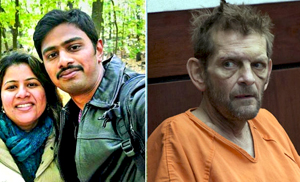
The indictment against Adam Purinton, 52, of Olathe, Kansas, comes after a February 22 shooting at Austin's Bar and Grill in Olathe, Kansas. Witnesses have said Purinton, who is white, yelled “get out of my country” at two 32-year-old Indian nationals, Srinivas Kuchibhotla and Alok Madasani, before he began shooting. Kuchibhotla died and Madasani was injured. A third man, Ian Grillot, was wounded when he tried to intervene.

The shooting raised fears of more attacks on immigrants following President Donald Trump's election and his call for a ban on immigrants from some countries. Officials in India also expressed concern about their citizens' safety in the US, where many work in technology and other industries.

Kuchibhotla and Madasani had come to the US from India to study and worked as engineers at GPS-maker Garmin.

'I need an answer': Srinivas Kuchibhotla's wife holds press conference |?Full transcript

An affidavit released in March said Madasani told detectives that the gunman asked if their “status was legal” before he opened fire.

The indictment announced Friday alleges Purinton shot the two Indian men because of their “actual and perceived” race, colour, religion and national origin. The indictment also alleges Purinton committed the crimes after premeditation and planning, attempted to kill more than one person and created a grave risk of death to others at the scene. The indictment also accuses Purinton of violating federal firearms laws.

After the shooting, Purinton drove 70 miles east to an Applebee's restaurant in Clinton, Missouri, where he allegedly admitted the shootings to a bartender, who called police.

The Justice Department said in a news release Friday that it would determine later whether Purinton should face the death penalty.

Purinton was a Navy veteran who was a regular customer at Austin's. Neighbours in the quiet Olathe cul-de-sac where he lived told The Associated Press that Purinton had become “a drunken mess” after his father's death about two years ago and had physically and mentally deteriorated before the shooting.

Olathe Mayor Michael Copeland said in a statement that the hate crime charge was appropriate.

“The intent of this one act was to spread hate. It failed miserably,” Copeland said. “It has spread love, and it has brought this community even closer together.”

Police Chief Steve Menke said he hoped the charges would bring some comfort to Kuchibhotla' loved ones and friends and to the survivors of the shooting.

Purinton is jailed in Johnson County, Kansas, on $2 million bond on murder and attempted murder charges.

His public defender, Michael McCulloch, did not immediately return a message seeking comment.

Grillot, who was hospitalised for 10 days after the shooting, was honored by Indian dignitaries for his efforts to stop the shooting. Three officials from the Consulate General of India in Houston traveled to Kansas City to meet Grillot in the days after the shooting. Consul General Anupam Ray told Grillot that his bravery was more representative of America than the violence at Austins, the hospital said.

In March, Grillot received a $100,000 check at a gala in Houston from The India House and three donors, with the money to be used toward buying a house.

A message left Friday with the Consul General's office was not immediately returned. A message to the Indian Embassy in Washington DC also was not immediately returned.

Comments

Add new comment

  • Coastaldigest.com reserves the right to delete or block any comments.
  • Coastaldigset.com is not responsible for its readers’ comments.
  • Comments that are abusive, incendiary or irrelevant are strictly prohibited.
  • Please use a genuine email ID and provide your name to avoid reject.
News Network
June 9,2020

Washington, Jun 9: When epidemiologists talked about "flattening the curve," they probably didn't mean it this way: the US hit its peak coronavirus caseload in April, but since that time the graph has been on a seemingly unending plateau.

That's unlike several other hard-hit countries which have successfully pushed down their numbers of new cases, including Spain and Italy, which now have bell-shaped curves.

Experts say the prolonged nature of the US epidemic is the result of the cumulative impact of regional outbreaks, as the virus that started out primarily on the coasts and in major cities moves inward.

Layered on top of that are the effects of lifting lockdowns in parts of the country that are experiencing rising cases, as well as a lapse in compliance with social distancing guidelines because of economic hardship, and in some cases a belief that the threat is overstated.

"The US is a large country both in geography and population, and the virus is at very different stages in different parts of the country," Tom Frieden, a former director of the Centers for Disease Control and Prevention told AFP.

The US saw more than 35,000 new cases for several days in April. While that figure has declined, it has still been exceeding 20,000 regularly in recent days.

By contrast, Italy was regularly hitting more than 5,000 cases per day in March but is currently experiencing figures in the low hundreds.

"We did not act quickly and robustly enough to stop the virus spreading initially, and data indicate that it travelled from initial hotspots along major transport routes into other urban and rural areas," added Frieden, now CEO of the non-profit Resolve to Save Lives.

To wit: the East Coast states of New York, New Jersey and Massachusetts accounted for about 50 percent of all cases until about a month or so ago -- but now the geographic footprint of the US epidemic has shifted to the Midwest and southeast, including Florida.

Another key problem, said Jennifer Nuzzo, an epidemiologist at Johns Hopkins, is that the United States is still not doing enough testing, contact tracing and isolation.

After coming late to the testing party -- for reasons ranging from technical issues to regulatory hurdles -- the US has now conducted more COVID-19 tests than any other country.

It even has one of the highest per capita rates per country of 62 per 1,000 people, according to the website ourworldindata.org -- better than Germany (52 per 1,000) and South Korea (20 per 1,000).

But according to Nuzzo, these numbers are misleading, because "the amount of testing that a country should do should be scaled to the size of its epidemic.

"The United States has the largest epidemic in the world so obviously we need to do a lot more testing than any other country."

For Johns Hopkins, the more important metric is the positivity rate -- that is, out of all tests conducted, how many came back positive for COVID-19.

As of June 7, the United States had an average daily positivity rate of 14 percent, well above the World Health Organization guideline of 5 percent over two weeks before social distancing guidelines should be relaxed.

By contrast, Germany, which has tested far fewer people in relation to its population, has a positivity rate of 5 percent.

Even if testing were scaled up, carrying out tests in of itself does very little good without the next steps -- finding out who was exposed and then asking them to isolate.

Here also, too many US states are lagging woefully behind.

Texas, which is experiencing a surge in cases after relaxing its lockdown, is a case in point. The state targeted hiring a modest 4,000 tracers by June, but according to local reports is still more than a thousand shy of even that goal.

Opt-in app based efforts have also been slow to get off the ground.

Then there is the fact that some people are growing tired of lockdowns, while others don't have the economic luxury of being able to stay home for prolonged periods.

The government sent some 160 million Americans a single stimulus check of up to $1,200 back in April but it's not clear whether more will be forthcoming.

Still others, particularly in so-called red states under Republican leadership, have chafed under restrictions and mask-wearing guidelines that they see as an affront to their personal freedom.

"The US is kind of on the extreme of the individual liberty side," Sten Vermund, dean of the Yale School of Public Health, told AFP.

Part of this has to do with mixed messaging from Republican leaders, including President Donald Trump, said Nuzzo.

"We have had at the highest political level an assertion that this is a situation that's been overblown, and that maybe certain protective behaviors are not necessary," she said.

More recently, tens of thousands of people across the country have taken to the streets to protest the killing on an unarmed black man by police, risking coronavirus infection to demonstrate against the public health threat of racialized state violence.

Comments

Add new comment

  • Coastaldigest.com reserves the right to delete or block any comments.
  • Coastaldigset.com is not responsible for its readers’ comments.
  • Comments that are abusive, incendiary or irrelevant are strictly prohibited.
  • Please use a genuine email ID and provide your name to avoid reject.
Agencies
February 23,2020

Wuhan, Feb 23: Ninety-seven more people died in China due to coronavirus, taking the death toll to 2,442, officials said on Sunday, as a team of WHO experts visited the worst-affected Wuhan city in Hubei province.

By the end of Saturday, a total of 2,442 people had died of the disease and 76,936 confirmed cases of novel coronavirus infection had been reported in 31 provincial-level regions, China's National Health Commission (NHC) said in its daily update on Sunday.

Ninety-six deaths were reported from Hubei province and one from Guangdong province on Saturday besides 648 new confirmed cases of coronavirus infections, it said.

Hubei province, where the virus first emerged in December last, reported 630 new confirmed cases, taking the total confirmed cases in the hard-hit province to 64,084, state-run Xinhua news agency reported.

The NHC also said China's daily number of newly cured and discharged novel coronavirus patients has surpassed that of new confirmed infections for the fifth consecutive day, indicating that cases of infections are coming down.

Saturday saw 2,230 people walk out of hospital after recovery, much higher than the number of the same day's new confirmed infections, which was 648, Xinhua reported.

A total of 22,888 patients infected with the novel coronavirus had been discharged from hospital after recovery by the end of Saturday, NHC said.

Meanwhile, a team of public health experts from the World Health Organisation (WHO) visited Wuhan on Saturday to conduct a detailed probe about the virus which reportedly originated from a seafood market in the city in December last year.

The NHC said WHO experts along with their Chinese counterparts who formed a joint investigation team have held talks with the local health authority in Wuhan and visited relevant healthcare institutions.

The UN team comprises specialists from the United States, Germany, Japan, Nigeria, Russia, Singapore and South Korea, Hong-Kong based South China Morning Post reported.

The 12-member team, which arrived in China on Monday, was initially designated to visit only Beijing, Guangdong and Sichuan provinces, while the worst-affected Hubei province and its capital Wuhan were missing from the list.

However, the team was finally given permission to visit Wuhan by the Chinese government.

Besides controlling the spread of the virus, a major task for the WHO team along with their Chinese counterparts was to come up with standard medicine to cure the disease.

The NHC said on Saturday that the team had met top Chinese respiratory disease expert Zhong Nanshan in Guangdong, and visited the centre for disease control and prevention in Guangdong and the city of Shenzhen, and Sichuan.

The specialists also discussed quarantine measures, the wild animal trade and community prevention measures with their Chinese counterparts, it said.

Comments

Add new comment

  • Coastaldigest.com reserves the right to delete or block any comments.
  • Coastaldigset.com is not responsible for its readers’ comments.
  • Comments that are abusive, incendiary or irrelevant are strictly prohibited.
  • Please use a genuine email ID and provide your name to avoid reject.
Agencies
June 10,2020

Houston, Jun 10: George Floyd was fondly remembered Tuesday as “Big Floyd” — a father and brother, athlete and neighborhood mentor, and now a catalyst for change — at a funeral for the black man whose death has sparked a global reckoning over police brutality and racial prejudice.

More than 500 mourners wearing masks against the coronavirus packed a Houston church a little more than two weeks after Floyd was pinned to the pavement by a white Minneapolis police officer who put a knee on his neck for what prosecutors said was 8 minutes and 46 seconds.

Cellphone video of the encounter, including Floyd’s pleas of “I can’t breathe,” ignited protests and scattered violence across the U.S. and around the world, turning the 46-year-old Floyd — a man who in life was little known beyond the public housing project where he was raised in Houston’s Third Ward — into a worldwide symbol of injustice.

“Third Ward, Cuney Homes, that’s where he was born at,” Floyd’s brother, Rodney, told mourners at the Fountain of Praise church. “But everybody is going to remember him around the world. He is going to change the world.”

The funeral capped six days of mourning for Floyd in three cities: Raeford, North Carolina, near where he was born; Houston, where he grew up; and Minneapolis, where he died. The memorials have drawn the families of other black victims whose names have become familiar in the debate over race and justice — among them, Eric Garner, Michael Brown, Ahmaud Arbery and Trayvon Martin.

After the service, Floyd’s golden casket was taken by hearse to the cemetery in the Houston suburb of Pearland to be entombed next to his mother, for whom he cried out as he lay dying. A mile from the graveyard, the casket was transferred to a glass-sided carriage drawn by a pair of white horses. A brass band played as his casket was taken inside the mausoleum.

Hundreds of people, some chanting, “Say his name, George Floyd,” gathered along the procession route and outside the cemetery entrance in the mid-90s heat.

“I don’t want to see any black man, any man, but most definitely not a black man sitting on the ground in the hands of bad police,” said Marcus Brooks, 47, who set up a tent with other graduates of Jack Yates High School, Floyd’s alma mater.

In the past two weeks, amid the furor over Floyd’s death, sweeping and previously unthinkable things have taken place: Confederate statues have been toppled, and many cities are debating overhauling, dismantling or cutting funding for police departments. Authorities in some places have barred police from using chokeholds or are otherwise rethinking policies on the use of force.

Dozens of Floyd’s family members, most dressed in white, took part in the four-hour service. Grammy-winning singer Ne-Yo was among those who sang.

The mourners included actors Jamie Foxx and Channing Tatum, J.J. Watt of the NFL’s Houston Texans, rapper Trae tha Truth, Rep. Sheila Jackson Lee, Houston Police Chief Art Acevedo and Houston Mayor Sylvester Turner, who brought the crowd to its feet when he announced he will sign an executive order banning chokeholds in the city.

“I know you have a lot of questions that no child should have to ask, questions that too many black children have had to ask for generations: Why? Why is Daddy gone?” former Vice President Joe Biden, the Democratic presidential candidate, said, addressing Floyd’s 6-year-old daughter in a video eulogy played at the service. “Now is the time for racial justice. That’s the answer we must give to our children when they ask why.”

Biden made no mention of his opponent in November. But other speakers took swipes at President Donald Trump, who has ignored demands to address racial bias and has called on authorities to crack down hard on lawlessness.

“The president talks about bringing in the military, but he did not say one word about 8 minutes and 46 seconds of police murder of George Floyd,” said the Rev. Al Sharpton, the civil rights activist. “He challenged China on human rights. But what about the human right of George Floyd?”

Most of the pews were full, with relatively little space between people.

“So much for social distancing today,” the Rev. Remus Wright told mourners, gently but firmly instructing those attending to wear face masks.

Texas has no limit on how many people can gather in places of worship during the pandemic, though Republican Gov. Greg Abbott has encouraged churches to follow federal health guidelines.

Although the church service was private, at least 50 people gathered outside to pay their respects.

“There’s a real big change going on, and everybody, especially black, right now should be a part of that,” said Kersey Biagase, who traveled more than three hours from Port Barre, Louisiana, with his girlfriend, Brandy Pickney. They wore T-shirts printed with Floyd’s name and “I Can’t Breathe.”

Floyd served nearly five years in prison for robbery with a deadly weapon before becoming a mentor and a church outreach volunteer in Houston. He moved to Minnesota several years ago through a program that tried to change men’s lives by helping them find work in new settings.

At the time of his death, Floyd was out of work as a bouncer at a Minneapolis club that had closed because of the coronavirus outbreak. He was seized by police after being accused of passing a counterfeit $20 bill at a convenience store.

Four Minneapolis officers were arrested in his death: Derek Chauvin, 44, was charged with second-degree murder. J. Alexander Kueng, Thomas Lane and Tou Thao were charged with aiding and abetting. All four could get up to 40 years in prison.

Some of the mostly peaceful demonstrations that erupted after Floyd’s death were marked by bursts of arson, assaults, vandalism and smash-and-grab raids on businesses, with more than 10,000 people arrested. But protests in recent days have been overwhelmingly peaceful.

Comments

Add new comment

  • Coastaldigest.com reserves the right to delete or block any comments.
  • Coastaldigset.com is not responsible for its readers’ comments.
  • Comments that are abusive, incendiary or irrelevant are strictly prohibited.
  • Please use a genuine email ID and provide your name to avoid reject.