Raipur, Apr 12: As many as 108 out of the 159 people that were quarantined by the Chhattisgarh government last week for allegedly taking part in Delhi’s Tablighi Jamaat congregation are Hindus, according to reliable sources.
The names of these 159 people, who were said to be in Delhi’s Nizamuddin area when the Tablighi Jamaat congregation was held mid-March, were mentioned in a list issued by the state home department last month.
The list has been accessed by the many media outlets. But, Raipur Collector S. Bharti Dasan and the state’s Principal Secretary, Home, Subrata Sahu, claimed no such list was issued.
However, a senior state home department official, who didn’t want to be named, said: “Listing of the names was done on the basis of location of mobile phones traced in Nizamuddin in the month of March during the period when congregation of Tablighi Jamaat was held.
“It was subsequently sent to the chief medical officers in the respective districts for further action,” the official added.
These 159 people have either been quarantined at their homes or at government isolation centres. The quarantine exercise took place between 31 March and 1 April.
Interestingly, almost all the people named in the list have denied attending the massive Jamaat congregation, which had seen the participation of over 3,000 people, including foreigners.
Under quarantine “forcefully”, these people alleged they are facing social boycott as they have been “linked to the Tablighi”.
Those placed under quarantine, told media if their phone locations have shown their presence in the Nizamuddin area that didn’t necessarily mean they had attended the Tablighi congregation.
“My neighbours are no longer like my family. After 31 March, I have received more than 500 calls (from relatives and friends) and had to convince them that I didn’t attend the Jamaat event,” Umesh Pandey, a resident of Ambikapur, said.
“People in my area have started saying that some Brahmins took part in the event. I have no objection to being kept in quarantine, but it should be explained why it is being done,” said Pandey, who is a consumer rights activist.
Pandey said, like every year, he had gone to Delhi in March to participate in a consumer protection programme and had stayed at a hotel in Nizamuddin. “I came back on 17 March. After I was quarantined, a false propaganda is being spread about me that I am linked with Tablighi Jamaat activities.”
Pandey said he and his family are now being “looked at as suspects”.
Kamal Kumar Popatani, a businessman from Bilaspur district, has faced similar problems. Popatani and his family have been living in isolation since 31 March.
“I am completely flabbergasted by this step taken by the state government. I always visit Delhi to procure items for my shop. This time too I had completed my procurement and had returned home on 16 March. Everything was usual till 30 March, but suddenly after 31 March, when this so-called list of 159 alleged suspects was released by the government, we were placed under isolation,” Popatani said.
“My own family members, neighbours and everyone I know are now accusing me that I had joined the Tabligi Jamaat gathering. How can it ever happen? This strange attitude of the government has made my entire family a victim of social boycott.”
Trader Abdul Rahman, a resident of Lutra Sharif area of Bilaspur district, also echoed similar sentiments.
“I returned from Delhi along with my wife on 15 March, but my entire family has been kept in isolation since 31 March. All this is way beyond my comprehension… Blood samples of the entire family were taken. Now everyone is keeping a distance from us and calling us corona suspects,” said Rahman, who had gone to Delhi for a holiday.
“People not only from my village but also in the nearby villages are pointing fingers at me and my family… We are the ones who condemn Tablighi Jamaat and their activities. We have nothing to do with them. The quarantine… has brought…infamy to us,” he added.
In another goof-up, the list even includes names of some people who no longer live in the state but carried mobile numbers issued in Chhattisgarh. One such name is that of BSF sub-inspector Shantanu Mukherjee, who was working in Bhilai about two years ago, but is currently posted in Delhi.
“What kind of list is this? Who released it in the first place? At first, I received a call from the Covid-19 control room in Chhattisgarh and then from the State Police Control Centre. They inquired about my health and current place of posting,” said Mukherjee, whose office is located close to the Nizamuddin area.
Makkhan Singh Yadav, a sub-inspector with the CRPF, is another case in point. Yadav, who is posted somewhere close to Nizamuddin, had bought a SIM card from Dantewada, when he was posted there five years ago.
“I had received calls from both Delhi and Chhattisgarh police after being marked as a corona suspect. But when I explained the reality to them, no calls were made thereafter. I could not understand how all this is taking place,” said Yadav, who is a native of Rampur, Uttar Pradesh.
A first-year Delhi University student, who belongs to Mahasamund district of Chhattisgarh, has been kept under isolation at a local government hospital.
The student, who didn’t want to be named, said she had gone to Nizamuddin railway station to catch a train for Chhattisgarh.
“I came home immediately after it was announced that educational institutions are shutting down. After returning from Delhi, I spent around 19 days at my own home, but suddenly I was admitted to the hospital on 1 April. Why have I been brought here (hospital) if I have no symptoms? All this feels like some sort of torture.”
“Despite my repeated denial, I was brought here by the health department on the pretext of being associated with the Tablighi Jamaat,” she said.
Asked about the Tablighi quarantine list, principal secretary Sahu said: “The government has issued no such list. We have received inputs from the social media about three such lists but the state government has not officially prepared any list.
“All those put under quarantine have been done as per the orders issued by the state government. This order states that those who came to the state after 1 March should be kept under isolation,” he added.
Raipur Collector Dasan refused to say anything about the list and added that people have been kept under quarantine after obtaining their “detailed travel history” based on the guidelines issued by the ICMR.
On the allegation of social boycott, Dasan said: “No person or their families placed under home quarantine or isolation should be subjected to any social boycott or misconduct. They also need not have any social inferiority complex in their minds.
“If any person placed under quarantine feels like this (social inferiority complex), the government has arranged counsellors for them. Our counsellors are convincing and assuring such people by reaching out to them.”



 The victim has been identified as Rubeena(27), mother of a two-and-a-half-year-old son. Her husband Mohammed Asif works in United Arab Emirates. Mr Asif has arrived from Dubai.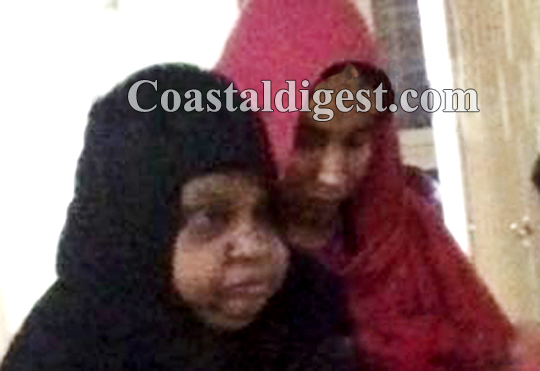

Comments
Inna lillahi vahinna hillalhi rajivoon
\Inna Lillahi Wa Inna Elaihi Rajiwoon\"
My deepest sympathies go out to her family,may ALLAH give her family comfort,peace,strength & \"sabr\" to bear the loss."
Inna lillahi wa Inna ilahi raijoon. Give sabar to their family members. ..
Inna lillahi wa Inna ilahi raijoon. .give sabar to family members.
Inna lillahi wa Inna ilahi raijoon. .give sabar to family members. .
Inna lillahi vahinna hillalhi rajivoon.....
Inna lillahi vahinna hillalhi rajivoon.....
Devil Act,
now a days its common everywhere, india govt should implement new law to stop this crime, for example lifetime Imprisonment should be claimed to the accused,
arrest and give maximum punishment to in laws
sorry sis, we are helpless that we couldnt help u at the right time.
Add new comment