


Karnataka fears massive revenue loss after currency chaos

November 16, 2016

Bengaluru, Nov 16: The Centre's move to demonetize high value currency notes threatens to derail Karnataka's revenue collection this financial year. Officials fear that the state might miss its revenue target by at least Rs 5,000-Rs 15,000 crore for the current fiscal. The move has already affected liquor sales, property transactions, and sale of new and used vehicles.
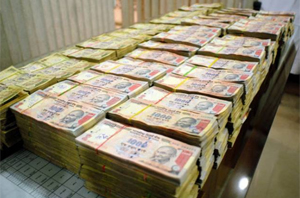
Untitled-1"We are still assessing the impact and will get a clear picture by the weekend. We are certainly expecting some impact,'' said ISN Prasad, additional chief secretary, state finance department. "The government's revenues have taken a severe beating following the demonetization move. Whatever taxes were supposed to come to the state, including commercial taxes, sales taxes and all the revenues have been hampered. It will certainly have a huge impact on this fiscal's tax collection," said another finance department official.

The government's excise department has been the worst hit. The sale of foreign liquor has come down drastically in the past few days. A senior excise department official said: "Most of the excise revenue come from the sale of Indian Manufactured Foreign Liquor. Officials at government outlets have claimed that the sale has gone down by at least 50%."

The government had fixed an ambitious revenue target of Rs 16,510 crore for the excise department this year following a 25% hike in taxes on liquor. The government has collected only about Rs 7,500 crore so far. "People have stopped buying liquor, especially the expensive ones, due to shortage of high-value currency," added the official.

The revenue target for the stamps and registration department had been fixed at a higher Rs 9,100 crore for the current fiscal. Most of this amount comes from revenue layouts through stamp duty and property registration, which has completely stopped since November 8. "Bengaluru is a big market for secondary real estate, which traditionally works on 60:40 white and black money ratio. Ban on transaction of black money has badly hit property registration," said a senior official of the stamps and registration department.

Comments

Althaf
 - 
Wednesday, 16 Nov 2016

Not only in karnataka All over india it will effect.

Skazi
 - 
Wednesday, 16 Nov 2016

let the Govt reduce the Value of lands for registration purposes... then the govt will get back the revenues.... as the buyers will come forward in the real estate business .....
The govt does not apply its mind while fixing the land values ... It goes by survey no.... whether the site has road connection or not,, the govt value is same for all sites ....

Add new comment

  • Coastaldigest.com reserves the right to delete or block any comments.
  • Coastaldigset.com is not responsible for its readers’ comments.
  • Comments that are abusive, incendiary or irrelevant are strictly prohibited.
  • Please use a genuine email ID and provide your name to avoid reject.
News Network
April 19,2020

Bengaluru, Apr 19: The Karnataka government on Saturday ordered 2 lakh Personal Protective Equipment (PPE) kits from DHB Global and 1 lakh from other major pharmaceuticals, for the healthcare warriors treating coronavirus patients.

According to the State Health Department, these PPEs have 10 components as per global standards like a face mask to prevent healthcare professional from any liquid sprays, goggles for additional safety, N95 masks for protection of nasal and mouth areas, surgical masks, nitrile gloves, coverall suit, shoe cover, waste disposable bag, plastic apron, and protective gear.

Each of the products should have the relevant certificate from the Food and Drug Administration (USFDA) or equivalent certification.

Comments

Add new comment

  • Coastaldigest.com reserves the right to delete or block any comments.
  • Coastaldigset.com is not responsible for its readers’ comments.
  • Comments that are abusive, incendiary or irrelevant are strictly prohibited.
  • Please use a genuine email ID and provide your name to avoid reject.
Agencies
July 8,2020

The Central Board of Secondary Education (CBSE) has rationalised by up to 30 per cent the syllabus for classes 9 to 12 for the academic year 2020-21 to reduce course load on students amid the COVID-19 crisis, Union HRD Minister Ramesh Pokhriyal 'Nishank' announced on Tuesday.

The curriculum has been rationalised while retaining the core elements, the Human Resource Development said.

Among the chapters dropped after the rationalisation exercise are lessons on democracy and diversity, demonetisation, nationalism, secularism, India's relations with its neighbours and growth of local governments in India, among others.

"Looking at the extraordinary situation prevailing in the country and the world, CBSE was advised to revise the curriculum and reduce course load for the students of classes 9 to 12.

"To aid the decision, a few weeks back I also invited suggestions from all educationists on the reduction of syllabus for students and I am glad to share that we received more than 1.5K suggestions. Thank you, everyone, for the overwhelming response," Nishank tweeted.

"Considering the importance of learning achievement, it has been decided to rationalise syllabus up to 30 per cent by retaining the core concepts," he added.

The Union minister said the changes made in the syllabi have been finalised by the respective course committees with the approval of the curriculum committee and the Governing Body of the Board.

"The heads of schools and teachers have been advised by the board to ensure that the topics that have been reduced are also explained to the students to the extent required to connect different topics. However, the reduced syllabus will not be part of the topics for internal assessment and year-end board examination.

"Alternative academic calendar and inputs from the NCERT on transacting the curriculum using different strategies shall also be part of the teaching pedagogy in the affiliated schools," a senior official of the HRD ministry said.

For classes 1 to 8, the National Council of Education Research and Training (NCERT) has already notified an alternative calendar and learning outcomes.

According to the updated curriculum, among the chapters deleted from class 10 syllabus are-- democracy and diversity, gender, religion and caste, popular struggles and movement, challenges to democracy

For class 11, the deleted portions included chapters on federalism, citizenship, nationalism, secularism, growth of local governments in India.

Similarly, class 12 students will not be required to study chapters on India's relations with its neighbours, changing nature of India's economic development, social movements in India and demonetisation, among others.

Universities and schools across the country have been closed since March 16 when the central government announced a nationwide classroom shutdown as one of the measures to contain the COVID-19 outbreak.

A nationwide lockdown was announced on March 24, which came into effect the next day. While the government has eased several restrictions, schools and colleges continue to remain closed.

Comments

Add new comment

  • Coastaldigest.com reserves the right to delete or block any comments.
  • Coastaldigset.com is not responsible for its readers’ comments.
  • Comments that are abusive, incendiary or irrelevant are strictly prohibited.
  • Please use a genuine email ID and provide your name to avoid reject.
News Network
January 30,2020

Bengaluru, Jan 30: The BJP government of Karnataka has given green signal to the proposal of hiking milk prices by Rs 2 per litre.

The new prices will come into effect from February 1. Seeking revision of prices, the Karnataka Milk Federation (KMF) had submitted a proposal last week to the state government. Alongside the revision of milk prices, the state government has also hiked the prices of curd by Rs 2 per liter.

The sudden hike in the prices of milk, curd is likely to have a cascading effect on the milk related beverages such as coffee, tea, and milkshakes with hoteliers and eateries mulling to increase the prices of coffee and tea following the hike in prices.

Sources in the state government revealed to DH that out of Rs 2, farmers will be getting a lion’s share as their accounts will be credited with Rs 1. Another 40 paise will be given to the farmers towards the insurances of their livestock.

Another 40 paise will go to the milk salesmen in the form of commission. The remaining 20 paise will be distributed among the workforce at the milk cooperative unions as an additional incentive.

Comments

Add new comment

  • Coastaldigest.com reserves the right to delete or block any comments.
  • Coastaldigset.com is not responsible for its readers’ comments.
  • Comments that are abusive, incendiary or irrelevant are strictly prohibited.
  • Please use a genuine email ID and provide your name to avoid reject.