Bengaluru, May 6: More than a month after international flights have been barred, Karnataka government is preparing to quarantine all 10,823 of the state''s people poised to return home from overseas amid the Covid pandemic, an official said on Tuesday.
"The state has planned to quarantine all 10,823 passengers coming back to Karnataka. The quarantine guidelines framed as below would be applicable," said Health Commissioner Pankaj Kumar Pandey in a statement.
According to the Government of India, 10,823 Karnataka residents have been stranded abroad by April 30, comprising 4,408 tourists, 3,074 students, 2,784 migrants and professionals and 557 ship crew.
Out of the 10,823 people, the state government is expecting 6,100 to return early as the government has decided to allow Indians stuck abroad to return.
"All the passengers arriving at points of entry (airports and seaports) will be compulsorily screened for symptoms of Covid-19," said Pandey.
Point of entry screening will include self-reporting form verification, thermal screening, pulse oximeter reading, briefing with instructions, categorisation, stamping for some and downloading of Aarogya Setu, Quarantine Watch and Apthamitra apps.
Arriving passengers are also required to declare existing comorbidities such hypertension, diabetes, asthma or any lung disease, organ transplantations, cancer, tuberculosis and other ailments.
Passengers will be categorised into three groups: Category A (symptomatic on arrival), Category B (asymptomatic with co-morbidity or aged above 60 years) and Category C (rest of asymptomatic passengers).
Depending on the category into which the people fall, their quarantine place and time will be determined.
Category A arrivals will be subjected to institutional quarantine for a fortnight, Category B one week quarantine at a hotel or hostel, followed by another week at home, and Category C home quarantine for a fortnight.
Karnataka government is making elaborate arrangements and logistical means, deploying healthcare, police and several other departments into action to handle the huge influx of Kannadigas and state residents.
Pandey has issued a 21-page elaborate standard operating procedure (SOP) guidelines on how to face the international returnees.



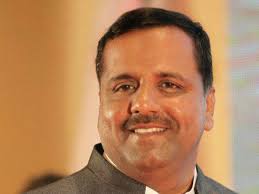 After public outcry, health and family welfare minister UT Khader had urged the finance department on Tuesday for ICU tax exemption.
Comments
It is only in India and many under-developed nations that Health and Education is made costly. Health and Education in many developed countries is their Birth Right and hence they are available to them either free of cost or highly subsidized form. We pay taxes for every thing we buy and use but why can't Govt. afford to implement the scheme. In the present scenario only rich can have good health and education, others have to either do some diploma or look for job early. The Govt. College and Hospitals are pathetic to go. Can they develop such that they are in par with Private institutions? Or do politicians have stakes in private companies that they don't want to improve the services of Govt. run institutions?
Add new comment