Bengaluru, Mar 19: To better enforce social distancing and prevent further spread of Covid-19, the Karnataka health and family welfare department on Wednesday said it will "stamp the back of the palm" of international passengers advised to be on home quarantine, along with the date they are allowed to get out of home. The stamping process began at 12am Thursday.
Pankaj Kumar Pandey, commissioner, health and family welfare, said: "It is noted that a few passengers under home quarantine are not following the instructions. Therefore, it has been decided to stamp the back of the palm of their left hand with a specially designed stamp which will indicate the last day of quarantine."
He said the special stamp will use an indelible ink and "airports in Karnataka have been instructed to follow this without fail". On average, about 3,000 people are arriving in Bengaluru on international flights every day.
The department said social distancing is the only known method of combating the spread of Covid-19 and added, "International passengers are segregated as symptomatic and asymptomatic."
High-risk flyers kept at mass quarantine unit
The symptomatic passengers (Group-A) are taken to designated hospitals; asymptomatic ones, depending on the port of origin, are taken to the quarantine centre or permitted to go on home quarantine.
At the mass quarantine centre, the asymptomatic passengers are divided into moderate-risk (Group-B) and high-risk (Group-C) categories.
“The high-risk passengers are kept at a mass quarantine centre for medical observation. The moderate-risk passengers are being sent for home quarantine where they need to spend 14 days,” the statement added.
Pandey said: “International passengers changing flights within the country cannot be stopped. Ideally, they should be stamped at the first port of entry when they arrive from a foreign country which is not happening.” He said this issue will be brought to the notice of the Directorate-General of Civil Aviation.



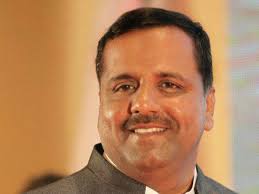 After public outcry, health and family welfare minister UT Khader had urged the finance department on Tuesday for ICU tax exemption.
Comments
It is only in India and many under-developed nations that Health and Education is made costly. Health and Education in many developed countries is their Birth Right and hence they are available to them either free of cost or highly subsidized form. We pay taxes for every thing we buy and use but why can't Govt. afford to implement the scheme. In the present scenario only rich can have good health and education, others have to either do some diploma or look for job early. The Govt. College and Hospitals are pathetic to go. Can they develop such that they are in par with Private institutions? Or do politicians have stakes in private companies that they don't want to improve the services of Govt. run institutions?
Add new comment