Bengaluru, Jun 26: Karnataka recorded 445 new Covid cases, majority of whom were contacts of earlier positive cases, breaching the 11,000 mark to settle at 11,005, an official said on Friday.
"New cases reported from Thursday 5 p.m. to Friday 5 p.m., 445," said a health official on Friday.
In the past 24 hours, 10 patients succumbed to the virus in Karnataka, three in Bengaluru Urban and one each in Kolar, Dharwad, Shivamogga, Bagalkote, Bidar, Kalaburagi and Ballari.
Like everyday, contacts of earlier cases outnumbered domestic returnees in the number of infections, constituting 39 per cent.
Positive cases with domestic travel history numbered 65, a mere 15 per cent and majority to Maharashtra.
There were also 21 cases with international travel history to countries like Oman, Qatar, Saudi Arabia and Dubai.
On Friday, cases spiked in Bengaluru Urban, Ballari, Kalaburagi, Koppal, Dakshina Kannada, Dharwad, Raichur, Gadag, Chamarajanagar, Udupi, Yadgir, Mandya, Uttara Kannada, Bagalkote, Shivamogga, Kolar and Mysuru.
Among the new cases, Bengaluru Urban accounted for 144, followed by Ballari (47), Kalaburagi (42), Koppal (36), Dakshina Kannada (33), Dharwad (30), Raichur (14), Gadag (12), Chamarajanagar (11), Udupi (9), Yadgir (7), Mandya, Uttara Kannada, Bagalkote, Shivamogga and Kolar (6 each).
Mysuru (5), Chikkamagaluru and Kodagu (4 each), Hassan and Bengaluru Rural (3 each), Vijayapura, Tumkur and Haveri (2 each) and Bidar, Belagavi, Davangere, Ramanagara and Chitradurga (1 each).
As many 144 patients are suffering from Influenza-like Illness (ILI) and 19 from Severe Acute Respiratory Infection (SARI).
In all, 5.68 lakh samples have been tested so far, of which 5.41 lakh tested negative.
Meanwhile, 178 patients are admitted in the ICU.
Of the total 180 deaths, Bengaluru Urban has accounted for 81, followed by Bidar (16), Kalaburagi (15), Ballari (9) and Dakshina Kannada (8), among others.



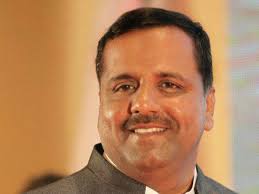 After public outcry, health and family welfare minister UT Khader had urged the finance department on Tuesday for ICU tax exemption.


Comments
It is only in India and many under-developed nations that Health and Education is made costly. Health and Education in many developed countries is their Birth Right and hence they are available to them either free of cost or highly subsidized form. We pay taxes for every thing we buy and use but why can't Govt. afford to implement the scheme. In the present scenario only rich can have good health and education, others have to either do some diploma or look for job early. The Govt. College and Hospitals are pathetic to go. Can they develop such that they are in par with Private institutions? Or do politicians have stakes in private companies that they don't want to improve the services of Govt. run institutions?
Add new comment