


Karnataka needs 1,725 new liquor stores, estimates Excise dept

News Network
February 10, 2016

Bengaluru, Feb 10: Based on the 2011 census, the Excise department has estimated that 1,725 new liquor retail shops (CL-2) are required in the State. The new licences would generate more revenue for the State exchequer and will also help curb the illegal sale of liquor.
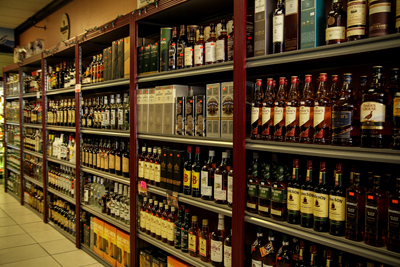
liquorPreviously, the CL-2 estimation was done based on the norms of the Excise Act, which permits one liquor shop for every 15,000 persons in rural areas and one shop for every 7,500 persons in urban areas. The government had granted more arrack shops in rural areas before 2007 (sale of arrack was banned that year). As there were more arrack shops the number of CL-2 lincences in rural areas was confined.

The State issued 3,935 licences (CL-2)?in 1992 based on the population data released in 1991. Though it has been two-and-half decades since then, the government has not issued any new licences in this category or for bar and restaurants (CL-9).

On the other hand, the government has been issuing new licences in the categories of CL-4 (clubs), CL-6A (star hotels), CL-7 (hotels and boarding houses), CL-7D (hotels and boardings houses owned by SC and ST), CL-8 (military canteen stores) and CL-8A (bonded warehouse). It had put a ban on CL-2 and CL-9.

A total of 9,871 liquor licences in various categories bring the State a good revenue. Increase in sales every year and additional tax impositions are also helping the government double liquor revenue.

An official from the department told Deccan Herald that issuing fresh licences would fetch the State exchequer more revenue, as the CL-2 shops have to pay the licence fee every year. The move will also help stop shops from charging extra as they face no competition.

The department has submitted its estimation report and had also sent a proposal to the government on three different occasions to issue new licences. But it has not yet made a decision in this regard, said Excise Commissioner Umashankar R S.

The department has fixed the licence fee for each category based on various parameters. For instance a CL-2 licence holder has to pay Rs 4.6 lakh every year if it is located in a corporation city with a population of more than 20 lakh, otherwise it costs Rs 3.64 lakh per year.

Comments

Subhan
 - 
Saturday, 27 Jun 2020

I want to bar licence

Jotiba jondhale
 - 
Saturday, 18 May 2019

I want new Bear bar licence

Jotiba jondhale
 - 
Saturday, 18 May 2019

J​​​​​​​​​​otiba jondhale

Sumith Kumar
 - 
Thursday, 10 Jan 2019

I want new bar licence

Need more info…
 - 
Thursday, 16 Nov 2017

Contact 8660779219

hariba. pavane
 - 
Saturday, 24 Dec 2016

cl 2 bar license information

hariba. pavane
 - 
Saturday, 24 Dec 2016

bar licence information

vinod
 - 
Wednesday, 10 Feb 2016

employment is generate through this to the shop & to the hospital too, nurses, Pharmacy, Dr; ambulance drives & all their family, this is the other side of the coin

vinod
 - 
Wednesday, 10 Feb 2016

If some body wants to drink, let them enjoy their life, let them drink sensibly, if some one is determined to drink no one can stop, you can see cases in Saudi Arabia, Gujarat people still drink cheap liquor, see always other side of the coin also, sharab, juaa or shabab this are man's weekness, now dont start give lecture on this, if you have not done any of this then you are welcome for the lecture

Fayaz Abdullah
 - 
Wednesday, 10 Feb 2016

please ban liquor seriously some family is suffering from it, for the development of the family everyone should work hard, but this liquor make them to spend all hard worked money to their habit.

Narvante
 - 
Wednesday, 10 Feb 2016

Only liquor hoses ? Brothels no need?
God knows y this Siddu govt is acting like Yeddy govt

IBRAHIM.HUSSAIN
 - 
Wednesday, 10 Feb 2016

It seems that Government of Karnataka need more money to spend their MLA's/MLC's and ministers expenditures. There are other states are thinking total ban on liquor whereas Karnataka is thinking of more licenses to liquor shops. The scapegoats are poor and middle class people of this state.

Siddaramayya must think more time on this and no more licenses are issued and don't bend down to the liquor lobby.

Santhosh
 - 
Wednesday, 10 Feb 2016

helmet compulsory, its saves head from accident, Liquor compulsory again it kills all part of the body, look at the govt policy, shame on selfish policy of karnataka govt, fools ruling govt.

Add new comment

  • Coastaldigest.com reserves the right to delete or block any comments.
  • Coastaldigset.com is not responsible for its readers’ comments.
  • Comments that are abusive, incendiary or irrelevant are strictly prohibited.
  • Please use a genuine email ID and provide your name to avoid reject.
News Network
February 22,2020

Bengaluru, Feb 22: Thanks to joint efforts by the Protector of Emigrants in Bengaluru and Indian Embassy in Qatar, a 26-year-old woman from Karnataka who had been kept in confinement in Qatar has been rescued and brought back to India.

Anupama (name changed) from Holenarasipura in Hassan district arrived in Bengaluru on Thursday night. She was allegedly locked up in a house for 14 days, restrained from using a mobile and wasn't fed. There were three other women with her. On the midnight of February 12, they broke the window panes and fled before contacting local police.

Anupama, a diploma graduate in computer science, was jobless and her friend working in Kuwait suggested she try for a job abroad. She contacted an agency based in Chikkamagaluru which offered her a nanny's job in Qatar. After document verification, the agency demanded she pay Rs 2 lakh but she said she didn't have that kind of money.

The agency sent Anupama on a visitor visa but told her if questioned by immigration officials, she must claim she was visiting her sister. They also gave her a return ticket.

As Anupama was travelling abroad for the first time, she said she was ignorant about several things.

On January 12, Anupama left Bengaluru. But as she reached Qatar, all her documents, including passport, were confiscated by the agency. Her return ticket was cancelled and she was sent to a house to work as babysitter-cum-cook for Rs 30,000. She lived with four other maids in the same house, where they were made to work for 16-18 hours a day.

"I used to wake up around 5.30am every day and had to prepare breakfast for the employers by 6.30am. My work would end around 11pm every day. We never even got time to eat," Anupama told media on Friday. Four days into work, Anupama's nose started bleeding. However, the employers cared little and insisted she continue to work. After 18 days, she requested her employers that she be relieved.

The agency sent her to a house where three women were already present and locked her up with them. "They used to give us a glass of raw rice, an onion, tomato and potato to cook for ourselves. While we got rice every day, we had to use the vegetables for three days. We were not supposed to use mobiles or go out. Two people were monitoring us," she recalled.

Anupama and the others decided to approach police but for that they needed to escape. Around 1.30am on February 12, the four women managed to break window panes and jumped out. They ran for more than a kilometre and managed to approach police, who summoned the agency and got the women to speak to their families.

Anupama called her brother-in-law, who approached the Protector of Emigrants office in Koramangala, Bengaluru. Shubham Singh, PoE in Bengaluru, said they took up the issue with the Indian Embassy in Qatar, which immediately got in touch with Qatar police. Anupama said, "We were kept in prison for a couple of days and were sent to the deportation centre later."

Meanwhile, the Indian embassy got the agency to return the women's documents. However, the agents did not pay their salaries. Two of the women were sent to Hyderabad and the third to Kerala. On Friday, Anupama met Singh at his office, where her statement was recorded. "We have started the process of initiating action against the agency in India," he said.

Comments

Add new comment

  • Coastaldigest.com reserves the right to delete or block any comments.
  • Coastaldigset.com is not responsible for its readers’ comments.
  • Comments that are abusive, incendiary or irrelevant are strictly prohibited.
  • Please use a genuine email ID and provide your name to avoid reject.
News Network
July 16,2020

Tirumala, Jul 16: As many as 14 priests of Tirumala Tirupati Devasthanams (TTD) were tested positive for COVID-19 in Andhra Pradesh on Thursday, said Anil Kumar Singhal, Executive officer, TTD.

Singhal also held a meeting with temple priests, health and vigilance officials today.

On July 14, Singhal held 'Dial your EO' programme at TTD administrative building conference hall wherein the EO addressed the devotees and media and informed that 91 TTD employees have tested positive for COVID-19 till date.

According to the Union Health Ministry, the state has reported 35,451 COVID-19 cases including, 16,621 active cases, 18,378 recovered and 452 deaths so far.

Comments

Add new comment

  • Coastaldigest.com reserves the right to delete or block any comments.
  • Coastaldigset.com is not responsible for its readers’ comments.
  • Comments that are abusive, incendiary or irrelevant are strictly prohibited.
  • Please use a genuine email ID and provide your name to avoid reject.
News Network
June 20,2020

Bengaluru,  Jun 19: Following the coronavirus outbreak, Bengaluru's Kempegowda International Airport has introduced ultraviolet treatment while scanning outbound baggage apart from other measures to enhance passenger and staff safety.

"Two custom-designed UV tunnels have been created to disinfect trolleys after every use. Two custom-designed UV tunnels have been created to disinfect trolleys after every use. These Tunnels are located at a cordoned-off area of the Terminal," according to a statement by the Bangalore International Airport Limited (BIAL).

The airport plans to use an ultra-low volume (ULV) spray treatment for check-in bags: all outbound passenger baggage is sanitised before dispatch to the aircraft

Authorities also plan to minimise use of additional trays for footwear by introducing specially designed trays; the trays that are in use are UV treated and sanitised manually after every use.

Officials are currently in the process of implementing silver nano-coating for frequently used touchpoints for self disinfection like check-in counters, Immigration counters, ATRS trays, etc. Currently, sanitisation of high-traffic areas and frequently touched surfaces continues to be done every thirty minutes manually without disrupting the flow of passengers.

All high-traffic areas are sanitised once every three hours by using ULV machines - eight times in 24 hours.

Washrooms across the Airport premises are sanitised on a regular basis with dedicated manpower, irrespective of the frequency of use. 456 units of tabletop hand sanitiser and 107 units of sensor-based hand sanitisers have been placed across the Terminal.

120 biowaste bins located across the Airport campus enable passengers and staff to dispose of their masks, gloves and other PPE conveniently and safely. This bio-waste is managed by a dedicated team and handed over to a Pollution Control Board-approved vendor and taken away for incineration.

The Airport said that the passenger feedback for the contactless process has been positive. "The objective of the process is to minimise physical contact and enhance passenger throughput," it said.

These sanitisation measures come in light of the highly infectious COVID-19 pandemic which spreads through person-to-person contact. Small droplets from the nose or mouth can spread the virus when they land on objects and surfaces around the person.

Comments

Add new comment

  • Coastaldigest.com reserves the right to delete or block any comments.
  • Coastaldigset.com is not responsible for its readers’ comments.
  • Comments that are abusive, incendiary or irrelevant are strictly prohibited.
  • Please use a genuine email ID and provide your name to avoid reject.