


Karnataka needs 1,725 new liquor stores, estimates Excise dept

News Network
February 10, 2016

Bengaluru, Feb 10: Based on the 2011 census, the Excise department has estimated that 1,725 new liquor retail shops (CL-2) are required in the State. The new licences would generate more revenue for the State exchequer and will also help curb the illegal sale of liquor.
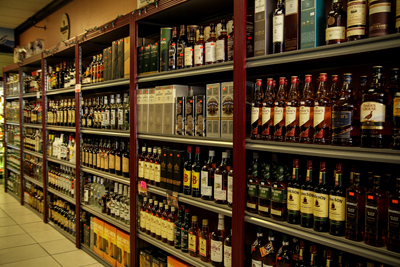
liquorPreviously, the CL-2 estimation was done based on the norms of the Excise Act, which permits one liquor shop for every 15,000 persons in rural areas and one shop for every 7,500 persons in urban areas. The government had granted more arrack shops in rural areas before 2007 (sale of arrack was banned that year). As there were more arrack shops the number of CL-2 lincences in rural areas was confined.

The State issued 3,935 licences (CL-2)?in 1992 based on the population data released in 1991. Though it has been two-and-half decades since then, the government has not issued any new licences in this category or for bar and restaurants (CL-9).

On the other hand, the government has been issuing new licences in the categories of CL-4 (clubs), CL-6A (star hotels), CL-7 (hotels and boarding houses), CL-7D (hotels and boardings houses owned by SC and ST), CL-8 (military canteen stores) and CL-8A (bonded warehouse). It had put a ban on CL-2 and CL-9.

A total of 9,871 liquor licences in various categories bring the State a good revenue. Increase in sales every year and additional tax impositions are also helping the government double liquor revenue.

An official from the department told Deccan Herald that issuing fresh licences would fetch the State exchequer more revenue, as the CL-2 shops have to pay the licence fee every year. The move will also help stop shops from charging extra as they face no competition.

The department has submitted its estimation report and had also sent a proposal to the government on three different occasions to issue new licences. But it has not yet made a decision in this regard, said Excise Commissioner Umashankar R S.

The department has fixed the licence fee for each category based on various parameters. For instance a CL-2 licence holder has to pay Rs 4.6 lakh every year if it is located in a corporation city with a population of more than 20 lakh, otherwise it costs Rs 3.64 lakh per year.

Comments

Subhan
 - 
Saturday, 27 Jun 2020

I want to bar licence

Jotiba jondhale
 - 
Saturday, 18 May 2019

I want new Bear bar licence

Jotiba jondhale
 - 
Saturday, 18 May 2019

J​​​​​​​​​​otiba jondhale

Sumith Kumar
 - 
Thursday, 10 Jan 2019

I want new bar licence

Need more info…
 - 
Thursday, 16 Nov 2017

Contact 8660779219

hariba. pavane
 - 
Saturday, 24 Dec 2016

cl 2 bar license information

hariba. pavane
 - 
Saturday, 24 Dec 2016

bar licence information

vinod
 - 
Wednesday, 10 Feb 2016

employment is generate through this to the shop & to the hospital too, nurses, Pharmacy, Dr; ambulance drives & all their family, this is the other side of the coin

vinod
 - 
Wednesday, 10 Feb 2016

If some body wants to drink, let them enjoy their life, let them drink sensibly, if some one is determined to drink no one can stop, you can see cases in Saudi Arabia, Gujarat people still drink cheap liquor, see always other side of the coin also, sharab, juaa or shabab this are man's weekness, now dont start give lecture on this, if you have not done any of this then you are welcome for the lecture

Fayaz Abdullah
 - 
Wednesday, 10 Feb 2016

please ban liquor seriously some family is suffering from it, for the development of the family everyone should work hard, but this liquor make them to spend all hard worked money to their habit.

Narvante
 - 
Wednesday, 10 Feb 2016

Only liquor hoses ? Brothels no need?
God knows y this Siddu govt is acting like Yeddy govt

IBRAHIM.HUSSAIN
 - 
Wednesday, 10 Feb 2016

It seems that Government of Karnataka need more money to spend their MLA's/MLC's and ministers expenditures. There are other states are thinking total ban on liquor whereas Karnataka is thinking of more licenses to liquor shops. The scapegoats are poor and middle class people of this state.

Siddaramayya must think more time on this and no more licenses are issued and don't bend down to the liquor lobby.

Santhosh
 - 
Wednesday, 10 Feb 2016

helmet compulsory, its saves head from accident, Liquor compulsory again it kills all part of the body, look at the govt policy, shame on selfish policy of karnataka govt, fools ruling govt.

Add new comment

  • Coastaldigest.com reserves the right to delete or block any comments.
  • Coastaldigset.com is not responsible for its readers’ comments.
  • Comments that are abusive, incendiary or irrelevant are strictly prohibited.
  • Please use a genuine email ID and provide your name to avoid reject.
News Network
June 19,2020

Bengaluru, June 19: The throat swabs of a Bengaluru-based Kannada journalist, who passed away on June 18, were tested positive for the covid-19, officials said.

Gauripura Chandru (54), who was one of the sub-editors of Vijaya Karnataka Kannada daily newspaper, had reportedly suffered cardiac arrest.

It is learnt that Chandru wasn’t keeping well for past few days. He collapsed at his home on Thursday afternoon and was immediately rushed to a hospital, where doctors pronounced him dead.

A native of Gauripura in Chitradurga district, Chandru had completed graduation in engineering. However, he had chosen journalism as his profession.

Comments

Add new comment

  • Coastaldigest.com reserves the right to delete or block any comments.
  • Coastaldigset.com is not responsible for its readers’ comments.
  • Comments that are abusive, incendiary or irrelevant are strictly prohibited.
  • Please use a genuine email ID and provide your name to avoid reject.
coastaldigest.com news network
May 10,2020

In a shocking incident, a pharmacist-cum-production manager of an Ayurvedic product company in Chennai’s T.Nagar died after drinking a chemical preparation he reportedly formulated for tackling the Coronavirus.

The managing director of the company, who is an ophthamologist by qualification, was hospitalised after he fainted soon after he ingested the chemical component.

The deceased, K.Sivanesan, 47, of Perungudi, was with Chennai-based Sujatha Biotech, an Ayurvedic and herbal products company which was founded 30 years ago. It has a plant in Kashipur, Uttarakhand, where Sivanesan was working. Sivanesan had devised formulas of various products and used to visit his managing director Dr. Rajkumar frequently in the city.

Due to the lockdown, Sivanesan came to Chennai and stayed with his family in Perungudi. On Thursday morning, he procured the chemical component from a market in Parry’s Corner.

First he gave a small amount powder he derived from the chemical to 67 years-old Rajkumar who fainted after tasting it.

Even as he was being resuscitated, Sivanesan went into the kitchen of the house and gulped it in liquid form after adding water to it. He could not be revived.

Deputy Commissioner of Police, T.Nagar, Ashok Kumar, said, “Our investigation revealed that Sivanesan died after drinking the preparation he claimed would help COVID-19 patients. His managing director fainted after tasting it initially. Further investigation is on.”

Sivanesan was rushed to a private hospital in T.Nagar and declared dead by the doctors there. Later his body was shifted to Government Royapettah Hospital for post-mortem. Teynampet police registered a case under section 174 of Criminal Procedure Code for unnatural death.

N.S.Vasan, designer-cum-media manager of the company said, “Due to the lockdown, Sivanesan stayed in the city and one day told us he heard of some medicine from U.S. President Donald Trump’s recent speech for curing Coronavirus. He said it would bring more immunity and help to prevent COVID-19. Deciding to test the effect of the medicine, he went to Parry’s Corner and bought the powder.” He added that Sivanesan must have taken a heavy dosage of the ‘drug’ and he was killed instantly.

Comments

Add new comment

  • Coastaldigest.com reserves the right to delete or block any comments.
  • Coastaldigset.com is not responsible for its readers’ comments.
  • Comments that are abusive, incendiary or irrelevant are strictly prohibited.
  • Please use a genuine email ID and provide your name to avoid reject.
Agencies
June 13,2020

New Delhi, Jun 13: Loss of smell or taste has been added to the list of COVID-19 symptoms, according to the revised clinical management protocols released by the Union Health Ministry on Saturday.

The ministry said that coronavirus-infected patients reporting to various COVID-19 treatment facilities have been reporting symptoms like fever, cough, fatigue, shortness of breath, expectoration, myalgia, rhinorrhea, sore throat and diarrhea.

They have also complained of loss of smell (anosmia) or loss of taste (ageusia) preceding the onset of respiratory symptoms.

Older people and immune-suppressed patients in particular may present with atypical symptoms such as fatigue, reduced alertness, reduced mobility, diarrhoea, loss of appetite, delirium, and absence of fever, the ministry said.

Children might not have reported fever or cough as frequently as adults.

The US's national public health institute, the Centers for Disease Control and Prevention (CDC), had in early May incorporated "a new loss of taste or smell" in the list of COVID-19 symptoms.

According to the data from Integrated Health Information Platform and Integrated Disease Surveillance Programme, portal case investigation forms for COVID 19 (n=15,366), the details on the signs and symptoms reported are (as on June 11), fever (27 per cent), cough (21 pc), sore throat (10 pc), breathlessness (8 pc), Weakness (7 pc), running nose (3pc ) and others 24 pc.

According to the health ministry, people infected by the novel coronavirus are the main source of infection.

Direct person-to-person transmission occurs through close contact, mainly through respiratory droplets that are released when the infected person coughs, sneezes, or talks.

These droplets may also land on surfaces, where the virus remains viable. Infection can also occur if a person touches an infected surface and then touches his or her eyes, nose, or mouth.

The median incubation period is 5.1 days (range 2–14 days). The precise interval during which an individual with COVID-19 is infectious is uncertain.

As per the current evidence, the period of infectivity starts 2 days prior to onset of symptoms and lasts up to 8 days.

The extent and role played by pre-clinical/ asymptomatic infections in transmission still remain under investigation.

Comments

Add new comment

  • Coastaldigest.com reserves the right to delete or block any comments.
  • Coastaldigset.com is not responsible for its readers’ comments.
  • Comments that are abusive, incendiary or irrelevant are strictly prohibited.
  • Please use a genuine email ID and provide your name to avoid reject.