Karnataka’s list of 30 ignored; Good news for SL Bhyrappa, 10 others

[email protected] (CD Network)
January 26, 2016

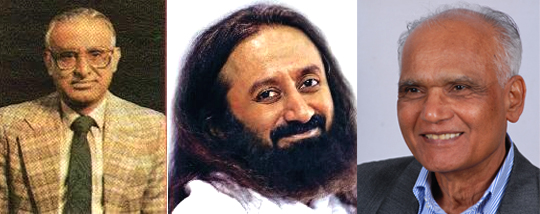
Bengaluru, Jan 26: Eleven personalities from across disciplines, including a few controversial figures, have been chosen from Karnataka for the prestigious Padma awards. Of them only three were shortlisted from a list of names the Siddaramaiah government had sent to a high-level screening committee. Eight other personalities including Shri Shri Ravishankar and controversial writer SL Bhyrappa have been chosen for the award without recommendation from the State.

padmaaward

Hindustani classical singer Venkatesh Kumar, ophthalmologist M M Joshi and Madhu Pandit Dasa from Iskcon were picked from a list of 30 names sent by the State to the awards screening committee, which identified others from Karnataka taking into consideration their contribution to various fields.

Though selecting names from the list sent by a state is not mandatory for the panel, the Central government this time was very selective in identifying personalities for the top award.

A high-level panel headed by the Union Home secretary shortlists the names. The panel, which also has members comprising officials and well-known personalities from different fields, sends the shortlisted names to the intelligence agency for vetting, following which it is sent to the prime minister for his view. After taking the prime minister’s opinion, the same is sent to President of India for final approval.

The Karnataka government had recommended two names for Padma Vibhushan, nine for Padma Bhushan and 19 for Padma Shri awards.

Former scientific adviser to the Defence Minister, Vasudev Kalkunte Aatre (Science and Engineering), and Art of Living founder Shri Shri Ravishankar (Spiritualism) were chosen for the Padma Vibhushan.

The nine who have been honoured with the Padma Shri are: S.L. Bhyrappa (Literature), M.M. Joshi (Medicine-Ophthalmology), John Ebnezar (Medicine-Orthopaedic Surgery), H.R. Nagendra (Yoga), Mylswamy Annadurai (Science and Engineering), Dipankar Chatterji (Science and Engineering), and M. Pandit Dasa (Social Work). Renowned Telugu film-maker S.S. Rajamouli, hailing from Raichur, also figures on the Karnataka list.

Comments

Abu Muhammad
 - 
Tuesday, 26 Jan 2016

Ravishankar for Land grabbing and Art of Cheating, Bhyrappa for distributing RSS leaflets, Anupam Kher for his suicidal lies and comedy and the list is endless... Why Adityanath, Sadhvi, Singh, Yogi, Muthalik, Thogadia left out? May be Bharat Ratna? Selection of the Millennium!!!

Add new comment

  • Coastaldigest.com reserves the right to delete or block any comments.
  • Coastaldigset.com is not responsible for its readers’ comments.
  • Comments that are abusive, incendiary or irrelevant are strictly prohibited.
  • Please use a genuine email ID and provide your name to avoid reject.
News Network
July 10,2020

Mysuru, Jul 9: The renowned Mysore Palace has been closed on Thursday after a relative of an employee at the palace was tested COVID-19 positive, an official said.

The palace has been closed for the visitors in the view of rising COVID-19 cases. Authorities have decided to re-open the palace on Monday.

Earlier the Palace was closed for tourists for a week from March 15 to 22, in the wake of the coronavirus outbreak, Mysore Palace committee said.

According to the Union Health Ministry, Karnataka has reported 28,877 COVID-19 positive cases including 16,531 active, 11,876 cured/discharged/migrated while 470 succumbed to the virus.

Comments

Add new comment

  • Coastaldigest.com reserves the right to delete or block any comments.
  • Coastaldigset.com is not responsible for its readers’ comments.
  • Comments that are abusive, incendiary or irrelevant are strictly prohibited.
  • Please use a genuine email ID and provide your name to avoid reject.
Media Release
February 14,2020

Veteran journalist P. Sainath has said that the nation is in a crisis. And this crisis is not limited to just the rural area. It has become a national crisis at various areas such as agriculture, education, economy, job creation etc.

He was delivering the endowment lecture on the topic ‘Indian democracy at the post-liberalization and post-truth era’ at Media Manthan 2020 organized by the PG department of journalism and mass communication at St Aloysius College (Autonomous). 

Mr Sainath said that the many policies adopted in the 90s led to India becoming unusually unequal. Referring to the speech Ambedkar had made at the Constituent Assembly while handing over the draft of the Constitution, Mr Sainath said, “Ambedkar had warned about the weakness of Indian democracy that liberty without equality allows the supremacy of a few over the multitude. Liberty, equality and fraternity must be kept together as we cannot have one without the other.” 

Mr Sainath stated that the agrarian crisis was no longer about the loss of productivity, employment or about farmer suicide; it was a societal, civilizational crisis. Commenting on the lopsided policies such as cow-slaughter ban, he explained how cow slaughter ban had adversely affected many industries due to their interdependency. While Muslims who slaughtered cows were rendered helpless, the cattle traders who were mostly OBCs lost their earnings as the cattle prices crashed. An important industry like Kolhapur sandals industry in Maharashtra went bankrupt as a result of the cow slaughter ban in Maharashtra. He said the policymakers had no idea how the rural industries were interconnected. Demonetisation too devastated the rural economy as 98 percent of rural transactions happen through cash. 

Mr Sainath also spoke about the crisis of inequality which affects the Dalits and the Adivasis far more than anyone else as 90 percent of the rural households take home less than Rs 10,000/- per month. “Women are yet another group whose labour is never counted in the gross domestic product. Women and girls globally do unpaid work which amounts to about 12.5 billion working hours per year. Monetarily speaking, this is worth 10.8 trillion dollars,” Mr Sainath added. 

Speaking about the crisis of jobs Mr Sainath said that major companies were laying off employees just to create more profits for the investors and the adoption of artificial intelligence in the industry would further destroy millions of jobs.

Rector of St Aloysius College Institutions Fr Dionysius Vaz SJ, Principal Dr (Fr) Praveen Martis SJ, HOD of Journalism and Mass Communication department Dr (Fr) Melwyn Pinto SJ were present.

‘Veerappan and Vijay Mallya’s business models are interesting!’

Addressing the gathering during his endowment lecture on Friday, Mr Sainath made an interesting comment on the so called ‘revenue model’. “Whenever I visit IIMs and IITs for lectures on my PARI project, the students there ask me what my revenue model for my project is. I tell them that I do not have a revenue model. In fact, journalism does not begin with a revenue model. Gandhiji, Ambedkar, Bhagat Singh were all great journalists. But they did not have a revenue model,” Mr Sainath said.

On a lighter note, he said that the best revenue model that he liked was that of forest brigand Veerappan and liquor baron Vijay Mallya. “Veerappan ruled the forest for forty years and from the top ministers to the villagers he could dictate terms and liver royally. Similarly, Mallya’s revenue model was to steal the banks and run away abroad and live like a king,” Mr Sainath added.

Journalism is not and can never be a business. It is a calling, he opined. While newspaper can be a business, television can be a business, journalism per se cannot be reduced to a business. “Unfortunately today, journalists are recruited on a contract basis and they have no bargaining power; and there are no unions to fight for their cause. Hence, they are at the mercy of the corporate media houses for their survival and are made to write stories that cannot be called journalism,” Mr Sainath said.

Answering a question as to the pressures he faced as a journalist, he said that external pressures from the government or others could be very well handled. It is the internal pressures from once own media house that journalists find it difficult to manage.


 

Comments

Add new comment

  • Coastaldigest.com reserves the right to delete or block any comments.
  • Coastaldigset.com is not responsible for its readers’ comments.
  • Comments that are abusive, incendiary or irrelevant are strictly prohibited.
  • Please use a genuine email ID and provide your name to avoid reject.
coastaldigest.com news network
May 31,2020

Bengaluru, May 31: With places of worship expected to reopen on June 8, the Karnataka State Minorities Commission has released guidelines for mosques and dargahs, that include social distancing, temperature testing and compulsory hand washing.

Abdul Azeem, commission chairman said, "Everyone will have to maintain one-metre distance and carry their prayer mats. They will all be scanned and Farz prayers will be held for 10-15 minutes. Friday prayers should be completed within 20 minutes."

Distribution of tabarukh, shaking hands, and overcrowding inside mosques will not be allowed.  The Muzrai department also issued guidelines for temples, like mandatory face masks, sanitisation of sanctum sanctorum and thermal screening.

In a letter, the Hindu Religious Institutions and Charitable Endowment Department mentioned that while temple authorities and devotees should wear masks, priests, helpers and workers are exempt, in the core area of the temple.

"Devotees should be scanned using infrared thermometers at the temple entrance, and must be given hand sanitiser. The temple trust is expected to bear the expenses," it added.

Comments

Add new comment

  • Coastaldigest.com reserves the right to delete or block any comments.
  • Coastaldigset.com is not responsible for its readers’ comments.
  • Comments that are abusive, incendiary or irrelevant are strictly prohibited.
  • Please use a genuine email ID and provide your name to avoid reject.