


Karnataka's new anti-superstition Bill proposes to ban 23 ugly practices

July 9, 2016

Bengaluru, Jul 9: The new version of an anti-superstition Bill?proposes to ban 23 practices, including human torture in the name of rituals and display of miracles' to earn money.
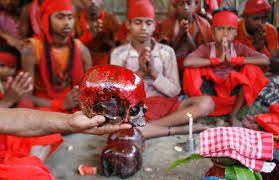
1uglyThe draft Karnataka Prevention and Eradication of Human Sacrifices and other Inhuman Evil and Aghori Practices and Black Magic Bill-2016 is a modified version of the Karnataka Prevention of Superstitious Practices Bill-2013.

The copy of the Bill was circulated at the state Cabinet meeting on Friday.

The Bill will be debated in the next Cabinet meeting, too, and introduced in the ongoing legislature session, according to Law Minister T?B Jayachandra.

The 2013 Bill had met with resistance from various quarters as it proposed to ban numerology, astrology among others, and was referred to the scrutiny committee for modification. The 2016 Bill is yet to be made public.

According to sources, it lists out practices which are proposed to be banned and those which will not apply under the provisions of the Bill. (See chart) Besides social evils like human sacrifice and Aghori, the Bill proposes to ban made snana', the practice of people rolling over leftovers after Brahmins have partaken food in temples; and fire-walking, the act of walking barefoot on redhot embers, which is a common practice in Karnataka.

Unhealthy rituals

Human sacrifice; propagation of human sacrifice

Practices like made snana', fire-walking, banamati', bettale seve'

Torture in the name of exorcism

Display of miracles to earn money or terrorise people

Inhuman, evil and Aghori practices which endanger life

Practice of black magic in search of precious things

Creating fear in others by claiming to have supernatural powers

Creating panic by threatening to invoke ghosts

It won't apply to...

Worship

Teaching of ancient and traditional learning

Performance of prayers

All religious celebrations

Piercing of ears, nose in accordance with religious rituals

Advice of vastu shastra', astrology and advice with regard to source of groundwater

Comments

Rajesh Sequira
 - 
Saturday, 9 Jul 2016

How can they pass this bill? Hindu religion is based on superstitions and the brahmins are preying upon the fears created on the lower classes.

Ahmed Ali K
 - 
Saturday, 9 Jul 2016

Please also add in the ban list - worshipping dead.

Add new comment

  • Coastaldigest.com reserves the right to delete or block any comments.
  • Coastaldigset.com is not responsible for its readers’ comments.
  • Comments that are abusive, incendiary or irrelevant are strictly prohibited.
  • Please use a genuine email ID and provide your name to avoid reject.
News Network
June 3,2020

Bengaluru, Jun 3: Lack of awareness on rail travel norms led to a tense situation on a Karnataka train as a female passenger was forced to disembark midway after her fellow passengers raised a hue and cry on seeing her knuckle stamped, mistaking it for a quarantine stamp, an official said on Tuesday.

"Many passengers on the train with the woman raised a hue and cry on seeing her stamped and complained to the TTE. She was later disembarked at Tumkur," a South Western Railway (SWR) zone official said.

The woman was travelling from Bengaluru to Belagavi as a transit passenger. Her status as such a passenger was stamped on her knuckle.

However, after some time, her fellow passengers observed her stamped hand and misunderstood that she was violating the quarantine norms.

Without realising that she was just a transit passenger who will be quarantined on reaching her destination, they created pandemonium and complained to the travelling ticket inspector.

"Following the public pressure, she was forcibly disembarked in Tumkur station," said the official.

Incidentally, the railways allows transit passengers to travel.

The official said the TTE would not have been aware of the rules and must have yielded to the passengers' pressure.

Later, the woman was allowed to board another train and reach her destination, the official said.

Comments

Add new comment

  • Coastaldigest.com reserves the right to delete or block any comments.
  • Coastaldigset.com is not responsible for its readers’ comments.
  • Comments that are abusive, incendiary or irrelevant are strictly prohibited.
  • Please use a genuine email ID and provide your name to avoid reject.
News Network
June 15,2020

Bengaluru, Jun 15: As the central government has not allowed reopening of gyms in the country amid COVID-19 pandemic, many gymnasiums in Bengaluru are on the verge of closing or sale.

Rakshith Gowda, a gym owner and secretary of gym owners association told ANI that they are not even able to pay rent of the premises which is Rs 60,000 to 1 lakh per month.

"The condition of the owners of the gym have worsened. We have to pay a minimum of Rs 60,000 - 100,000 rent of the building and for past 4 months we couldn't pay the rent, salary to trainers and cleaners, EMI," Gowda said.

"I urge the government to take necessary steps to bring up the gym sector as they have allowed opening up of shops, temples, malls. We urge the government to take proper steps in the interest of gyms," added Gowda.

Mahesh, a gymer said that he had to participate in a competition and due to lockdown he could not work on his bodybuilding.

"I was building my body for one year and due to lockdown I couldn't do the workout, I had to take part in a competition, now I need at least another one year to build my body back," Mahesh said.

Prasad, international bodybuilder said, "Most of the bodybuilders and gym owners are running gyms by taking loans, they are not in the situation to pay their loan EMIs."

"It's very important for us to reopen gyms and run them with all precautions and guidelines but the government is not allowing us to pay our loans and many gym owners and trainers are facing a tough time to earn living. We have requested Deputy Chief Minister Govind Karjol and cabinet ministers to allow us to open, but the government hasn't taken the decision in the interest of gyms which is creating more problems for us," Prasad said.

Comments

Add new comment

  • Coastaldigest.com reserves the right to delete or block any comments.
  • Coastaldigset.com is not responsible for its readers’ comments.
  • Comments that are abusive, incendiary or irrelevant are strictly prohibited.
  • Please use a genuine email ID and provide your name to avoid reject.
Agencies
May 8,2020

Washington D.C., May 8: The prime time for brain development in a child's life is the first year, where the infant spends most of the time asleep. It is the time when neural connections form and sensory memories are encoded.

However, when sleep is disrupted, as occurs more often among children with autism, brain development may be affected, too.

New research led by the University of Washington finds that sleep problems in a baby's first 12 months may not only precede an autism diagnosis but also may be associated with altered growth trajectory in a key part of the brain, the hippocampus.

The study, which was published in the American Journal of Psychiatry, researchers report that in a sample of more than 400 taken of 6- to 12-month-old infants, those who were later diagnosed with autism were more likely to have had difficulty falling asleep.

It also states that this sleep difficulty was associated with altered growth trajectories in the hippocampus.

"The hippocampus is critical for learning and memory, and changes in the size of the hippocampus have been associated with poor sleep in adults and older children.

As many as 80 per cent of the children with autism spectrum disorder have sleep problems," said Annette Estes, director of the UW Autism Center and senior author of the study.

"In our clinical experience, parents have a lot of concerns about their children's sleep, and in our work on early autism intervention, we observed that sleep problems were holding children and families back," added Estes, who is also a UW professor of speech and hearing sciences.

"It could be that altered sleep is part-and-parcel of autism for some children. One clue is that behavioural interventions to improve sleep don't work for all children with autism, even when their parents are doing everything just right. This suggests that there may be a biological component to sleep problems for some children with autism," said Estes.

To consider links among sleep, brain development, and autism, researchers at the IBIS Network looked at MRI scans of 432 infants, surveyed parents about sleep patterns, and measured cognitive functioning using a standardized assessment.

At the outset of the study, infants were classified according to their risk for developing autism: Those who were at higher risk of developing autism -- about two-thirds of the study sample -- had an older sibling who had already been diagnosed.

Infant siblings of children with autism have a 20 per cent chance of developing autism spectrum disorder -- a much higher risk than children in the general population.

In the current study, 127 of the 432 infants were identified as "low risk" at the time the MRI scans were taken because they had no family history of autism.

They later evaluated all the participants at 24 months of age to determine whether they had developed autism. Of the roughly 300 children originally considered "high familial risk," 71 were diagnosed with autism spectrum disorder at that age.

Problems with sleep were more common among the infants later diagnosed with an autism spectrum disorder, as were larger hippocampi. No other subcortical brain structures were affected, including the amygdala, which is responsible for certain emotions and aspects of memory, or the thalamus, a signal transmitter from the spinal cord to the cerebral cortex.

The authors note that while parents reported more sleep difficulties among infants who developed autism compared to those who did not, the differences were very subtle and only observed when looking at group averages across hundreds of infants.

Sleep patterns in the first years of life change rapidly as infants transition from sleeping around the clock to a more adult-like sleep/wake cycle. Until further research is completed, Estes said, it is not possible to interpret challenges with sleep as an early sign of increased risk for autism.

Comments

Add new comment

  • Coastaldigest.com reserves the right to delete or block any comments.
  • Coastaldigset.com is not responsible for its readers’ comments.
  • Comments that are abusive, incendiary or irrelevant are strictly prohibited.
  • Please use a genuine email ID and provide your name to avoid reject.