



Karnataka's new anti-superstition Bill proposes to ban 23 ugly practices

July 9, 2016

Bengaluru, Jul 9: The new version of an anti-superstition Bill?proposes to ban 23 practices, including human torture in the name of rituals and display of miracles' to earn money.
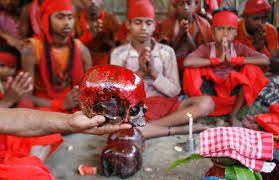
1uglyThe draft Karnataka Prevention and Eradication of Human Sacrifices and other Inhuman Evil and Aghori Practices and Black Magic Bill-2016 is a modified version of the Karnataka Prevention of Superstitious Practices Bill-2013.

The copy of the Bill was circulated at the state Cabinet meeting on Friday.

The Bill will be debated in the next Cabinet meeting, too, and introduced in the ongoing legislature session, according to Law Minister T?B Jayachandra.

The 2013 Bill had met with resistance from various quarters as it proposed to ban numerology, astrology among others, and was referred to the scrutiny committee for modification. The 2016 Bill is yet to be made public.

According to sources, it lists out practices which are proposed to be banned and those which will not apply under the provisions of the Bill. (See chart) Besides social evils like human sacrifice and Aghori, the Bill proposes to ban made snana', the practice of people rolling over leftovers after Brahmins have partaken food in temples; and fire-walking, the act of walking barefoot on redhot embers, which is a common practice in Karnataka.

Unhealthy rituals

Human sacrifice; propagation of human sacrifice

Practices like made snana', fire-walking, banamati', bettale seve'

Torture in the name of exorcism

Display of miracles to earn money or terrorise people

Inhuman, evil and Aghori practices which endanger life

Practice of black magic in search of precious things

Creating fear in others by claiming to have supernatural powers

Creating panic by threatening to invoke ghosts

It won't apply to...

Worship

Teaching of ancient and traditional learning

Performance of prayers

All religious celebrations

Piercing of ears, nose in accordance with religious rituals

Advice of vastu shastra', astrology and advice with regard to source of groundwater

Comments

Rajesh Sequira
 - 
Saturday, 9 Jul 2016

How can they pass this bill? Hindu religion is based on superstitions and the brahmins are preying upon the fears created on the lower classes.

Ahmed Ali K
 - 
Saturday, 9 Jul 2016

Please also add in the ban list - worshipping dead.

Add new comment

  • Coastaldigest.com reserves the right to delete or block any comments.
  • Coastaldigset.com is not responsible for its readers’ comments.
  • Comments that are abusive, incendiary or irrelevant are strictly prohibited.
  • Please use a genuine email ID and provide your name to avoid reject.
News Network
May 19,2020

Saharanpur (Uttar Pradesh), May 19: Islamic seminary Darul Uloom Deoband has issued a fatwa asking Muslims to offer their Eid prayers this time at home, instead of congregating at mosques.

The directive comes amid a nationwide lockdown to slow down the spread of coronavirus.

Despite the relaxations announced in the lockdown, religious and other large gatherings are still banned.

The fatwa was issued in response to a query put to the seminary, its spokesman Ashraf Usmani said.

The fatwa said the Eid namaz can be offered in the same manner that the Friday prayers are now being read at home.

It said not holding the namaz in the usual manner is pardonable in circumstances such as these.

Comments

Add new comment

  • Coastaldigest.com reserves the right to delete or block any comments.
  • Coastaldigset.com is not responsible for its readers’ comments.
  • Comments that are abusive, incendiary or irrelevant are strictly prohibited.
  • Please use a genuine email ID and provide your name to avoid reject.
News Network
March 11,2020

Bengaluru, Mar 11: With the outbreak of coronavirus, Chief Minister BS Yediyurappa on Tuesday said that over 1,000 people in the state have been identified for observation.

"So far, 1048 people have been identified for observation. Out of which 446 samples have been sent for testing. 389 samples have tested negative. Four samples have tested positive," Chief Minister Yediyurappa told reporters.

Earlier today, Health Minister B Sriramulu said that family members of those who tested positive for COVID-19 have been isolated and their health is being monitored.

Comments

Add new comment

  • Coastaldigest.com reserves the right to delete or block any comments.
  • Coastaldigset.com is not responsible for its readers’ comments.
  • Comments that are abusive, incendiary or irrelevant are strictly prohibited.
  • Please use a genuine email ID and provide your name to avoid reject.
News Network
January 29,2020

Newsroom, Jan 29: Karnataka’s capital has earned the unwelcome distinction of global capital of traffic congestion. According to a report by TomTom, the Netherlands-based global provider of navigation, traffic and map products, Bengaluru beat 415 other cities across 57 countries to earn the title of world's most traffic congested city in 2019.

“Bengaluru takes the top spot this year with drivers in the southern Indian city expecting to spend an average of 71% extra travel time stuck in traffic," TomTom said in the ninth edition of its annual Traffic Index.

Three other Indian cities, namely, Mumbai, Pune and New Delhi are also ranked in the 2019 edition of TomTom’s Traffic Index of the world’s most traffic-congested cities. 

The report released on Tuesday ranks cities by the average time added to a trip. TomTom index also includes details on when congestion is heaviest and lightest, how highways compare with surface streets, and how much time drivers wasted waiting for other drivers to get out of their way.

Following closely on the heels of Bengaluru is Manila, Philippines, with the similar 71% traffic congestion. Among the top five worst traffic affected cities are Mumbai and Pune from India at the fourth and fifth place respectively, while Bogota, Colombia is on third spot.

Delhi, the national capital of India is on the 8th spot, while Moscow (Russia), Lima (Peru), Istanbul (Turkey) and Jakarta (Indonesia) are on 6th, 7th, 9th and 10th spot respectively.

Mumbai recorded a 65% traffic congestion with 9th September, 2019 being the worst day. On an average, a Mumbaikar lost 209 hours in traffic congestion. Pune has 59% traffic congestion with 2nd August, 2019 being the worst day. 193 hours are lost due to congestion. Delhi, on the other hand, has 56% traffic congestion. 23rd October, 2019 was the worst day, while 190 hours are lost in traffic congestion.

Interestingly, among all the four Indian cities, Delhi has the most number of cars. Previous studies have concluded that Delhi has the best road conditions among the Metro cities of India.

If you are wondering what exactly the percentages mean, a 53% congestion level in Bangkok, for example, means that a trip will take 53% more time than it would during Bangkok’s baseline uncongested conditions.

TomTom calculates the baseline per city by analyzing free-flow travel times of all vehicles on the entire road network – recorded 24/7, 365 days a year. The report by Dutch navigation and mapping company ranks cities by the average time added to a trip. It also includes details on when congestion is heaviest and lightest, and how much time drivers wasted waiting for other drivers to get out of their way.

Comments

Add new comment

  • Coastaldigest.com reserves the right to delete or block any comments.
  • Coastaldigset.com is not responsible for its readers’ comments.
  • Comments that are abusive, incendiary or irrelevant are strictly prohibited.
  • Please use a genuine email ID and provide your name to avoid reject.