



Karnataka's new anti-superstition Bill proposes to ban 23 ugly practices

July 9, 2016

Bengaluru, Jul 9: The new version of an anti-superstition Bill?proposes to ban 23 practices, including human torture in the name of rituals and display of miracles' to earn money.
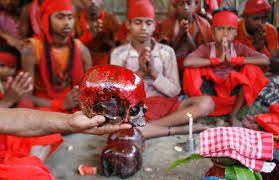
1uglyThe draft Karnataka Prevention and Eradication of Human Sacrifices and other Inhuman Evil and Aghori Practices and Black Magic Bill-2016 is a modified version of the Karnataka Prevention of Superstitious Practices Bill-2013.

The copy of the Bill was circulated at the state Cabinet meeting on Friday.

The Bill will be debated in the next Cabinet meeting, too, and introduced in the ongoing legislature session, according to Law Minister T?B Jayachandra.

The 2013 Bill had met with resistance from various quarters as it proposed to ban numerology, astrology among others, and was referred to the scrutiny committee for modification. The 2016 Bill is yet to be made public.

According to sources, it lists out practices which are proposed to be banned and those which will not apply under the provisions of the Bill. (See chart) Besides social evils like human sacrifice and Aghori, the Bill proposes to ban made snana', the practice of people rolling over leftovers after Brahmins have partaken food in temples; and fire-walking, the act of walking barefoot on redhot embers, which is a common practice in Karnataka.

Unhealthy rituals

Human sacrifice; propagation of human sacrifice

Practices like made snana', fire-walking, banamati', bettale seve'

Torture in the name of exorcism

Display of miracles to earn money or terrorise people

Inhuman, evil and Aghori practices which endanger life

Practice of black magic in search of precious things

Creating fear in others by claiming to have supernatural powers

Creating panic by threatening to invoke ghosts

It won't apply to...

Worship

Teaching of ancient and traditional learning

Performance of prayers

All religious celebrations

Piercing of ears, nose in accordance with religious rituals

Advice of vastu shastra', astrology and advice with regard to source of groundwater

Comments

Rajesh Sequira
 - 
Saturday, 9 Jul 2016

How can they pass this bill? Hindu religion is based on superstitions and the brahmins are preying upon the fears created on the lower classes.

Ahmed Ali K
 - 
Saturday, 9 Jul 2016

Please also add in the ban list - worshipping dead.

Add new comment

  • Coastaldigest.com reserves the right to delete or block any comments.
  • Coastaldigset.com is not responsible for its readers’ comments.
  • Comments that are abusive, incendiary or irrelevant are strictly prohibited.
  • Please use a genuine email ID and provide your name to avoid reject.
News Network
April 16,2020

Mangaluru, Apr 16: An old refrigerator has been turned into a "disinfection chamber" by researchers who are striving to come up with solutions to tackle the spread of coronavirus.

Dr Arun M Isloor, head of Chemistry Department, National Institute of Technology Karnataka (NITK), Surathkal, along with research scholar Syed Ibrahim has come up with the device which can disinfect items kept inside it.

"We have named this as ZERO-COV," Dr Isloor said.

He says the device ensures 99.9 per cent destruction of microorganisms present on the surface of items.

"We can keep items like vegetables, currency notes, books or envelopes inside the chamber. Switching on the chamber for 15 minutes ensures 99.9 per cent destruction of microorganisms present in the surface of the items," Dr Isloor added.

Comments

Add new comment

  • Coastaldigest.com reserves the right to delete or block any comments.
  • Coastaldigset.com is not responsible for its readers’ comments.
  • Comments that are abusive, incendiary or irrelevant are strictly prohibited.
  • Please use a genuine email ID and provide your name to avoid reject.
News Network
February 24,2020

Bengaluru, Feb 24: Census authorities in Karnataka have requested deputy commissioners in the state’s districts to hold outreach and awareness campaigns about the National Population Register (NPR), as they fear misgivings about the exercise could hurt the forthcoming enumeration of population.

The house-listing phase of the Census and updating of NPR will be rolled out simultaneously by mid-April in the BJP-ruled state.

About 1,50,000 enumerators will handle the massive exercise.

Officials believe widespread awareness will help address concerns about the NPR data-gathering process and make people cooperate with enumerators when they visit houses for both NPR and census work.

“Sensing the kind of questions that enumerators may face when they do house visits, in all video conferences with deputy commissioners of districts, we have requested to establish contact with local representatives,” SB Vijay Kumar, director of Census Operations in Karnataka told news agency. “We have asked them to organise outreach programmes to ensure that people’s doubts are resolved before the information gathering work begins,” he added.

Census operations are handled by the Union home ministry. Several district officials are said to have raised concerns about the possibility of people refusing to share information when the work on the census and NPR begins in two months. This would affect the quality of the census work, making the exercise incomplete.

news channel earlier reported that people in parts of Karnataka had declined to share personal information with officials visiting households in connection with government programmes, suspecting them of gathering data for the yet-to-be unveiled National Register of Citizens, following enactment of the Citizenship Amendment Act (CAA) recently.

Kumar said district authorities will train and sensitise enumerators to tread carefully while gathering information. Enumerators will be told not to demand information but seek it gently.

“We will tell enumerators to proactively engage with people. For instance, if an old man in a village does not know his exact date or place of birth, the enumerator may engage in a conversation with the person that may elicit some anecdotes and roughly establish the year and the place of birth,” the census director said.

As of now, the NPR questionnaire has 21queries, but officials say it has not yet been finalised.

With most of the census and NPR data gathering and storage happening digitally this time, the challenge before census officials is to convince people that the data would remain safe.

“Individual data is sealed and all that we can see is collective data. The information is consolidated and tailor-made. We are telling district officials to create awareness about data safety as well,” Kumar said.

Comments

Add new comment

  • Coastaldigest.com reserves the right to delete or block any comments.
  • Coastaldigset.com is not responsible for its readers’ comments.
  • Comments that are abusive, incendiary or irrelevant are strictly prohibited.
  • Please use a genuine email ID and provide your name to avoid reject.
News Network
July 17,2020

Bengaluru, July 17: The government of Karnataka has decided to issue caste and income certificates to Brahmins in the state to reduce the socio-economic inequality faced by the community.

“A notification has been issued to tehsildars in all 30 districts to issue caste and income certificates to Brahmins so that they can also benefit from the government schemes and scholarships,” a Revenue Department official told said.

The notification comes a month after the Karnataka State Brahmin Development Board on June 10 appealed to Chief Minister B.S. Yediyurappa to issue the certificates to the traditionally dominant community, which accounts for 3 per cent of the 7 crore state population.

“Though Brahmins are in ‘minority’ in terms of their population across the state, they need caste and income certificates to benefit from the welfare schemes meant for the economic weaker sections such as SC, ST and OBC groups,” the official said.

The board was set up in March 2019 as a state-run company with Rs 5 crore authorised capital and Rs 5 crore equity and is registered with the Registrar of Companies.

The notification was issued to the local bodies and taluk offices after several members of the community complained to state Revenue Minister R. Ashoka that they were unable to benefit from the welfare schemes in the absence of the certificates.

The certificates will also help students from the community to avail scholarships for higher studies from the state-funded board if their gross annual family income is less than Rs 8 lakh per year.

The board has also urged the state government to implement the 10 per cent quota for its community members under the economically weaker sections, as applicable for Central government jobs and admissions to central institutions.

Noting that every community has people who are forward and backward economically for various reasons, including historical, the official said the board would be empowered to serve the Brahmins.

“The board will provide interest-free loans to the financially weaker sections of the community,” said its Chairman H.S. Sachidananda Murthy.

Comments

Add new comment

  • Coastaldigest.com reserves the right to delete or block any comments.
  • Coastaldigset.com is not responsible for its readers’ comments.
  • Comments that are abusive, incendiary or irrelevant are strictly prohibited.
  • Please use a genuine email ID and provide your name to avoid reject.