Kasaragod: Undocumented expat worker returns from Bahrain after 38 years

[email protected] (CD Network)
January 10, 2016

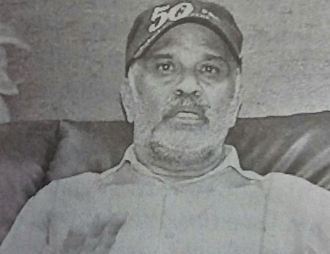
Kasaragod, Jan 10: Nearly four decades after he left Kasaragod and landed in Gulf, he could not return home till last week. 54-year-old Alambadu Balakrishnan who spent 38 years in Bahrain as an undocumented migrant worker returned home last Saturday under a six-month public amnesty for undocumented workers in Bahrain that ended on December 31, 2015.

balakrishnaBalakrishnan, who has been doing mundane jobs, did not go home even once as he was stuck without a passport and suffered from depression following the death of his mother and brother in the past.

Alambadu Balakrishnan, who hails from Kanjangadu, Madikkai in Kasargod, Kerala, was brought to Bahrain by his elder brother Kannan, who later fell sick due to cancer and returned home for treatment. His younger brother Kelu, too was in Bahrain, but he lost his job, leaving the responsibility of repatriating him to Balakrishnan.

“He used to send money to his mother till her death three years ago. When his friends visited Kerala, he used to send blankets and other gifts for his mother. He spoke for about one hour when his mother died and after three hours, he got another phone call informing about the death of his elder brother,” a Malayalam language has reported.

Balakrishnan’s ambition on returning home is to build a house and if anyone is ready to be his life partner at this age, he wishes to get married.

Over 42,000 expatriate workers in Bahrain benefited from the six-month general amnesty for workers staying in Bahrain illegally, the CEO of the Labour Market Regulatory Authority Ausamah Abdullah Al Absi has said. Bangladeshis, Indians and Pakistanis were the most beneficiaries of the amnesty.

Comments

Mohan
 - 
Sunday, 10 Jan 2016

we should blame our country for this injustice act,

jeevan
 - 
Sunday, 10 Jan 2016

lucky man finally get to his country

Mehaboob khan
 - 
Sunday, 10 Jan 2016

we should be thankful to saudi govt.

Add new comment

  • Coastaldigest.com reserves the right to delete or block any comments.
  • Coastaldigset.com is not responsible for its readers’ comments.
  • Comments that are abusive, incendiary or irrelevant are strictly prohibited.
  • Please use a genuine email ID and provide your name to avoid reject.
News Network
April 30,2020

Bengaluru, Apr 30: Chief Minister B S Yediyurappa, has directed the Bengaluru City Police to return all the vehicles, which were seized during the Coronavirus Lockdown period, for having flouted rules.

The City Police Commissioner, Bhaskar Rao, informed that it was decided to return the seized vehicles to the owners, after verifying documents.

He said that the vehicles had been seized while enforcing strict guidelines, issued to prevent the spread of the COVID-19 virus, in the city.

Comments

Add new comment

  • Coastaldigest.com reserves the right to delete or block any comments.
  • Coastaldigset.com is not responsible for its readers’ comments.
  • Comments that are abusive, incendiary or irrelevant are strictly prohibited.
  • Please use a genuine email ID and provide your name to avoid reject.
News Network
May 6,2020

Mysuru, May 6: A seven-months pregnant woman fled Covid-19 hotspot Mumbai along with her family, and made it to her village 1000 km away in KR Pet taluka in Mandya district of Karnataka, flashing her mother's ID card at each checkpost. After reaching her destination, she got herself tested for Covid-19.

She tested positive for the virus on Monday in Mandya.

The 20-year-old woman (assigned the number P637) had been living with her husband and in-laws at Santa Cruz East, Agripada in Mumbai for the past three years. To get out of the containment zone, they started out from Mumbai at 7.30 pm on April 23 -- she, her husband, brother-in-law, co-sister and their children, and a 19-year-old girl. She made it past checkposts at Belagavi, Hubballi, Davanagere, Kadur, Arasikere, Channarayapatna and Shravanabelagola and reached her village Jaaginakere at 3 pm on April 24.

She stayed at her home in the village from 24 April to April 29. With the Mandya district administration testing people on a campaign mode in the entire district, she and her family got themselves tested on May 1.

Her test returned positive on May 4, according to deputy commissioner M V Venkatesh.

Along with her, the 19-year-old girl (P638) who travelled with the family also tested positive. The girl is in the sixth semester of her BE Electronics course at an engineering college in Mumbai.

This is not the first case of a corona fugitive from Mumbai. Earlier, a 50-year-old man who ran a hotel in Mumbai travelled in a vehicle carrying dates and reached Channarayapatna in Hassan district.

In fact there have been three such incidents, including that of seven people coming to Mandya from Mumbai transporting a dead man's body for cremation in his native village of B Kodagalli in Pandavapura taluk.

Mandya deputy commissioner Dr Venkatesh has appealed to natives of Mandya who are stuck in Mumbai to stay there till the Covid situation comes to control.

So far 28 people in Mandya diatrict have tested positive for Covid 19. Seven people have been discharged. Currently there are 21 active cases being treated at the Mandya Institute of Medical Sciences.

Comments

Add new comment

  • Coastaldigest.com reserves the right to delete or block any comments.
  • Coastaldigset.com is not responsible for its readers’ comments.
  • Comments that are abusive, incendiary or irrelevant are strictly prohibited.
  • Please use a genuine email ID and provide your name to avoid reject.
Agencies
May 8,2020

Washington D.C., May 8: The prime time for brain development in a child's life is the first year, where the infant spends most of the time asleep. It is the time when neural connections form and sensory memories are encoded.

However, when sleep is disrupted, as occurs more often among children with autism, brain development may be affected, too.

New research led by the University of Washington finds that sleep problems in a baby's first 12 months may not only precede an autism diagnosis but also may be associated with altered growth trajectory in a key part of the brain, the hippocampus.

The study, which was published in the American Journal of Psychiatry, researchers report that in a sample of more than 400 taken of 6- to 12-month-old infants, those who were later diagnosed with autism were more likely to have had difficulty falling asleep.

It also states that this sleep difficulty was associated with altered growth trajectories in the hippocampus.

"The hippocampus is critical for learning and memory, and changes in the size of the hippocampus have been associated with poor sleep in adults and older children.

As many as 80 per cent of the children with autism spectrum disorder have sleep problems," said Annette Estes, director of the UW Autism Center and senior author of the study.

"In our clinical experience, parents have a lot of concerns about their children's sleep, and in our work on early autism intervention, we observed that sleep problems were holding children and families back," added Estes, who is also a UW professor of speech and hearing sciences.

"It could be that altered sleep is part-and-parcel of autism for some children. One clue is that behavioural interventions to improve sleep don't work for all children with autism, even when their parents are doing everything just right. This suggests that there may be a biological component to sleep problems for some children with autism," said Estes.

To consider links among sleep, brain development, and autism, researchers at the IBIS Network looked at MRI scans of 432 infants, surveyed parents about sleep patterns, and measured cognitive functioning using a standardized assessment.

At the outset of the study, infants were classified according to their risk for developing autism: Those who were at higher risk of developing autism -- about two-thirds of the study sample -- had an older sibling who had already been diagnosed.

Infant siblings of children with autism have a 20 per cent chance of developing autism spectrum disorder -- a much higher risk than children in the general population.

In the current study, 127 of the 432 infants were identified as "low risk" at the time the MRI scans were taken because they had no family history of autism.

They later evaluated all the participants at 24 months of age to determine whether they had developed autism. Of the roughly 300 children originally considered "high familial risk," 71 were diagnosed with autism spectrum disorder at that age.

Problems with sleep were more common among the infants later diagnosed with an autism spectrum disorder, as were larger hippocampi. No other subcortical brain structures were affected, including the amygdala, which is responsible for certain emotions and aspects of memory, or the thalamus, a signal transmitter from the spinal cord to the cerebral cortex.

The authors note that while parents reported more sleep difficulties among infants who developed autism compared to those who did not, the differences were very subtle and only observed when looking at group averages across hundreds of infants.

Sleep patterns in the first years of life change rapidly as infants transition from sleeping around the clock to a more adult-like sleep/wake cycle. Until further research is completed, Estes said, it is not possible to interpret challenges with sleep as an early sign of increased risk for autism.


Comments

Add new comment

  • Coastaldigest.com reserves the right to delete or block any comments.
  • Coastaldigset.com is not responsible for its readers’ comments.
  • Comments that are abusive, incendiary or irrelevant are strictly prohibited.
  • Please use a genuine email ID and provide your name to avoid reject.