Kasganj riots: Hindu youth was murdered by saffron activists!

News Network
February 4, 2018

Within days after a senior IAS officer virtually accused the saffron outfits of inciting communal tension in Uttar Pradesh, a senior Uttar Pradesh government official has revealed that Kasganj communal riot victim Chandan Gupta was killed by the saffron activists.

Rashmi Varun, Deputy Director in Statistics Department and currently posted at Saharanpur, also lent support to Raghavendra Vikram Singh, Bareilly District Magistrate, who had in a Facebook post said that the saffron outfits had taken out processions without permission in the Muslim-dominated areas and raised "anti-Pakistan" slogans.

"The boy (Chandan) was not killed by a second or third community...he was killed by saffron in the guise of white, saffron and green," she said in her Facebook post on Saturday.

Police have arrested two persons in connection with the killing.

Rashmi wrote that no "pro-Pakistan" slogans were raised at Kasganj nor was the "Tricolour procession" stopped on that day. "It (news to this effect) was the work of Whatsapp University," she said in a sarcastic vein referring to the rumours on the social media during the violence.

The official also supported the Bareilly DM's post and said that even a right person has to apologise after speaking the truth.

The Bareilly DM had in his post said that the saffron outfits were inciting communal tension. "It has become a fashion...take out forced processions in Muslim-dominated areas...shout anti-Pakistan slogans...are they (Muslims) Pakistanis?...the same thing had happened in Bareilly...there were stone-pelting and FIRs were lodged."

After the criticism by the BJP leaders, Singh had apologised for the post and deleted it.

Comments

abbu
 - 
Monday, 5 Feb 2018

hahahahaha for political profit they are killing hindu itself... may be after 5 years hindu youth population will be much  lesser than today.. there will be only RSS - Brahmins.. RSS / BJP never killed brahmins for any political gains.. they r killing other than brahmins.. which they dont care of thier lives... JAAGO JAAGO HINDU BROTHERS.. ANY TIME u will be get killed by BJP/RSS.

FairMan
 - 
Monday, 5 Feb 2018

India sold to Anti Nationals, Terrorist hand. These saffron terrorists have to be encountered.


Days are near to figtht for Freedom India from these saffron Terrorists

Add new comment

  • Coastaldigest.com reserves the right to delete or block any comments.
  • Coastaldigset.com is not responsible for its readers’ comments.
  • Comments that are abusive, incendiary or irrelevant are strictly prohibited.
  • Please use a genuine email ID and provide your name to avoid reject.
Agencies
June 4,2020

New Delhi, Jun 4: CSIR Director-General Shekhar Mande said on Thursday that the World Health Organisation's (WHO) decision to halt hydroxychloroquine (HCQ) drug trial was taken in haste and the global body should have actually analysed the data before making the decision.

"I firmly believe that WHO decision was taken in haste it was a kind of knee jerk reaction they should have actually analyse the data on their own before temporarily suspend the trials that is my personal opinion," Mande said.

India's nodal government agency ICMR (Indian Council of Medical Research) overseeing the country's response to the coronavirus pandemic last month wrote to the WHO citing differences in dosage standards between Indian and international trials that could explain the efficacy issues of HCQ in treating COVID-19 patients.

In addition, Dr Sheela Godbole, National Coordinator of the WHO-India Solidarity Trial and Head of the Division of Epidemiology, ICMR-National AIDS Research Institute also wrote a letter via an email to Dr Soumya Swaminathan, Chief Scientist at World Health Organisation.

In a letter, Dr Godbole stated: "There was no reason to suspend the trial for safety concern," attributing it to the current RECOVERY data which differs significantly from the non-randomised assessment by Mehra et al, a scientific paper.

Referring to the letter, the CSIR head said, "We don't know what actually happened behind the scenes but the hypothesis is that because of the paper published in Lancet. It is a very well known journal and if Lancet has done due vigilance in publishing the paper. 

Therefore, the WHO thought the paper's findings are right that's why WHO hold based on what is published on Lancet. The WHO shouldn't have accepted it immediately this should have taken their own due vigilance to find out that study is right or not."

DG CSIR said because there is a global outcry it must have put pressure on both Lancet as well as WHO and both of them now retracted from their original position. "WHO has started a trial again and Lancet has put an expression of concern on their website both of these are very welcome development for science," he said.

"So I am pretty sure that Lancet would have published the reports only after seeing somewhere the drug failed to work," Mande said.

Comments

Add new comment

  • Coastaldigest.com reserves the right to delete or block any comments.
  • Coastaldigset.com is not responsible for its readers’ comments.
  • Comments that are abusive, incendiary or irrelevant are strictly prohibited.
  • Please use a genuine email ID and provide your name to avoid reject.
News Network
July 27,2020

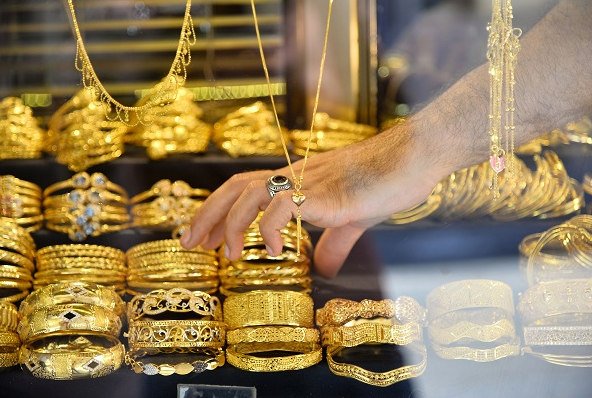
Tokyo, Jul 27: Gold hit an all-time high on Monday as tit-for-tat consulate closures in China and the United States rattled investors, boosting the allure of safe-haven assets, although sentiment was mixed with tech gains supporting some Asian stocks.

MSCI's ex-Japan Asia-Pacific index rose 1.3 percent as Taiwan's TSMC, Asia's third-largest company by market capitalisation, rose almost 10 percent.

The chipmaker's gains boosted other tech stocks in the region and came after rival Intel signalled it may give up manufacturing its own components due to delays in new 7-nanometer chip technology.

Also soothing sentiment, Chinese shares eked out gains after big falls late last week, with CSI300 index rising 0.5 percent.

S&P500 futures were last up 0.4 percent in choppy trade while Japan's Nikkei fell 0.5 percent, resuming trade after a long weekend and catching up with falls in global shares late last week.

Global shares had lost steam last week after Washington ordered China's consulate in Houston to close, prompting Beijing to react in kind by closing the US consulate in Chengdu.

US Secretary of State Mike Pompeo took fresh aim at China last week, saying Washington and its allies must use "more creative and assertive ways" to press the Chinese Communist Party to change its ways.

"US President (Donald) Trump used to say China's President Xi Jinping is a great leader. But now Pompeo's wording is becoming so aggressive that markets are starting to worry about further escalation," said Norihiro Fujito, chief investment strategist at Mitsubishi Securities.

Gold rose 1.0 percent to a record high of $1,920.9 per ounce, surpassing a peak touched in September 2011, as Sino-US tensions boosted the allure of safe-haven assets, especially those not tied to any specific country.

The yellow metal is also helped by aggressive monetary easing adopted by many central banks around the world since the pandemic plunged the global economy into a recession.

Some investors fret such an unprecedented level of money-printing could eventually lead to inflation.

MORE STIMULUS

Hopes of a quick US economic recovery are fading as coronavirus infections showed few signs of slowing.

That means the economy could capitulate without fresh support from the government, with some of earlier steps such as enhanced jobless benefits due to expire this month.

Investors hope US Congress will agree on a deal before its summer recess but there are some sticking points including the size of the stimulus and enhanced unemployment benefits.

US Treasury Secretary Steve Mnuchin said the package will contain extended unemployment benefits with 70 percent "wage replacement".

Democrats, who control the House of Representatives, want enhanced benefits of $600 per week to be extended and look to much bigger stimulus compared with the Republicans' $1 trillion plan.

Investors are looking to corporate earnings from around the world for hints on the pace of recovery in the global economy.

"It looks like rising coronavirus cases are starting to slow down recovery in many countries," said Masahiro Ichikawa, senior strategist at Sumitomo Mitsui DS Asset Management.

Concerns about the US economic outlook started to weigh on the dollar, reversing its inverse correlation with the economic well-being over the past few months.

The dollar index dropped 0.3 percent to its lowest level in nearly two years.

The euro gained 0.3 percent to $1.1693, hitting a 22-month high of $1.16590 as sentiment on the common currency improved after European leaders reached a deal on a recovery fund in a major step towards more fiscal co-operation.

Against the yen, the dollar slipped 0.5 percent to 105.605 yen, a four-month low while the British pound hit a 4 1/2-month high of $1.2832.

Oil prices dipped on worries about the worsening Sino-US relations.

Brent futures fell 0.46 percent to $43.14 per barrel while US crude futures lost 0.44 percent to $41.11.


Comments

Add new comment

  • Coastaldigest.com reserves the right to delete or block any comments.
  • Coastaldigset.com is not responsible for its readers’ comments.
  • Comments that are abusive, incendiary or irrelevant are strictly prohibited.
  • Please use a genuine email ID and provide your name to avoid reject.
Agencies
July 30,2020

Mumbai, Jul 30: Counterfeiting incidents have increased 24 per cent in the country in 2019 over the previous year, creating an over Rs 1 lakh crore hole in the economy, according to a report.

The report also said counterfeiters are having a free run due to the pandemic-driven disruptions to organised supply chains and the resultant spike in consumer demand.

According to the report by ASPA, a self-regulated industry body of anti-counterfeiting and traceability solutions providers, counterfeiting has risen steadily in the last few years, and exploiting the pandemic as a cover for their activities.

Between February and April 2020, over 150 incidents of counterfeiting cases were reported, mostly about fake PPE kits, sanitisers and masks taking advantage of the high demand for these products, it noted.

"There was a 24 per cent increase in counterfeiting in 2019 over 2018, leading to the loss of more than Rs 1 lakh crore to the overall economy," said Nakul Pasricha, president of Authentication Solution Providers Association.

The association works with global authorities like the International Hologram Manufacturers Association, Counterfeit Intelligence Bureau of the Interpol, and domestic industry lobbies like Ficci, he said.

Counterfeiting is a universal issue and is 3.3 per cent of global trade, according to the OECD data, impacting social and economic development across the world.

The report lists the currency, FMCG, alcohol, pharma, documents, agriculture, infrastructure, automotive, tobacco, lifestyle and apparel, as the 10 sectors impacted most by counterfeiting.

Among these, currency, alcohol and FMCG continue to be the top three sectors with the highest counterfeiting in the last two years. The FMCG sector is most vulnerable, as counterfeit incidents rose 63 per cent between 2018 (79) and 2019 when the reported cases jumped to 129.

Within the states, the fakers have a free run in Uttar Pradesh, Bihar, Rajasthan, Madhya Pradesh, Bengal, Punjab, Jharkhand, Delhi, Gujarat, and Uttarakhand, calling for urgent actions to frame anti-counterfeiting policy measures.

According to the report, UP continues to be on top followed by Bihar, Rajasthan, and together these three states represent almost 45 per cent of all counterfeiting reported in the last two years.

What is more alarming is that counterfeiting is not limited to high-end luxury items today, as common everyday items as fake cumin seeds, mustard cooking oil, ghee, hair oils, soaps, baby care vaccines and medicines are aplenty in the markets.

"There is an urgent need for building and nurturing authentication ecosystems in the country with the active involvement and active participation of all stakeholders," said Pasricha.

Comments

Add new comment

  • Coastaldigest.com reserves the right to delete or block any comments.
  • Coastaldigset.com is not responsible for its readers’ comments.
  • Comments that are abusive, incendiary or irrelevant are strictly prohibited.
  • Please use a genuine email ID and provide your name to avoid reject.