


Killing in name of cow against Hindutva; need national policy on beef: Shiv Sena

Agencies
July 4, 2017

New Delhi, Jul 4: Days after Prime Minister Narendra Modi strongly decried violence in the name of cow protection, BJP ally Shiv Sena too has spoken out against incidents of lynching in the name of cow.shivsena
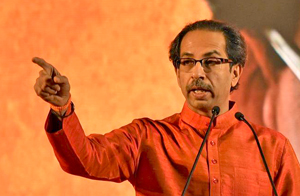
The Sena said said lynching people in the name of cow protection is against Hindutva and urged PM Modi to come up with a national policy on beef.

The Maharashtra-focused party's comments were published in its mouthpiece 'Saamana' today and come after a number of a incidents of lynching over either alleged transport of cow for slaughter or beef consumption in parts of India.

The incidents, also reported from several Bharatiya Janata Party-ruled states including Jharkhand, Haryana and Uttar Pradesh, have promoted protests, most notably the #NotInMyName rallies that took place in several cities across the country.

Commenting in an editorial in 'Saamana' today, the Shiv Sena said, "The issue of beef is related to eating habits, business and employment. Hence, there should be a national policy over the issue." "Those who were safeguarding cows were Hindus till yesterday. Today, they have become murderers."

Shiv Sena welcomed the prime minister's comments from last week, when a visible charged up Modi admonished the so-called 'gau rakshaks' and said that killing in the name of cow is not acceptable.

"We welcome the stand taken by the prime minister over the issue. Nobody has the right to take law in his hands in the name of cow protection. Lynching people is against the principles of Hindutva," the Sena said in its editorial.

"We thank him (Modi) for clearly defining Hindutva. He should now come up with a national policy on beef to ease tensions," the Sena said.

Previously, BJP chief Amit Shah and Rashtriya Swayamsevak Sangh head Mohan Bhagwat have both hit out at cow vigilante violence. Bhagwat, while demanding a national law to ban cow slaughter, said killing someone in the name of cow protection is wrong.

Shah has struck a more subdued note. The BJP chief recently termed incidents of lynching as "serious", but claimed more of these happened under the previous governments than the three years of NDA rule.

Modi's comments last week followed the lynching of a teenager, Junaid Khan, who was stabbed to death by a group of men on a train when he was returning home to Ballabhgarh in Haryana after shopping for Eid. His assailants termed Junaid, his brother and friends as "beef eaters".

In Jharkhand's Ramgarh, a Muslim meat trader was beaten to death last week by cow vigilantes who alleged he was carrying beef in his vehicle. Nityanand Mahto, a local BJP leader is among those arrested in connection with the incident.

Earlier this year, a cattle farmer - Pehlu Khan - died after being attacked by so-called gau rakshaks who suspected him of illegally ferrying cattle for the purpose of slaughter in Rajasthan's Alwar.

In September 2015, Mohammad Akhlaq was beaten to death at Dadri in Uttar Pradesh over suspicion of storing and consuming beef. Modi had spoken up against cow-related violence even then, but did not explicitly mention the Dadri incident.

Comments

Abdullah
 - 
Saturday, 8 Jul 2017

Only barking like Modi.
What action you people have taken against BD, RSS goons from these many years???

Add new comment

  • Coastaldigest.com reserves the right to delete or block any comments.
  • Coastaldigset.com is not responsible for its readers’ comments.
  • Comments that are abusive, incendiary or irrelevant are strictly prohibited.
  • Please use a genuine email ID and provide your name to avoid reject.
News Network
March 15,2020

Bengaluru, Mar 15: The Karnataka government on Saturday issued a statement saying that surveillance and containment measures against the spread of coronavirus have been increased in the state.

"In the wake of coronavirus scare, 104 Arogya Sahayavani (call centre) has reserved 20 lines for receiving calls for COVID-19," read the statement.

It also read that the dedicated seating at the 104 call centre has been increased to 40 and one person form 108 call centre will be responsible for coordinating with the ambulance services.

The statement also read that the government had arranged an orientation for the medical college staff to train them to deal with coronavirus patients.

While six people from the state were reported positive of coronavirus, the Union Ministry of Health, one amongst them was a 76-year-old man from the Kalaburagi region and he died due to co-morbidity.

The state Health Department Commissioner has said that the Telangana government has been notified about the man's death as he was also admitted to a hospital there.

So far, 84 people have been infected with COVID-19 in India.

Comments

Add new comment

  • Coastaldigest.com reserves the right to delete or block any comments.
  • Coastaldigset.com is not responsible for its readers’ comments.
  • Comments that are abusive, incendiary or irrelevant are strictly prohibited.
  • Please use a genuine email ID and provide your name to avoid reject.
coastaldigest.com news network
July 8,2020

Mangaluru, Jul 8: A seven-day-old baby from Kallapu near Permannur village, within Ullal town limits in Mangaluru taluk has tested positive for COVID-19.

The baby’s mother, while pregnant, was admitted to a private hospital in the town on June 30. 

Her samples, which were sent for testing before delivery, reported positive, doctor said.

On Wednesday, the baby’s tests too reported positive for COVID-19.

Comments

Add new comment

  • Coastaldigest.com reserves the right to delete or block any comments.
  • Coastaldigset.com is not responsible for its readers’ comments.
  • Comments that are abusive, incendiary or irrelevant are strictly prohibited.
  • Please use a genuine email ID and provide your name to avoid reject.
Agencies
May 8,2020

Washington D.C., May 8: The prime time for brain development in a child's life is the first year, where the infant spends most of the time asleep. It is the time when neural connections form and sensory memories are encoded.

However, when sleep is disrupted, as occurs more often among children with autism, brain development may be affected, too.

New research led by the University of Washington finds that sleep problems in a baby's first 12 months may not only precede an autism diagnosis but also may be associated with altered growth trajectory in a key part of the brain, the hippocampus.

The study, which was published in the American Journal of Psychiatry, researchers report that in a sample of more than 400 taken of 6- to 12-month-old infants, those who were later diagnosed with autism were more likely to have had difficulty falling asleep.

It also states that this sleep difficulty was associated with altered growth trajectories in the hippocampus.

"The hippocampus is critical for learning and memory, and changes in the size of the hippocampus have been associated with poor sleep in adults and older children.

As many as 80 per cent of the children with autism spectrum disorder have sleep problems," said Annette Estes, director of the UW Autism Center and senior author of the study.

"In our clinical experience, parents have a lot of concerns about their children's sleep, and in our work on early autism intervention, we observed that sleep problems were holding children and families back," added Estes, who is also a UW professor of speech and hearing sciences.

"It could be that altered sleep is part-and-parcel of autism for some children. One clue is that behavioural interventions to improve sleep don't work for all children with autism, even when their parents are doing everything just right. This suggests that there may be a biological component to sleep problems for some children with autism," said Estes.

To consider links among sleep, brain development, and autism, researchers at the IBIS Network looked at MRI scans of 432 infants, surveyed parents about sleep patterns, and measured cognitive functioning using a standardized assessment.

At the outset of the study, infants were classified according to their risk for developing autism: Those who were at higher risk of developing autism -- about two-thirds of the study sample -- had an older sibling who had already been diagnosed.

Infant siblings of children with autism have a 20 per cent chance of developing autism spectrum disorder -- a much higher risk than children in the general population.

In the current study, 127 of the 432 infants were identified as "low risk" at the time the MRI scans were taken because they had no family history of autism.

They later evaluated all the participants at 24 months of age to determine whether they had developed autism. Of the roughly 300 children originally considered "high familial risk," 71 were diagnosed with autism spectrum disorder at that age.

Problems with sleep were more common among the infants later diagnosed with an autism spectrum disorder, as were larger hippocampi. No other subcortical brain structures were affected, including the amygdala, which is responsible for certain emotions and aspects of memory, or the thalamus, a signal transmitter from the spinal cord to the cerebral cortex.

The authors note that while parents reported more sleep difficulties among infants who developed autism compared to those who did not, the differences were very subtle and only observed when looking at group averages across hundreds of infants.

Sleep patterns in the first years of life change rapidly as infants transition from sleeping around the clock to a more adult-like sleep/wake cycle. Until further research is completed, Estes said, it is not possible to interpret challenges with sleep as an early sign of increased risk for autism.

Comments

Add new comment

  • Coastaldigest.com reserves the right to delete or block any comments.
  • Coastaldigset.com is not responsible for its readers’ comments.
  • Comments that are abusive, incendiary or irrelevant are strictly prohibited.
  • Please use a genuine email ID and provide your name to avoid reject.