


Killing in name of cow against Hindutva; need national policy on beef: Shiv Sena

Agencies
July 4, 2017

New Delhi, Jul 4: Days after Prime Minister Narendra Modi strongly decried violence in the name of cow protection, BJP ally Shiv Sena too has spoken out against incidents of lynching in the name of cow.shivsena
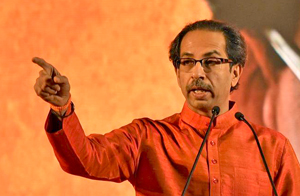
The Sena said said lynching people in the name of cow protection is against Hindutva and urged PM Modi to come up with a national policy on beef.

The Maharashtra-focused party's comments were published in its mouthpiece 'Saamana' today and come after a number of a incidents of lynching over either alleged transport of cow for slaughter or beef consumption in parts of India.

The incidents, also reported from several Bharatiya Janata Party-ruled states including Jharkhand, Haryana and Uttar Pradesh, have promoted protests, most notably the #NotInMyName rallies that took place in several cities across the country.

Commenting in an editorial in 'Saamana' today, the Shiv Sena said, "The issue of beef is related to eating habits, business and employment. Hence, there should be a national policy over the issue." "Those who were safeguarding cows were Hindus till yesterday. Today, they have become murderers."

Shiv Sena welcomed the prime minister's comments from last week, when a visible charged up Modi admonished the so-called 'gau rakshaks' and said that killing in the name of cow is not acceptable.

"We welcome the stand taken by the prime minister over the issue. Nobody has the right to take law in his hands in the name of cow protection. Lynching people is against the principles of Hindutva," the Sena said in its editorial.

"We thank him (Modi) for clearly defining Hindutva. He should now come up with a national policy on beef to ease tensions," the Sena said.

Previously, BJP chief Amit Shah and Rashtriya Swayamsevak Sangh head Mohan Bhagwat have both hit out at cow vigilante violence. Bhagwat, while demanding a national law to ban cow slaughter, said killing someone in the name of cow protection is wrong.

Shah has struck a more subdued note. The BJP chief recently termed incidents of lynching as "serious", but claimed more of these happened under the previous governments than the three years of NDA rule.

Modi's comments last week followed the lynching of a teenager, Junaid Khan, who was stabbed to death by a group of men on a train when he was returning home to Ballabhgarh in Haryana after shopping for Eid. His assailants termed Junaid, his brother and friends as "beef eaters".

In Jharkhand's Ramgarh, a Muslim meat trader was beaten to death last week by cow vigilantes who alleged he was carrying beef in his vehicle. Nityanand Mahto, a local BJP leader is among those arrested in connection with the incident.

Earlier this year, a cattle farmer - Pehlu Khan - died after being attacked by so-called gau rakshaks who suspected him of illegally ferrying cattle for the purpose of slaughter in Rajasthan's Alwar.

In September 2015, Mohammad Akhlaq was beaten to death at Dadri in Uttar Pradesh over suspicion of storing and consuming beef. Modi had spoken up against cow-related violence even then, but did not explicitly mention the Dadri incident.

Comments

Abdullah
 - 
Saturday, 8 Jul 2017

Only barking like Modi.
What action you people have taken against BD, RSS goons from these many years???

Add new comment

  • Coastaldigest.com reserves the right to delete or block any comments.
  • Coastaldigset.com is not responsible for its readers’ comments.
  • Comments that are abusive, incendiary or irrelevant are strictly prohibited.
  • Please use a genuine email ID and provide your name to avoid reject.
News Network
March 30,2020

Bengaluru, Mar 30: The nationwide lockdown has left the state on the brink of a fresh agrarian crisis.

The lack of transport facilities spells doom for ready-to-harvest grapes worth Rs 500-600 crore in Bengaluru Rural, Chikkaballapur and Kolar districts. Unable to find buyers, several farmers have begun dumping their produce into compost pits.

On Sunday, Munishamappa, a farmer in Chikkaballapur, emptied four truckloads of grapes into the pit as buyers didn’t turn up due to the lockdown. “If the grapes wither and fall to the ground, it will affect the soil’s fertility and I will be forced to dispose of them,” he said.

Venkata Krishnappa, Munishamappa’s son, said their 1.5-acre vineyard yielded 25 tonnes of grapes. “Just before the lockdown, 10 tonnes were harvested and delivered to the market. Due to lack of transport, buyers haven’t turned up for the remaining 15 tonnes which we are dumping into the pit.”

For latest updates on coronavirus outbreak, click here

Anjaneya Reddy, a farmer leader, said that in Chikkaballapur alone, they have cultivated grapes on 2,000 acres. “Even if you consider 15 tonnes per acre as yield, there are about 30,000 tonnes ready to be harvested in the district. At a market rate of Rs 50 to Rs 60 per kilogram, the net worth will be Rs 200 crore to Rs 300 crore. And if you consider the crop in Kolar and Bengaluru Rural, grapes worth Rs 500 to Rs 600 crore are at stake,” he explained.

The ‘Dilkush’ grapes is the most preferred variety of domestic consumption, according to the farmers.

This apart, farmers would have invested about Rs 3 lakh to 4 lakh per acre on fertilisers, pesticide and labour. “With markets being shut and no of the transport facilities available, farmers are forced to dump their produce into pits. It is high time the government intervened and provided us with market options so that farmers can sell at an affordable price of Rs 30 to 40,” Reddy said.

Somu, a farmer in Ganjam village of Srirangapattana, dumped two tonnes of chikku (sapota) citing market shutdown in Mandya. Reddy appealed to the government to emulate the Maharashtra model where the government is helping farmers market fruits through Hopcoms or dairy units as nutrient supplements to people.

Comments

Add new comment

  • Coastaldigest.com reserves the right to delete or block any comments.
  • Coastaldigset.com is not responsible for its readers’ comments.
  • Comments that are abusive, incendiary or irrelevant are strictly prohibited.
  • Please use a genuine email ID and provide your name to avoid reject.
News Network
April 19,2020

Kasaragod, Apr 19: Kasaragod, Kerala's COVID-19 hotspot, is the only district in the southern state lacking adequate health infrastructure.

In spite of treating the highest number of COVID-19 patients in the state with meagre infrastructural facilities and even without the support of a medical college in the north Kerala district, no deaths have been reported due to coronavirus.

The state health department views the performance of M Kunhiraman and his team, consisting of Janardhana Naik and Krishna Naik, at the General hospital in Kasaragod as a success story.

"Not only did they control the situation quickly with minimum infrastructure, they also started turning out a large number of negative cases within a few weeks and creditably ensured zero mortality.

This can be showcased as a best global model," Chairman of the Information Education and Communication (IEC) Committee and Project Director Kerala State Aids Control Society, R Ramesh said.

Recalling the ordeal, Janardhana Naik said his first major challenge was the physical examination of a patient with suspected COVID-19.

"Even with the PPE kit, nobody knew how effective they were and it took a whole 30 minutes to wear them properly.

But as time passed, we got accustomed to it," he said.

The traditional method of dealing with a patient involved knowing his or her history, observation and physical examination.

For hundreds of years, the hands-on body approach has been the soul of the doctor-patient relationship -- taking the pulse, tapping on and listening to the chest, feeling lumps.

With the onset of COVID-19 all that has changed.

"In fact, the whole exercise was fraught with grave risks because everything connected with COVID-19 was new.

Doctors have to keep a distance even though the physical examination wearing a Personal Protective Equipment (PPE) is difficult.

Sounds from the body are inaudible, vision is blurred through the smog-covered goggles and a stethoscope seldom has any use," Janardhana Naik said.

It was from March 15 that the hospital started receiving COVID-19 patients, primarily from Dubai.

By the time the first person came, the hospital was ready for him.

Soon, patient numbers began to swell and in a couple of weeks they reached about 91.

From then on, it was teamwork.

Committees were formed for each and every task, including the help desk, IT, treatment, medical board, training, food, waste disposal and data maintenance.

Initially, patients had many misgivings about the hospital.

"Some were disillusioned and even aggressive. Some were not happy with the facilities the hospital had to offer.

But gradually through good treatment and counselling by a psychiatrist, who visited the hospital on alternate days, the confidence and mood of the patients changed and they became friendly with the staff," Naik elaborated.

Counselling was also given to the concerned family members of the patients.

Besides treatment, the medical staff had to spend a considerable amount of time clearing the doubts of patients.

When they got discharged some patients insisted on seeing the faces of the medical staff, who till then were anonymous entities covered from head to toe.

Some even wanted to take selfies with them.

However, the medical team politely turned down their requests and preferred to remain hidden in their work attires.

The mood of the patients also rubbed off on the doctors and hospital staff.

All the physicians and hospital staff are now more confident of dealing with contagious diseases after treating COVID-19 patients.

"Our previous experience of treating H1N1, Chikungunya and Dengue cases helped us a lot.

Words of encouragement from the Health Minister K K Shailaja, Health Principal Secretary Dr Rajan N Khobragade and Health Services Director Dr Sarita R L gave us the impetus to build up confidence.

Moreover, the field health workers did a wonderful job in containing the viral spread," Naik added.

As the number of coronavirus cases rose, the state government on April 5 deputed a 26-member medical team from Thiruvananthapuram to set up a COVID-19 hospital in the district.

They turned a block of the under construction Government Medical College as a hospital-like facility, setting up a 200 bed facility to treat coronavirus patients.

Comments

Add new comment

  • Coastaldigest.com reserves the right to delete or block any comments.
  • Coastaldigset.com is not responsible for its readers’ comments.
  • Comments that are abusive, incendiary or irrelevant are strictly prohibited.
  • Please use a genuine email ID and provide your name to avoid reject.
News Network
June 24,2020

Bengaluru, Jun 24: Karnataka Chief Minister BS Yediyurappa was all praise for a sixth standard student from Kallianpur in Udupi district for joining the fight against COVID-19 by stitching Face Masks with one hand for SSLC students writing examination beginning from Thursday.

Mr Yediyurappa took to Twitter and wrote, “Proud of this young COVID warrior Sindhuri. Her smile as she stitches that mask inspires all of us to go beyond our limitation and strengthens us to fight this battle together. God bless you!”

Sindhuri, daughter of Sudhir and Renuka is currently studying in the sixth standard in Mount Rosary school and Bulbul in Scouts and Guides as well.

Comments

Add new comment

  • Coastaldigest.com reserves the right to delete or block any comments.
  • Coastaldigset.com is not responsible for its readers’ comments.
  • Comments that are abusive, incendiary or irrelevant are strictly prohibited.
  • Please use a genuine email ID and provide your name to avoid reject.