


Killing in name of cow against Hindutva; need national policy on beef: Shiv Sena

Agencies
July 4, 2017

New Delhi, Jul 4: Days after Prime Minister Narendra Modi strongly decried violence in the name of cow protection, BJP ally Shiv Sena too has spoken out against incidents of lynching in the name of cow.shivsena
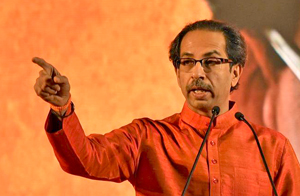
The Sena said said lynching people in the name of cow protection is against Hindutva and urged PM Modi to come up with a national policy on beef.

The Maharashtra-focused party's comments were published in its mouthpiece 'Saamana' today and come after a number of a incidents of lynching over either alleged transport of cow for slaughter or beef consumption in parts of India.

The incidents, also reported from several Bharatiya Janata Party-ruled states including Jharkhand, Haryana and Uttar Pradesh, have promoted protests, most notably the #NotInMyName rallies that took place in several cities across the country.

Commenting in an editorial in 'Saamana' today, the Shiv Sena said, "The issue of beef is related to eating habits, business and employment. Hence, there should be a national policy over the issue." "Those who were safeguarding cows were Hindus till yesterday. Today, they have become murderers."

Shiv Sena welcomed the prime minister's comments from last week, when a visible charged up Modi admonished the so-called 'gau rakshaks' and said that killing in the name of cow is not acceptable.

"We welcome the stand taken by the prime minister over the issue. Nobody has the right to take law in his hands in the name of cow protection. Lynching people is against the principles of Hindutva," the Sena said in its editorial.

"We thank him (Modi) for clearly defining Hindutva. He should now come up with a national policy on beef to ease tensions," the Sena said.

Previously, BJP chief Amit Shah and Rashtriya Swayamsevak Sangh head Mohan Bhagwat have both hit out at cow vigilante violence. Bhagwat, while demanding a national law to ban cow slaughter, said killing someone in the name of cow protection is wrong.

Shah has struck a more subdued note. The BJP chief recently termed incidents of lynching as "serious", but claimed more of these happened under the previous governments than the three years of NDA rule.

Modi's comments last week followed the lynching of a teenager, Junaid Khan, who was stabbed to death by a group of men on a train when he was returning home to Ballabhgarh in Haryana after shopping for Eid. His assailants termed Junaid, his brother and friends as "beef eaters".

In Jharkhand's Ramgarh, a Muslim meat trader was beaten to death last week by cow vigilantes who alleged he was carrying beef in his vehicle. Nityanand Mahto, a local BJP leader is among those arrested in connection with the incident.

Earlier this year, a cattle farmer - Pehlu Khan - died after being attacked by so-called gau rakshaks who suspected him of illegally ferrying cattle for the purpose of slaughter in Rajasthan's Alwar.

In September 2015, Mohammad Akhlaq was beaten to death at Dadri in Uttar Pradesh over suspicion of storing and consuming beef. Modi had spoken up against cow-related violence even then, but did not explicitly mention the Dadri incident.

Comments

Abdullah
 - 
Saturday, 8 Jul 2017

Only barking like Modi.
What action you people have taken against BD, RSS goons from these many years???

Add new comment

  • Coastaldigest.com reserves the right to delete or block any comments.
  • Coastaldigset.com is not responsible for its readers’ comments.
  • Comments that are abusive, incendiary or irrelevant are strictly prohibited.
  • Please use a genuine email ID and provide your name to avoid reject.
Agencies
February 6,2020

Even more than three years after demonetisation and all-out efforts to make most transactions through electronic, cash is still king, as it thrives in a digital India, said fintech start-up Paytm founder Vijay Sekhar Sharma.

"While cashless economy is not possible in India, less cash economy will be in the future. Less cash is the only solution, not the elimination of cash," Sharma told IANS in an interview after unveiling an all-in-one payment gateway on Tuesday.

Asserting that it would take 5-10 years for India to make the transition to digital payments from the traditional mode of cash, Sharma, 41, said the e-payment industry benefitted more from the November 8, 2016 note ban and withdrawal of old Rs 1,000 and Rs 500 denominations.

"I think it (demonetisation) helped the industry despite lack of specific help. But the world has changed since then. It is about the scale of distribution of merchants that is what is propelling digital payments," said Sharma.

Most of the cash not only came back into circulation, but also remains as the mode of payment for the majority due to its convenience for the people used to such transactions.

Expounding Paytm's zero service charge, Sharma said the strategy is sustainable as it leads to acquiring more customers and merchants, enabling newer business opportunities.

Paytm also does not levy a service charge to small merchants for its payments services, unlike organised players like Uber.

"Though there is a monetisation model, the merchants who are small shopkeepers, become our financial services customers as they open a bank account, which is profitable."

Paytm secured a Payments Bank license from the Reserve Bank of India to offer a savings bank account, Rupay debit card and money transfer services.

"We are banking on payment services acquiring customers and merchants who avail banking, lending, insurance, wealth and software services like billing software and business ledger software services eventually," Sharma noted.

The mobile first bank services include zero balance and zero digital transaction charge accounts.

"Basically, payments, cloud, commerce and financial services are a cohort we follow. So, payments is our customer as well as merchant acquisition. If it breaks even, we are happy because other line items make more money, he affirmed.

Noting that in a market like India, one cannot price services at a premium unlike in a developed country like the US, the billionaire businessman said a consumer in a developing country would not be able to afford such a hefty charge.

Forbes ranked Sharma as India's youngest billionaire in 2017, with a net worth of $2.1 billion.

While several countries operate on the model of higher service charges, Sharma said newer business models have to be discovered in India, as customer lifecycle value is accounted for more stages than in other nations.

Asked about an upscale retailer like Zara not giving a wallet payment option during its recent end of season sale in Bengaluru, Sharma said Paytm was addressing such hiccups with its all-in-one payment solutions.

"It's an opportunity, because if the retailer has our all-in-one point of sale machine, where in they enter the amount, it shows both the Quick Response code (QR) and card payment options," he observed.

Sharma compared older swiping payment machine to feature phones and modern ones to feature-rich smartphones.

"If you notice, they look like feature phones and the modern day card machine is more a smartphone like. You can add the smatphone components, which can add the features," reiterated Sharma.

Though Paytm's all-in-one QR point of sale machine integrates the billing system, its chief executive said it was not ideal to have an independent QR feature.

Paytm has 16 million strong merchant user base, which Sharma aims to raise to 26 million base in the next one year.

Sharma has launched in this tech city an all-in-one payment gateway and Paytm Business Payments solution, which enable digital payments through multiple methods for small and medium enterprises (SMEs) and an Android point of sale machine.

With the new gateway solution, collecting digital payments through multiple methods can be achieved seamlessly while Paytm Business Payments solution enables automated vendor payments, including employee salaries and customer refunds among others.

The One97 Communications-owned Paytm aims to help SMEs streamline and digitise their business activities using its new solutions, which enhance the overall efficiency of both accepting and making payments.

Paytm has a data bank of over 200 million saved cards and bank accounts, a feature which enables partner apps to shorten transaction times and propel faster conversions while using the all-in-one payment gateway.

Complementing the two solutions, Sharma also launched an all-in-one Android point of sale machine, which can accept payments through all forms such as cards, wallets, UPI apps and even cash.

The device has a QR code that supports all contact and contactless payments, coming with integrated billing software customized solutions for different sectors such as catering, ticketing, parking and others.

The handheld Android device is equipped with an in-built printer, scanner and can also generate bills.

Valued at $16 billion, Paytm is not alone in the fiercely competitive Indian fintech space where a dozen players like PhonePe, MobiKwik, Kotak 811 and deep pocketed international giants Google Pay and Amazon Pay are in the fray.

Comments

Add new comment

  • Coastaldigest.com reserves the right to delete or block any comments.
  • Coastaldigset.com is not responsible for its readers’ comments.
  • Comments that are abusive, incendiary or irrelevant are strictly prohibited.
  • Please use a genuine email ID and provide your name to avoid reject.
News Network
February 26,2020

Mysuru, Feb 26: Twenty-nine students of the Government Primary School fell sick after consuming milk supplied at the school on Wednesday morning at Kiranguru village, in Hanagodu hobli, in the hunsur taluk in the district.

Police said the students were immediately rushed to the primary health centre in Hanagodu and provided first aid.

Tahsildar and Police personnel visited the health centre and inquired about the health of the students. "All the students are responding to the treatment," sources said.

Comments

Add new comment

  • Coastaldigest.com reserves the right to delete or block any comments.
  • Coastaldigset.com is not responsible for its readers’ comments.
  • Comments that are abusive, incendiary or irrelevant are strictly prohibited.
  • Please use a genuine email ID and provide your name to avoid reject.
News Network
June 12,2020

Bengaluru, Jun 12: The Karnataka government is mulling to issue caste and income certificates to Brahmins though they are in a minority, accounting a mere three per cent of the southern state''s seven crore population, an official said on Thursday.

"Though Brahmins are in a ''minority'' in terms of their population across the state, they need caste and income certificates to benefit from the welfare schemes as in the case of the SC, ST and OBC groups," an official said here.

The Karnataka State Brahmin Development Board was set up in March 2019 as a state-run company with Rs five crore authorized capital and Rs five crore equity and is registered with the Registrar of Companies.

"The Board has petitioned the state government to implement the 10 per cent quota for the economically weaker sections, as its benefit is being given by the central government jobs and in admissions to the national educational institutions," said its chairman H.S. Sachidananda Murthy.

Responding to the demand, state Chief Minister B.S. Yediyurappa said the state government would consider issuing caste certificates to the Brahmins so that they too can benefit from the state''s various welfare schemes.

"Though Brahmins belong to the forward community, they are economically weaker and need financial support," said Yediyurappa on Wednesday after unveiling the Board''s official website for all its stakeholders here.

Brahmins whose gross annual family income is less than Rs eight lakh per annum will be eligible for the benefit schemes.

"The Board will soon be authorised to issue caste and income certificates to the members of the Brahmin community so that they can also benefit from the schemes," said the chief minister on the occasion.

Noting that every community has people who are forward and backward economically for various, including historical reasons, Yediyurappa said the Board would be empowered to serve the Brahmins.

"The Board also proposes to provide interest-free loans to the financially weaker sections of the people in the Brahmin community," added Murthy.

The community members urged the Chief Minister to provide 10 per cent of the state government jobs and seats in state-run educational institutions, including professional collages.

Comments

Add new comment

  • Coastaldigest.com reserves the right to delete or block any comments.
  • Coastaldigset.com is not responsible for its readers’ comments.
  • Comments that are abusive, incendiary or irrelevant are strictly prohibited.
  • Please use a genuine email ID and provide your name to avoid reject.