


King Salman approves hosting of US troops in Saudi Arabia to enhance regional security

Agencies
July 20, 2019

Jeddah/Washington, Jul 20: Saudi Arabia’s King Salman approved hosting US forces in the Kingdom to boost regional security and stability, the Saudi Ministry of Foreign Affairs said on Friday.

The ministry tweeted that Saudi Arabia and the United States are "strengthen(ing) their longstanding partnership in (the) face of regional threats."

In Washington, the US Defense Department confirmed the move in a statement, saying it would deploy troops and resources to Saudi Arabia to “provide an additional deterrent” in the face of “emergent, credible threats.”

The gesture comes amid rising tensions between Washington and Tehran in the Gulf that have impacted global oil markets.

With Iranian military threats in mind, the US is sending American forces, including fighter aircraft, air defense missiles and likely more than 500 troops, to a Saudi air base that became a hub of American air power in the Middle East in the 1990s.

Senior American defense officials said some US troops and Patriot air defense missile systems have already arrived at Prince Sultan Air Base, south of Riyadh, where the troops have been preparing for the arrival of aircraft later this summer as well as additional troops. The officials spoke on condition of anonymity in order to provide details not publicly announced.

The agreement has been in the works for many weeks and is not a response specifically to Friday’s seizure by Iran of a British tanker in the Arabian Gulf.

Tensions with Iran have spiked since May when the Trump administration said it had detected increased Iranian preparations for possible attacks on US forces and interests in the Gulf area.

In a written statement Friday evening, US Central Command said the deployments to Saudi Arabia had been approved by the Pentagon.

“This movement of forces provides an additional deterrent, and ensures our ability to defend our forces and interests in the region from emergent, credible threats,” Central Command said. “This movement creates improvement of operational depth and logistical networks. US Central Command continually assesses force posture in the region and is working with Kingdom of Saudi Arabia authorities to base US assets at the appropriate locations.”

Putting US combat forces back in Saudi Arabia, after an absence of more than a decade, adds depth to the regional alignment of US military power, which is mostly in locations on the Arabian Gulf that are more vulnerable to Iranian missile attack.

In June, the Pentagon said it would deploy 1,000 troops to the Middle East but did not say where they were going.

Comments

Add new comment

  • Coastaldigest.com reserves the right to delete or block any comments.
  • Coastaldigset.com is not responsible for its readers’ comments.
  • Comments that are abusive, incendiary or irrelevant are strictly prohibited.
  • Please use a genuine email ID and provide your name to avoid reject.
Agencies
June 5,2020

Dubai, Jun 5: A new set of coronavirus guidelines for UAE hotels has been published by the National Emergency Crisis and Disasters Management Authority.

The guidelines, released late Thursday, require all employees to be tested for Covid-19 before reopening, and to be re-tested every 15 days.

Hotels are expected to provide an infrared thermometer and thermal camera, with employee temperatures to be tested several times per working day.

Any guest or employee showing coronavirus symptoms will not be permitted to enter hotel facilities, the guidelines stress.

Hotels must also leave a 24-hour gap between guests leaving a room, and the next guests arriving.

Facilities such as restaurants, cafes, gyms, swimming pools and beaches in hotels will resume operation under a minimum capacity.

Customers must have their temperatures taken before they enter.

The working hours of restaurants and cafes will be from 6am until 9pm, allowing four people to sit at the same table with 2.5 metres left between tables. Menus must be sterilised after each use.

Comments

Add new comment

  • Coastaldigest.com reserves the right to delete or block any comments.
  • Coastaldigset.com is not responsible for its readers’ comments.
  • Comments that are abusive, incendiary or irrelevant are strictly prohibited.
  • Please use a genuine email ID and provide your name to avoid reject.
News Network
July 23,2020

Beirut, Jul 23: The pandemic will exact a heavy toll on Arab countries, causing an economic contraction of 5.7% this year, pushing millions into poverty and compounding the suffering of those affected by armed conflict, a U.N. report said Thursday.

The U.N.'s Economic and Social Commission for Western Asia expects some Arab economies to shrink by up to 13%, amounting to an overall loss for the region of $152 billion.

Another 14.3 million people are expected to be pushed into poverty, raising the total number to 115 million — a quarter of the total Arab population, it said. More than 55 million people in the region relied on humanitarian aid before the COVID-19 crisis, including 26 million who were forcibly displaced.

Arab countries moved quickly to contain the virus in March by imposing stay-at-home orders, restricting travel and banning large gatherings, including religious pilgrimages.

Arab countries as a whole have reported more than 830,000 cases and at least 14,717 deaths. That equates to an infection rate of 1.9 per 1,000 people and 17.6 deaths per 1,000 cases, less than half the global average of 42.6 deaths, according to the U.N.

But the restrictions exacted a heavy economic toll, and authorities have been forced to ease them in recent weeks. That has led to a surge in cases in some countries, including Lebanon, Iraq and the Palestinian territories.

Wealthy Gulf countries were hit by the pandemic at a time of low oil prices, putting added strain on already overstretched budgets. Middle-income countries like Jordan and Egypt have seen tourism vanish overnight and a drop in remittances from citizens working abroad.

War-torn Libya and Syria have thus far reported relatively small outbreaks. But in Yemen, where five years of civil war had already generated the world's worst humanitarian crisis, the virus is running rampant in the government-controlled south while rebels in the north conceal its toll.

Rola Dashti, the head of the U.N. commission, said Arab countries need to “turn this crisis into an opportunity” and address longstanding issues, including weak public institutions, economic inequality and over-reliance on fossil fuels.

“We need to invest in survival, survival of people and survival of businesses,” she said.

Comments

Add new comment

  • Coastaldigest.com reserves the right to delete or block any comments.
  • Coastaldigset.com is not responsible for its readers’ comments.
  • Comments that are abusive, incendiary or irrelevant are strictly prohibited.
  • Please use a genuine email ID and provide your name to avoid reject.
Agencies
July 31,2020

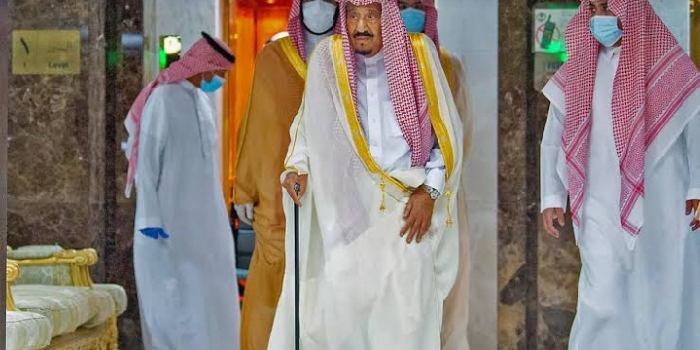
Makkah, Jul 31: Organising this year's scaled-down hajj required "double efforts" by Saudi authorities amid the coronavirus pandemic, King Salman said Friday after being discharged from hospital following gall bladder surgery.

Only up to 10,000 people already residing in the kingdom are participating in this year's pilgrimage, compared with 2019's gathering of some 2.5 million from around the world.

"Holding the ritual in the shadow of this pandemic... required reducing the numbers of pilgrims, but it obliged various official agencies to put in double efforts," 84-year-old King Salman said in a speech read out on state television by acting media minister Majid Al-Qasabi.

"The hajj this year was restricted to a very limited number of people from multiple nationalities, ensuring the ritual was completed despite the difficult circumstances," he said.

The speech came on the occasion of Eid al-Adha, the Muslim festival of sacrifice, a day after the king left hospital following a 10-day stay for surgery to remove his gall bladder.

The hajj, which began on Wednesday, is one of the five pillars of Islam and a must for able-bodied Muslims at least once in their lifetime.

Authorities implemented the "highest health precautions" during the rituals, the king said.

Pilgrims, who were all tested for the virus, are required to wear masks and observe social distancing.

For Friday's "stoning of the devil", the last major ritual of the hajj, Saudi authorities offered the pilgrims pebbles that were sanitised to protect against the pandemic.

In a sign that its strict measures were working, the health ministry reported no coronavirus cases in the holy sites on Wednesday or Thursday.

Comments

Add new comment

  • Coastaldigest.com reserves the right to delete or block any comments.
  • Coastaldigset.com is not responsible for its readers’ comments.
  • Comments that are abusive, incendiary or irrelevant are strictly prohibited.
  • Please use a genuine email ID and provide your name to avoid reject.