



KMC Hospitals organize walkathon for arthritis patients

[email protected] (CD Network)
October 31, 2015

Mangaluru, Oct 31: KMC Hospitals part of Manipal Health Enterprises on Saturday organized a walkathon for patients that have had treatment for arthritis – joint replacement or other drug treatments. The walkathon aimed to break the myth that people who have undergone knee surgery cannot lead a normal life and walk like before. The event witnessed a participation of 30 patients who have successfully undergone knee surgeries and others with multiple joint arthritis that have undergone treatment with rheumatological and immune system modifying drugs.
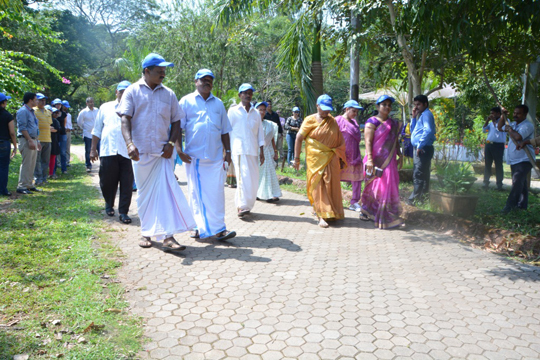
walkaton1

Arthritis is a common problem across all age groups (including children, adults & old people) and almost 15% of Indian population suffers from this condition. The condition can be treated successfully with medications and surgeries but due to lack of awareness people usually ignore the symptoms.

KMC Hospital has successfully performed various simple, complicated and revision knee & hip joint replacement surgeries. With competent & highly specialized Rheumatologists & Joint Specialist surgeons cases have been dealt with great efficiency and finesse. For the first time in Mangalore, 100% cases of primary joint replacement, undertaken in the last 10 months in patients of ages ranging from 50 to 79 by our Specialist Hip & Knee unit, have walked on the same day of surgery.

‘This walkathon by patients who have undergone Hip & Knee replacement surgeries breaks the myth that they cannot lead a normal life post-surgery. We at KMC Hospital have the latest joint replacement techniques, surgeries and therapies to cater to a wide range of issues related to joints. What needs to be understood about the surgery is that early and right diagnosis can prevent arthritis from developing. There are a range of rehabilitation techniques as well as minor surgeries done with Arthroscopy techniques, that if undertaken at the right time, can prevent severe joint damage in younger patients. These surgeries for patients riddled with severe end- stage arthritis have been certified worldwide as among the best of all surgeries in terms of quality of life”, said Dr. Yogeesh D Kamat, Joint Replacement Surgeon & Sports Injury- Arthroscopy Specialist.

‘Patients develop pain and swelling of single or multiple joints involving the fingers, wrists, elbows, shoulders, neck, hips, knees, ankles and the feet. Persistent backache can also be due to arthritis of the back joints. If left untreated, the pain and limitation can become so severe that patients no matter how young they are, become bedridden and if not treated can lead to permanent damage in the joints with deformities and disability’ said Dr. Sajjan Shenoy N, Specialist, Immunology and Rheumatology, KMC Hospital, Mangalore.

There are various forms of arthritis. Among young adults Ankylosing Spondylitis which causes pain the back and neck, Gout is related to high uric acid levels, Rheumatoid Arthritis occur mainly in the hands, wrists, elbows, feet, knees and hips and leads to rapid destruction of the joints and disability. Psoriatic Arthritis associated with skin disease, Reactive Arthritis Joint pains follow an episode of infections, Post-viral Arthritis occurs following a viral infection, Systemic Lupus Erythematosus (SLE) (and other Connective tissue diseases (CTD) is a more serious multi-system disease and tends to affect many organs. Juvenile Idiopathic Arthritis occurs in children between the age group of 2 – 16 years, Inflammatory Bowel Disease (IBD) associated arthritis symptoms include recurrent loose stools with blood. ‘Osteoarthritis which is the most common cause for joint pains among the elderly patients related to wear-and-tear of the joints over years and is mostly seen in the knees and hips.

Osteo Arthritis if ignored can be more damaging than even a stroke. Immobile and elderly people get more prone to fractures as bones become weaker with decreased mobility. Similarly consumption of various prescribed and non-prescribed drugs can have harmful side effects on the patient. Untreated osteoarthritis itself is self- propagating: by avoiding mechanical pressure on an affected joint, one strains the neighbouring joints, overall increasing the risks and making for further complexities in treatment.
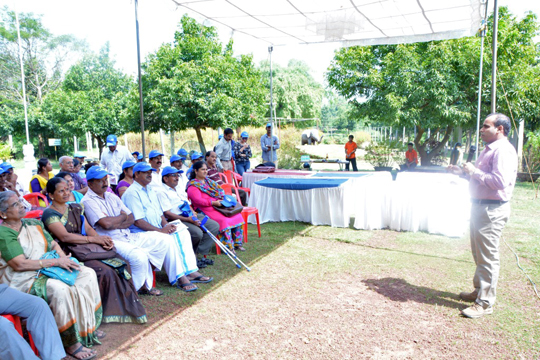

walkaton2

Comments

Caryn
 - 
Tuesday, 12 Jan 2016

I'm amazed, I must say. Rarely do I encounter a blog that's equally educative and entertaining, and without a doubt, you've hit the nail on the head.
The problem is an issue that too few men and women are speaking intelligently about.
I'm very happy I came across this during my search for something relating to this.

my web blog; women for sex: http://comment.gp-digital.org/

Add new comment

  • Coastaldigest.com reserves the right to delete or block any comments.
  • Coastaldigset.com is not responsible for its readers’ comments.
  • Comments that are abusive, incendiary or irrelevant are strictly prohibited.
  • Please use a genuine email ID and provide your name to avoid reject.
Ram Puniyani
February 10,2020

Noam Chomsky is one of the leading peace workers in the world. In the wake of America’s attack on Vietnam, he brought out his classic formulation, ‘manufacturing consent’. The phrase explains the state manipulating public opinion to have the public approve of it policies—in this case, the attack of the American state on Vietnam, which was then struggling to free itself from French colonial rule.

In India, we are witness to manufactured hate against religious minorities. This hatred serves to enhance polarisation in society, which undermines India’s democracy and Constitution and promotes support for a Hindu nation. Hate is being manufactured through multiple mechanisms. For example, it manifests in violence against religious minorities. Some recent ghastly expressions of this manufactured hate was the massive communal violence witnessed in Mumbai (1992-93), Gujarat (2002), Kandhamal (2008) and Muzaffarnagar (2013). Its other manifestation was in the form of lynching of those accused of having killed a cow or consumed beef. A parallel phenomenon is the brutal flogging, often to death, of Dalits who deal with animal carcasses or leather.

Yet another form of this was seen when Shambhulal Regar, indoctrinated by the propaganda of Hindu nationalists, burned alive Afrazul Khan and shot the video of the heinous act. For his brutality, he was praised by many. Regar was incited into the act by the propaganda around love jihad. Lately, we have the same phenomenon of manufactured hate taking on even more dastardly proportions as youth related to Hindu nationalist organisations have been caught using pistols, while police authorities look on.

Anurag Thakur, a BJP minster in the central government recently incited a crowd in Delhi to complete his chant of what should happen to ‘traitors of the country...” with a “they should be shot”. Just two days later, a youth brought a pistol to the site of a protest at Jamia Millia Islamia university and shouted “take Azaadi!” and fired it. One bullet hit a student of Jamia. This happened on 30 January, the day Nathuram Godse had shot Mahatma Gandhi in 1948. A few days later, another youth fired near the site of protests against the CAA and NRC at Shaheen Bagh. Soon after, he said that in India, “only Hindus will rule”.

What is very obvious is that the shootings by those associated with Hindu nationalist organisations are the culmination of a long campaign of spreading hate against religious minorities in India in general and against Muslims in particular. The present phase is the outcome of a long and sustained hate campaign, the beginning of which lies in nationalism in the name of religion; Muslim nationalism and Hindu nationalism. This sectarian nationalism picked up the communal view of history and the communal historiography which the British introduced in order to pursue their ‘divide and rule’ policy.

In India what became part of “social common sense” was that Muslim kings had destroyed Hindu temples, that Islam was spread by force, and that it is a foreign religion, and so on. Campaigns, such as the one for a temple dedicated to the Hindu god Rama to be built at the site where the Babri masjid once stood, further deepened the idea of a Muslim as a “temple-destroyer”. Aurangzeb, Tipu Sultan and other Muslim kings were tarnished as the ones who spread Islam by force in the subcontinent. The tragic Partition, which was primarily due to British policies, and was well-supported by communal streams also, was entirely attributed to Muslims. The Kashmir conflict, which is the outcome of regional, ethnic and other historical issues, coupled with the American policy of supporting Pakistan’s ambitions of regional hegemony, (which also fostered the birth of Al-Qaeda), was also attributed to the Muslims.

With recurring incidents of communal violence, these falsehoods went on going deeper into the social thinking. Violence itself led to ghettoisation of Muslims and further broke inter-community social bonds. On the one hand, a ghettoised community is cut off from others and on the other hand the victims come to be presented as culprits. The percolation of this hate through word-of-mouth propaganda, media and re-writing of school curricula, had a strong impact on social attitudes towards the minorities.

In the last couple of decades, the process of manufacturing hate has been intensified by the social media platforms which are being cleverly used by the communal forces. Swati Chaturvedi’s book, I Am a Troll: Inside the Secret World of the BJP’s Digital Army, tells us how the BJP used social media to spread hate. Whatapp University became the source of understanding for large sections of society and hate for the ‘Other’, went up by leaps and bounds. To add on to this process, the phenomenon of fake news was shrewdly deployed to intensify divisiveness.

Currently, the Shaheen Bagh movement is a big uniting force for the country; but it is being demonised as a gathering of ‘anti-nationals’. Another BJP leader has said that these protesters will indulge in crimes like rape. This has intensified the prevalent hate.

While there is a general dominance of hate, the likes of Shambhulal Regar and the Jamia shooter do get taken in by the incitement and act out the violence that is constantly hinted at. The deeper issue involved is the prevalence of hate, misconceptions and biases, which have become the part of social thinking.

These misconceptions are undoing the amity between different religious communities which was built during the freedom movement. They are undoing the fraternity which emerged with the process of India as a nation in the making. The processes which brought these communities together broadly drew from Gandhi, Bhagat Singh and Ambedkar. It is these values which need to be rooted again in the society. The communal forces have resorted to false propaganda against the minorities, and that needs to be undone with sincerity.

Combating those foundational misconceptions which create hatred is a massive task which needs to be taken up by the social organisations and political parties which have faith in the Indian Constitution and values of freedom movement. It needs to be done right away as a priority issue in with a focus on cultivating Indian fraternity yet again.

Comments

Add new comment

  • Coastaldigest.com reserves the right to delete or block any comments.
  • Coastaldigset.com is not responsible for its readers’ comments.
  • Comments that are abusive, incendiary or irrelevant are strictly prohibited.
  • Please use a genuine email ID and provide your name to avoid reject.
News Network
January 27,2020

Mangaluru, Jan 27: JD(S) leader and former Labour Minister K Amarnath Shetty passed away at a private hospital in Mangaluru on Monday morning. He was 80. Shetty was unwell for sometime, and was admitted to the hospital a few days ago, family sources said.

Amarnath Shetty, a trustee of Alva's Education Foundation (AEF), had joined politics in 1965.

He became the president of Paladka Gram Panchayat and soon was elected as MLA from Moodbdri constituency in 1983. He won the successive elections held in the same constituency in 1987 and 1994. He had served as Tourism and later as Labour Minister.

Comments

Add new comment

  • Coastaldigest.com reserves the right to delete or block any comments.
  • Coastaldigset.com is not responsible for its readers’ comments.
  • Comments that are abusive, incendiary or irrelevant are strictly prohibited.
  • Please use a genuine email ID and provide your name to avoid reject.
News Network
April 11,2020

Bengaluru, Apr 11: The coronavirus-driven lockdown will continue for another 15 days, but relaxations will be allowed in a graded manner, Karnataka Chief Minister B S Yediyurappa said after a four-hour-long video conference with Prime Minister Narendra Modi on Saturday.

“Agriculture and industrial sectors will be given relaxation. Government offices will be allowed to work with partial strength. But the PM said detailed guidelines will be issued in two days,” Yediyurappa said, briefing reporters. 

“Importantly, the lockdown for the next two weeks will be different than how it was in the past three weeks. The Centre, keeping in mind economic activities, especially agriculture, industry and employment of labourers, the Centre will tell us what needs to be done,” the CM said.
 
According to Yediyurappa, PM Modi told all chief ministers that the next 2-3 weeks will be critical. “The next few weeks will decide whether or not we have succeeded. If the situation worsens, we have to face the crisis,” Yediyurappa said, quoting Modi. 

Apparently, Modi sought details on the COVID-19 situation from 12-13 states where the situation is grave. “He did not take a report from Karnataka,” Yediyurappa said. “This morning, seven new cases were reported in the state, taking our tally to 214. Nationally, we were in the third place; we’re now 11th,” he said, hailing the efforts of officials involved in fighting the pandemic. 

The CM said it was “inevitable” to continue the lockdown for another 15 days. “But for citizens to get essential supplies, there’s no bar on them going by walk alone. Also, we will see to it that agricultural activities are not affected anywhere,” Yediyurappa said.

Comments

Add new comment

  • Coastaldigest.com reserves the right to delete or block any comments.
  • Coastaldigset.com is not responsible for its readers’ comments.
  • Comments that are abusive, incendiary or irrelevant are strictly prohibited.
  • Please use a genuine email ID and provide your name to avoid reject.