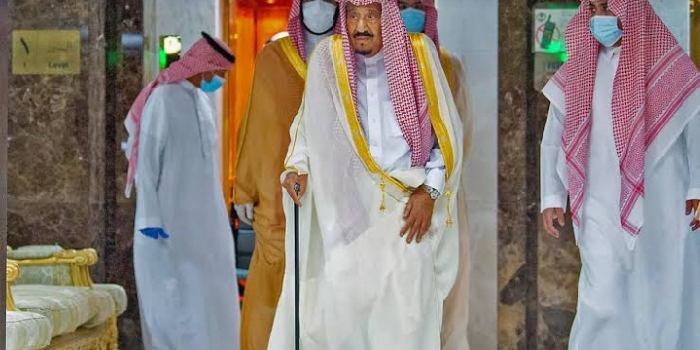
Lebanese PM Hariri withdraws resignation after consensus deal

Agencies
December 5, 2017

Beirut, Dec 5: Lebanese Prime Minister Saad Hariri has formally rescinded his resignation following a consensus deal reached with rival political parties.

The announcement came at the end of the first Cabinet meeting to be held since Lebanon was thrown into a political crisis following Hariri’s stunning Nov. 4 move.

Hariri shocked the nation with his bizarre resignation in a televised broadcast from Saudi Arabia last month, citing Hezbollah’s meddling in in regional affairs as a main reason for stepping down.

Tuesday’s Cabinet meeting, attended by Hariri, endorsed a statement that calls on rival Lebanese groups to distance themselves from regional conflicts and the internal affairs of Arab countries.

Hariri heads a coalition government that includes ministers from the Lebanese militant Hezbollah group.

Comments

Add new comment

  • Coastaldigest.com reserves the right to delete or block any comments.
  • Coastaldigset.com is not responsible for its readers’ comments.
  • Comments that are abusive, incendiary or irrelevant are strictly prohibited.
  • Please use a genuine email ID and provide your name to avoid reject.
News Network
May 7,2020

Dubai, May 7: As India begins the world’s largest evacuation mission by repatriating its overseas citizens stranded due to COVID-19, as many as 354 of them from the UAE will fly into their home country in the first two flights to Kerala today.

An Air India Express flight, which is scheduled to take off from Abu Dhabi to Kochi at 4.15 pm is the first flight, which will be followed by a Dubai-Kozhikode flight of the same airline at 5.10pm. The Indian missions in the UAE finalised the list of passengers, who were chosen based on the compelling reasons they submitted while registering their names.

Selection criteria

These include pregnant women and their accompanying family members in some instances, people with medical emergencies, workers and housemaids in distress, families with cancelled visas, bereaved family members who couldn’t attend funerals back home, a few students and stranded visitors and tourists including two brothers who got stranded in Dubai International Airport for 50 days, the missions said.

Short-listing the first passengers from among a database of more than 200,000 applicants, who include around 6,500 pregnant women, has been a mammoth task which posed several challenges for the missions, Neeraj Agrawal, Consul Press, Information and Culture at the Indian Consulate in Dubai told Gulf News.

He said the consulate set up an operations room in a tie-up with community volunteers from Kerala Muslim Cultural Centre, Indian Association Ajman, AKCAF Task Force, the BAPS Mandir, Indian People’s Forum, and Tamil Ladies’ Sangam.

 “We are trying to accommodate as many deserving people as possible. We expect the understanding of the people. It has been very difficult to sort out everyone’s urgency.”

“We cannot do a lottery system in this and we had to make sub- categories to ensure there is a mix of people with different types of urgencies.”

“Though we want to give priority to pregnant women, it is practically not possible and not good for the health and safety of the applicants to allot a lot of them on the same flight.”

He said 11 pregnant women have been issued tickets on the Dubai-Kozhikode flight.

“That is the threshold we can allow on a flight.”

Volunteer support

The consul appreciated the support of the volunteers in finalising the flight manifest.

“But our response ratio was very less. Many people whose names came up on top of the list were not willing to go on the first flights.”

Due to various constraints like this and sometimes the details of accompanying persons not readily being available, he said the mission was not able to quickly reach out to who might be really in need.

“However, we have given due consideration to people who got in touch with us with their emergency needs. At the time of issuing tickets, we had about 20 such cases.”

He said the Consul General of India in Dubai Vipul led the entire operation and Pankaj Bodkhe, consul, education, was in charge of the Dubai flight.

A big challenge

“It has been a big challenge. Our only concern is that despite our best efforts, sometimes people with more compelling reasons might have got left out on the first flights because of the volume of people who have reached out to us.”

Since there is a chance that some passengers with tickets might not be allowed to fly if they fail the medical screening including blood tests to check antibodies for COVID-19, he said some applicants in the waiting list have been asked to be on standby at the airport.

People with emergencies wishing to fly to other destinations also could not be included, he pointed out.

“We had to ask them to wait. We are unable to send them to other destinations. We can see their desperation. We feel sorry and desperate.”

He said the government is trying to add more flights to un-chartered destinations and a new flight from Dubai to Kannur has been added on May 12.

Passengers of today’s flights have been urged to reach the airport four to five hours prior to departure to facilitate the medical screening.

Comments

Add new comment

  • Coastaldigest.com reserves the right to delete or block any comments.
  • Coastaldigset.com is not responsible for its readers’ comments.
  • Comments that are abusive, incendiary or irrelevant are strictly prohibited.
  • Please use a genuine email ID and provide your name to avoid reject.
News Network
January 22,2020

Davos, Jan 22: President Donald Trump has said that the US is watching the developments between India and Pakistan over Kashmir "very closely" and repeated his offer to "help" resolve the longstanding dispute between the two neighbours as he met Prime Minister Imran Khan on the sidelines of the World Economic Forum here in the Swiss ski resort.

Addressing the media with the Pakistan Prime Minister prior to their private meeting on Tuesday, President Trump asserted that trade and borders were both critical points for discussion, while Khan said that for him, Afghanistan was the top priority.

Trump told Khan, whom he referred to as "my friend", that he would speak to Prime Minister Narendra Modi about the ongoing Kashmir issue. The US president is expected to visit India in the coming weeks, marking his first visit after taking up his post in the White House.

"What's going on between Pakistan and India … if we can help, we certainly will be willing to. We have been watching it very closely and it's an honour to be here with my friend," he said.

"The Pakistan-India conflict is a very big issue for us in Pakistan and we expect the US to always play its part in deescalating the tensions, because no other country can," Khan said.

President Trump has repeatedly offered to mediate following India's August 5 decision to revoke the special status to Jammu and Kashmir and bifurcate the state into two Union Territories, evoking strong reaction from Pakistan which has been trying to internationalise the Kashmir issue.

New Delhi has defended the move, saying Jammu and Kashmir is an integral part of India and the issue was strictly internal to the country, and the special status provisions only gave rise to terrorism in Jammu and Kashmir.

"The country took the decision of abrogation of Article 370, which had only given separatism and terrorism to that state," Prime Minister Narendra Modi said at a function in October last year.

This is the third meeting between Trump and Khan since Pakistan premier assumed office in 2018 and it came against the backdrop of Pakistan Foreign Minister Shah Mehmood Qureshi's recent trip to the US, amid reports that the US and Afghan Taliban were close to striking a peace deal.

"There are issues we want to talk about. The main issue is Afghanistan because it concerns the US and Pakistan. Fortunately, we are on the same page. Both of us are interested in peace there and an orderly transition in Afghanistan with talks with Taliban and the government," Khan said.

When a reporter asked Trump if he would visit Pakistan considering he was already set to visit India, the US president said he was meeting the Pakistan premier in Davos.

"Well, we're visiting right now. So we don't really have to. I wanted to say that from a relationship standpoint, we got a great relationship. From the standpoint our two countries, we're getting along very well. I would say we've never been closer with Pakistan the way we're right now. And this is a big statement," Trump said.

Khan left for Switzerland to attend the World Economic Forum and meet the world leaders, including President Trump, on the sidelines of the annual event which kicked off at the ski resort town of Davos on Tuesday.

The four-day summit marks the 50th anniversary of the forum.

A total of 53 heads of State are on the guest list. Nearly 3,000 participants from 118 countries are expected to attend the event during which political leaders, business executives, heads of international organisations and civil society representatives are set to deliberate on contemporary economic, geopolitical, social and environmental issues.

Comments

Add new comment

  • Coastaldigest.com reserves the right to delete or block any comments.
  • Coastaldigset.com is not responsible for its readers’ comments.
  • Comments that are abusive, incendiary or irrelevant are strictly prohibited.
  • Please use a genuine email ID and provide your name to avoid reject.
News Network
January 8,2020

Tehran, Jan 8: Iran struck back at the United States for the killing of a top Iranian general early Wednesday, firing a series of ballistic missiles at two Iraqi bases housing U.S. troops in a major escalation that brought the two longtime foes closer to war.

Iranian state TV said it was in revenge for the U.S. killing of Revolutionary Guard Gen. Qassem Soleimani, whose death last week in an American drone strike near Baghdad prompted angry calls to avenge his slaying. A U.S. official said there were no immediate reports of American casualties, though buildings were still being searched.

Soleimani's killing and the strikes by Iran came as tensions have been rising steadily across the Mideast after President Donald Trump's decision to unilaterally withdraw America from Tehran's nuclear deal with world powers. They also marked the first time in recent years that Washington and Tehran have attacked each other directly rather than through proxies in the region. It raised the chances of open conflict erupting between the two enemies, which have been at odds since Iran's 1979 Islamic Revolution.

But in a tweet shortly after the missile launches, Iran's foreign minister called a ballistic missile attack a ``proportionate measures in self-defense'' and said it was not seeking to escalate the situation but would defend itself against any aggression.

Iran initially announced only one strike, but U.S. officials confirmed both. U.S. defense officials were at the White House, likely to discuss options with Trump, who launched the strike on Soleimani while facing an upcoming impeachment trial in the Senate,

Iran's Revolutionary Guard warned the U.S. and its regional allies against retaliating over the missile attack against the Ain al-Asad air base in Iraq's western Anbar province. The Guard issued the warning via a statement carried by Iran's state-run IRNA news agency.

``We are warning all American allies, who gave their bases to its terrorist army, that any territory that is the starting point of aggressive acts against Iran will be targeted,'' The Guard said. It also threatened Israel.

After the strikes, a former Iranian nuclear negotiator posted a picture of the Islamic Republic's flag on Twitter, appearing to mimic Trump who posted an American flag following the killing of Soleimani and others Friday in a drone strike in Baghdad.

Ain al-Asad air base was first used by American forces after the 2003 U.S.-led invasion that toppled dictator Saddam Hussein, and later saw American troops stationed there amid the fight against the Islamic State group in Iraq and Syria. It houses about 1,500 U.S. and coalition forces.

Two Iraqi security officials said at least one of the missiles appeared to have struck a plane at the base, igniting a fire. It was not immediately clear whether it was an Iraqi or U.S. jet. There were no immediate reports of casualties from the attacks, according to the officials, who spoke on condition of anonymity as they had no permission to brief journalists.

About 70 Norwegian troops also were on the air base but no injuries were reported, Brynjar Stordal, a spokesperson for the Norwegian Armed Forces told The Associated Press.

Trump visited the sprawling Ain al-Asad air base, about 100 miles or 60 kilometers west of Baghdad, in December 2018, making his first presidential visit to troops in the region. He did not meet with any Iraqi officials at the time, and his visit inflamed sensitivities about the continued presence of U.S. forces in Iraq. Vice President Mike Pence also has visited the base.

Iranian state TV said the Guard's aerospace division that controls Iran's missile program launched the attack, which it said was part of an operation dubbed ``Martyr Soleimani.'' Iran said it would release more information later.

The U.S. also acknowledged another missile attack on a base in Irbil in Iraq's semiautonomous Kurdish region.

``As we evaluate the situation and our response, we will take all necessary measures to protect and defend U.S. personnel, partners and allies in the region,'' said Jonathan Hoffman, an assistant to the U.S. defense secretary.

Wednesday's revenge attack happened a mere few hours after crowds in Iran mourned Soleimani at his funeral. It also came the U.S. continued to reinforce its own positions in the region and warned of an unspecified threat to shipping from Iran in the region's waterways, crucial routes for global energy supplies. U.S. embassies and consulates from Asia to Africa and Europe issued security alerts for Americans. The FAA also warned of a "potential for miscalculation or mis-identification" for civilian aircraft in the Persian Gulf amid in an emergency flight restriction.

A stampede broke out Tuesday at Soleimani's funeral, and at least 56 people were killed and more than 200 were injured as thousands thronged the procession, Iranian news reports said. Shortly after Iran's revenge missile launches early Wednesday, Soleimani's shroud-wrapped remains were lowered into the ground as mourners wailed at the grave site.

Tuesday's deadly stampede took place in Soleimani's hometown of Kerman as his coffin was being borne through the city in southeastern Iran, said Pirhossein Koulivand, head of Iran's emergency medical services.

There was no information about what set off the crush in the packed streets, and online videos showed only its aftermath: people lying apparently lifeless, their faces covered by clothing, emergency crews performing CPR on the fallen, and onlookers wailing and crying out to God.

``Unfortunately as a result of the stampede, some of our compatriots have been injured and some have been killed during the funeral processions," Koulivand said, and state TV quoted him as saying that 56 had died and 213 had been injured.

Soleimani's burial was delayed, with no new time given, because of concerns about the huge crowd at the cemetery, the semi-official ISNA news agency said.

A procession in Tehran on Monday drew over 1 million people in the Iranian capital, crowding both main avenues and side streets in Tehran. Such mass crowds can prove dangerous. A smaller stampede at the 1989 funeral for Ayatollah Ruhollah Khomeini killed at least eight people and injured hundreds.

Hossein Salami, Soleimani's successor as leader of the Revolutionary Guard, addressed a crowd of supporters gathered at the coffin in a central square in Kernan. He vowed to avenge Soleimani, who was killed in a U.S. drone strike Friday near Baghdad's airport.

``We tell our enemies that we will retaliate but if they take another action we will set ablaze the places that they like and are passionate about," Salami said.

``Death to Israel!'' the crowd shouted in response, referring to one of Iran's longtime regional foes.

Salami praised Soleimani's work, describing him as essential to backing Palestinian groups, Yemen's Houthi rebels and Shiite militias in Iraq and Syria. As a martyr, Soleimani represented an even greater threat to Iran's enemies, Salami said.

Soleimani will ultimately be laid to rest between the graves of Enayatollah Talebizadeh and Mohammad Hossein Yousef Elahi, two former Guard comrades killed in Iran's 1980s war with Iraq. They died in Operation Dawn 8, in which Soleimani also took part. It was a 1986 amphibious assault that cut Iraq off from the Persian Gulf and led to the end of the war that killed 1 million.

The funeral processions in major cities over three days have been an unprecedented honor for Soleimani, seen by Iranians as a national hero for his work leading the Guard's expeditionary Quds Force.

The U.S. blames him for killing U.S. troops in Iraq and accused him of plotting new attacks just before he was killed. Soleimani also led forces supporting Syrian President Bashar Assad in that country's civil war, and he also served as the point man for Iranian proxies in countries like Iraq, Lebanon and Yemen. Russian President Vladimir Putin met with Assad in Syria on Tuesday amid the tensions between Washington and Tehran.

Soleimani's slaying already has led Tehran to abandon the remaining limits of its 2015 nuclear deal with world powers as his successor and others vow to take revenge.

In Iraq, pro-Iranian factions in parliament have pushed to oust American troops from Iraqi soil following Soleimani's killing. Germany and Canada announced plans to move some of their soldiers in Iraq to neighboring countries.

The FAA warning barred U.S. pilots and carriers from flying over areas of Iraqi, Iranian and some Persian Gulf airspace. The region is a major East-West travel hub and home to Emirates airline and Dubai International Airport, the world's busiest for international travel. It earlier issued warnings after Iran shot down a U.S. military surveillance drone last year that saw airlines plan new routes to avoid the Strait of Hormuz.

The U.S. Maritime Administration warned ships across the Mideast, citing the rising threats. ``The Iranian response to this action, if any, is unknown, but there remains the possibility of Iranian action against U.S. maritime interests in the region,'' it said.

Oil tankers were targeted in mine attacks last year that the U.S. blamed on Iran. Tehran denied responsibility, although it did seize oil tankers around the crucial Strait of Hormuz, the narrow mouth of the Persian Gulf through which 20% of the world's crude oil travels.

The U.S. Navy's Bahrain-based 5th Fleet said it would work with shippers in the region to minimize any possible threat.

The 5th Fleet ``has and will continue to provide advice to merchant shipping as appropriate regarding recommended security precautions in light of the heightened tensions and threats in the region,'' 5th Fleet spokesman Cmdr. Joshua Frey told The Associated Press.

Iran's parliament, meanwhile, has passed an urgent bill declaring the U.S. military's command at the Pentagon and those acting on its behalf in Soleimani's killing as ``terrorists," subject to Iranian sanctions. The measure appears to be in response to a decision by Trump in April to declare the Revolutionary Guard a ``terrorist organization.''

The U.S. Defense Department used that terror designation to support the strike that killed Soleimani.

Comments

Add new comment

  • Coastaldigest.com reserves the right to delete or block any comments.
  • Coastaldigset.com is not responsible for its readers’ comments.
  • Comments that are abusive, incendiary or irrelevant are strictly prohibited.
  • Please use a genuine email ID and provide your name to avoid reject.



