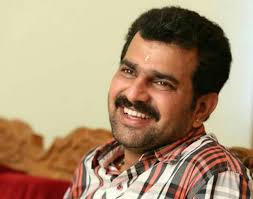
Look-out notice against Yuva Brigade leader Naresh Shenoy

[email protected] (CD Network)
April 7, 2016

nareshMangaluru, Apr 6: The Mangaluru Police have issued a look-out notice against Naresh Shenoy, the founder of the city unit of NaMo Brigade (now known as Yuva Brigade), a right wing group, in connection with the murder of 51-year-old RTI activist Vinayak Baliga.

The activist was hacked to death allegedly by three persons near his house at Kodialbail here on March 21. The police have so far arrested two persons allegedly involved in the murder.

Police Commissioner M. Chandra Sekhar said that the look-out notice was a step to prevent him from leaving the country.

Mr. Chandra Sekhar said that they need to question him in connection with the murder. Mr. Chandra Sekhar said that they are yet to find Shiva (20) of Panjimogaru and Srikant (40) of Kavoor, who are suspected to be involved in the crime.

Comments

Aakhash
 - 
Thursday, 7 Apr 2016

Even if he caught by police, nothing will be going to happen!! he will get bail and will be released by court and will get hero welcome plus MLA or MP seat in next election!! this s what happening in our country in recent years.

Add new comment

  • Coastaldigest.com reserves the right to delete or block any comments.
  • Coastaldigset.com is not responsible for its readers’ comments.
  • Comments that are abusive, incendiary or irrelevant are strictly prohibited.
  • Please use a genuine email ID and provide your name to avoid reject.
Agencies
July 8,2020

The Central Board of Secondary Education (CBSE) has rationalised by up to 30 per cent the syllabus for classes 9 to 12 for the academic year 2020-21 to reduce course load on students amid the COVID-19 crisis, Union HRD Minister Ramesh Pokhriyal 'Nishank' announced on Tuesday.

The curriculum has been rationalised while retaining the core elements, the Human Resource Development said.

Among the chapters dropped after the rationalisation exercise are lessons on democracy and diversity, demonetisation, nationalism, secularism, India's relations with its neighbours and growth of local governments in India, among others.

"Looking at the extraordinary situation prevailing in the country and the world, CBSE was advised to revise the curriculum and reduce course load for the students of classes 9 to 12.

"To aid the decision, a few weeks back I also invited suggestions from all educationists on the reduction of syllabus for students and I am glad to share that we received more than 1.5K suggestions. Thank you, everyone, for the overwhelming response," Nishank tweeted.

"Considering the importance of learning achievement, it has been decided to rationalise syllabus up to 30 per cent by retaining the core concepts," he added.

The Union minister said the changes made in the syllabi have been finalised by the respective course committees with the approval of the curriculum committee and the Governing Body of the Board.

"The heads of schools and teachers have been advised by the board to ensure that the topics that have been reduced are also explained to the students to the extent required to connect different topics. However, the reduced syllabus will not be part of the topics for internal assessment and year-end board examination.

"Alternative academic calendar and inputs from the NCERT on transacting the curriculum using different strategies shall also be part of the teaching pedagogy in the affiliated schools," a senior official of the HRD ministry said.

For classes 1 to 8, the National Council of Education Research and Training (NCERT) has already notified an alternative calendar and learning outcomes.

According to the updated curriculum, among the chapters deleted from class 10 syllabus are-- democracy and diversity, gender, religion and caste, popular struggles and movement, challenges to democracy

For class 11, the deleted portions included chapters on federalism, citizenship, nationalism, secularism, growth of local governments in India.

Similarly, class 12 students will not be required to study chapters on India's relations with its neighbours, changing nature of India's economic development, social movements in India and demonetisation, among others.

Universities and schools across the country have been closed since March 16 when the central government announced a nationwide classroom shutdown as one of the measures to contain the COVID-19 outbreak.

A nationwide lockdown was announced on March 24, which came into effect the next day. While the government has eased several restrictions, schools and colleges continue to remain closed.


Comments

Add new comment

  • Coastaldigest.com reserves the right to delete or block any comments.
  • Coastaldigset.com is not responsible for its readers’ comments.
  • Comments that are abusive, incendiary or irrelevant are strictly prohibited.
  • Please use a genuine email ID and provide your name to avoid reject.
News Network
April 30,2020

Bengaluru, Apr 30: The Karnataka government on Thursday decided to allow migrant workers, tourists, students and others stranded in different parts of the state due to the ongoing lockdown to return to their native places, a day after the Centre issued guidelines for the process.

This will be a one-time movement and the government would arrange buses for those in need but they should bear the expenses, Law and Parliamentary Affairs Minister J C Madhuswamy said. He also said people willing to return to the state would have to undergo tests for COVID-19. The decision was taken at the state cabinet meet and it might come into effect from Friday as the Chief Secretary will have to issue an official order, he said.

"Prime Minister Narendra Modi had taken decision on movement of people and the Centre had issued a circular in this regard. Following this we have decided to permit interstate and inter-district movement," he told reporters here.

Travel expenses should be borne by those willing to return and if they want the government can provide buses from the state transport corporations. The Union Ministry of Home Affairs on Wednesday issued orders allowing migrant workers, tourists, students and other people stranded in different parts of the country to move to their respective destinations with certain conditions, giving a big relief to the distressed people. Decision on opening of salons and liquor shops will be taken after May 3, he said.

Madhuswamy said permission would be given for one-time movement of labourers and others who want to go from one district to other for work or any other purpose. Those operating industry or establishment and want to move from place to place for management purpose will be given passes with strict scrutiny and through checks.

Responding to a question, the minister said, "we don't know yet how many are willing to go, where they will go, if some one asks for permission, we will permit." "One family or two or three people want to go, they can use taxi. If too many people want to go, we will provide facility through transport corporation buses," he said.

Comments

Add new comment

  • Coastaldigest.com reserves the right to delete or block any comments.
  • Coastaldigset.com is not responsible for its readers’ comments.
  • Comments that are abusive, incendiary or irrelevant are strictly prohibited.
  • Please use a genuine email ID and provide your name to avoid reject.
News Network
January 8,2020

Bengaluru, Jan 8: The Karnataka government on Tuesday decided to adopt a no-fail approach for Class 7 examinations for government and private schools following the state syllabus.

The report card of a student doesn’t carry ‘pass’ or ‘fail’ remark, but points to his or her strengths and weaknesses in each subject in the exams, which will now be called Common Evaluation Exam.

The quality cell of the Karnataka Secondary Education Examination Board (which conducts SSLC exams) will prepare question papers, which will be evaluated at the district level by government and private schoolteachers. The Class 7 exams will be held in March.

The Common Evaluation Exam follows the Continuous Comprehensive Evaluation (CCE) currently practised under the Right to Education Act. “The formative and summative assessments (tests, projects and quizzes) will be held as usual,”KG Jagadeesha, commissioner of public instruction, said.

Edu dept to launch helpline by March

For the March exam, summative assessment 2 will be held with half the syllabus. Other modalities (exam duration and total marks) will be announced next week,” said KG Jagadeesha. The CCE system will continue for classes 8 and 9. The government hopes the exam and subsequent interventions in classes 8 and 9 will boost students’ confidence for crucial board examinations.

Minister S Suresh Kumar said, “More than an exam, it’s an evaluation of a child’s knowledge. The Belagavi division has done something similar. The Kalaburagi zone found mathematics and science were areas of concern; language was an issue in Urdumedium schools.” The minister said zilla panchayat CEOs have observed that intervention should start from class 8. “Keeping this in mind, we’ve started necessary preparation for class 7 exam ,” he added.

The education department will start a helpline by March for students, teachers, school managements and educationists to 11 raise problems on day-to-day issues.

Comments

Add new comment

  • Coastaldigest.com reserves the right to delete or block any comments.
  • Coastaldigset.com is not responsible for its readers’ comments.
  • Comments that are abusive, incendiary or irrelevant are strictly prohibited.
  • Please use a genuine email ID and provide your name to avoid reject.