Madhya Pradesh CM Shivraj Singh Chouhan tests covid positive

News Network
July 25, 2020

Bhopal, Jul 25: Madhya Pradesh chief minister Shivraj Singh Chouhan said on Saturday he has tested positive for the coronavirus disease (Covid-19).

Chouhan made the announcement in a series of tweets.

“My dear countrymen, I had symptoms of COVID-19 and after the test, my report has come back positive. I appeal to all my colleagues that whoever came in contact with me, must get their corona test done. And my close contacts should quarantine themselves,” Chouhan said in a tweet in Hindi.

“If COVID19 is treated on time, a person is completely cured. I have been reviewing the status of corona infection every evening since March 25. I will try to review corona situation through video conferencing as much as possible now,” he added.

The chief minister said the review meeting will now be held by home minister Narottam Mishra, urban development and administration minister Bhuppendra Singh, health education minister Vishvas Sarang and health minister Dr Prabhuram Choudhary in his absence.

“I will also continue to do everything possible to help control COVID19 in the state during treatment,” he said.

One of Chouhan’s ministerial colleagues tested positive for Covid-19 late on July 22.

The chief minister along with the minister, the Bharatiya Janata Party’s state unit president VD Sharma and state unit general secretary (organisation) Suhas Bhagat had visited Lucknow in a government plane on July 21 to attend the funeral of MP governor Lalji Tandon who died away in the Uttar Pradesh capital, his hometown. during hospitalisation.

The minister is admitted to a private medical college’s teaching hospital in Bhopal.

Comments

Kannadiga
 - 
Saturday, 25 Jul 2020

Why so priority for him. There are so many  better person here in our State and District Talk and Right about them.

Add new comment

  • Coastaldigest.com reserves the right to delete or block any comments.
  • Coastaldigset.com is not responsible for its readers’ comments.
  • Comments that are abusive, incendiary or irrelevant are strictly prohibited.
  • Please use a genuine email ID and provide your name to avoid reject.
News Network
January 28,2020

Kolkata, Jan 28: West Bengal chief minister Mamata Banerjee Tuesday said she is ready for talks with Prime Minister Narendra Modi on the issue of Citizenship Amendment Act but the Centre has to first withdraw the contentious law.

Banerjee said protesting against the decisions of the centre doesn't make opposition parties anti-national and iterated that she will not implement CAA, NRC or NPR in the state.

"It is good that the prime minister is ready for talks but the Citizenship Amendment Act (CAA) must be revoked first. They (Centre) did not call an all-party meeting before taking a decision on Kashmir and CAA.

"We are ready for talks but first withdraw this Citizenship Amendment Act," Banerjee, a staunch critic of the BJP, said addressing a protest programme against CAA through paintings.

The West Bengal assembly had on Monday passed a resolution against the CAA to become the fourth state after Kerala, Punjab and Rajasthan, to do so. The state assembly had on September 6, 2019, passed a resolution against the NRC.

Comments

Add new comment

  • Coastaldigest.com reserves the right to delete or block any comments.
  • Coastaldigset.com is not responsible for its readers’ comments.
  • Comments that are abusive, incendiary or irrelevant are strictly prohibited.
  • Please use a genuine email ID and provide your name to avoid reject.
Agencies
July 27,2020

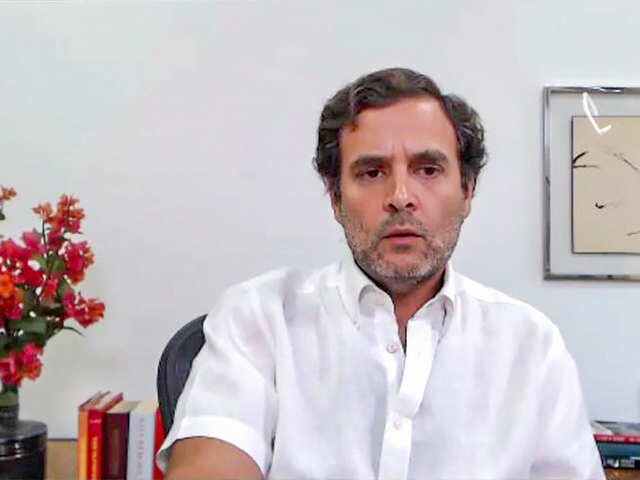
New Delhi, Jul 27: Congress leader Rahul Gandhi on Monday said he is not going to lie about Chinese transgressions in eastern Ladakh even if it costs him politically, asserting he will say the truth as far as Indian territory is concerned.

Gandhi made these remarks in a tweet, along with an over-a-minute-long video, as part of a series launched by him on the India-China face-off along the Line of Actual Control(LAC) in eastern Ladakh.

Asked in the video how he would react to people who say his questions to Prime Minister Narendra Modi on China weakened India, the former Congress chief said, "If you want me to lie that the Chinese have not entered this country, I am not going to lie. I will simply not do it. I do not care if my whole career goes to hell. I am not going to lie."

"This disturbs me. Frankly, it makes my blood boil. How can some other nation just come into our territory?"

"Hiding the truth is anti-national. Bringing it to people's attention is patriotic," Gandhi said.

"So frankly, I do not care if it costs me politically. I do not care if I have no political career at all after that. But I am going to say the truth as far as Indian territory is concerned," he added.

Gandhi has been repeatedly attacking the prime minister and the government over Chinese transgressions on the LAC in eastern Ladakh.

"As an Indian, my number one priority is the nation and its people," he said on Monday.

The Bharatiya Janata Party (BJP) has hit back at Gandhi over his attack on the government on the Ladakh face-off, alleging he is seeking to politicise defence and foreign policy matters and "wash their past sins of 1962 and weaken India".

BJP president JP Nadda has also alleged that for years, a dynasty has been trying to destroy Modi, while adding that those who want to destroy the prime minister will only end up causing further damage to their own party.

Comments

Add new comment

  • Coastaldigest.com reserves the right to delete or block any comments.
  • Coastaldigset.com is not responsible for its readers’ comments.
  • Comments that are abusive, incendiary or irrelevant are strictly prohibited.
  • Please use a genuine email ID and provide your name to avoid reject.
News Network
January 1,2020

Jan 1: The ban on the practice of instant triple talaq, making it a penal offence and the increase in the strength of Supreme Court judges were two of the major achievements of the law ministry in 2019.

In July, Parliament gave its nod to The Muslim Women (Protection of Rights on Marriage) Bill, 2019. The new law makes talaq-e-biddat or any other similar form of talaq having the effect of instantaneous and irrevocable divorce pronounced by a Muslim husband void and illegal.

It makes it illegal to pronounce talaq three times in spoken, written or through SMS or WhatsApp or any other electronic chat in one sitting.

According to the new law, any Muslim who pronounces the illegal form of talaq upon his wife shall be punished with imprisonment for a term which may extend to three years, and shall also be liable to fine.

During the year, four new judges were appointed to the Supreme Court in September, taking its strength to 34, the highest-ever.

However, vacancies in high courts and lower courts are on the rise and convincing state governments and the 25 high courts to come on board to create an all-India judicial service to recruit judges for the subordinate courts tops the agenda of the Law Ministry in 2020.

Besides creating a consensus on setting up the All-India Judicial Services, the ministry will also have to focus on filling up vacancies in the high court. On an average, the vacancies stood at 400 throughout this year.

With more than 5,000 positions of judicial officers in district and subordinate courts lying vacant, the Law Ministry has pitched for setting up all-India judicial services.

The sanctioned strength of the judicial officers in district and subordinate courts was 22,644. The number of judicial officers in position and vacant posts is 17,509 and 5,135, respectively.

The government has proposed that while states and high courts can recruit judicial officers, the Union Public Service Commission (UPSC) can hold pan-India entrance tests.

The ministry has made it clear that such services would not encroach on the powers of the states.

As of now, the selection and appointment of judges in subordinate courts is the responsibility of the high courts and state governments concerned.

The Narendra Modi government has given a fresh push to the long-pending proposal to set up the new service to have a separate cadre for the lower judiciary in the country.

But there is a divergence of opinion among state governments and respective high courts on the constitution of the All India Judicial Service (AIJS).

One of the problems cited is that since several states have used powers under Code of Criminal Procedure (CrPC) and Code of Civil Procedure (CPC) to declare that the local language would be used in lower courts even for writing orders, a person say selected from Tamil Nadu may find it difficult to hold proceedings in states like Uttar Pradesh and Bihar.

The other point of opposition is that an all India service may hamper the career progression of state judicial services officers.

Another key issue the ministry has to handle in 2020 is vacancies in the 25 high courts.

Throughout 2019, on an average, the high courts faced a shortage of 400 judges.

According to Law Ministry data, as on September 1, the high courts had 414 vacant positions as compared to the sanctioned strength of 1,079 judges. The figure was 409 in August and 403 in July, as per the data.

A three-member Supreme Court collegium recommends the names of candidates for appointment as high court judges. In case of appointments to the Supreme Court, the collegium consists of five top judges of the top court.

High court collegiums shortlist candidates for their respective high courts and send the names to the law ministry.

The ministry, along with background check reports by the Intelligence Bureau, forwards it to the Supreme Court collegium for a final call.

The government has maintained that appointment of judges in the high courts is a "continuous collaborative process" between the Executive and the Judiciary, as it requires consultation and approval from various Constitutional authorities.

Vacancies keep arising on account of retirement, resignation or elevation of judges and increase in judges' strength. In June last year, the vacancy position stood at 399, while it was 396 in May.

In April, 399 posts of judges were vacant, while the figure was 394 in March. The vacancy position in February stood at 400 and in January, it was 392, according to the data collated by the Department of Justice.

Over 43 lakh cases are pending in the 25 high courts.

Another priority would be the finalisation of the memorandum of the procedure to guide the appointment and transfer of the Supreme Court and high court judges. The issue had now been pending for over two years now with the SC collegium and the government failing to reach a consensus.

Successive governments have also been working on making India a hub of international arbitration. It has taken several steps to change laws dealing with commercial disputes.


Comments

Add new comment

  • Coastaldigest.com reserves the right to delete or block any comments.
  • Coastaldigset.com is not responsible for its readers’ comments.
  • Comments that are abusive, incendiary or irrelevant are strictly prohibited.
  • Please use a genuine email ID and provide your name to avoid reject.