Mangaluru: BCF presents scholarships, wheel-chairs, sewing machines

[email protected] (CD Network | Chakravarthi)
August 14, 2016

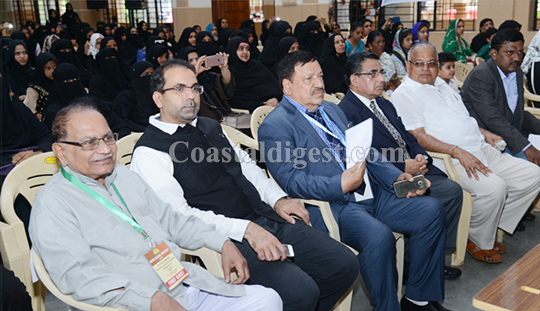
Mangaluru, Aug 14: Encouraging and assisting the children of economically backward communities to peruse education is a noble work, said B A Mohiuddin Bava, MLA, Mangaluru North.

BCF evng 15

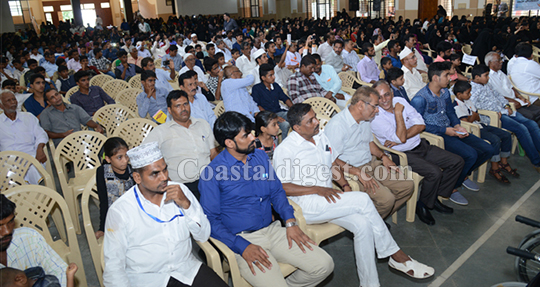
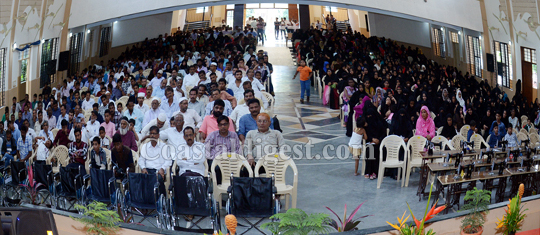
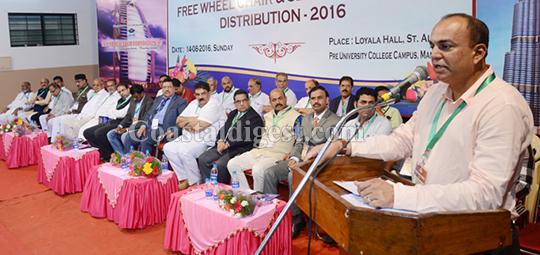
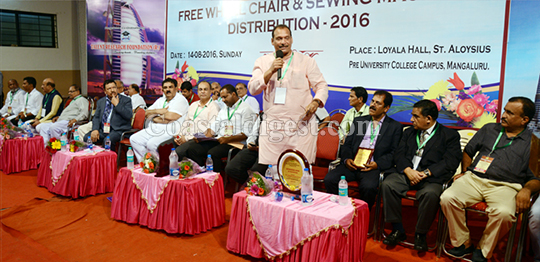
Inaugurating the scholarship distribution programme organised by the UAE-based Bearys Cultural Forum (BCF) at Loyola Hall here on Sunday, Mr Bava said that the contribution of BCF for past 15 years in this regard is commendable.

Opining that the people of backward communities have today realised the importance of formal education, Mr Bava said that philanthropic organisations like BCF should continue to strive towards the upliftment of the community.

Delivering the keynote address B M Farooq, Chairman, Fiza Group of Companies, Bengaluru, said that organisations like BCF played a crucial role in improving the condition of Beary community, which has now understood the importance of education.

“Today more number of Muslim girls are perusing higher education and performing better compared to their male counterparts. This is a positive development. However, Muslim boys also should work hard,” he said.

Scholarships to 600 students

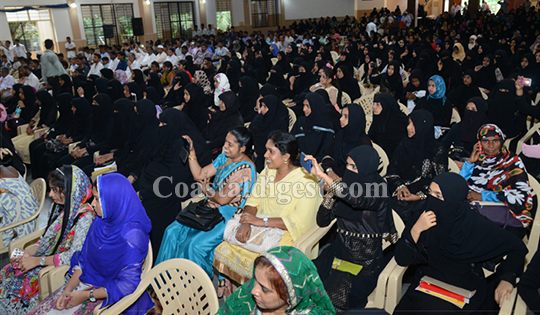
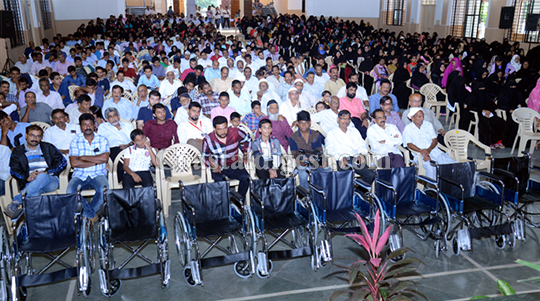
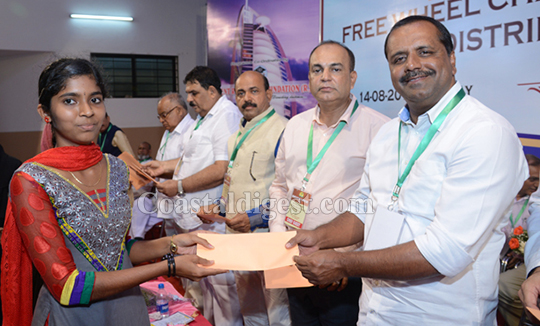
Scholarships were distributed among 600 college students of different courses from pre-university to post-graduation degrees. Besides, as many as nine students who did exceptionally well in SSLC and PUC exams this year and one sports achiever were presented the BCF Awards.

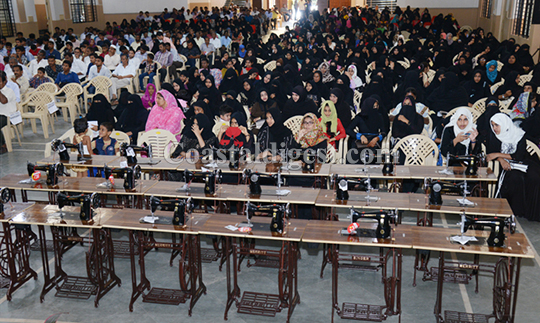
Like previous years wheel-chairs were handed over to the physically challenged and sewing machines to women from financially backward families.

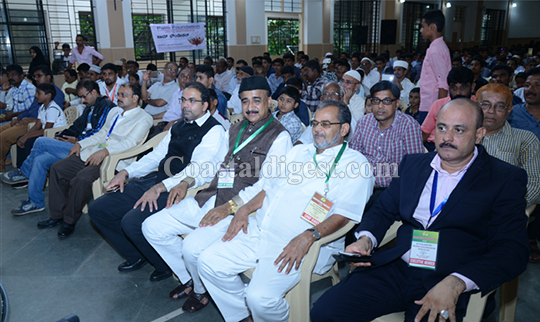
B M Mumtaz Ali, patron of BCF welcomed the gathering. Ibrahim Kodijal, MUDA chairman, K Mohammed Haris, MD of Mukka Sea Food Industries Pvt Ltd, Dr A M Khan, professor and registrar (evaluation), Mangalore University, Fathaulla Saheb Tonse, MD, Barsha International Group, Satish Poojary, president Billawa Association, Dubai, Abdulla Madumoole, general secretary, BWF Abu Dhabi, M B Noor Mohammed Mulky, Hyder Parthipadi, Inayath Ali, M K Abdul Khader were present among others.

Earlier in the morning, a career guidance programme was organised for students. JR Lobo, MLA, Mangaluru South, inaugurated the session. Dr Kaup Mohammed, Dean of UAE London American City College, was the resource person. Udupi Khazi Ibrahim Musliyar Bekal offered dua.

Also Read: Mangaluru: Zakariya Jokatte conferred with 'Star of Bearys 2016' award

BCF 1

BCF 2

BCF 3

BCF 4

BCF 5

BCF 6

BCF 7

BCF 8

BCF 9

BCF evng 1

BCF evng 2

BCF evng 3

BCF evng 4

BCF evng 5

BCF evng 6

BCF evng 7

BCF evng 8

BCF evng 9

BCF evng 10

BCF evng 11

BCF evng 12

BCF evng 13

BCF evng 14

BCF evng 16

BCF evng 17

BCF evng 18

BCF evng 19

BCF evng 20

BCF evng 21

BCF evng 22

BCF evng 23

BCF evng 24

BCF evng 25

BCF evng 26

BCF evng 27

BCF evng 28

BCF evng 29

BCF evng 30

Comments

INdian
 - 
Monday, 15 Aug 2016

I have a suggestion for Cheddis

U take responsibility of taking care of hindus but i dont see any activity other than hatred from U... If U can help the poor and needy from hindu people, It would great help for the poor and our mangalore society...

Appreciate BCF and thanks, for also distributing help to non muslims...

Add new comment

  • Coastaldigest.com reserves the right to delete or block any comments.
  • Coastaldigset.com is not responsible for its readers’ comments.
  • Comments that are abusive, incendiary or irrelevant are strictly prohibited.
  • Please use a genuine email ID and provide your name to avoid reject.
coastaldigest.com news network
May 11,2020

Mangaluru, May 11: The first evocation flight from Dubai to Mangaluru amidst corona crisis is expected to bring back 177 stranded Kannadigas, mainly residents of coastal Karnataka, on Tuesday, May 12.

All the international passengers have to undergo three mandatory upon their arrival at Mangaluru International Airport - the thermal test, pulse oximetry reading and swab test.

They will be categorised based on their health condition and sent to institutional quarantine, said Sindhu B Rupesh, deputy commissioner, Dakshina Kannada.

“Those with some health issues on arrival (Category A) will be ferried through ambulances to quarantine facilities and rest in buses,” she said.

Arriving passengers will be given the option to choose their quarantine home (lodge, hostel and service apartment) based on their budget and preference.

It is learnt that Dakshina Kannada district administration has kept ready close to 1,000 rooms. The tariff for quarantine facilities is between Rs 1,200 and Rs 4,500 (including food) per day.

As per the Karnataka government, as on May 6, about 10,823 stranded expatriates are expected to return home.

The CISF, airport authorities, health and police departments will make arrangements for the arriving repatriates at MIA.

Sindhu said that the district administration has no personal information about the arriving passengers and there is high probability that they may belong to other districts or the neighbouring Kerala.

“So far, the district administration has received the missive that 177 passengers will be landing on May 12. If we are given advance details about the expats from other districts/state, the district administration will alert them to make necessary arrangements,” she said.

Comments

Add new comment

  • Coastaldigest.com reserves the right to delete or block any comments.
  • Coastaldigset.com is not responsible for its readers’ comments.
  • Comments that are abusive, incendiary or irrelevant are strictly prohibited.
  • Please use a genuine email ID and provide your name to avoid reject.
News Network
July 28,2020

Hounde, Jul 28: Coronavirus and its restrictions are pushing already hungry communities over the edge, killing an estimated 10,000 more young children a month as meager farms are cut off from markets and villages are isolated from food and medical aid, the United Nations warned Monday.

In the call to action shared with The Associated Press ahead of publication, four UN agencies warned that growing malnutrition would have long-term consequences, transforming individual tragedies into a generational catastrophe.

Hunger is already stalking Haboue Solange Boue, an infant from Burkina Faso who lost half her former body weight of 5.5 pounds (2.5 kilograms) in just a month. Coronavirus restrictions closed the markets, and her family sold fewer vegetables. Her mother was too malnourished to nurse.

“My child,” Danssanin Lanizou whispered, choking back tears as she unwrapped a blanket to reveal her baby's protruding ribs.

More than 550,000 additional children each month are being struck by what is called wasting, according to the UN — malnutrition that manifests in spindly limbs and distended bellies. Over a year, that's up 6.7 million from last year's total of 47 million. Wasting and stunting can permanently damage children physically and mentally.

“The food security effects of the COVID crisis are going to reflect many years from now,” said Dr. Francesco Branca, the WHO head of nutrition. “There is going to be a societal effect.”

From Latin America to South Asia to sub-Saharan Africa, more poor families than ever are staring down a future without enough food.

In April, World Food Program head David Beasley warned that the coronavirus economy would cause global famines “of biblical proportions” this year. There are different stages of what is known as food insecurity; famine is officially declared when, along with other measures, 30% of the population suffers from wasting.

The World Food Program estimated in February that one Venezuelan in three was already going hungry, as inflation rendered salaries nearly worthless and forced millions to flee abroad. Then the virus arrived.

“Every day we receive a malnourished child,” said Dr. Francisco Nieto, who works in a hospital in the border state of Tachira.

In May, Nieto recalled, after two months of quarantine, 18-month-old twins arrived with bodies bloated from malnutrition. The children's mother was jobless and living with her own mother. She told the doctor she fed them only a simple drink made with boiled bananas.

“Not even a cracker? Some chicken?” he asked.

“Nothing,” the children's grandmother responded. By the time the doctor saw them, it was too late: One boy died eight days later.

The leaders of four international agencies — the World Health Organization, UNICEF, the World Food Program and the Food and Agriculture Organization — have called for at least dollar 2.4 billion immediately to address global hunger.

But even more than lack of money, restrictions on movement have prevented families from seeking treatment, said Victor Aguayo, the head of UNICEF's nutrition program.

“By having schools closed, by having primary health care services disrupted, by having nutritional programs dysfunctional, we are also creating harm,” Aguayo said. He cited as an example the near-global suspension of Vitamin A supplements, which are a crucial way to bolster developing immune systems.

In Afghanistan, movement restrictions prevent families from bringing their malnourished children to hospitals for food and aid just when they need it most. The Indira Gandhi hospital in the capital, Kabul, has seen only three or four malnourished children, said specialist Nematullah Amiri. Last year, there were 10 times as many.

Because the children don't come in, there's no way to know for certain the scale of the problem, but a recent study by Johns Hopkins University indicated an additional 13,000 Afghans younger than 5 could die.

Afghanistan is now in a red zone of hunger, with severe childhood malnutrition spiking from 690,000 in January to 780,000 — a 13% increase, according to UNICEF.

In Yemen, restrictions on movement have blocked aid distribution, along with the stalling of salaries and price hikes. The Arab world's poorest country is suffering further from a fall in remittances and a drop in funding from humanitarian agencies.

Yemen is now on the brink of famine, according to the Famine Early Warning Systems Network, which uses surveys, satellite data and weather mapping to pinpoint places most in need.

Some of the worst hunger still occurs in sub-Saharan Africa. In Sudan, 9.6 million people live from one meal to the next — a 65% increase from the same time last year.

Lockdowns across Sudanese provinces, as around the world, have dried up work and incomes for millions. With inflation hitting 136%, prices for basic goods have more than tripled.

“It has never been easy but now we are starving, eating grass, weeds, just plants from the earth,” said Ibrahim Youssef, director of the Kalma camp for internally displaced people in war-ravaged south Darfur.

Adam Haroun, an official in the Krinding camp in west Darfur, recorded nine deaths linked with malnutrition, otherwise a rare occurrence, over the past two months — five newborns and four older adults, he said.

Before the pandemic and lockdown, the Abdullah family ate three meals a day, sometimes with bread, or they'd add butter to porridge. Now they are down to just one meal of “millet porridge” — water mixed with grain. Zakaria Yehia Abdullah, a farmer now at Krinding, said the hunger is showing “in my children's faces.”

“I don't have the basics I need to survive,” said the 67-year-old, who who hasn't worked the fields since April. “That means the 10 people counting on me can't survive either.”


Comments

Add new comment

  • Coastaldigest.com reserves the right to delete or block any comments.
  • Coastaldigset.com is not responsible for its readers’ comments.
  • Comments that are abusive, incendiary or irrelevant are strictly prohibited.
  • Please use a genuine email ID and provide your name to avoid reject.
News Network
June 20,2020

Bengaluru, Jun 20: A petition has been filed in Karnataka High Court to transfer Amulya Leona case to the National Investigation Agency (NIA). She raised pro-Pakistan slogans at an anti-CAA rally on February 20 at Freedom Park.

The petition, filed by advocate Vishal Raghu, blamed the probe team for not filing chargesheet on time and suggested the state government to approach the higher court against bail granted to Amulya Leona.

On June 11, she was granted conditional bail by the Bengaluru civil court.

She was charged with sedition for her actions in the presence of All India Majlis-e-Ittehad-ul-Muslimeen chief Asaduddin Owaisi.

The court granted bail after hearing the bail application. Amulya's advocate on behalf of the petitioner said, "the petitioner is just a 19-year-old lady and she is studying in a private college in the Bengaluru. She shouted 'Pakistan Zindabad' but she never mentioned Pakistan as her country."

Comments

Add new comment

  • Coastaldigest.com reserves the right to delete or block any comments.
  • Coastaldigset.com is not responsible for its readers’ comments.
  • Comments that are abusive, incendiary or irrelevant are strictly prohibited.
  • Please use a genuine email ID and provide your name to avoid reject.