Mangaluru: Billava Sangha Kuwait holds scholarship and motivation programme

[email protected] (CD Network)
August 31, 2016

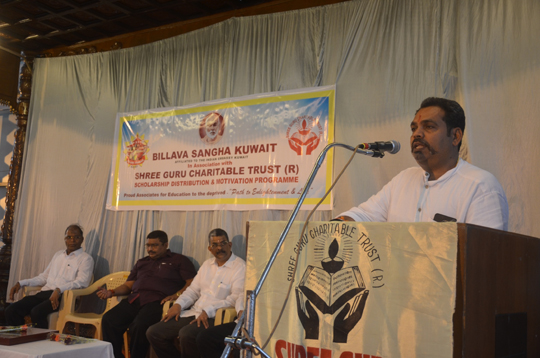
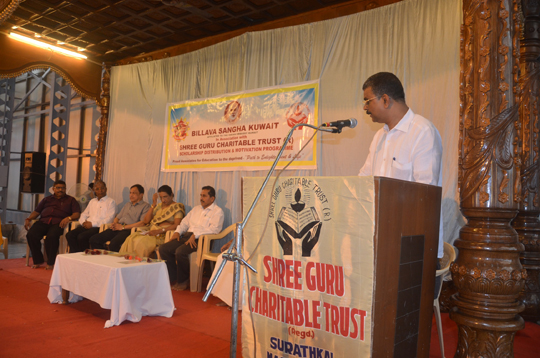
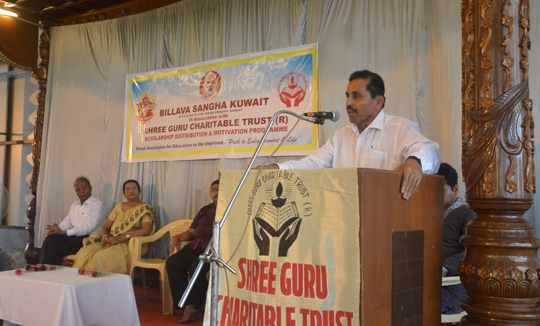
Mangaluru, Aug 31: Billava Sangha Kuwait in association with Shree Guru Charitable Trust, Mangaluru initiated Education Programme' from this year with scholarship distribution and motivation event held recently at Shri Vishvanatha Kalyana Mantapa (Glass House), Shri GokarnanathaKshetra, Kudroli, here.
bsk 4

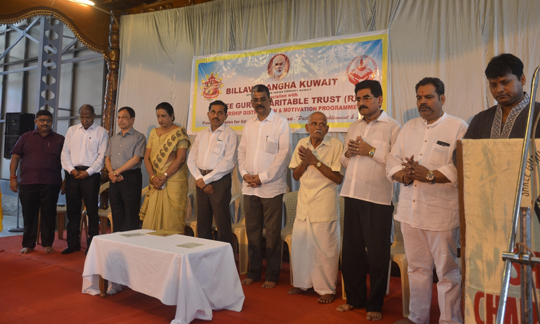
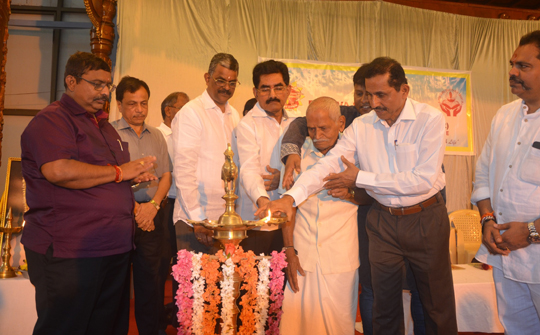
H. S. Sairam, President of the Shri Gokarnanatha Kshetra inaugurated the programme by lighting the lamp. Ganesh A Bangera, President of Shree Guru Charitable Trust presided over the function. Chandrasekhar Nanil, Vice President of Guru Charitable Trust welcomed the distinguished guests and the gathering. Greetings from JanardhanaPoojary and Sri Jaya Suvarnawas conveyed to the gathering and blessings to the students.

Sri Satish Kunder on behalf of the Billava Sangha Kuwait gave the insight of the activities of Billava Sangha Kuwait and how the motivated members of BSK worked hard to make this Education Programme a reality even though the organization is only 3 years into its inception. With the creation of strong base of associates and the univocal support, this programmecan continue to serve the community in a bigger way year after year. He also briefed though the Billava history and how the strong Billava community has become weak due to not involvement with the changes in the society and only education can take the community to their earlier status again.

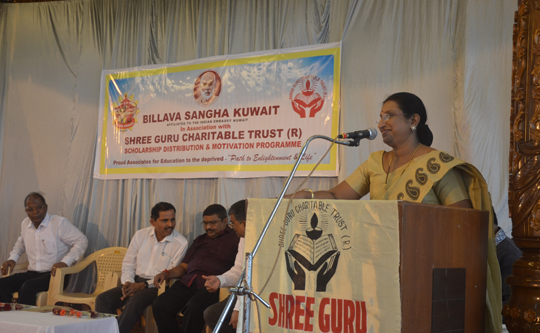
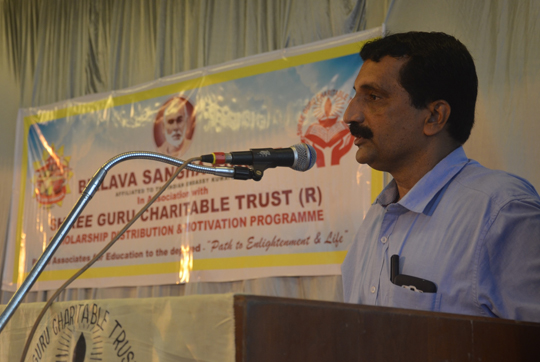
Dr Ramila Shekhar, Dean PG Department, Roshni Nilaya delivered the motivation speech for the students. She stressed the need for the children to be disciplined in their way of life and the motivation can come only from within. She asked the children to focused on their goal and evaluate their actions on day to day basis. She said the children are full of energy and needs to put it into action in shaping their life.

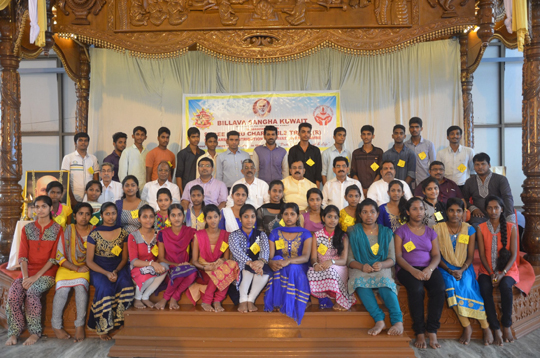
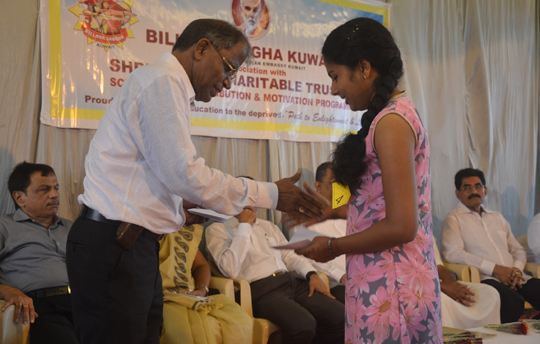
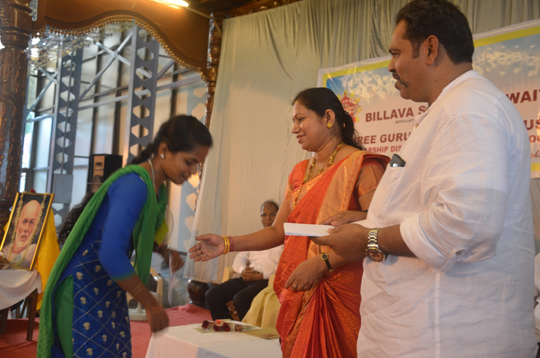
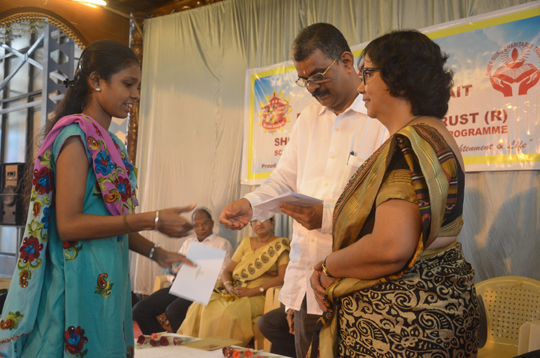
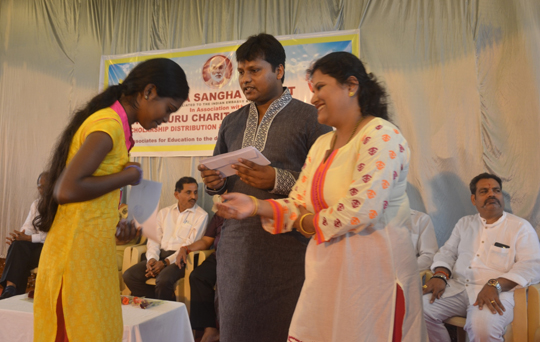
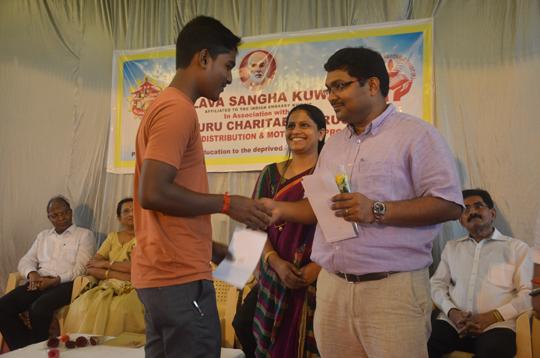
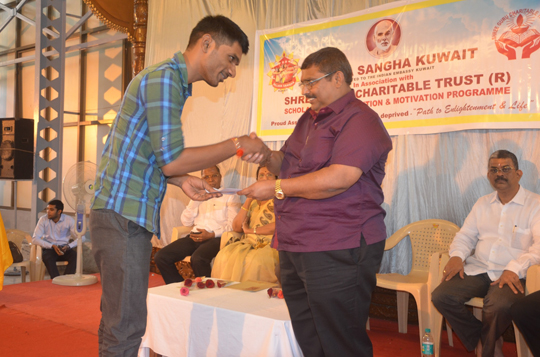
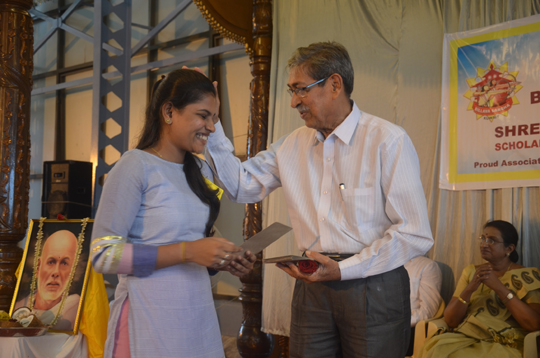
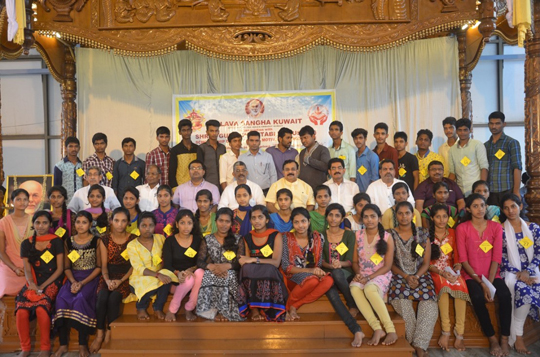
It was august occasion where 89 less privileged deserving students pursuing Post graduation, Engineering, Diploma, Law, Degree, Pre-University and Trade courseswere provided with Scholarships. Total of Rupees 5 lakhs and 40 thousands was distributed as Scholarship among these students. Scholarships were distributed by the guests and Rohith Sanil, Raghav, Vivek Rao, Sri A. K. Ravindra, Sri Manoj Bangera, Ramanath Kotekar and others.

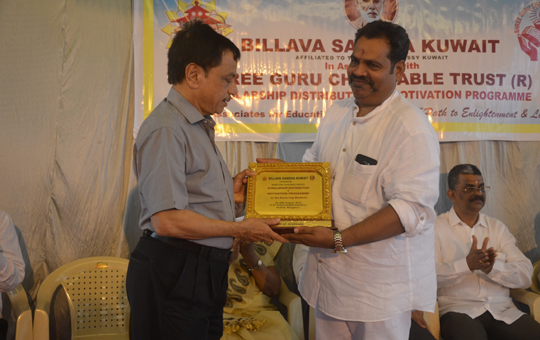
Chief Guest, Shylendra Y. Suvarna, Managing Director Of SRR Industries asked the children to utilize the opportunity with the helping hand from BSK who have done so with all the odds of working with extreme temperature in Kuwait. He wished all the children to excel in their studies and reach the goal.

Harikrishna Bantwal, spokesperson of the Billava Mahamandal, in his keynote speech asked the children to emulate the life and preaching of Swami Vivekanada and Sri Narayana Guru. He said that the backward tag of the community needs to be removed and we have to make ourselves strong with quality education and unity.

Raghu Poojary, Vice Prsident of Billava Sangha Kuwait also spoke on the occasion and thanked Sri Guru Charitable Trust for making this Education Programme a reality with their extensive Survey work. Jayanada, Secretary of Sri Guru Charitable Trust in his emotional speech explained how some of the less privileged students with all hardships and even without proper place to live have excelled in their studies. Sri YogishKotian also spoke on the occasion.

Ganesh Bangera in his presidential address briefed how the difficult work of survey was conducted and how these children were motivated from time to time. Senior Billava leader M Seetharam, and former President Mohandas Poojary were also present at the dais.

Earlier in the day Dr Ashith M.V. motivated the students and Pratibha Kulai spoke on “Stress Management” Education programme -2016 was concluded with Vote of thanks by Sri Govind Belchada of Billava Sangha Kuwait.

Billava Sangha Kuwait slogan – “Proud Associates for Education to the deprived, Path to Enlightenment and Life” is there to remain and BSK pledged to carry on with more enthusiasm year after year.
bsk 1

bsk 2

bsk 3

bsk 5

bsk 6

bsk 7

bsk 8

bsk 9

bsk 10

bsk 11

bsk 12

bsk 13

bsk 14

bsk 15

bsk 16

bsk 17

Comments

B. M. Iqbal
 - 
Thursday, 1 Sep 2016

good job Billawa Sangha Kuwait

Add new comment

  • Coastaldigest.com reserves the right to delete or block any comments.
  • Coastaldigset.com is not responsible for its readers’ comments.
  • Comments that are abusive, incendiary or irrelevant are strictly prohibited.
  • Please use a genuine email ID and provide your name to avoid reject.
Ram Puniyani
February 4,2020

As democracy is seeping in slowly all over the world, there is an organization which is monitoring the degree of democracy in the individual countries, The Economist Intelligence Unit. As such in each country there are diverse factors which on one hand work to deepen it, while others weaken it. Overall there is a march from theoretical democracy to substantive one. The substantive democracy will herald not just the formal equality, freedom and community feeling in the country but will be founded on the substantive quality of these values. In India while the introduction of modern education, transport, communication laid the backdrop of beginning of the process, the direction towards deepening of the process begins with Mahatma Gandhi when he led the non-cooperation movement in 1920, in which average people participated. The movement of freedom for India went on to become the ‘greatest ever mass movement’ in the World.

The approval and standards for democracy were enshrined in Indian Constitution, which begins ‘We the people of India’, and was adopted on 26th January 1950. With this Constitution and the policies adopted by Nehru the process of democratization started seeping further, the dreaded Emergency in 1975, which was lifted later restored democratic freedoms in some degree. This process of democratisation is facing an opposition since the decade of 1990s after the launch of Ram Temple agitation, and has seen the further erosion with BJP led Government coming to power in 2014. The state has been proactively attacking civil liberties, pluralism and participative political culture with democracy becoming flawed in a serious way. And this is what got reflected in the slipping of India by ten places, to 51st, in 2019. On the index of democracy India slipped down from the score of 7.23 to 6.90. The impact of sectarian BJP politics is writ on the state of the nation, country.

Ironically this lowering of score has come at a time when the popular protests, the deepening of democracy has been given a boost and is picking up with the Shaheen Bagh protests. The protest which began in Shaheen Bagh, Delhi in the backdrop of this Government getting the Citizenship amendment Bill getting converted into an act and mercilessly attacking the students of Jamia Milia Islamia, Aligarh Muslim University along with high handed approach in Jamia Nagar and neighbouring areas.  From 15th December 2019, the laudable protest is on.

It is interesting to note that the lead in this protest has been taken by the Muslim women, from the Burqa-Hijab clad to ‘not looking Muslim’ women and was joined by students and youth from all the communities, and later by the people from all the communities. Interestingly this time around this Muslim women initiated protest has contrast from all the protests which earlier had begun by Muslims. The protests opposing Shah Bano Judgment, the protests opposing entry of women in Haji Ali, the protests opposing the Government move to abolish triple Talaq. So far the maulanas from top were initiating the protests, with beard and skull cap dominating the marches and protests. The protests were by and large for protecting Sharia, Islam and were restricted to Muslim community participating.

This time around while Narendra Modi pronounced that ‘protesters can be identified by their clothes’, those who can be identified by their external appearance are greatly outnumbered by all those identified or not identified by their appearance.

The protests are not to save Islam or any other religion but to protect Indian Constitution. The slogans are structured around ‘Defence of democracy and Indian Constitution’. The theme slogans are not Allahu Akbar’ or Nara-E-Tadbeer’ but around preamble of Indian Constitution. The lead songs have come to be Faiz Ahmad Faiz’s ‘Hum Dekhenge’, a protest against Zia Ul Haq’s attempts to crush democracy in the name of religion. Another leading protest song is from Varun Grover, ‘Tanashah Aayenge…Hum Kagaz nahin Dikhayenge’, a call to civil disobedience against the CAA-NRC exercise and characterising the dictatorial nature of the current ruling regime.

While BJP was telling us that primary problem of Muslim women is Triple talaq, the Muslim women led movements has articulated that primary problem is the very threat to Muslim community. All other communities, cutting across religious lines, those below poverty line, those landless and shelter less people also see that if the citizenship of Muslims can be threatened because of lack of some papers, they will be not far behind in the victimization process being unleashed by this Government.

While CAA-NRC has acted as the precipitating factor, the policies of Modi regime, starting from failure to fulfil the tall promises of bringing back black money, the cruel impact of demonetisation, the rising process of commodities, the rising unemployment, the divisive policies of the ruling dispensation are the base on which these protest movements are standing. The spread of the protest movement, spontaneous but having similar message is remarkable. Shaheen Bagh is no more just a physical space; it’s a symbol of resistance against the divisive policies, against the policies which are increasing the sufferings of poor workers, the farmers and the average sections of society.

What is clear is that as identity issues, emotive issues like Ram Temple, Cow Beef, Love Jihad and Ghar Wapasi aimed to divide the society, Shaheen Bagh is uniting the society like never before. The democratisation process which faced erosion is getting a boost through people coming together around the Preamble of Indian Constitution, singing of Jan Gan Man, waving of tricolour and upholding the national icons like Gandhi, Bhagat Singh, Ambedkar and Maulana Azad. One can feel the sentiments which built India; one can see the courage of people to protect what India’s freedom movement and Indian Constitution gave them.

Surely the communal forces are spreading canards and falsehood against the protests. As such these protests which is a solid foundation of our democracy. The spontaneity of the movement is a strength which needs to be channelized to uphold Indian Constitution and democratic ethos of our beloved country.

Comments

Add new comment

  • Coastaldigest.com reserves the right to delete or block any comments.
  • Coastaldigset.com is not responsible for its readers’ comments.
  • Comments that are abusive, incendiary or irrelevant are strictly prohibited.
  • Please use a genuine email ID and provide your name to avoid reject.
News Network
April 22,2020

Bengaluru, Apr 22:  Karnataka Women and Child Welfare Department has warned of action against those raising funds for Covid relief works, by using photos of children.

In a release here on Wednesday, the department said that several non-governmental organisations and voluntary groups were using the photographs of children to collect donations.

It has come to notice that several NGOs are using photos of children to raise donations to meet their food, health and other expenditure during the lockdown. However, this is against the Juvenile Justice (Care and Protection of Children) Act," the Director of the ICDS scheme stated in a release.

Comments

Add new comment

  • Coastaldigest.com reserves the right to delete or block any comments.
  • Coastaldigset.com is not responsible for its readers’ comments.
  • Comments that are abusive, incendiary or irrelevant are strictly prohibited.
  • Please use a genuine email ID and provide your name to avoid reject.
News Network
January 23,2020

Bengaluru, Jan 23: City civic body Bruhat Bengaluru Mahanagara Palike (BBMP) levied a penalty of Rs 50,000 on the Karnataka State Cricket Association (KSCA) for using single-use plastic cups during the recent India-Australia one-day international match at the M Chinnaswamy Stadium in Bengaluru.

"Despite many awareness meetings, BBMP has found that single-use plastic cups were used during yesterday's cricket match and has fined KSCA Rs 50,000 as penalty," tweeted the civic body commissioner BH Anil Kumar.

The state cricket association treasurer Vinaya Mruthyunjaya said the civic body gave a general notice without detailed information on plastic use.

"We have been environmentally friendly for the last many years and at all gates, security has made sure no plastic or flex was allowed inside the stadium," Mruthyunjaya told media.

Mruthyunjaya said KSCA sought information from the civic body as to where the single-use plastic cups were found in the stadium during the India-Australia match.

On January 16, KSCA president Roger Binny inaugurated a plastic bottle shredder at the Chinnaswamy Stadium, in addition to other green initiatives at the cricket ground such as solar panels, sub-air system, biogas unit, rainwater harvesting and others. 

Similarly, in December 2019, BBMP cracked down on popular fast food eatery – Adyar Anand Bhavan in HSR Layout and fined the establishment Rs 1 lakh for plastic use.

In October, the BBMP fined eateries including McDonald's in central Bengaluru for using plastic.

Comments

Add new comment

  • Coastaldigest.com reserves the right to delete or block any comments.
  • Coastaldigset.com is not responsible for its readers’ comments.
  • Comments that are abusive, incendiary or irrelevant are strictly prohibited.
  • Please use a genuine email ID and provide your name to avoid reject.