Mangaluru: Billawas Dubai presents scholarships, excellency awards

[email protected] (CD Network | Suresh)
August 14, 2016

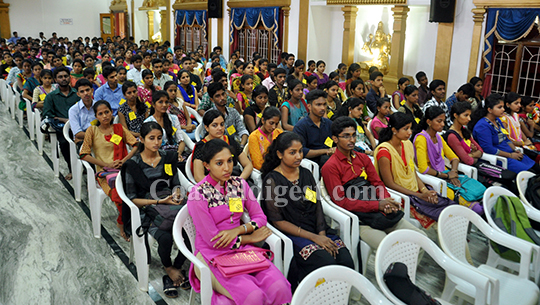
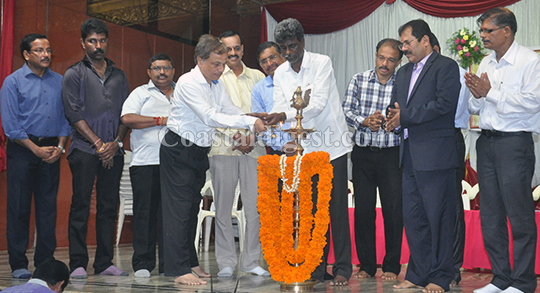
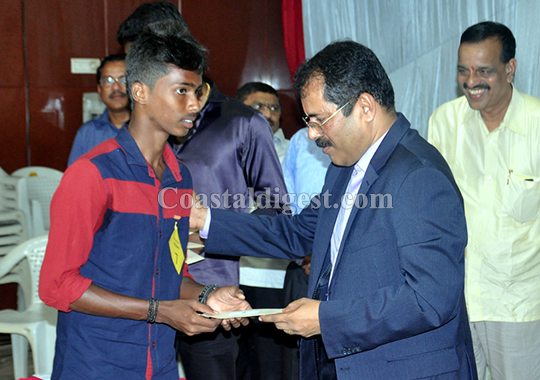
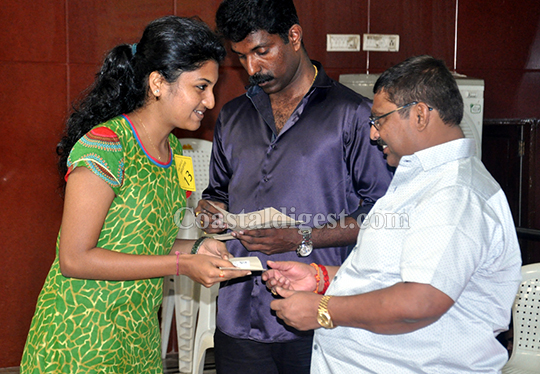
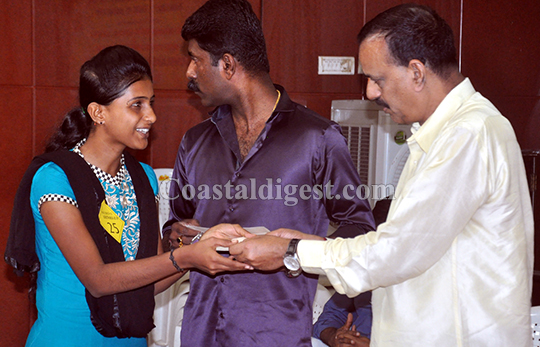
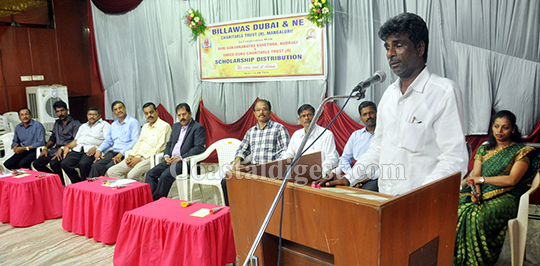
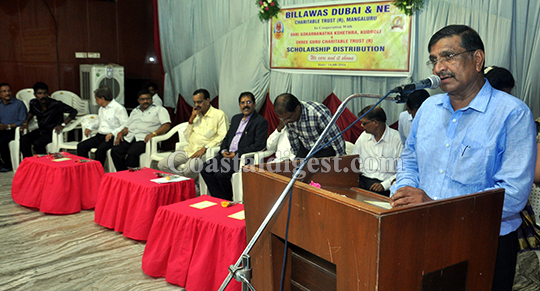
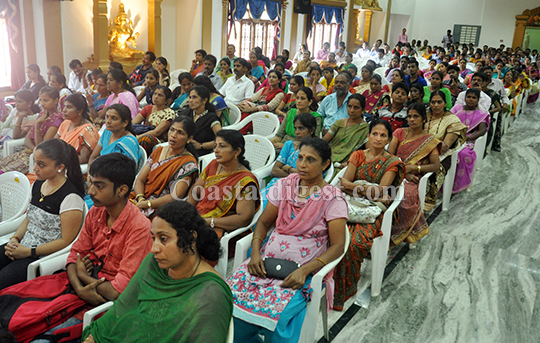
Mangaluru, Aug 14: As part of its mission to educate the new generation of needy families of the community, Billawas Dubai and Northern Emirates (BDNE), a charitable trust, on Sunday organised a scholarship distribution program in the city.

BillawasDxb 10

Kota Srinivas Poojary, former minister, and Jaya C. Suvarna, President, Rashtriya Billawa Mahamandala were present as chief guest at the scholarship distribution programme held at Adyakksha Koragappa Memorial Hall in Shri Gokarnatheshwara Temple, Kudroli, here.

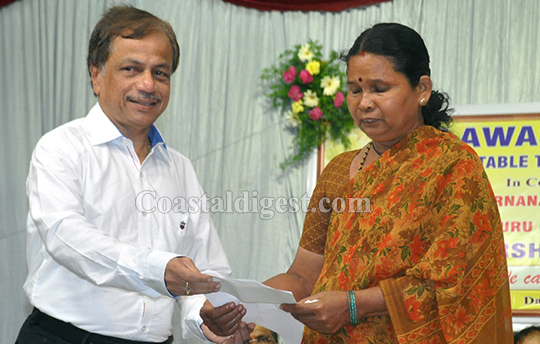
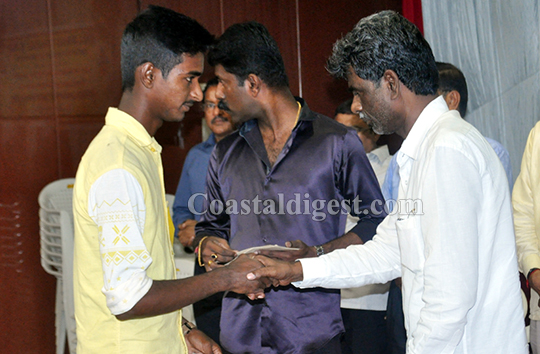
As many as 211 deserving students who are studying medicine, engineering, nursing, post-graduation etc were given scholarships.

On the same occasion 23 outstanding students were presented with Excellency awards. Besides, 15 helpless and sick individuals were provided financial assistance for urgent medical care. A total of Rs 15.68 lakhs cash was spent for these causes.

Nithyananda D Kotian, President, Billawar Association, Mumbai, H S Sairam, President, Shri Gokarnatheshwara Kshetra Kudroli, Ganesh A Bangera, President, Shri Guru Charitable Trust, Jithendra Suvarna, former president, BDNE and VasanthThumbey, general secretary, were present among others.

BillawasDxb 1

BillawasDxb 2

BillawasDxb 3

BillawasDxb 4

BillawasDxb 5

BillawasDxb 6

BillawasDxb 7

BillawasDxb 8

BillawasDxb 9

BillawasDxb 11

Comments

Ahmed Fairman
 - 
Thursday, 1 Jan 1970

Education is the key to success, it destroy all enemies of society.
Always go for quality education.

Peaceful life is the result of education.
Teach inter-community harmony.

Teach your children 'Other caste as their brothers and cousins. \";88.85.231.200"

Ahmed Fairman
 - 
Thursday, 1 Jan 1970

Education is the key to success, it destroy all enemies of society.
Always go for quality education.

Peaceful life is the result of education.
Teach inter-community harmony.

Teach your children 'Other caste as their brothers and cousins. \";88.85.231.200"

Add new comment

  • Coastaldigest.com reserves the right to delete or block any comments.
  • Coastaldigset.com is not responsible for its readers’ comments.
  • Comments that are abusive, incendiary or irrelevant are strictly prohibited.
  • Please use a genuine email ID and provide your name to avoid reject.
Agencies
May 8,2020

Washington D.C., May 8: The prime time for brain development in a child's life is the first year, where the infant spends most of the time asleep. It is the time when neural connections form and sensory memories are encoded.

However, when sleep is disrupted, as occurs more often among children with autism, brain development may be affected, too.

New research led by the University of Washington finds that sleep problems in a baby's first 12 months may not only precede an autism diagnosis but also may be associated with altered growth trajectory in a key part of the brain, the hippocampus.

The study, which was published in the American Journal of Psychiatry, researchers report that in a sample of more than 400 taken of 6- to 12-month-old infants, those who were later diagnosed with autism were more likely to have had difficulty falling asleep.

It also states that this sleep difficulty was associated with altered growth trajectories in the hippocampus.

"The hippocampus is critical for learning and memory, and changes in the size of the hippocampus have been associated with poor sleep in adults and older children.

As many as 80 per cent of the children with autism spectrum disorder have sleep problems," said Annette Estes, director of the UW Autism Center and senior author of the study.

"In our clinical experience, parents have a lot of concerns about their children's sleep, and in our work on early autism intervention, we observed that sleep problems were holding children and families back," added Estes, who is also a UW professor of speech and hearing sciences.

"It could be that altered sleep is part-and-parcel of autism for some children. One clue is that behavioural interventions to improve sleep don't work for all children with autism, even when their parents are doing everything just right. This suggests that there may be a biological component to sleep problems for some children with autism," said Estes.

To consider links among sleep, brain development, and autism, researchers at the IBIS Network looked at MRI scans of 432 infants, surveyed parents about sleep patterns, and measured cognitive functioning using a standardized assessment.

At the outset of the study, infants were classified according to their risk for developing autism: Those who were at higher risk of developing autism -- about two-thirds of the study sample -- had an older sibling who had already been diagnosed.

Infant siblings of children with autism have a 20 per cent chance of developing autism spectrum disorder -- a much higher risk than children in the general population.

In the current study, 127 of the 432 infants were identified as "low risk" at the time the MRI scans were taken because they had no family history of autism.

They later evaluated all the participants at 24 months of age to determine whether they had developed autism. Of the roughly 300 children originally considered "high familial risk," 71 were diagnosed with autism spectrum disorder at that age.

Problems with sleep were more common among the infants later diagnosed with an autism spectrum disorder, as were larger hippocampi. No other subcortical brain structures were affected, including the amygdala, which is responsible for certain emotions and aspects of memory, or the thalamus, a signal transmitter from the spinal cord to the cerebral cortex.

The authors note that while parents reported more sleep difficulties among infants who developed autism compared to those who did not, the differences were very subtle and only observed when looking at group averages across hundreds of infants.

Sleep patterns in the first years of life change rapidly as infants transition from sleeping around the clock to a more adult-like sleep/wake cycle. Until further research is completed, Estes said, it is not possible to interpret challenges with sleep as an early sign of increased risk for autism.


Comments

Add new comment

  • Coastaldigest.com reserves the right to delete or block any comments.
  • Coastaldigset.com is not responsible for its readers’ comments.
  • Comments that are abusive, incendiary or irrelevant are strictly prohibited.
  • Please use a genuine email ID and provide your name to avoid reject.
News Network
July 20,2020

Bengaluru, Jul 20: Karnataka Minister for Primary and Higher Education S Suresh Kumar today said that the results of the Secondary School Leaving Certificate (SSLC) Examinations, held amidst Corona threat, will be announced in the first week of August.

Speaking to newsmen on Monday after visiting the evaluation centres in the City, said that the work is in full swing and it was proposed to announce the results by end of first week next month.

He said that the evaluation of the answer sheets are set to take another 10-12 days. Currently, evaluations of the answer sheets are taking place at 220 centres in the State.

Comments

Add new comment

  • Coastaldigest.com reserves the right to delete or block any comments.
  • Coastaldigset.com is not responsible for its readers’ comments.
  • Comments that are abusive, incendiary or irrelevant are strictly prohibited.
  • Please use a genuine email ID and provide your name to avoid reject.
coastaldigest.com news network
May 23,2020

Mangaluru, May 23: Criticising the Karnataka government's fresh protocol for management of Covid-19 as expensive, a prominent physician in the city has demanded its withdrawal.

According to Dr B Srinivas Kakkilaya, the protocol released by the Health and Family Welfare Department on May 15 enlists unnecessary and unconfirmed tests and treatments. 

The protocol has classified Covid-19 cases into three categories and has provided for hospitalisation of all three categories of patients, from asymptomatic to the most severely ill.

In a letter to the government, Dr Kakkilaya said: "The protocol suggests several investigations to be done right on the day of admission, including blood counts, liver and renal function tests, chest X Ray, ECG, CT scan of the chest, and other special investigations, all of which, if done, will cost Rs 25,000 per patient."

"In the coming days when lakhs of patients are likely to be infected with SARS CoV2, is it necessary and feasible to hospitalise and test all these patients at Rs 25,000 per person," he questioned.

The treatment options suggested in the protocol are also surprising, he pointed out. "The protocol recommends choloroquine, azithromycin, oseltamivir, zinc and vitamin C for all patients, from asymptomatic to the severely ill, and also anti coagulant injections for many patients. All these would cost at least Rs 5,000 per patient. For severe cases of Covid-19, many unproven and experimental treatments have been suggested, which are very expensive and highly questionable," Dr Kakkilaya notes.

Therefore, this protocol, he asserted was not evidence based and likely to do more harm than good. He said these unnecessarily expensive tests and allowing private companies to conduct trials on Covid-19 patients is likely to be misused by vested interests and must be immediately withdrawn, and instead, a protocol that is evidence-based, simple and avoiding unnecessary expenses, must be developed.

Comments

Add new comment

  • Coastaldigest.com reserves the right to delete or block any comments.
  • Coastaldigset.com is not responsible for its readers’ comments.
  • Comments that are abusive, incendiary or irrelevant are strictly prohibited.
  • Please use a genuine email ID and provide your name to avoid reject.