Mangaluru: CET topper Ananth says, he avoided mobile phone for 2 years

[email protected] (CD Network)
May 29, 2016

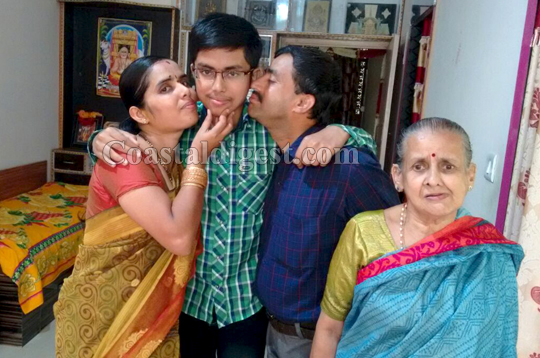
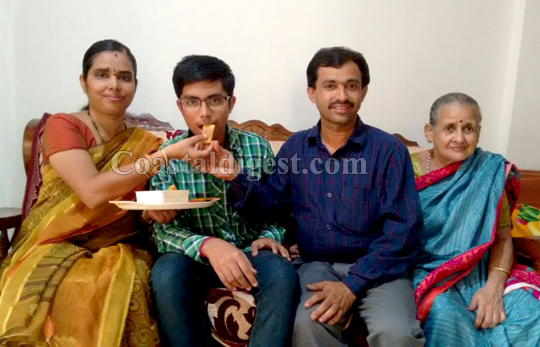
Mangaluru, May 29: Mohan Alva, chairman of Alva's Education Foundation, Mohan Alva, has announced a cash prize money of Rs. 5 lakh for Ananth G, student of Alva's PU College, for topping the medical/dental stream in the Common Entrance Test.

ananthtop 1

Ananth, who hails from bengaluru, had come to Dakshina Kannada for education. “Coaching in the college, night special classes and support of teachers, parents and Alva's College chairperson helped me to achieve the feat,” he said.

“I used to study for six to seven hours a day. The atmosphere in the hostel was also very conducive for learning. The doubts were cleared by the teachers daily which helped us,” he said.

He also said that he was totally disconnected from TV and mobile phone for the last two years, which helped him to concentrate on his studies.

Explaining his choice of Medicine, Ananth said, “I want to serve the people, so I am choosing a noble profession. I want to pursue my studies in Bangalore Medical College.”

ananthtop 3

ananthtop 4

Comments

yaseen baig
 - 
Sunday, 29 May 2016

Excellent performance, all the best.

Pramod
 - 
Sunday, 29 May 2016

all the best and keep the good performance in next stage.

Add new comment

  • Coastaldigest.com reserves the right to delete or block any comments.
  • Coastaldigset.com is not responsible for its readers’ comments.
  • Comments that are abusive, incendiary or irrelevant are strictly prohibited.
  • Please use a genuine email ID and provide your name to avoid reject.
Agencies
May 8,2020

Washington D.C., May 8: The prime time for brain development in a child's life is the first year, where the infant spends most of the time asleep. It is the time when neural connections form and sensory memories are encoded.

However, when sleep is disrupted, as occurs more often among children with autism, brain development may be affected, too.

New research led by the University of Washington finds that sleep problems in a baby's first 12 months may not only precede an autism diagnosis but also may be associated with altered growth trajectory in a key part of the brain, the hippocampus.

The study, which was published in the American Journal of Psychiatry, researchers report that in a sample of more than 400 taken of 6- to 12-month-old infants, those who were later diagnosed with autism were more likely to have had difficulty falling asleep.

It also states that this sleep difficulty was associated with altered growth trajectories in the hippocampus.

"The hippocampus is critical for learning and memory, and changes in the size of the hippocampus have been associated with poor sleep in adults and older children.

As many as 80 per cent of the children with autism spectrum disorder have sleep problems," said Annette Estes, director of the UW Autism Center and senior author of the study.

"In our clinical experience, parents have a lot of concerns about their children's sleep, and in our work on early autism intervention, we observed that sleep problems were holding children and families back," added Estes, who is also a UW professor of speech and hearing sciences.

"It could be that altered sleep is part-and-parcel of autism for some children. One clue is that behavioural interventions to improve sleep don't work for all children with autism, even when their parents are doing everything just right. This suggests that there may be a biological component to sleep problems for some children with autism," said Estes.

To consider links among sleep, brain development, and autism, researchers at the IBIS Network looked at MRI scans of 432 infants, surveyed parents about sleep patterns, and measured cognitive functioning using a standardized assessment.

At the outset of the study, infants were classified according to their risk for developing autism: Those who were at higher risk of developing autism -- about two-thirds of the study sample -- had an older sibling who had already been diagnosed.

Infant siblings of children with autism have a 20 per cent chance of developing autism spectrum disorder -- a much higher risk than children in the general population.

In the current study, 127 of the 432 infants were identified as "low risk" at the time the MRI scans were taken because they had no family history of autism.

They later evaluated all the participants at 24 months of age to determine whether they had developed autism. Of the roughly 300 children originally considered "high familial risk," 71 were diagnosed with autism spectrum disorder at that age.

Problems with sleep were more common among the infants later diagnosed with an autism spectrum disorder, as were larger hippocampi. No other subcortical brain structures were affected, including the amygdala, which is responsible for certain emotions and aspects of memory, or the thalamus, a signal transmitter from the spinal cord to the cerebral cortex.

The authors note that while parents reported more sleep difficulties among infants who developed autism compared to those who did not, the differences were very subtle and only observed when looking at group averages across hundreds of infants.

Sleep patterns in the first years of life change rapidly as infants transition from sleeping around the clock to a more adult-like sleep/wake cycle. Until further research is completed, Estes said, it is not possible to interpret challenges with sleep as an early sign of increased risk for autism.


Comments

Add new comment

  • Coastaldigest.com reserves the right to delete or block any comments.
  • Coastaldigset.com is not responsible for its readers’ comments.
  • Comments that are abusive, incendiary or irrelevant are strictly prohibited.
  • Please use a genuine email ID and provide your name to avoid reject.
coastaldigest.com news network
May 22,2020

Mangaluru, May 22: There will be complete lockdown in Dakshina Kananda from 7 p.m. on Saturday (May 23) to 7 a.m. on Monday (May 25). 

Announcing this today, Deputy commissioner Sindhu B Rupesh clarified that there would be no restrictions on sale of newspapers, vegetables, fish, meat, milk and medicine.

Other shops, hotels and bars will remain closed. Movement of private vehicles also banned during this period.

Under lockdown period, people are instructed to stay indoors and all non-essential activities are restricted. 

Under coronavirus lockdown, people can step out only for essential activities like medical supplies, grocery shopping, and hospital appointments.

Wedding with permission

If marriages have been scheduled already on Sunday, they will be considered as a special case. However, prior permission is must for scheduled weddings, said the deputy commissioner.

Marriages can be permitted by ensuring social distancing, capping the number of guests at 50 and strict compliance with all other guidelines.

No AC, no consumption of liquor and paan, no invitation to people aged above 65 and below 10 and also pregnant women are some of the guidelines to be followed for holding marriages or events.

Containment zones 

In the corona containment zones that have been sealed no one can step out, only home delivery of essential services are allowed. Only movement of medical vehicles will be allowed and no one will be allowed to perform any other activity. No one will be allowed to step out of their home even for essential services. The govt may take legal action if anyone is seen out of their home.

Comments

Add new comment

  • Coastaldigest.com reserves the right to delete or block any comments.
  • Coastaldigset.com is not responsible for its readers’ comments.
  • Comments that are abusive, incendiary or irrelevant are strictly prohibited.
  • Please use a genuine email ID and provide your name to avoid reject.
News Network
February 25,2020

Bengaluru, Feb 25: Infosys is all set to announce a cyber defence centre in Indianapolis to complement its technology and innovation centre inaugurated early last year.

This will be Infosys' seventh global cyber defence centre. According to its recent cybersecurity report titled 'Assuring Digital Trust,' 83 per cent of executives view cybersecurity as critical, yet 67 per cent are still struggling to have security embedded.

The cyber defence centre will provide end-to-end, real-time, 24x7 cyber security monitoring and protection services to support and guide American businesses in their digital transformation journey, it said.

The facility is dedicated and organised to prevent, detect, assess and respond to cybersecurity threats and breaches.

Client environment will be monitored round the clock, adopting a follow-the-sun model to deliver services like 24x7 security monitoring, management and remediation, threat hunting, security analytics, incident discovery and response, compliance reporting and malware analysis.

Vishal Salvi, Chief Information Security Officer and Head of Cyber Security Practice at Infosys, said the cyber defence centre is staffed with expert security analysts with niche skills around threat research and intelligence gathering to deliver best-in-class services to customers.

"Additionally, advanced data analytics and machine learning models are deployed to detect zero-day threats by unknown threat actors. This supports our commitment to helping our customers build a resilient cybersecurity programme that operates at scale while increasing operational efficiency and reducing costs," he said in a statement.

Comments

Add new comment

  • Coastaldigest.com reserves the right to delete or block any comments.
  • Coastaldigset.com is not responsible for its readers’ comments.
  • Comments that are abusive, incendiary or irrelevant are strictly prohibited.
  • Please use a genuine email ID and provide your name to avoid reject.