Mangaluru Chalo: Cops scuttle bike rally as BJP defies ban

coastaldigest.com news network
September 7, 2017

Mangaluru, Sept 7: The city police successfully prevented the BJP Yuva Morcha’s illegal motorbike rally in the city on Thursday by briefly detaining scores of Hindutva agitators including prominent BJP leaders after they violated a ban imposed the cops.

In order to prevent untoward incidents such as stone pelting, the Mangaluru city police had denied permission to hold proposed motorbike rally from Dr B R Ambedkar Circle (Jyothi Circle) to DC Office. The police had allowed the BJP only to hold a public meeting for three hours, from 11 am to 2 pm at Nehru Maidan.

However, hundreds of BJP activists gathered in the morning at Ambedkar Circle wherein their leaders delivered speeches till noon. They had decided to violate the ban and hold bike rally.

However, soon after former chief minister B S Yeddyurappa flagged off the illegal rally, the men in khaki stepped into action and took the agitators into custody.

The BJP leaders continued to raise slogans against chief minister Siddaramaiah led government for not granting permission to hold motorbike rally.

Dakshina Kannada Deputy Commissioner Dr K G Jagadeesha also has imposed prohibitory orders under Section 35 of Karnataka Police Act, restricting bike rally and procession till the midnight of September 8 in entire district.

Also Read: Mangaluru on high alert as hundreds of saffron activists gather in downtown

Comments

SHAHID
 - 
Thursday, 7 Sep 2017

What a party....this BJP party is saying that then will run the state after elections, the same leaders have threatned to set DK on fire, can we trust them are they trustworthy????? thnk people think before you vote

Abdullah
 - 
Thursday, 7 Sep 2017

Why dont Laticharge????

Add new comment

  • Coastaldigest.com reserves the right to delete or block any comments.
  • Coastaldigset.com is not responsible for its readers’ comments.
  • Comments that are abusive, incendiary or irrelevant are strictly prohibited.
  • Please use a genuine email ID and provide your name to avoid reject.
Agencies
July 29,2020

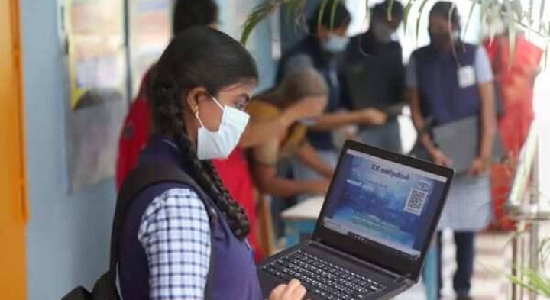
New Delhi, Jul 29: The new National Education Policy (NEP) approved by the Union Cabinet on Wednesday is set to usher in a slew of changes with the vision of creating an education system that contributes directly to transforming the country, providing high-quality education to all, and making India a global knowledge superpower.

The draft of the NEP by a panel headed by former Indian Space Research Organisation (ISRO) chief Kasturirangan and submitted to the Union Human Resource Development Minister Ramesh Pokhriyal when he took charge last year. The new NEP replaces the one formulated in 1986.

Some of the key highlights of the New Education Policy are:-

The policy aims to enable an individual to study one or more specialized areas of interest at a deep level, and also develop character, scientific temper, creativity, spirit of service, and 21st century capabilities across a range of disciplines including sciences, social sciences, arts, humanities, among others.

It identified the major problems facing the higher education system in the country and suggested changes such as moving towards multidisciplinary universities and colleges, with more institutions across India that offer medium of instruction in local/Indian languages, a more multidisciplinary undergraduate education, among others. 

The governance of such institutions by independent boards having academic and administrative autonomy has also been suggested.

Under the suggestions for institutional restructuring and consolidation, it has suggested that by 2040, all higher education institutions (HEIs) shall aim to become multidisciplinary institutions, each of which will aim to have 3,000 or more students, and by 2030 each or near every district in the country there will be at least one HEI.

The aim will be to increase the Gross Enrolment Ratio in HEIs including vocational education from 26.3 per cent (2018) to 50 per cent by 2035.

Single-stream HEIs will be phased out over time, and all will move towards becoming vibrant multidisciplinary institutions or parts of vibrant multidisciplinary HEI clusters.

It also pushes for more holistic and multidisciplinary education to be provided to the students.

Comments

Add new comment

  • Coastaldigest.com reserves the right to delete or block any comments.
  • Coastaldigset.com is not responsible for its readers’ comments.
  • Comments that are abusive, incendiary or irrelevant are strictly prohibited.
  • Please use a genuine email ID and provide your name to avoid reject.
Agencies
July 30,2020

Mumbai, Jul 30: Counterfeiting incidents have increased 24 per cent in the country in 2019 over the previous year, creating an over Rs 1 lakh crore hole in the economy, according to a report.

The report also said counterfeiters are having a free run due to the pandemic-driven disruptions to organised supply chains and the resultant spike in consumer demand.

According to the report by ASPA, a self-regulated industry body of anti-counterfeiting and traceability solutions providers, counterfeiting has risen steadily in the last few years, and exploiting the pandemic as a cover for their activities.

Between February and April 2020, over 150 incidents of counterfeiting cases were reported, mostly about fake PPE kits, sanitisers and masks taking advantage of the high demand for these products, it noted.

"There was a 24 per cent increase in counterfeiting in 2019 over 2018, leading to the loss of more than Rs 1 lakh crore to the overall economy," said Nakul Pasricha, president of Authentication Solution Providers Association.

The association works with global authorities like the International Hologram Manufacturers Association, Counterfeit Intelligence Bureau of the Interpol, and domestic industry lobbies like Ficci, he said.

Counterfeiting is a universal issue and is 3.3 per cent of global trade, according to the OECD data, impacting social and economic development across the world.

The report lists the currency, FMCG, alcohol, pharma, documents, agriculture, infrastructure, automotive, tobacco, lifestyle and apparel, as the 10 sectors impacted most by counterfeiting.

Among these, currency, alcohol and FMCG continue to be the top three sectors with the highest counterfeiting in the last two years. The FMCG sector is most vulnerable, as counterfeit incidents rose 63 per cent between 2018 (79) and 2019 when the reported cases jumped to 129.

Within the states, the fakers have a free run in Uttar Pradesh, Bihar, Rajasthan, Madhya Pradesh, Bengal, Punjab, Jharkhand, Delhi, Gujarat, and Uttarakhand, calling for urgent actions to frame anti-counterfeiting policy measures.

According to the report, UP continues to be on top followed by Bihar, Rajasthan, and together these three states represent almost 45 per cent of all counterfeiting reported in the last two years.

What is more alarming is that counterfeiting is not limited to high-end luxury items today, as common everyday items as fake cumin seeds, mustard cooking oil, ghee, hair oils, soaps, baby care vaccines and medicines are aplenty in the markets.

"There is an urgent need for building and nurturing authentication ecosystems in the country with the active involvement and active participation of all stakeholders," said Pasricha.

Comments

Add new comment

  • Coastaldigest.com reserves the right to delete or block any comments.
  • Coastaldigset.com is not responsible for its readers’ comments.
  • Comments that are abusive, incendiary or irrelevant are strictly prohibited.
  • Please use a genuine email ID and provide your name to avoid reject.
News Network
March 23,2020

Bengaluru, Mar 23: Karnataka Home Minister Basavaraj Bommai had warned those who chose to defy the lockdown order clamped in nine districts, to prevent the spread of the dreaded COVID-19 virus in the state. 

Speaking to newsmen, he said, "We have ordered for a lockdown in nine districts in the state to prevent the spread of the coronavirus and issued guidelines to follow it."

The nine COVID-19-affected districts are Bengaluru, Bengaluru Rural, Mysuru, Kodagu, Dakshina Kannada (Mangaluru), Dharwad, Belagavi, Kalaburgi and Chikkablapur.

According to Mr. Bommai, the State government will put in place further measures next week depending on how the situation will unfold in the State and the neighbouring States.

"Government offices will be operational in the State, including in the nine COVID 19-affected districts. As per the current schedule, the legislature sessions will also continue. Pourakarmikas will be working at 50% strength," he added.

Comments

Add new comment

  • Coastaldigest.com reserves the right to delete or block any comments.
  • Coastaldigset.com is not responsible for its readers’ comments.
  • Comments that are abusive, incendiary or irrelevant are strictly prohibited.
  • Please use a genuine email ID and provide your name to avoid reject.