Bengaluru, Jun 26: The National Restaurant Association of India (NRAI) on Thursday came up with a Standard Operating Procedure (SOP) for restaurants whereby among other physical distancing norms, it has suggested a 2-metre gap between tables.
Formulated in partnership with Releski, a Bengaluru based skill-tech company, the SoP suggests that in case of back-to-back seating, people sitting with their backs towards each other will have their seats divided by 'Plexiglass' divider raised up to 2 meters from the ground.
"In a typical restaurant, the improvised seating plan should have a minimum distance of 2 metres between tables. The distance of 2 metres (6 feet) between tables should measure from one edge of the table to the other table's edge," it said.
In case of loose or free seating such as in banquet style or food court style seating, a minimum 2 meters of distance should be maintained between tables.
The guidelines noted that, to encourage physical distancing, restaurants have to sacrifice their seating capacity, to promote health and safety, and also to gain trust from their patrons.
"In order to perform this, divide your restaurants under different sectors. Pull out your restaurant's floor plan and colour code different sections red and yellow. Red sections are potential areas where maximum footfall or traffic is observed. Yellow sections are areas where the footfalls are average," it said.
All the red sections are encircled or bordered by placing barricades or Q manager and will open at specific points to access the yellow section and all the opening points will have hand sanitisers and sprays, and every guest who walks from red zones to yellow zones will sanitise himself/herself to reduce the chances of contamination.
For air conditioning, the guidelines of CPWD shall be followed which inter alia emphasises that the temperature setting of all air conditioning devices should be in the range of 24-30 degree Celsius, relative humidity should be in the range of 40- 65 per cent, intake of fresh air should be as much as possible and cross ventilation should be adequate, the guidelines suggested.
The industry body has also suggested appointment of a COVID-free Ambassador who would operate as the Chief Health Officer within the restaurant team, preferably from the management team in each shift.
The ambassador's would put the new daily work routines into practice, to monitor compliance with good practice and to lead the preventative measures, adapt to health & safety recommendations and requirements of the restaurant and oversee the implementation of the norms.
Anurag Katriar, President of NRAI and CEO & Executive Director of deGustibus Hospitality, said: "Every restaurant cutting across formats is facing the harsh reality of subdued to shut business volumes in the present and the uncertainty of business environment in the future. One thing is certain that hygiene and safety will be a key differentiator in the post-pandemic restaurant operations."



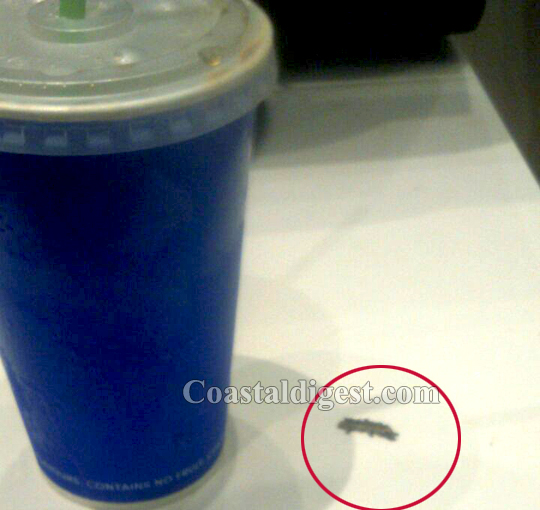 On the evening of August 27, two journalism students from Nitte Institute of Communication decided to stop by for a drink after their freshers party at Icy Creams, an ice cream parlour in the city around 9:15 p.m.

Comments
They are least bothered about cleanliness or your health; they are just bothered about their profit. so better you drink tender coconut (BONDA)
Do we need to drink PEPSI ? Can't we live without PEPSI? - Ban all Colas
Bonda parle maarre .. Namma oorda namma neerda.
From childhood we learn that humans inhale oxygen and exhale carbon dioxide. But we wilfully and forcefully dump this co2 and high level of sugar into our body in the form of pepsi n coke. Dont play with your health for these latest trendy drinks. And now complimentary with worms!
Save your health by drinking fresh healthy drinks which in turn also benefit the local farmers who grow coconuts and fresh fruits for their livelihood.
Stop making Soft drink companies make money at the cost of our health!
Add new comment