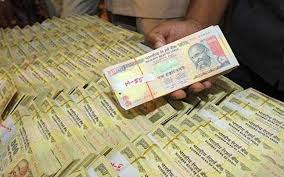
Mangaluru colleges using students to convert black money into white?

[email protected] (Coastaldigest.com News Network)
November 17, 2016

Mangaluru, Nov 17: Where there's a will to convert black money into white without paying penalty, there's always a way! And, the heads of the educational institutions in Mangaluru, the city of 'intelligent' people, have found an easiest way to counter thejihad' against black money.

1balckwhiteAccording to reliable sources, a few city based professional college, have asked some of their students, who had paid huge donations and fees a few months ago, to collect the money back in the form of denominated notes of Rs 1,000 and Rs 500 and return new currency notes after exchanging them in banks.

A Keralite student of a paramedical college in Mangaluru told coastaldigest.com on condition of anonymity that many of her batch mates have been asked to return their fee receipts. The college will give them the receipts only after they help the college to exchange the denominated currency notes through their personal accounts.

Ironically, the students who had paid fees through cheques are also being used as money mules by the professional colleges. The unethical practice of the colleges has caused inconveniences to several poor parents, who had sold their gold ornaments to pay the huge donations and fees months ago.

It is learnt that some students have paid more than Rs 3 lakh donations and fees to get seats in professional courses. The parents of those students are now in a quandary as the deposit above Rs 2.5 lakh will come under scanner.

Comments

Naren kotian
 - 
Friday, 18 Nov 2016

Inform IT officials . direct email id is available . CD must put this in website and spread .

Jeev
 - 
Thursday, 17 Nov 2016

Let the students inform IT officials. Why do they succumb to the pressure tactics of educational institutes?

Rikaz
 - 
Thursday, 17 Nov 2016

They should have taken that money in check....this situation would not have happened....Income tax worry??? let them suffer....

Add new comment

  • Coastaldigest.com reserves the right to delete or block any comments.
  • Coastaldigset.com is not responsible for its readers’ comments.
  • Comments that are abusive, incendiary or irrelevant are strictly prohibited.
  • Please use a genuine email ID and provide your name to avoid reject.
News Network
July 10,2020

Bengaluru, July 10: The Karnataka government has decided to hold examinations only for the final semester students of undergraduate (UG) and postgraduate (PG) in various universities of state and promote other semester students to the next level without holding any examination.

The decision was taken to safeguarding the students' interest as well as academic career of lakhs of students during the time of Covid-19 pandemic. The significant move by the Higher Education department was announced by Deputy Chief Minister Dr CN Ashwath Narayan who is also the minister for Higher Education.

The DCM announced that the examination for final semester UG and PG students will be conducted as per the guidelines issued by the University Grants Commission (UGC) by the end of September 2020.

As per the latest decision, all students who are either at the beginning or middle semester of their UG and PG courses will be promoted to next semester without any examination. The state government further made it clear that the latest decision would only be applicable for this academic year--2019-20.

The students will be promoted to the next semesters based on academic performances during the previous assessment.

Giving details of the decision, Dr CN Ashwath Narayan told media persons that the decision was taken in the interest of the students. "Keeping in mind the safety of students during Covid-19 pandemic times, the government has taken the decision. We have also discussed with education experts, former Vice Chancellors before arriving at this decision," he said.

The DCM also revealed that Governor Vajubhai Vala who is the Chancellor of all the universities has also given his consent for the decision. Students can call up on the department helpline 080-22341394 for any academic queries.

How will students be promoted?

The students who are pursuing UG and PG courses at mid semester levels will be evaluated internally based on their academic performance along with the marks scored during the previous semester or year.

"Based on this comprehensive evaluation, we will promote the students to next semester. But for the first semester students, they will be promoted entirely based on internal evaluation on academic performance," the Deputy Chief Minister explained.

In case if the students wish to improve their marks further, they can take the exams separately later. This apart, students with backlog subjects have also been allowed to carry those subjects further into the next semester subject to only the present academic year.

Comments

Add new comment

  • Coastaldigest.com reserves the right to delete or block any comments.
  • Coastaldigset.com is not responsible for its readers’ comments.
  • Comments that are abusive, incendiary or irrelevant are strictly prohibited.
  • Please use a genuine email ID and provide your name to avoid reject.
News Network
February 20,2020

New Delhi, Feb 20: The Supreme Court on Thursday stayed the non-bailable warrants issued against the state Director General of Police (DGP) and Inspector General of Police (IGP) by the Karnataka High Court.

A bench of Chief Justice SA Bobde stayed the non-bailable warrants while hearing a plea filed by the Karnataka government.

Earlier today, the apex court had agreed to hear the matter today itself after Solicitor General Tushar Mehta mentioned the matter before it.

Tushar Mehta had pointed that Home Secretary has been asked by the High Court to execute the non-bailable warrants and said that this order is "unusual".

Karnataka High Court had earlier issued non-bailable warrants against the top cops in a case.

Comments

Add new comment

  • Coastaldigest.com reserves the right to delete or block any comments.
  • Coastaldigset.com is not responsible for its readers’ comments.
  • Comments that are abusive, incendiary or irrelevant are strictly prohibited.
  • Please use a genuine email ID and provide your name to avoid reject.
Media Release
February 14,2020

Veteran journalist P. Sainath has said that the nation is in a crisis. And this crisis is not limited to just the rural area. It has become a national crisis at various areas such as agriculture, education, economy, job creation etc.

He was delivering the endowment lecture on the topic ‘Indian democracy at the post-liberalization and post-truth era’ at Media Manthan 2020 organized by the PG department of journalism and mass communication at St Aloysius College (Autonomous). 

Mr Sainath said that the many policies adopted in the 90s led to India becoming unusually unequal. Referring to the speech Ambedkar had made at the Constituent Assembly while handing over the draft of the Constitution, Mr Sainath said, “Ambedkar had warned about the weakness of Indian democracy that liberty without equality allows the supremacy of a few over the multitude. Liberty, equality and fraternity must be kept together as we cannot have one without the other.” 

Mr Sainath stated that the agrarian crisis was no longer about the loss of productivity, employment or about farmer suicide; it was a societal, civilizational crisis. Commenting on the lopsided policies such as cow-slaughter ban, he explained how cow slaughter ban had adversely affected many industries due to their interdependency. While Muslims who slaughtered cows were rendered helpless, the cattle traders who were mostly OBCs lost their earnings as the cattle prices crashed. An important industry like Kolhapur sandals industry in Maharashtra went bankrupt as a result of the cow slaughter ban in Maharashtra. He said the policymakers had no idea how the rural industries were interconnected. Demonetisation too devastated the rural economy as 98 percent of rural transactions happen through cash. 

Mr Sainath also spoke about the crisis of inequality which affects the Dalits and the Adivasis far more than anyone else as 90 percent of the rural households take home less than Rs 10,000/- per month. “Women are yet another group whose labour is never counted in the gross domestic product. Women and girls globally do unpaid work which amounts to about 12.5 billion working hours per year. Monetarily speaking, this is worth 10.8 trillion dollars,” Mr Sainath added. 

Speaking about the crisis of jobs Mr Sainath said that major companies were laying off employees just to create more profits for the investors and the adoption of artificial intelligence in the industry would further destroy millions of jobs.

Rector of St Aloysius College Institutions Fr Dionysius Vaz SJ, Principal Dr (Fr) Praveen Martis SJ, HOD of Journalism and Mass Communication department Dr (Fr) Melwyn Pinto SJ were present.

‘Veerappan and Vijay Mallya’s business models are interesting!’

Addressing the gathering during his endowment lecture on Friday, Mr Sainath made an interesting comment on the so called ‘revenue model’. “Whenever I visit IIMs and IITs for lectures on my PARI project, the students there ask me what my revenue model for my project is. I tell them that I do not have a revenue model. In fact, journalism does not begin with a revenue model. Gandhiji, Ambedkar, Bhagat Singh were all great journalists. But they did not have a revenue model,” Mr Sainath said.

On a lighter note, he said that the best revenue model that he liked was that of forest brigand Veerappan and liquor baron Vijay Mallya. “Veerappan ruled the forest for forty years and from the top ministers to the villagers he could dictate terms and liver royally. Similarly, Mallya’s revenue model was to steal the banks and run away abroad and live like a king,” Mr Sainath added.

Journalism is not and can never be a business. It is a calling, he opined. While newspaper can be a business, television can be a business, journalism per se cannot be reduced to a business. “Unfortunately today, journalists are recruited on a contract basis and they have no bargaining power; and there are no unions to fight for their cause. Hence, they are at the mercy of the corporate media houses for their survival and are made to write stories that cannot be called journalism,” Mr Sainath said.

Answering a question as to the pressures he faced as a journalist, he said that external pressures from the government or others could be very well handled. It is the internal pressures from once own media house that journalists find it difficult to manage.


 

Comments

Add new comment

  • Coastaldigest.com reserves the right to delete or block any comments.
  • Coastaldigset.com is not responsible for its readers’ comments.
  • Comments that are abusive, incendiary or irrelevant are strictly prohibited.
  • Please use a genuine email ID and provide your name to avoid reject.