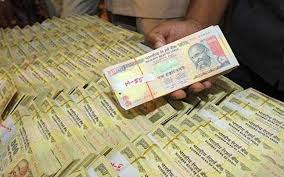
Mangaluru colleges using students to convert black money into white?

[email protected] (Coastaldigest.com News Network)
November 17, 2016

Mangaluru, Nov 17: Where there's a will to convert black money into white without paying penalty, there's always a way! And, the heads of the educational institutions in Mangaluru, the city of 'intelligent' people, have found an easiest way to counter thejihad' against black money.

1balckwhiteAccording to reliable sources, a few city based professional college, have asked some of their students, who had paid huge donations and fees a few months ago, to collect the money back in the form of denominated notes of Rs 1,000 and Rs 500 and return new currency notes after exchanging them in banks.

A Keralite student of a paramedical college in Mangaluru told coastaldigest.com on condition of anonymity that many of her batch mates have been asked to return their fee receipts. The college will give them the receipts only after they help the college to exchange the denominated currency notes through their personal accounts.

Ironically, the students who had paid fees through cheques are also being used as money mules by the professional colleges. The unethical practice of the colleges has caused inconveniences to several poor parents, who had sold their gold ornaments to pay the huge donations and fees months ago.

It is learnt that some students have paid more than Rs 3 lakh donations and fees to get seats in professional courses. The parents of those students are now in a quandary as the deposit above Rs 2.5 lakh will come under scanner.

Comments

Naren kotian
 - 
Friday, 18 Nov 2016

Inform IT officials . direct email id is available . CD must put this in website and spread .

Jeev
 - 
Thursday, 17 Nov 2016

Let the students inform IT officials. Why do they succumb to the pressure tactics of educational institutes?

Rikaz
 - 
Thursday, 17 Nov 2016

They should have taken that money in check....this situation would not have happened....Income tax worry??? let them suffer....

Add new comment

  • Coastaldigest.com reserves the right to delete or block any comments.
  • Coastaldigset.com is not responsible for its readers’ comments.
  • Comments that are abusive, incendiary or irrelevant are strictly prohibited.
  • Please use a genuine email ID and provide your name to avoid reject.
News Network
April 10,2020

Bengaluru, Apr 10: The Karnataka Education Board on Friday further postponed the annual examination for SSLC to May due to extension of lockdown to arrest spread of coronavirus which is spreading like wildfire in the state.

Minister for Primary and Higher Education S Suresh Kumar also announced that the PUC examination were also postponed to May.

"However, depending upon the situation we will announce the date in May and will inform the students one week earlier of the examination date to give time for preparation,"

Comments

Add new comment

  • Coastaldigest.com reserves the right to delete or block any comments.
  • Coastaldigset.com is not responsible for its readers’ comments.
  • Comments that are abusive, incendiary or irrelevant are strictly prohibited.
  • Please use a genuine email ID and provide your name to avoid reject.
coastaldigest.com news network
February 23,2020

Mangalore University has been participating in the campus bird count a sub-event of ‘Great backyard bird count’ (GBBC) organized by Bird Count India for the past 5 years. This year, CBC was held from 14th to 17th February of 2020 across various campuses in India.

This year the four days event was successfully ended up with the sightings of 103 species of birds from various locations across the campus spread on 300 acres. In this Black Drongo, Black Kite, Brahminy Kite, Common Iora, Green Wabler, Purple-rumed Sunbird, Red-whiskered Bulbul, White-cheeked Barbet, Jungle Babbler and Plum headed parakeets were the common birds, and also observed House Crow with nest and nestlings, Indian Robin nest with eggs, Bronzed Drongo constructing the nest and Shikra mating and carrying nesting materials.  Whereas Yellow-billed Babbler is rare in the campus, Ashy Drongo, Barn Swallow, Booted Eagle, Grey Wagtail, Indian Pitta etc. were migratory birds, Grey-headed Bulbul (Near Threatened bird), Rufous Babbler and Grey-headed Bulbul were Western Ghats Endemics  and Brown Wood Owl, Barn Owl, Spotted Owlet, Nightjars (Savanna, Indian and Jerdon’s) and Sri Lanka Frogmouth were nocturnal birds. Blue-eared Kingfisher Grey-bellied Cuckoo which was very rare and new additions to avian list of the campus.

In the first year (2016) of Mangalore University’s CBC recorded 77 species, in 2017 recorded 95 species, in 2018 recorded 110 species and in 2019 recorded 107 species of birds. However some of the common species like Rose ringed parakeets, Blue tailed bee-eater, Nilgiri Flowerpecker and Indian roller etc., sighted last year were not seen this year. But with 2 new additions from this CBC, the checklist of Mangalore University Campus has been updated with a total of 141 species.

This event was coordinated by Vivek Hasyagar from the Department of Applied Zoology and Maxim Rodrigues from the Department of Marine Geology. Survey trails were led by more than 60 students and research scholars from various Departments of Mangalore University includes Applied Zoology, Biosciences, Microbiology, Botany, Physics, Chemistry and Material Science.  In addition, some enthusiastic participants from St. Aloysius College had involved in identifying the birds around the campus.

Quote:

Wild/planned fire affects negatively on the existing ecologically sensitive areas in and around the campus especially in lateritic grasslands. Because many insectivorous birds are dependent on these lateritic grassland habitats for their food and breeding grounds for many ground dwelling birds like Yellow wattled lapwing, Red wattled lapwing, Indian Robin and Barred buttonquails. Conserving these habitats will be helpful in protecting these birds.

Quotes from the participants: “The Campus Bird Count 2020 at Mangalore University was an experience of its own kind. Observing birds in their natural habitat gave me new perspective of viewing them not only as another living being, but as equals, or even of higher intelligence. The Campus Bird Count is an important step towards documenting bird life year after year, and creating awareness amongst youngsters, so that proper conservation steps can be taken to protect them from human interference”.

-Jyotsna Dessai ( 1 M.Sc Zoology)

Comments

Add new comment

  • Coastaldigest.com reserves the right to delete or block any comments.
  • Coastaldigset.com is not responsible for its readers’ comments.
  • Comments that are abusive, incendiary or irrelevant are strictly prohibited.
  • Please use a genuine email ID and provide your name to avoid reject.
News Network
May 29,2020

New Delhi, May 29: Opining that there is no harm in importing ideas from abroad Swadeshi Jagran Manch, an affiliate of Rashtriya Swayamsevak Sangh, has suggested that India should take a cue from Pakistan and turn the “locust threat” into “chicken feed.

In an interview, Ashwani Mahajan, national co-convener of Swadeshi Jagran Manch (SJM) said: “I saw an article which shows that Pakistan has turned the locust threat into an opportunity by converting it into chicken feed”

“If there is a good idea originating from anywhere, we should be open to exploring such ideas. We should adopt good ideas. There is no harm in that,” he added.

He also shared the article on Twitter and wrote: “Pakistan turns locust threat into chicken feed. Need to understand the idea and replicate it in India.”

The article stated “an innovative pilot project in Pakistan’s Okara district offers a sustainable solution in which farmers earn money by trapping locusts that are turned into high-protein chicken feed by animal feed mills”.

“It was the brainchild of Muhammad Khurshid, a civil servant in the Ministry of National Food Security and Research, and Johar Ali, a bio-technologist from the Pakistan Agricultural Research Council,” according to the article.

Both Pakistan and India have been hit by locust attacks. These are desert locusts, which is one of the 12 species of short-horned grasshoppers. Swarms can comprise billions and travel up to 130 km in a day.

India has been battling the locust attacks with moderate success since December. However, the onset of monsoon could bring more trouble.

Comments

Add new comment

  • Coastaldigest.com reserves the right to delete or block any comments.
  • Coastaldigset.com is not responsible for its readers’ comments.
  • Comments that are abusive, incendiary or irrelevant are strictly prohibited.
  • Please use a genuine email ID and provide your name to avoid reject.