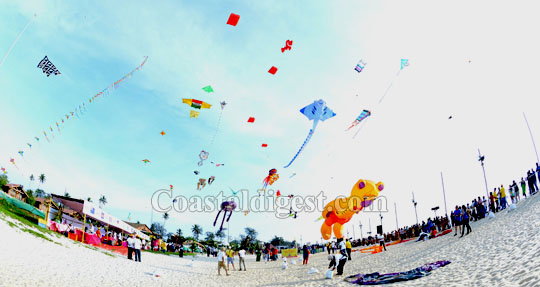
Mangaluru: Colourful kites paint the sky at Panambur beach

[email protected] (CD Network | Suresh, Chakravarthi)
January 16, 2016

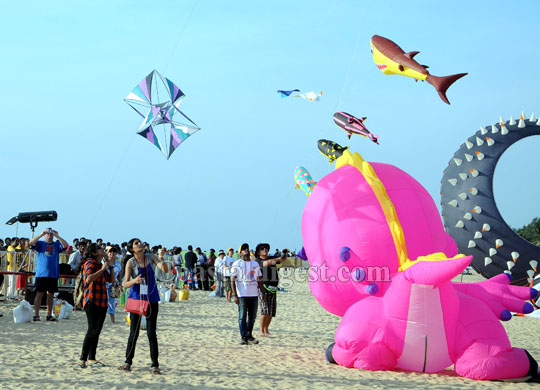
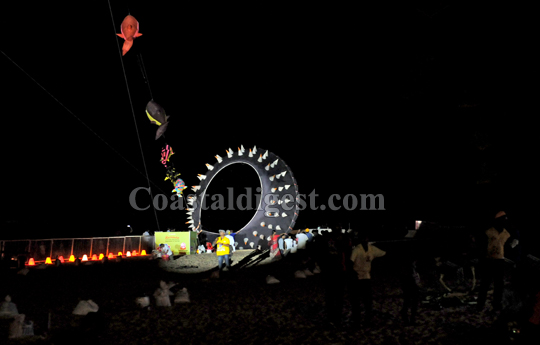
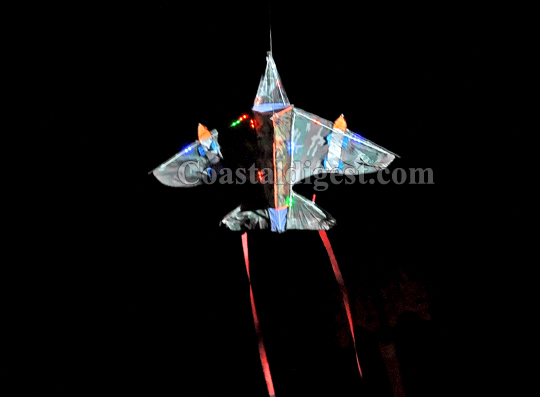
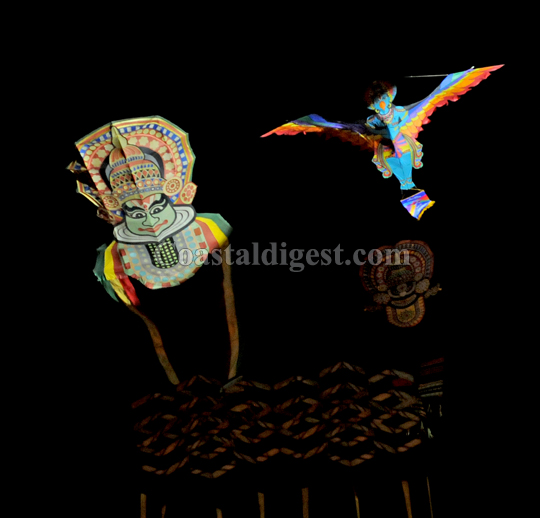
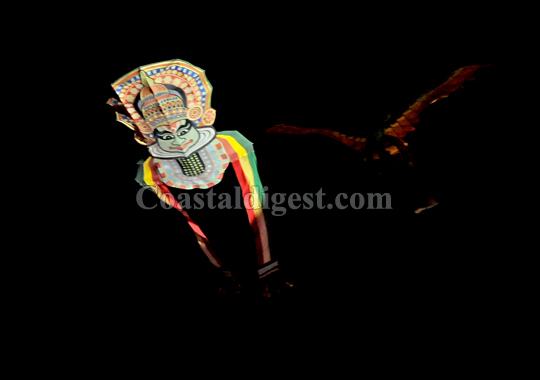
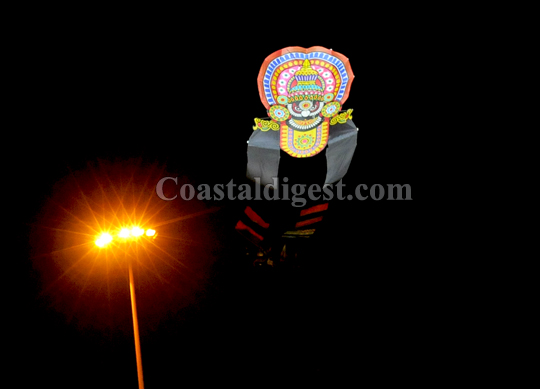
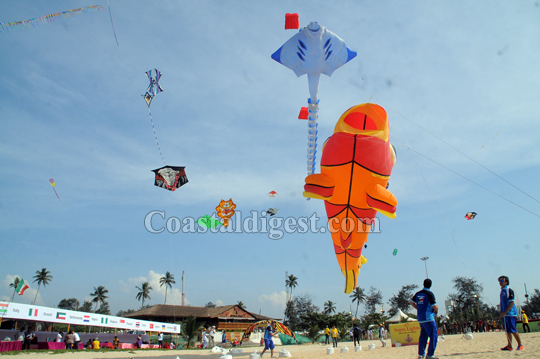
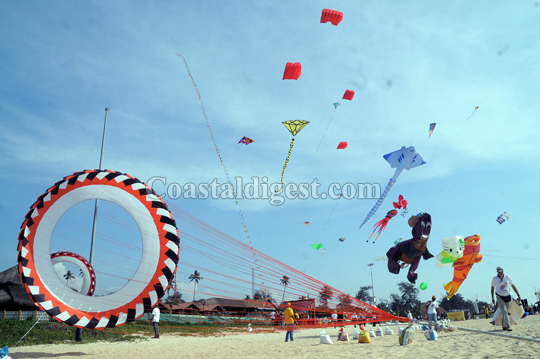
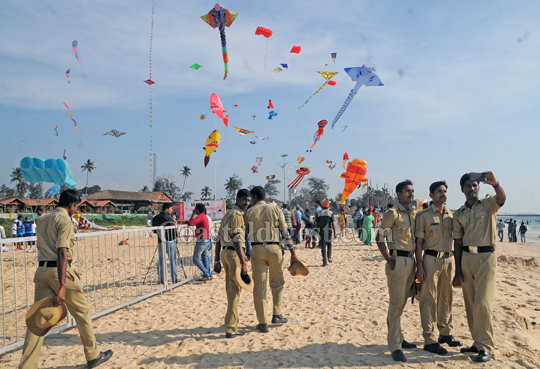
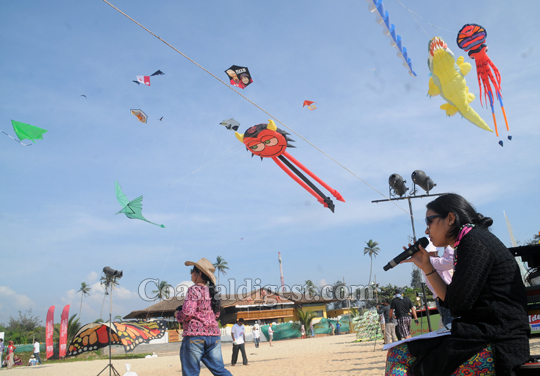
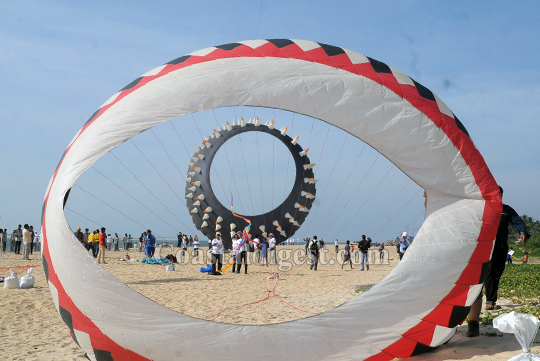
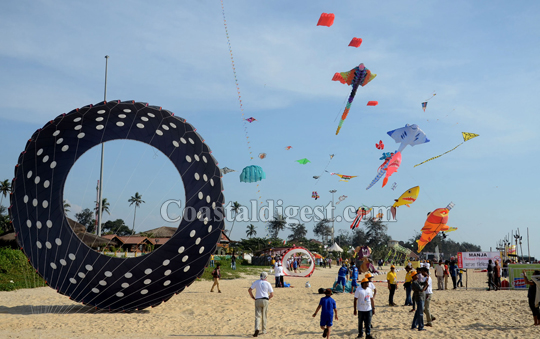
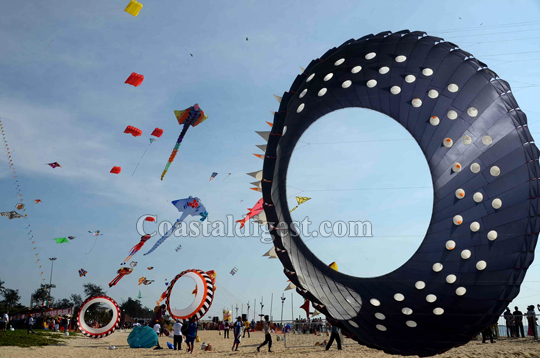
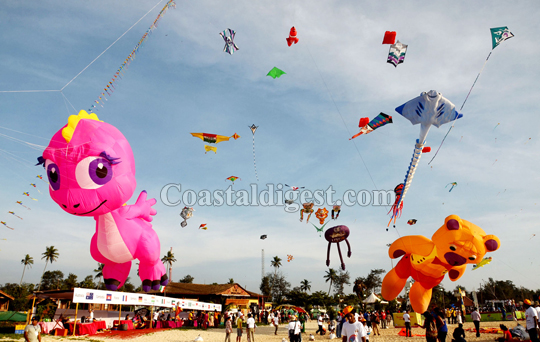
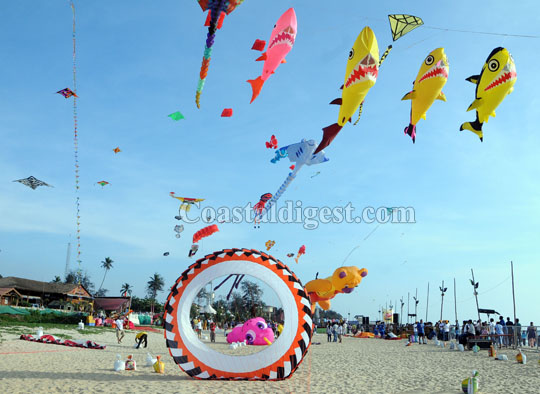
Mangaluru: Jan 16: Hundreds of colourful kites adored the skies of Panambur beach at the International Kite Festival organised by Rotary International in the city on Saturday.

kitss 1

Kite flyers from various countries took part in the fest and variety of uniquely-shaped kites reflected the theme ‘One kite, one earth, one family’.

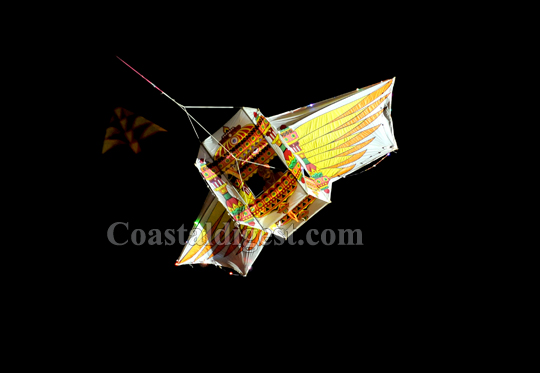
Speaking to Deccan Herald, Michael Alwares from Australia said that he has been flying the box kite, which is a typical Australian kite. He said the 15 metre long kite has 20 box shaped kites attached to it symmetrically. Alwares, who has been nurturing this hobby for the last 32 last years, has been teaching children kite-flying at various places. Alwares said it is his first time in an International Kite Festival.

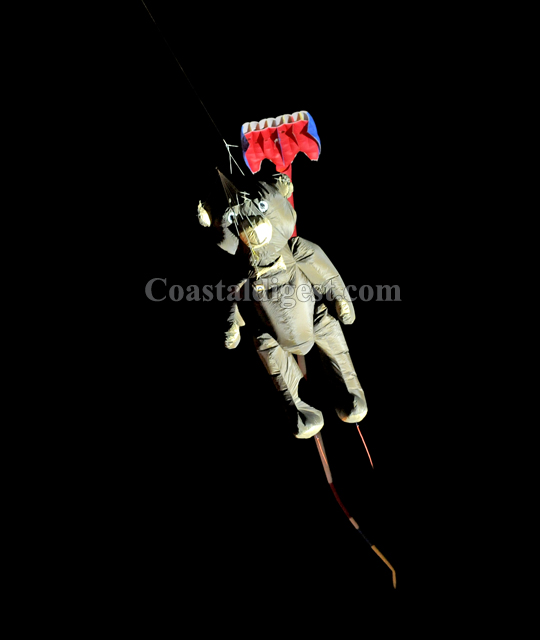
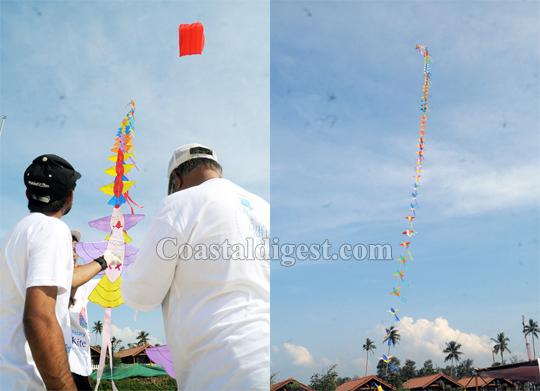
Ashok H Shah from Dahane, Maharastra, said he is represents his professional kite flyers group, Ashok Designer Kite and had brought 30 kites. He said he is taking part in the kite festival for the fourth time in Mangaluru. The 300-feet bird train kite and 3D tiger kite were among the kites flown by him. He has won several prizes in Gujarat Kite Festival and holds a Limca Record for conducting workshop for 1,100 children at a time on kite flying in Sholapur. He added the crowd in Mangaluru is disciplined and the wind is excellent.

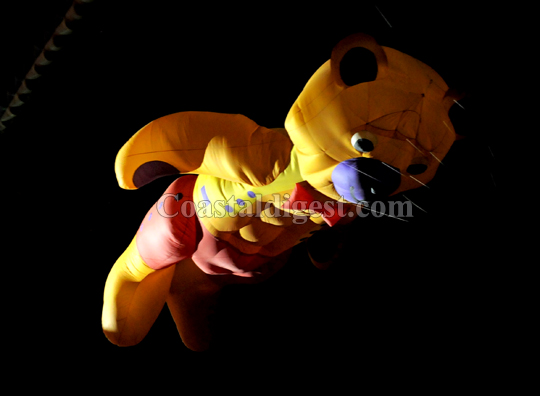
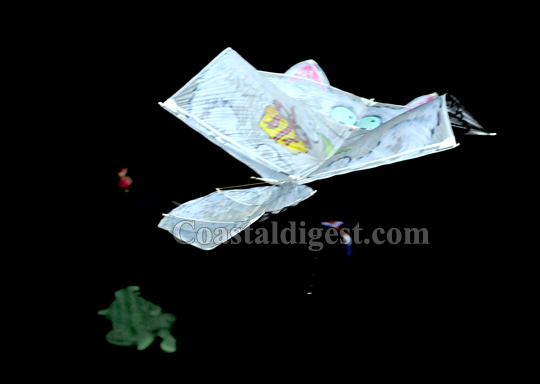
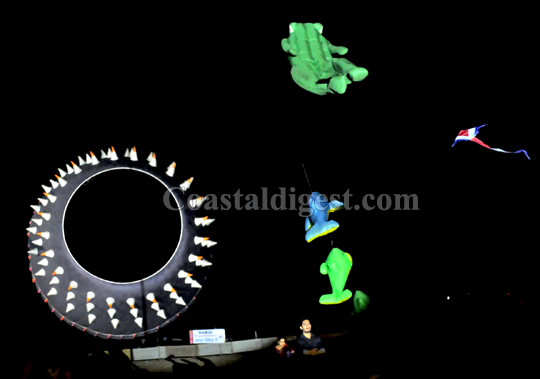
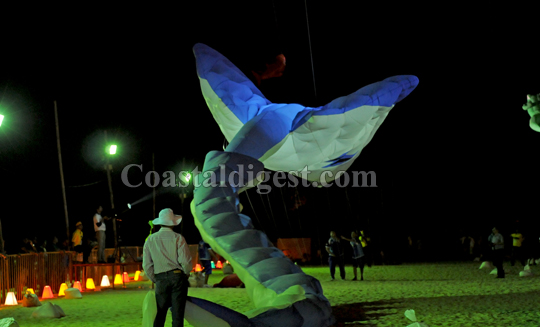
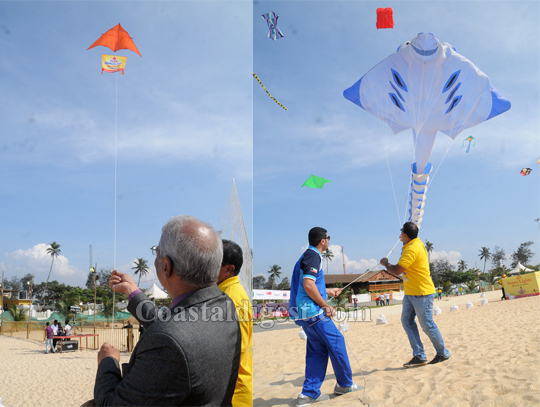
The traditional Cambodian kite, which creates musical sounds when it flies, stickless balloon-like kites and turbine shaped rotating kite attracted attention. Kites designed in the form of octopus, fish, cow and such other kites in different shapes and sizes amused the crowd.

Ariel photography, based on picavet lacing technique, carried out by NITK?team led by Dr Prithviraj, Assistant Professor, department of Applied Mechanics and Hydraullics, were among the highlights of the fest.

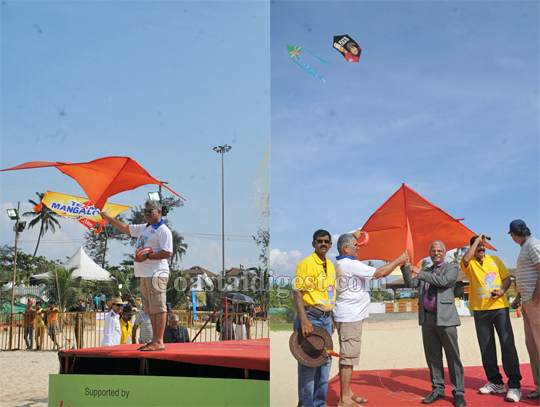
Kite photography competition was also held on the occasion. Participants from Australia, Cambodia, France, Germany, India, Italy, Kuwait, Netherlands, Nigeria, Singapore, Thailand, Turkey, Ukraine and United Kingdom took part. Rotary International District Governor Dr Bharatesh inaugurated the fest. Ramakrishna Kamath and Team Mangalore Founder Sarvesh Rao were present among others.

kitenight 1

kitenight 2

kitenight 3

kitenight 4

kitenight 5

kitenight 6

kitenight 7

kitenight 8

kitenight 9

kitenight 10

kitenight 11

kitenight 12

kitenight 13

kitenight 14

kitenight 15

kites 1

kites 2

kites 3

kites 4

kites 5

kites 6

kites 7

kites 8

kites 9

kitesFest 2

kitesFest 3

kitesFest 4

kitss 2

kitss 3

Comments

Add new comment

  • Coastaldigest.com reserves the right to delete or block any comments.
  • Coastaldigset.com is not responsible for its readers’ comments.
  • Comments that are abusive, incendiary or irrelevant are strictly prohibited.
  • Please use a genuine email ID and provide your name to avoid reject.
Ram Puniyani
February 10,2020

Noam Chomsky is one of the leading peace workers in the world. In the wake of America’s attack on Vietnam, he brought out his classic formulation, ‘manufacturing consent’. The phrase explains the state manipulating public opinion to have the public approve of it policies—in this case, the attack of the American state on Vietnam, which was then struggling to free itself from French colonial rule.

In India, we are witness to manufactured hate against religious minorities. This hatred serves to enhance polarisation in society, which undermines India’s democracy and Constitution and promotes support for a Hindu nation. Hate is being manufactured through multiple mechanisms. For example, it manifests in violence against religious minorities. Some recent ghastly expressions of this manufactured hate was the massive communal violence witnessed in Mumbai (1992-93), Gujarat (2002), Kandhamal (2008) and Muzaffarnagar (2013). Its other manifestation was in the form of lynching of those accused of having killed a cow or consumed beef. A parallel phenomenon is the brutal flogging, often to death, of Dalits who deal with animal carcasses or leather.

Yet another form of this was seen when Shambhulal Regar, indoctrinated by the propaganda of Hindu nationalists, burned alive Afrazul Khan and shot the video of the heinous act. For his brutality, he was praised by many. Regar was incited into the act by the propaganda around love jihad. Lately, we have the same phenomenon of manufactured hate taking on even more dastardly proportions as youth related to Hindu nationalist organisations have been caught using pistols, while police authorities look on.

Anurag Thakur, a BJP minster in the central government recently incited a crowd in Delhi to complete his chant of what should happen to ‘traitors of the country...” with a “they should be shot”. Just two days later, a youth brought a pistol to the site of a protest at Jamia Millia Islamia university and shouted “take Azaadi!” and fired it. One bullet hit a student of Jamia. This happened on 30 January, the day Nathuram Godse had shot Mahatma Gandhi in 1948. A few days later, another youth fired near the site of protests against the CAA and NRC at Shaheen Bagh. Soon after, he said that in India, “only Hindus will rule”.

What is very obvious is that the shootings by those associated with Hindu nationalist organisations are the culmination of a long campaign of spreading hate against religious minorities in India in general and against Muslims in particular. The present phase is the outcome of a long and sustained hate campaign, the beginning of which lies in nationalism in the name of religion; Muslim nationalism and Hindu nationalism. This sectarian nationalism picked up the communal view of history and the communal historiography which the British introduced in order to pursue their ‘divide and rule’ policy.

In India what became part of “social common sense” was that Muslim kings had destroyed Hindu temples, that Islam was spread by force, and that it is a foreign religion, and so on. Campaigns, such as the one for a temple dedicated to the Hindu god Rama to be built at the site where the Babri masjid once stood, further deepened the idea of a Muslim as a “temple-destroyer”. Aurangzeb, Tipu Sultan and other Muslim kings were tarnished as the ones who spread Islam by force in the subcontinent. The tragic Partition, which was primarily due to British policies, and was well-supported by communal streams also, was entirely attributed to Muslims. The Kashmir conflict, which is the outcome of regional, ethnic and other historical issues, coupled with the American policy of supporting Pakistan’s ambitions of regional hegemony, (which also fostered the birth of Al-Qaeda), was also attributed to the Muslims.

With recurring incidents of communal violence, these falsehoods went on going deeper into the social thinking. Violence itself led to ghettoisation of Muslims and further broke inter-community social bonds. On the one hand, a ghettoised community is cut off from others and on the other hand the victims come to be presented as culprits. The percolation of this hate through word-of-mouth propaganda, media and re-writing of school curricula, had a strong impact on social attitudes towards the minorities.

In the last couple of decades, the process of manufacturing hate has been intensified by the social media platforms which are being cleverly used by the communal forces. Swati Chaturvedi’s book, I Am a Troll: Inside the Secret World of the BJP’s Digital Army, tells us how the BJP used social media to spread hate. Whatapp University became the source of understanding for large sections of society and hate for the ‘Other’, went up by leaps and bounds. To add on to this process, the phenomenon of fake news was shrewdly deployed to intensify divisiveness.

Currently, the Shaheen Bagh movement is a big uniting force for the country; but it is being demonised as a gathering of ‘anti-nationals’. Another BJP leader has said that these protesters will indulge in crimes like rape. This has intensified the prevalent hate.

While there is a general dominance of hate, the likes of Shambhulal Regar and the Jamia shooter do get taken in by the incitement and act out the violence that is constantly hinted at. The deeper issue involved is the prevalence of hate, misconceptions and biases, which have become the part of social thinking.

These misconceptions are undoing the amity between different religious communities which was built during the freedom movement. They are undoing the fraternity which emerged with the process of India as a nation in the making. The processes which brought these communities together broadly drew from Gandhi, Bhagat Singh and Ambedkar. It is these values which need to be rooted again in the society. The communal forces have resorted to false propaganda against the minorities, and that needs to be undone with sincerity.

Combating those foundational misconceptions which create hatred is a massive task which needs to be taken up by the social organisations and political parties which have faith in the Indian Constitution and values of freedom movement. It needs to be done right away as a priority issue in with a focus on cultivating Indian fraternity yet again.


Comments

Add new comment

  • Coastaldigest.com reserves the right to delete or block any comments.
  • Coastaldigset.com is not responsible for its readers’ comments.
  • Comments that are abusive, incendiary or irrelevant are strictly prohibited.
  • Please use a genuine email ID and provide your name to avoid reject.
News Network
March 7,2020

Bengaluru, Mar 7: As a precautionary measure to control the spread of coronavirus in Karnataka, the state government has planned to suspend biometric attendance for the time-being at its offices, also in corporate and IT companies, Medical Education Minister Dr K Sudhakar said on Saturday.

He said the government has taken all precautionary measures to control the spread of the virus in the state.

"Our Additional Chief Secretary has already spoken to IT companies yesterday on behalf of the government regarding guidelines that need to be followed, it is part of it...we will do it in the government also in the days to come," Sudhakar told reporters here.

He was responding to a question about suspending biometric attendance at offices in the wake of the coronavirus outbreak.

Asked about suspending biometric attendanceat government offices, he said, "we have planned to do it yesterday."

Sudhakar said so far in Karnataka not even one case has been identified, to that extent we have been taking precautionary measures effectively.

He said from villages to state capital Bengaluru at all levels the health department officials have been activated as part of the precautionary measures.

Also, committees headed by Deputy Commissioners have been formed in all district, he added.

"We have given certain guidelines to people. We have also included private hospitals. We have taken all precautionary measures to stop the virus from entering the state," he added.

In response to a question regarding masks, the Minister clarified that those who have the symptoms of the disease only should use them.

He said, "N95 masks are required only for those who have tested positive, there is not even a single positive case in the state so far...surgical masks that will have three layers can be used by those who have symptoms like cough, cold, fever."

In the state as a precautionary measure 2,500 beds have been kept ready if the situation arises, despite not having a single case.

Comments

Add new comment

  • Coastaldigest.com reserves the right to delete or block any comments.
  • Coastaldigset.com is not responsible for its readers’ comments.
  • Comments that are abusive, incendiary or irrelevant are strictly prohibited.
  • Please use a genuine email ID and provide your name to avoid reject.
coastaldigst.com web desk
June 20,2020

New Delhi, Jun 20: As part of measures to check the spread of covid-19, Indian Railways is likely to stop distributing blankets and pillows in trains to AC passengers in coming days and it will make arrangements for sale at stalls on platforms.

The railways already stopped distributing blankets and pillows in 15 pair Special Rajdhani trains and 100 pair of fixed timetabled special trains, which is being operted at present. The system of not distributing blanks and pillows may continue in future once train operations normalise, said the official.

Passengers are encouraged to bring their own blankets and pillows. However same will be made available for purchase at shops so that if passengers want they can buy it, said an official.

The railways also made arrangements to sell sanitisers, masks and gloves at shops. The national transporter also said sale price should not exceed maximum retail price.

As per the Railway Board circular to zonal railways, " Amongst the items which fulfill the needs of travelling public and in keeping with the emphasis for providing safe and hygine travel facilities to passengers, it must be ensured that take away bedrolls kits/items other COVID-19 related protective items such as masks, sanitiser, gloves etc are also made available for sale through multi purpose stalls."

All items should be in good quality and will be sold only at MRP rate, circular said. The railways has also permanently removed curtains inside the AC coaches.

Comments

Add new comment

  • Coastaldigest.com reserves the right to delete or block any comments.
  • Coastaldigset.com is not responsible for its readers’ comments.
  • Comments that are abusive, incendiary or irrelevant are strictly prohibited.
  • Please use a genuine email ID and provide your name to avoid reject.