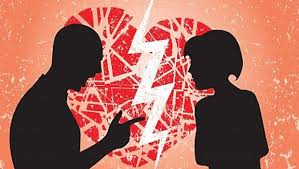
Mangaluru: Five get life term for killing man to continue affair with his wife

[email protected] (CD Network)
July 26, 2016

Mangaluru, Jul 26: Nearly a decade after a man was murdered by group of miscreants to continue extra-marital affair with his wife, a local court has convicted five persons and sentenced to them to life imprisonment.

afffarThe murder of Siddappa, 29, from Bagalkote, who married Kasturi and lived in a rented house in Kuloor in Mangaluru taluk, took place in December 2007. The incident came to light after two years when his dead body was recovered.

Principal district and sessions court on Saturday sentenced five persons accused of murdering a 29-year-old labourer and burying his body in a pit in December 2007.

Mohammed Anwar of Balloorgudde often visited Siddappa's house and developed a physical relationship with Kasturi. According to the chargesheet filed by the Mangaluru Rural Police Station, Kasturi had left her son at Anwar's house, which Siddappa did not approve of.

Anwar's frequent visit to their house and her relationship with him also led to frequent fights between Kasturi and Siddappa. It was then that Anwar and Kasturi decided to get rid of Siddappa.

The duo called Siddappa to a place near the railway track in Balloorgudde. Anwar, along with his friends Mohammed Naufal, 23, Mohammed Salim, 26, Abdul Bashir, 37 and Abdul Naushad, 32, strangled Siddappa and buried his body near the railway track.

Basappa, Siddappa's brother filed a missing complaint with the jurisdictional police station on August 22, 2009. The police questioned Kasturi, who revealed the murder plot and also showed the place where the body was buried.

Then police inspector B R Lingappa arrested all five accused. The pit in which Siddappa was buried was opened in the presence of the then AC Prabhulinga Kavalikatti. The skull and bones which were recovered were sent for DNA examination that revealed that remains were of Siddappa. Public prosecutor Pushparaj presented evidences and 23 witnesses including forensic experts Raghavendra Babu Y P, Suresh Kumar Shetty and Kavalikatti.

K S Bilagi, the principal district and session's court judge, sentenced Mohammed Anwar and his four friends to life imprisonment including three years of rigorous imprisonment and were directed to pay a fine of Rs 10,000 for destroying evidence. The court did not pass any order against Kasturi as she was reported missing after she obtained bail.

Comments

Rikaz
 - 
Thursday, 28 Jul 2016

Shame on them....
Well deserved punishment.....

Reader
 - 
Wednesday, 27 Jul 2016

Life imprisonment is not enough for miscreants, they should be hanged in public.

s
 - 
Tuesday, 26 Jul 2016

great work. such anti social elements should be punished. killing another human is a huge crime.

Add new comment

  • Coastaldigest.com reserves the right to delete or block any comments.
  • Coastaldigset.com is not responsible for its readers’ comments.
  • Comments that are abusive, incendiary or irrelevant are strictly prohibited.
  • Please use a genuine email ID and provide your name to avoid reject.
Ram Puniyani
January 14,2020

In the beginning of January 2020 two very disturbing events were reported from Pakistan. One was the attack on Nankana Sahib, the holy shrine where Sant Guru Nanak was born. While one report said that the place has been desecrated, the other stated that it was a fight between two Muslim groups. Prime Minister of Pakistan Imran Khan condemned the incident and the main accused Imran Chisti was arrested. The matter related to abduction and conversion of a Sikh girl Jagjit Kaur, daughter of Pathi (One who reads Holy Guru Granth Sahib in Gurudwara) of the Gurudwara. In another incident one Sikh youth Ravinder Singh, who was out on shopping for his marriage, was shot dead in Peshawar.

While these condemnable attacks took place on the Sikh minority in Pakistan, BJP was quick enough to jump to state that it is events like this which justify the Citizenship Amendment Act (CAA). Incidentally CAA is the Act which is discriminatory and relates to citizenship with Religion, which is not as per the norms of Indian constitution. There are constant debates and propaganda that population of Hindus has come down drastically in Pakistan and Bangla Desh. Amit Shah, the Home minister stated that in Pakistan the population of Hindus has come down from 23% at the time of partition to 3.7% at present. And in Bangla Desh it has come down from 22% to present 8%.

While not denying the fact that the religious minorities are getting a rough deal in both these countries, the figures which are presented are totally off the mark. These figures don’t take into consideration the painful migrations, which took place at the time of partition and formation of Bangla Desh later. Pakistan census figures tell a different tale. Their first census was held in 1951. As per this census the overall percentage of Non Muslim in Pakistan (East and West together) was 14.2%, of this in West Pakistan (Now Pakistan) it was 3.44 and in Eat Pakistan it was 23.2. In the census held in Pakistan 1998 it became 3.72%. As far as Bangla Desh is concerned the share of Non Muslims has gone down from 23.2 (1951) to 9.6% in 2011.

The largest minority of Pakistan is Ahmadis, (https://minorityrights.org/country/pakistan/) who are close to 4 Million and are not recognised as Muslims in Pakistan. In Bangla Desh the major migrations of Hindus from Bangla Desh took place in the backdrop of Pakistan army’s atrocities in the then East Pakistan.

As far as UN data on refugees in India it went up by 17% between 2016-2019 and largest numbers were from Tibet and Sri Lanka.  (https://www.un.org/en/development/desa/population/migration/publication…)

The state of minorities is in a way the index of strength of democracy. Most South Asian Countries have not been able to sustain democratic values properly. In Pakistan, the Republic began with Jinnah’s classic speech where secularism was to be central credo of Pakistan. This 11th August speech was in a way what the state policy should be, as per which people of all faiths are free to practice their religion. Soon enough the logic of ‘Two Nation theory” and formation of Pakistan, a separate state for Muslim took over. Army stepped in and dictatorship was to reign there intermittently. Democratic elements were suppressed and the worst came when Zia Ul Haq Islamized the state in collusion with Maulanas. The army was already a strong presence in Pakistan. The popular formulation for Pakistan was that it is ruled by three A’s, Army, America and Allah (Mullah).

Bangla Desh had a different trajectory. Its very formation was a nail in the coffin of ‘two nation theory’; that religion can be the basis of a state. Bangla Desh did begin as a secular republic but communal forces and secular forces kept struggling for their dominance and in 1988 it also became Islamic republic. At another level Myanmar, in the grip of military dictatorship, with democratic elements trying to retain their presence is also seeing a hard battle. Democracy or not, the army and Sanghas (Buddhist Sang has) are strong, in Myanmar as well. The most visible result is persecution of Rohingya Muslims.

Similar phenomenon is dominating in Sri Lanka also where Budhhist Sanghas and army have strong say in the political affairs, irrespective of which Government is ruling. Muslim and Christian minorities are a big victim there, while Tamils (Hindus, Christians etc.) suffered the biggest damage as ethnic and religious minorities. India had the best prospect of democracy, pluralism and secularism flourishing here. The secular constitution, the outcome of India’s freedom struggle, the leadership of Gandhi and Nehru did ensure the rooting of democracy and secularism in a strong way.

India so far had best democratic credentials amongst all the south Asian countries. Despite that though the population of minorities rose mainly due to poverty and illiteracy, their overall marginalisation was order of the day, it went on worsening with the rise of communal forces, with communal forces resorting to identity issues, and indulging in propaganda against minorities.

While other South Asian countries should had followed India to focus more on infrastructure and political culture of liberalism, today India is following the footsteps of Pakistan. The retrograde march of India is most visible in the issues which have dominated the political space during last few years. Issues like Ram Temple, Ghar Wapasi, Love Jihad, Beef-Cow are now finding their peak in CAA.

India’s reversal towards a polity with religion’s identity dominating the political scene was nicely presented by the late Pakistani poetess Fahmida Riaz in her poem, Tum bhi Hum Jaise Nikle (You also turned out to be like us). While trying to resist communal forces has been an arduous task, it is becoming more difficult by the day. This phenomenon has been variously called, Fundamentalism, Communalism or religious nationalism among others. Surely it has nothing to do with the religion as practiced by the great Saint and Sufi traditions of India; it resorts mainly to political mobilization by using religion as a tool.


Comments

Ashi
 - 
Tuesday, 14 Jan 2020

If Malaysia implement similar NRC/CAA, India and China are the loser.

Add new comment

  • Coastaldigest.com reserves the right to delete or block any comments.
  • Coastaldigset.com is not responsible for its readers’ comments.
  • Comments that are abusive, incendiary or irrelevant are strictly prohibited.
  • Please use a genuine email ID and provide your name to avoid reject.
News Network
April 6,2020

Hubli, April 6: A disinfection tunnel was installed at the entrance of the Agricultural Produce Market Committee (APMC) market here on Sunday.

The tunnel, installed with the help of Young India.org, sprays people with a small percentage of Sodium hypochlorite solution through nozzles in order to sanitise them before they enter the market.

"It is helpful for all the farmers, vegetable vendors and other people who are coming and going to the APMC market. This is very useful," said Jagdish Shettar, Minister of Large and Medium Scale Industries, Karnataka.

With regards to any plans of more devices being added in the near future, Shettar added: "Firstly, we will have to see what would be the public's reaction and then, later on, we will decide."

President of Confederation of Indian Industry, Hubli VSV Prasad said that the setting up of this tunnel can help curtail the spread of Coronavirus "by disinfecting the bacteria of the body".

While it was on the trial stage right now, Prasad hopes that the trial is successful and the chamber is set up in more public places. With regards to the cost of the tunnel, he said: "The cost is around Rs 1.5 Lac to Rs 2 Lac and hopefully it will come down once we go for production," he added.

Srinivas Joshi, a representative of Young India.org, speaking to news agency said: "We have added 1.8 percent of Sodium hypochlorite solution in 100 litres of water. It is pumped through high-pressure pumps and sprayed like a mist via nozzles for 3-5 seconds which is very less time to cause any kind of allergy."

"People who are allergic to chemicals should avoid going through this chamber. We are putting signboard very soon," he added.

The number of positive cases of coronavirus in the country continues to surge. As per the Ministry of Health and Family Welfare, the total number of confirmed COVID-19 cases is 3,577 with 83 deaths.

Comments

Add new comment

  • Coastaldigest.com reserves the right to delete or block any comments.
  • Coastaldigset.com is not responsible for its readers’ comments.
  • Comments that are abusive, incendiary or irrelevant are strictly prohibited.
  • Please use a genuine email ID and provide your name to avoid reject.
coastaldigest.com news network
July 7,2020

Mangaluru/Udupi, Jul 7: Coastal districts of Dakshina Kannada and Udupi crossed 100 plus Covid19 positive cases mark again on Tuesday, after slipping to double digit cases for a day on Monday. While Dakshina Kannada accounted for 83 of these cases and one death, Udupi tallied 28 fresh cases taking the combined tally of new cases to 111.

DK stood second behind Bengaluru Urban that recorded 800 out of 1,498 new cases that the state recorded for the day.

In all, 48 primary contacts testing positive led DK district’s spurt of 83 cases, Sindhu B Rupesh, deputy commissioner, said. Influenza like illness (ILI) cases accounted for 20 of the 83 cases, one each were diagnosed with severe acute respiratory illness (SARI) and from pre-surgery sample collected before delivery, two had history of inter-district travel, three each were cases of random, pre-surgery samples and source of infection being traced.

A 65-year-old male from Moodbidri who had co-morbid conditions including diabetes, pneumonia and heart ailment succumbed to the pandemic during the day. He was admitted for treatment at a private hospital on July 3. With this, the death toll due to coronavirus in DK district rose to 26 and two of them are due to non-Covid reasons including a case each of suicide and a person succumbing to liver cirrhosis and they tested positive post death.

G Jagadeesha, deputy commissioner, Udupi district said the 28 new cases took the total positive cases in Udupi to 1390. With 1182 patients discharged and three deaths, Udupi as on date has 205 active cases. Those who tested positive include KSRTC driver who travelled to Bengaluru, vegetable vendor at Adi Udupi market and people with travel history to Tumakuru, Bengaluru, Mumbai, Dubai and two even from DK and rest primary contacts, DC said.

Health authorities in DK district also discharged 99 patients during the day to keep their active cases tally at 650. The two districts combined have 855 active cases as on date. As per revised protocol issued by the department of health and family welfare, the district administration also permitted 28 patients with mild symptoms to undergo home isolation while the rest are being treated either at private hospitals or at the designated Covid19 hospital for DK.

Comments

Add new comment

  • Coastaldigest.com reserves the right to delete or block any comments.
  • Coastaldigset.com is not responsible for its readers’ comments.
  • Comments that are abusive, incendiary or irrelevant are strictly prohibited.
  • Please use a genuine email ID and provide your name to avoid reject.