Mangaluru: Glittering display of talent at BIT Utsav

[email protected] (CD Network | Photos by Moany Gutty)
April 2, 2016

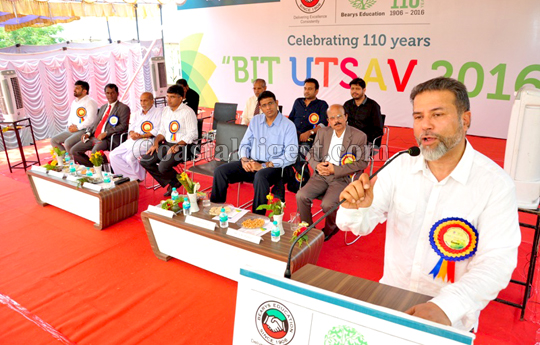
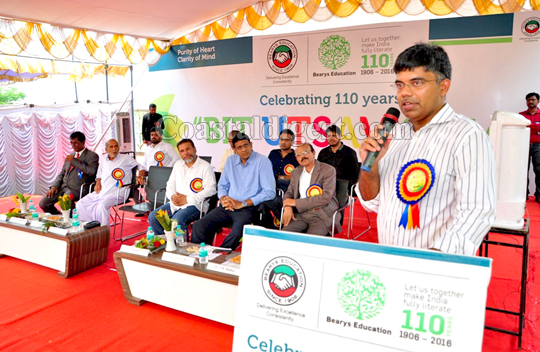
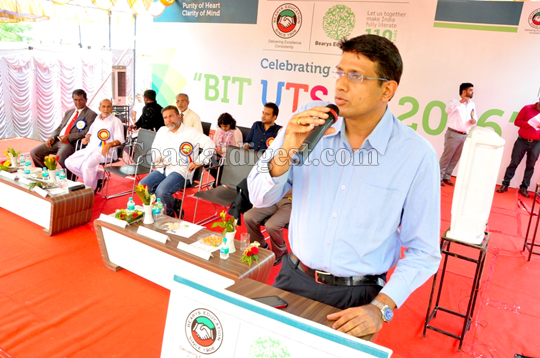
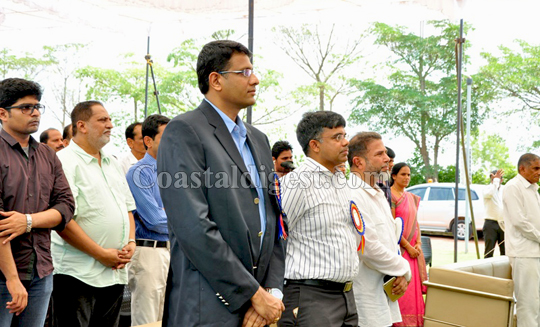
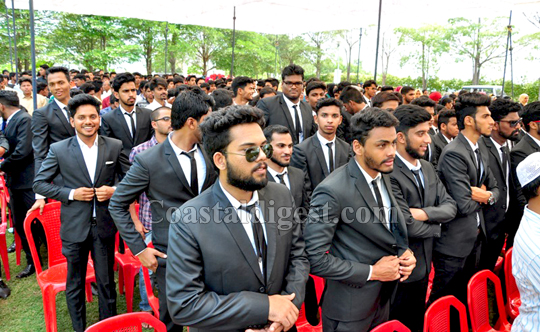
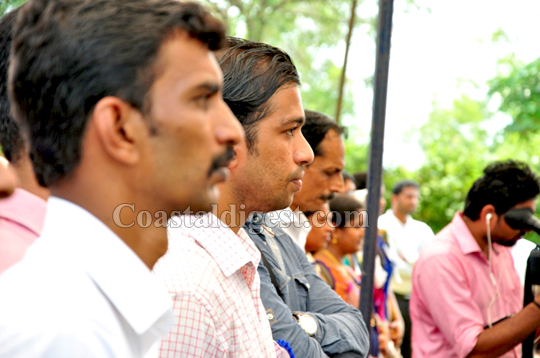
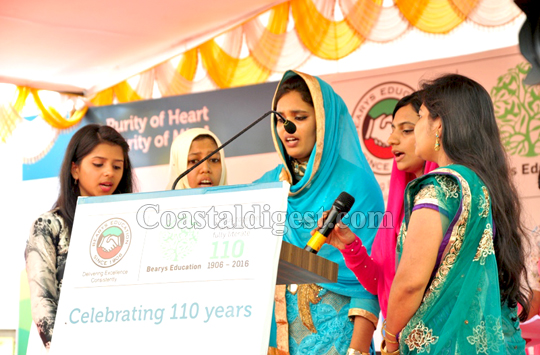
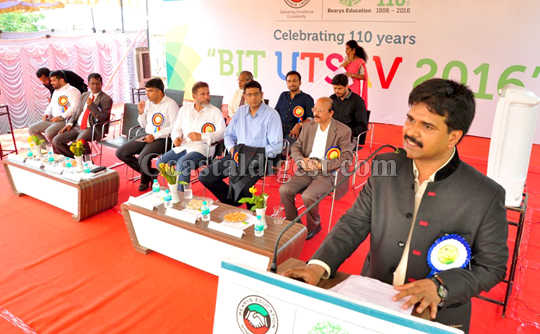
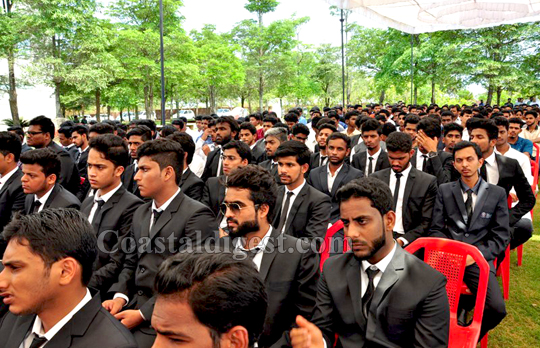
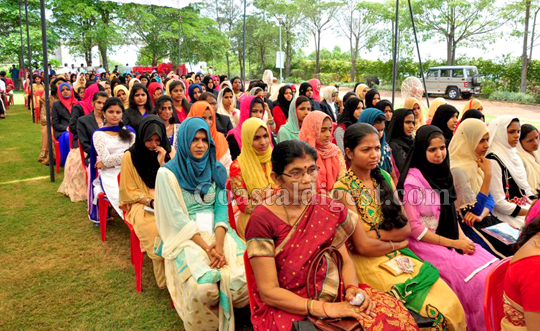
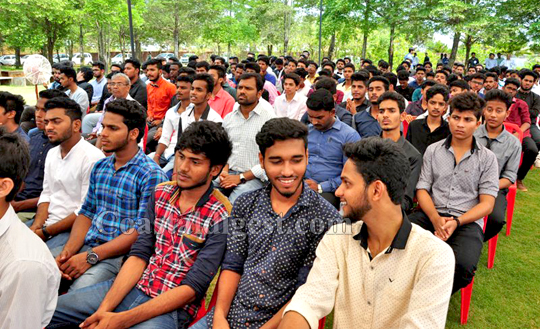
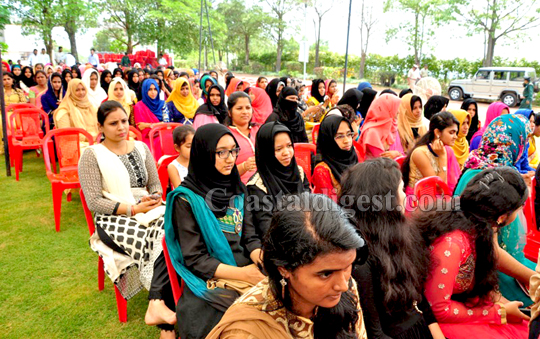
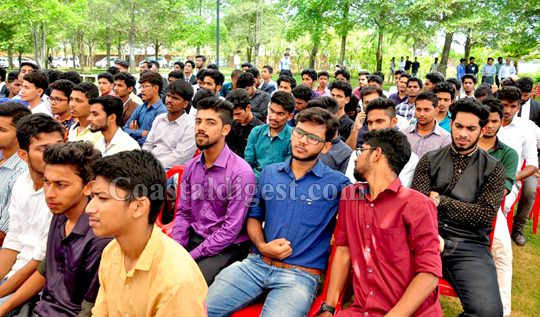
Mangaluru, Apr 2: Bearys Institute of Technology (BIT), celebrated its annual day at its campus in Mangaluru on Saturday in a glittering display of colour, joy and talent from its students.

bearys 18

The program began in the morning at 10.30 AM with the arrival of guests Mr. Chandrashekhar M, Commissioner of Police, Mangalore and Mr Sudheer Pai, HR Head, Infosys Mangalore was the guest of honour.

In this welcome address, Prof. Mustafa, HOD of Computer Science Engineering, greeted everyone and outlined the underlying significance of BIT UTSAV. BIT UTSAV, he said, is the culmination of a holistic education system adopted at BIT which caters to the body, mind and spirit.

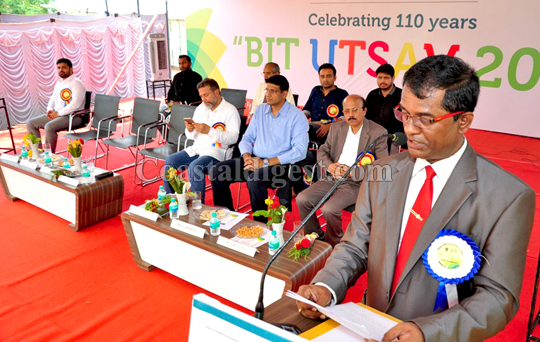
The Principal, Dr. K. Palakshappa, then read out the annual report of BIT for 2014-15. He clearly highlighted the various achievements of the departments, faculty and students and the great strides they had taken in the field of academics, sports and social events.

The Chairman of Bearys Group Mr. Syed Mohamed Beary then spoke and through an illustrative anecdote, outlined the intricate relation that exists between good deeds and salvation. He told the students that being the young generation for the future, should think beyond. He hoped that at least a portion of BIT students would go on to join civil services and defense services so as to serve the country. He advised the students not to look at education as a means to earn a job and instead to look upon it as a solution to the problems of this world. He ended his talk by stating that success comes from sacrifice.

In his address to the gathering the Guest of honour Commissioner of Police, Mr Chandrashekhar said, Today's generation is missing the quality of gratitude though they excel in technologies. He urged the students to join civil services, especially police department so that can contribute to the development of the country.

The Guest of honour Mr. Sudheer Pai, brought in his vast experience of the corporate world to give some extremely useful tips to the students who would shortly be going out from the protective environments of their student days. He promised of organizing career counseling and guidance to BIT students through Infosys shortly.

Dr Raikar SK, founder principal and current senior advisor said, Students, teachers, parents and management are the 4 pillars in the growth of institute. Mr Mazhar beary, trustee of BIT wished success to all the students of BIT.

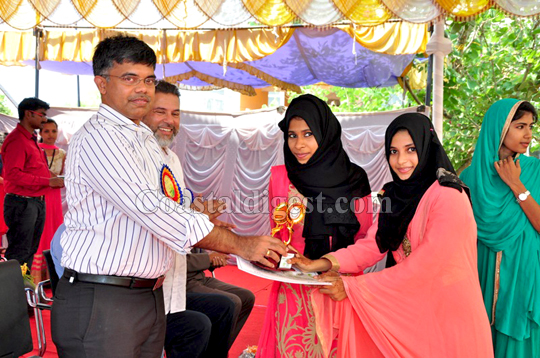
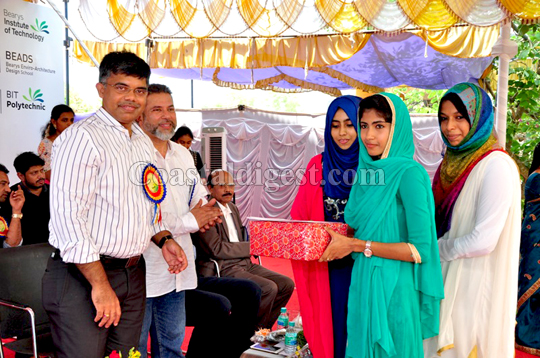
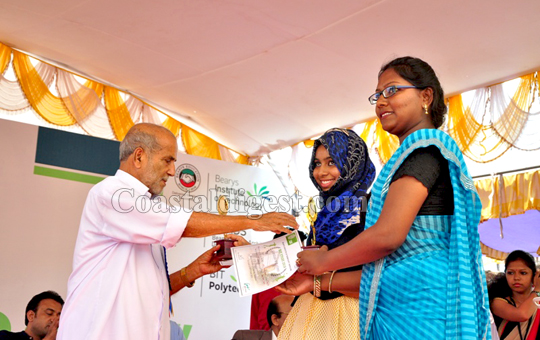
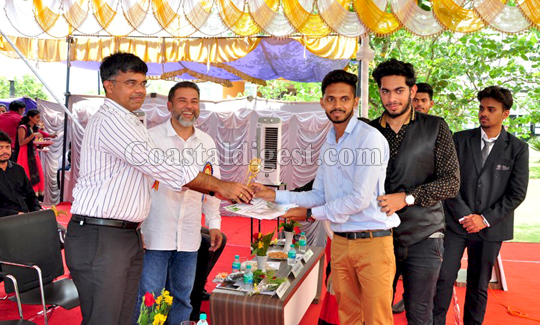
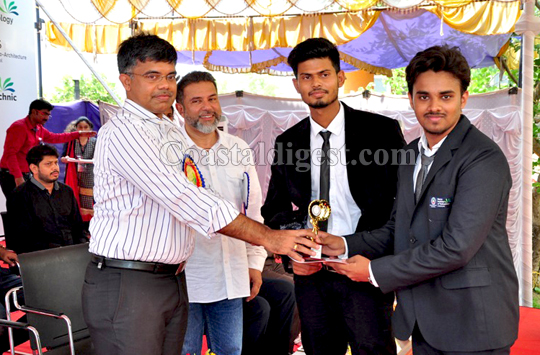
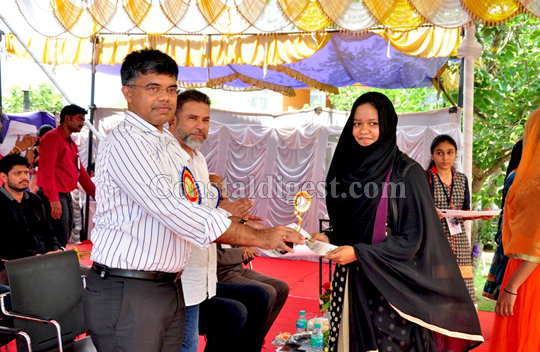
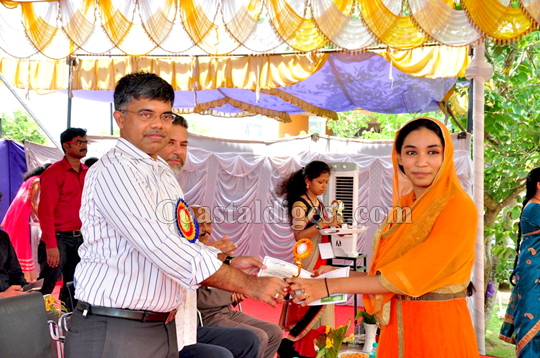
Prizes and mementos were given away to students who excelled in academics, sports and cultural events as a mark of appreciation for their achievements. The distinguished guests who graced the occasions where felicitated by BIT.

Prof. Shameez, the Event coordinator, then proposed a vote of thanks. Ms Ashritha of 8th ECE compered the program. The formal session of BIT UTSAV concluded with the national anthem.

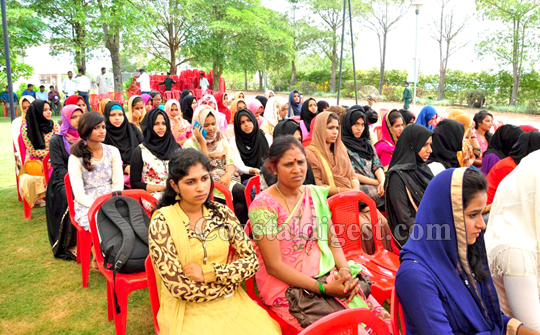
In the afternoon session, students of BIT put up a scintillating performance in a glittering display of talent cutting across, regions, religions and languages. Solo and group songs, solo and group dances, skits, miming, classical dance etc.

bearys 1

bearys 2

bearys 3

bearys 4

bearys 5

bearys 6

bearys 7

bearys 8

bearys 9

bearys 10

bearys 11

bearys 12

bearys 13

bearys 14

bearys 15

bearys 16

bearys 17

bearys 19

bearys 20

bearys 21

bearys 22

Comments

Salam Thodar
 - 
Tuesday, 5 Apr 2016

Need of the hour speech! from all. Nice to see the photos with nature. I wish you all the very best in your future endeavors dear students.

Suleman Beary
 - 
Saturday, 2 Apr 2016

Best of luck students. Campus looks beautiful with trees.

Add new comment

  • Coastaldigest.com reserves the right to delete or block any comments.
  • Coastaldigset.com is not responsible for its readers’ comments.
  • Comments that are abusive, incendiary or irrelevant are strictly prohibited.
  • Please use a genuine email ID and provide your name to avoid reject.
News Network
January 19,2020

Chikkamagaluru, Jan 19: A Chikkamagaluru court on Saturday were sentenced to death two persons convicted of rape and murder 18-year-old girl in 2016.

Pradeep M, 32, and Santhosh, 24, of Vykuntapura in Sringeri taluk raped a 18-year-old girl while she was returning home from college on Februrary 16, 2016.

The crime in which a first year B.Com student who was walking towards her home in a footway was stopped, raped and murdered by the duo. The killers then had dumped her body in a discarded well.

Comments

Add new comment

  • Coastaldigest.com reserves the right to delete or block any comments.
  • Coastaldigset.com is not responsible for its readers’ comments.
  • Comments that are abusive, incendiary or irrelevant are strictly prohibited.
  • Please use a genuine email ID and provide your name to avoid reject.
News Network
July 22,2020

Bengaluru, Jul 22: Karnataka's Covid-19 task force on Tuesday decided that the state government will regulate the supply of Remdesivir, the drug used in the treatment of coronavirus infected patients, to private hospitals to check black marketing and hoarding.

"Remdesivir which is currently available in the government hospitals will be supplied to private hospitals through the government.

This will help curb black marketing of this drug," Medical Education Minister K Sudhakar's office said in a release.

Along with Sudhakar, other task force members, including Health Minister Sriramulu, Deputy Chief Minister C N Ashwath Narayan and Chief Secretary T M Vijay Bhaskar attended the meeting. However, Home Minister Basavaraj Bommai was not part of it as he was out of Bengaluru.

At the meeting, the government has also fixed the rate for Covid-19 tests in private labs- Rs 2,000 for government referred cases and 3,000 for self-reporting cases.

It was also decided to purchase 4 lakh antigen test kits and 5 lakh swab test kits to ramp up testing, the release said, adding that approvals have also been given for additional drugs for the treatment of Covid-19 patients.

The decisions also included increasing monthly salary for Ayush doctors to 48,000, MBBS doctors to 80,000 and nurses to get 30,000 for next 6 months.

The task force also made it clear that private hospitals have to reserve 50 percent beds for the government for Covid-19 treatment. The remaining 50 percent can be used by the private hospitals for Covid-19 and non-Covid-19 treatment.

Private hospitals provide treatment under Ayushman Bharat scheme (ABARK) for Covid-19 patients.

Those cases in which treatment does not cover under the scheme can be charged as per the user charges, the release said.

A committee will be formed to supervise and recommend the purchase of equipment and medicines for Covid-19 treatment, which will be headed by ACS, ITBT Department.

Approval has been given for the procurement of N-95 masks and lakh PPE kits for the safety of healthcare workers. The decision also has been taken to connect oxygen pipeline to 4,736 beds in 17 government medical colleges, which will enable high flow oxygen for these beds besides being beneficial for future use as well.

According to the release, 16 RTPCR and 15 Automated RNA extraction units will be established to ramp up testing and this will help achieve the target of 50,000 tests per day. "On the whole approvals given for purchase of equipment and upgradation of existing facilities at government hospitals is estimated to be about Rs 500 Crore," it added.

Comments

Add new comment

  • Coastaldigest.com reserves the right to delete or block any comments.
  • Coastaldigset.com is not responsible for its readers’ comments.
  • Comments that are abusive, incendiary or irrelevant are strictly prohibited.
  • Please use a genuine email ID and provide your name to avoid reject.
Ram Puniyani
February 10,2020

Noam Chomsky is one of the leading peace workers in the world. In the wake of America’s attack on Vietnam, he brought out his classic formulation, ‘manufacturing consent’. The phrase explains the state manipulating public opinion to have the public approve of it policies—in this case, the attack of the American state on Vietnam, which was then struggling to free itself from French colonial rule.

In India, we are witness to manufactured hate against religious minorities. This hatred serves to enhance polarisation in society, which undermines India’s democracy and Constitution and promotes support for a Hindu nation. Hate is being manufactured through multiple mechanisms. For example, it manifests in violence against religious minorities. Some recent ghastly expressions of this manufactured hate was the massive communal violence witnessed in Mumbai (1992-93), Gujarat (2002), Kandhamal (2008) and Muzaffarnagar (2013). Its other manifestation was in the form of lynching of those accused of having killed a cow or consumed beef. A parallel phenomenon is the brutal flogging, often to death, of Dalits who deal with animal carcasses or leather.

Yet another form of this was seen when Shambhulal Regar, indoctrinated by the propaganda of Hindu nationalists, burned alive Afrazul Khan and shot the video of the heinous act. For his brutality, he was praised by many. Regar was incited into the act by the propaganda around love jihad. Lately, we have the same phenomenon of manufactured hate taking on even more dastardly proportions as youth related to Hindu nationalist organisations have been caught using pistols, while police authorities look on.

Anurag Thakur, a BJP minster in the central government recently incited a crowd in Delhi to complete his chant of what should happen to ‘traitors of the country...” with a “they should be shot”. Just two days later, a youth brought a pistol to the site of a protest at Jamia Millia Islamia university and shouted “take Azaadi!” and fired it. One bullet hit a student of Jamia. This happened on 30 January, the day Nathuram Godse had shot Mahatma Gandhi in 1948. A few days later, another youth fired near the site of protests against the CAA and NRC at Shaheen Bagh. Soon after, he said that in India, “only Hindus will rule”.

What is very obvious is that the shootings by those associated with Hindu nationalist organisations are the culmination of a long campaign of spreading hate against religious minorities in India in general and against Muslims in particular. The present phase is the outcome of a long and sustained hate campaign, the beginning of which lies in nationalism in the name of religion; Muslim nationalism and Hindu nationalism. This sectarian nationalism picked up the communal view of history and the communal historiography which the British introduced in order to pursue their ‘divide and rule’ policy.

In India what became part of “social common sense” was that Muslim kings had destroyed Hindu temples, that Islam was spread by force, and that it is a foreign religion, and so on. Campaigns, such as the one for a temple dedicated to the Hindu god Rama to be built at the site where the Babri masjid once stood, further deepened the idea of a Muslim as a “temple-destroyer”. Aurangzeb, Tipu Sultan and other Muslim kings were tarnished as the ones who spread Islam by force in the subcontinent. The tragic Partition, which was primarily due to British policies, and was well-supported by communal streams also, was entirely attributed to Muslims. The Kashmir conflict, which is the outcome of regional, ethnic and other historical issues, coupled with the American policy of supporting Pakistan’s ambitions of regional hegemony, (which also fostered the birth of Al-Qaeda), was also attributed to the Muslims.

With recurring incidents of communal violence, these falsehoods went on going deeper into the social thinking. Violence itself led to ghettoisation of Muslims and further broke inter-community social bonds. On the one hand, a ghettoised community is cut off from others and on the other hand the victims come to be presented as culprits. The percolation of this hate through word-of-mouth propaganda, media and re-writing of school curricula, had a strong impact on social attitudes towards the minorities.

In the last couple of decades, the process of manufacturing hate has been intensified by the social media platforms which are being cleverly used by the communal forces. Swati Chaturvedi’s book, I Am a Troll: Inside the Secret World of the BJP’s Digital Army, tells us how the BJP used social media to spread hate. Whatapp University became the source of understanding for large sections of society and hate for the ‘Other’, went up by leaps and bounds. To add on to this process, the phenomenon of fake news was shrewdly deployed to intensify divisiveness.

Currently, the Shaheen Bagh movement is a big uniting force for the country; but it is being demonised as a gathering of ‘anti-nationals’. Another BJP leader has said that these protesters will indulge in crimes like rape. This has intensified the prevalent hate.

While there is a general dominance of hate, the likes of Shambhulal Regar and the Jamia shooter do get taken in by the incitement and act out the violence that is constantly hinted at. The deeper issue involved is the prevalence of hate, misconceptions and biases, which have become the part of social thinking.

These misconceptions are undoing the amity between different religious communities which was built during the freedom movement. They are undoing the fraternity which emerged with the process of India as a nation in the making. The processes which brought these communities together broadly drew from Gandhi, Bhagat Singh and Ambedkar. It is these values which need to be rooted again in the society. The communal forces have resorted to false propaganda against the minorities, and that needs to be undone with sincerity.

Combating those foundational misconceptions which create hatred is a massive task which needs to be taken up by the social organisations and political parties which have faith in the Indian Constitution and values of freedom movement. It needs to be done right away as a priority issue in with a focus on cultivating Indian fraternity yet again.


Comments

Add new comment

  • Coastaldigest.com reserves the right to delete or block any comments.
  • Coastaldigset.com is not responsible for its readers’ comments.
  • Comments that are abusive, incendiary or irrelevant are strictly prohibited.
  • Please use a genuine email ID and provide your name to avoid reject.