Mangaluru: No rains despite prayers in temples, mosques, churches

[email protected] (CD Network)
May 6, 2016

Mangaluru, May 6: The wait for rains continued in the coastal city of Mangaluru on Friday amidst special prayers in temples, mosques and churches. Even though a few parts of Dakshina Kannada district received moderate rain earlier this week, the merciless sun continued to rule the region.
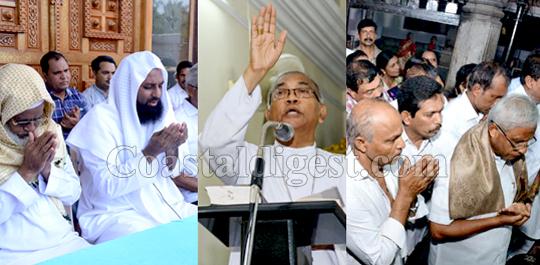
unityprayer

The administration and residents are making all-out efforts to ease the impact of severe water famine which the district is undergoing, ranging from offering prayers to making alternative arrangements.

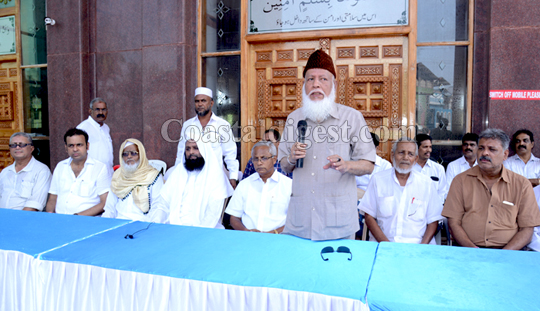
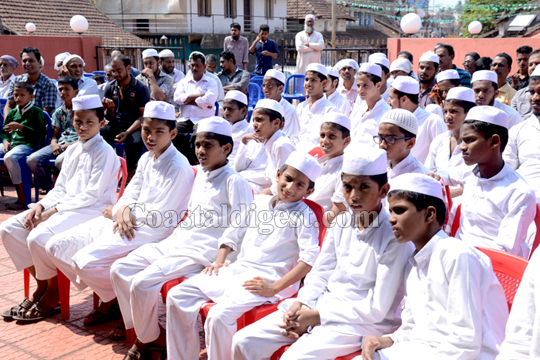
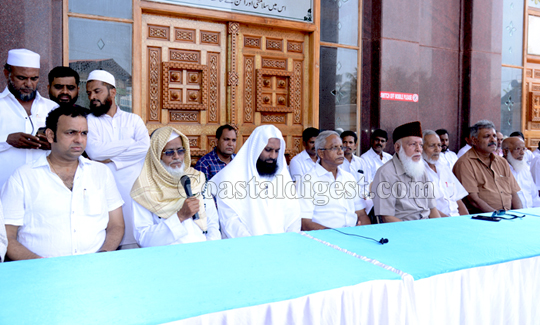
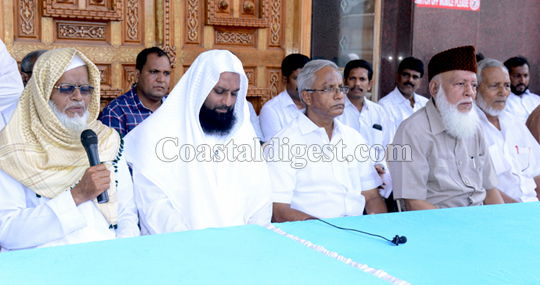
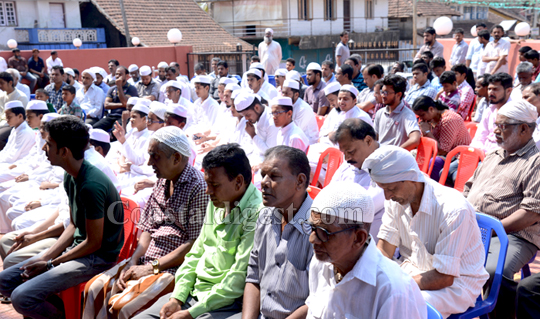
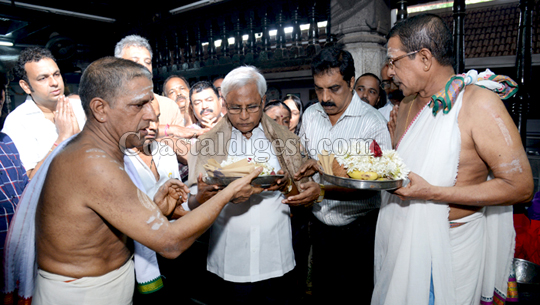
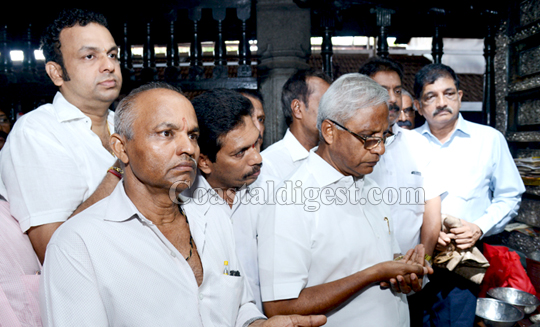
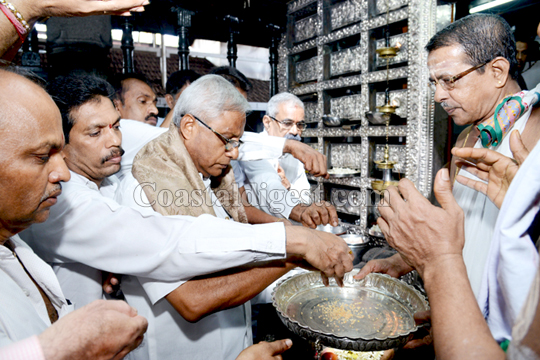
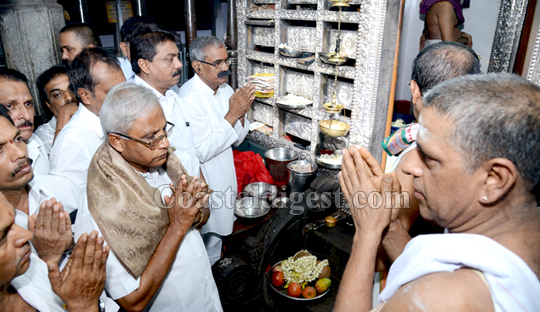
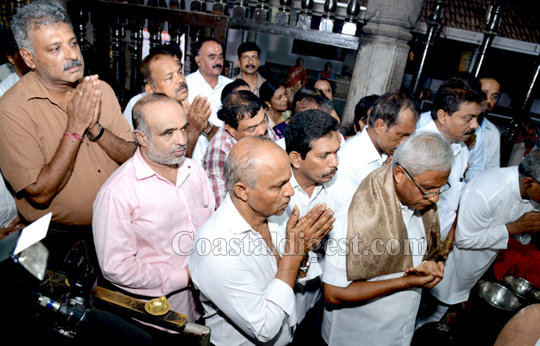
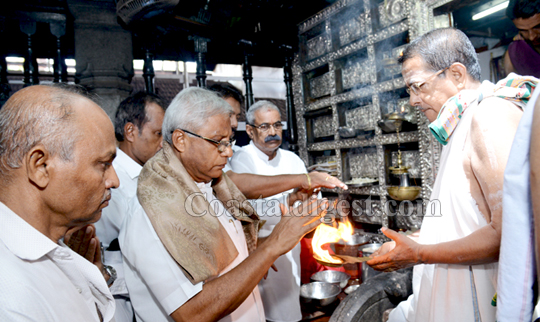
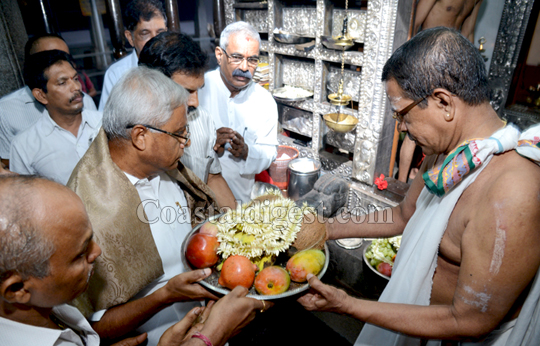
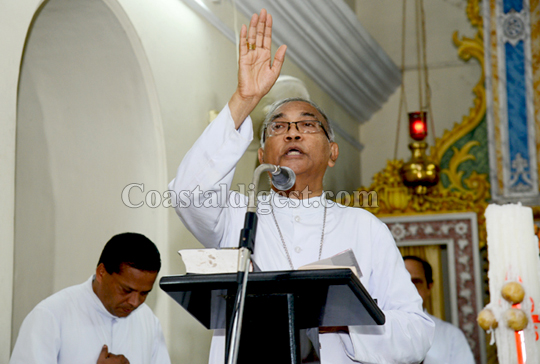
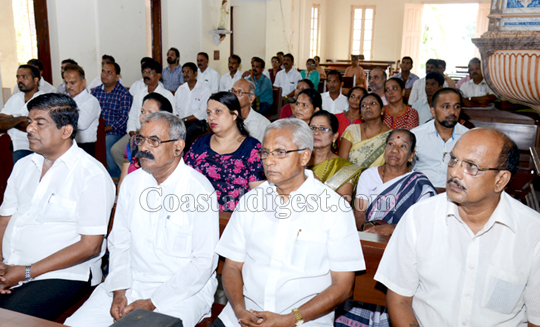
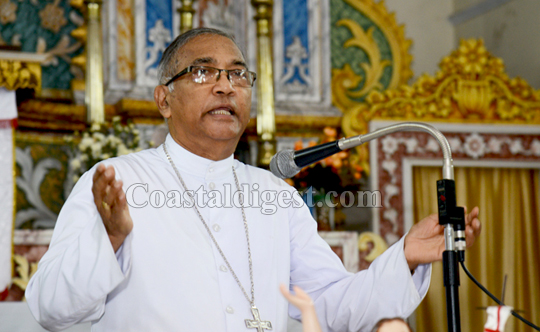
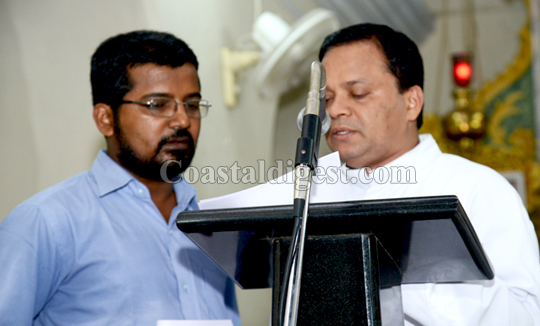
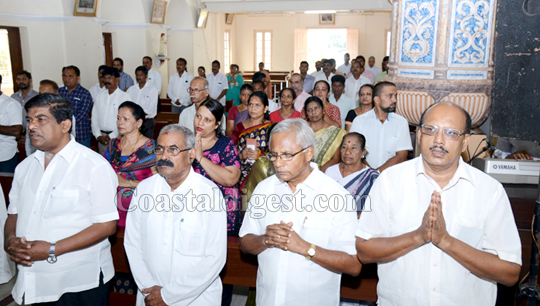
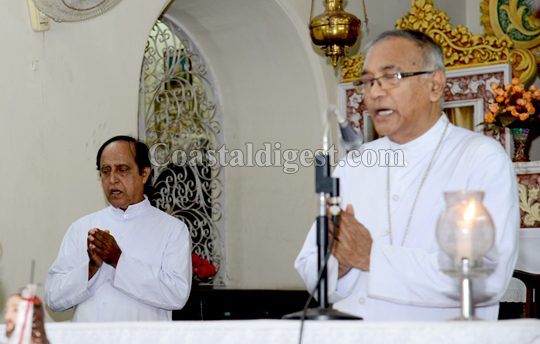
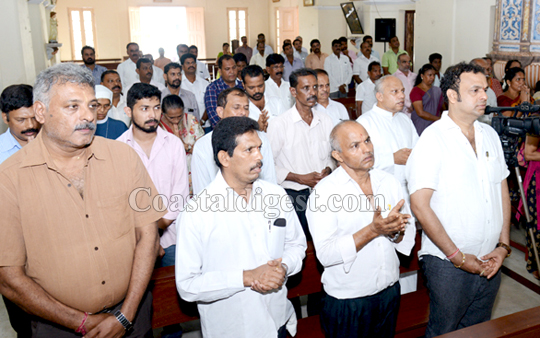
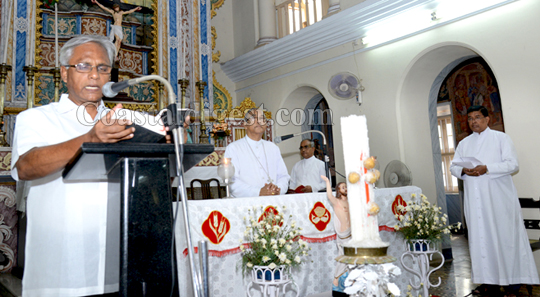
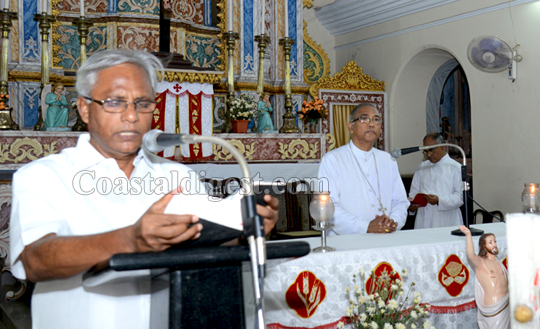
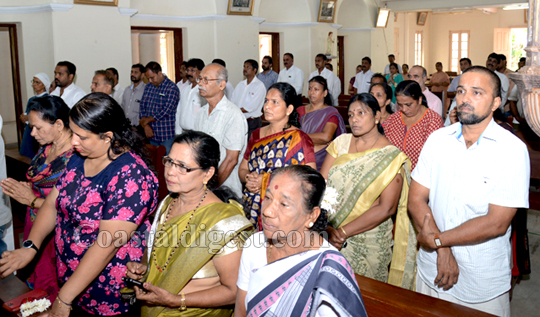
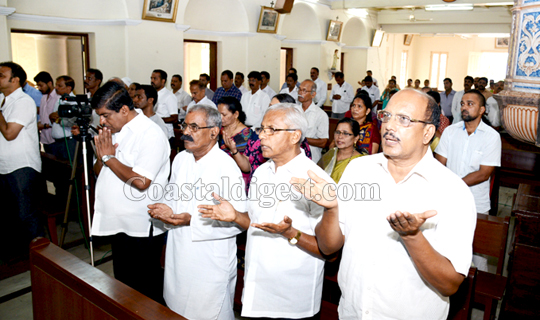
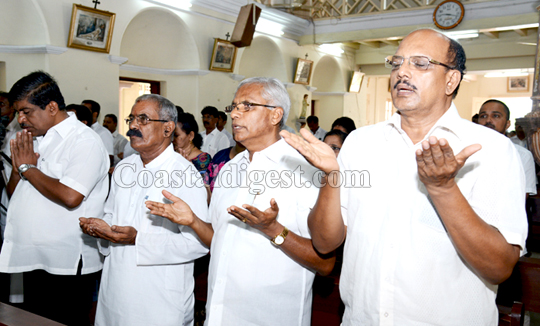
Mangaluru, known for its vibrant religious practices, on Thursday witnessed an all-religion prayer invoking the blessings of the Almighty for rain, led by Mangaluru South MLA J.R. Lobo.

Prayers were held at the historic Mangala Devi Temple, through which the city got its name, the Kudroli Jumma Masjid and the Chapel at the Bishop's house at Kodialbail. Leaders from various sections of society and residents participated in the prayer.

The administration, in its emergency meeting here, brainstormed over the high rates being charged by private water suppliers.

Mangaluru City Corporation Commissioner H.N. Gopalakrishna said that the suppliers cannot collect more than Rs. 900 per tanker of 6,000 litres of water.

If anyone charges more, people may complain to the corporation on te Water Helpline which would be opened on Friday.

District in-charge Minister B. Ramanath Rai, who chaired the meeting, said that the district is severely affected by water crisis this time even as Mangaluru taluk has remained the worst-affected.

He said that villages such as Konaje, Balepuni, Kairangala, Sajipa Nadu, Harekala-Pavoor, Asaigoli, Amblamogaru, Ilyarpadavu and Deralakatte were facing severe water scarcity on the outskirts of Mangaluru.

Officials of gram panchayats concerned informed the meeting that alternative arrangements for water supply through tankers are being made.

Meanwhile, the administration permitted Mangalore University and Infosys in Mudipu to draw water for three hours every day from the mainline.
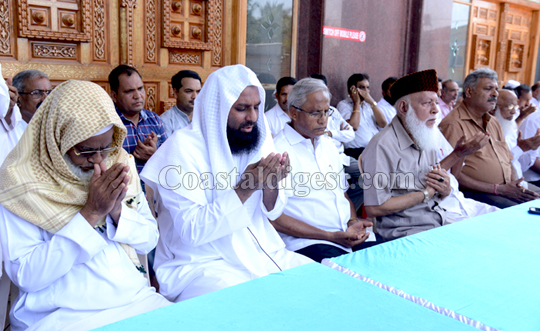
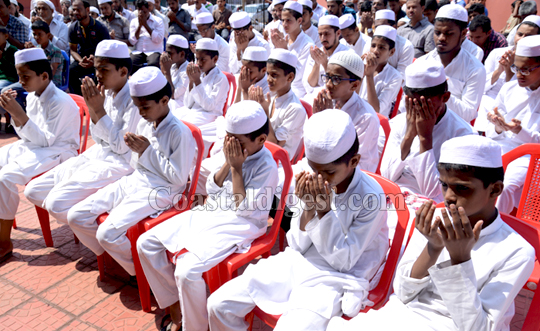
masjidprayer 1

masjidprayer 2

masjidprayer 3

masjidprayer 4

masjidprayer 5

masjidprayer 6

masjidprayer 7

masjidprayer 8

mangaldevi 1

mangaldevi 2

mangaldevi 3

mangaldevi 4

mangaldevi 5

mangaldevi 6

mangaldevi 7

bishophouse 1

bishophouse 2

bishophouse 3

bishophouse 4

bishophouse 5

bishophouse 6

bishophouse 7

bishophouse 8

bishophouse 9

bishophouse 10

bishophouse 11

bishophouse 12

Comments

SURESH
 - 
Friday, 6 May 2016

AS GOD IS CONFUSED, PRAYERS WERE HELD IN TEMPLE, MOSQUE AND CHURCH.

Add new comment

  • Coastaldigest.com reserves the right to delete or block any comments.
  • Coastaldigset.com is not responsible for its readers’ comments.
  • Comments that are abusive, incendiary or irrelevant are strictly prohibited.
  • Please use a genuine email ID and provide your name to avoid reject.
Coastaldigest.com news network
April 19,2020

Mangaluru, May 19: Team Be Human, a city based group of philanthropists, has taken commendable initiative to satiate the hunger of the civic workers of Mangaluru City Corporation that are endangering their lives to keep the city clean amidst covid-19 lockdown. 

On Friday, April 18, gorcesary kits were distributed among around 180 civic workers at Eidgah Maidan in Light House Hill in the presence of Corporator Abdul Raoof Bajal, Mansoor Ahmed Azad, Aina group Ashraf, Ceco Asif, Advocate Abdul Shukoor, U B Saleem, Sahil Zaheer, Rash Beary, Munna Kammaradi and Abdul Muttalib.

The Team swung into action on hearing the civic workers' plight due to the delay in payment of their wages by the Antony Waste Management firm. The Team was helped by the alumni of the St Aloysius College, Mangaluru (batch 1989). 

This is not the first time the Team Be Human distributing kits among the needy. Amidst lockdown it has already distributed around 1200 grocery kits among the poor people including the daily wage workers, migrant labourers in Dakshina Kannada district with help of Ahnaf Deals, Altaf, Shameem, Basha, Pradeep, Vincent,  Shiyaz Deals, Nawaz and Haneef. 

In its next step the Team Be Human is planning to distribute the kits among civic workers in Urva and Suratkal region, said Asif Deals, founder president of Team Be Human. He called upon the youth and students to come forward to help the needy and poor people who are deprived of basic facilities.

Comments

Add new comment

  • Coastaldigest.com reserves the right to delete or block any comments.
  • Coastaldigset.com is not responsible for its readers’ comments.
  • Comments that are abusive, incendiary or irrelevant are strictly prohibited.
  • Please use a genuine email ID and provide your name to avoid reject.
News Network
March 24,2020

Mangaluru, Mar 24: The District Wenlock Hospital Superintendent Dr H R Rajeshwaridevi has filed a complaint with the police on Tuesday seeking action against those circulating fake videos of a man infected with COVID-19, at the hospital.

In the video, a man was seen struggling to breathe at a hospital. The message in the video says that the man was admitted at Wenlock Hospital.

Dr Rajeshwaridevi, who issued a clarification, stated that video clips which are being circulated on social media is not from Wenlock Hospital.

Moreover, Wenlock Hospital does not use blue colour beds.

Comments

Add new comment

  • Coastaldigest.com reserves the right to delete or block any comments.
  • Coastaldigset.com is not responsible for its readers’ comments.
  • Comments that are abusive, incendiary or irrelevant are strictly prohibited.
  • Please use a genuine email ID and provide your name to avoid reject.
Agencies
May 8,2020

Washington D.C., May 8: The prime time for brain development in a child's life is the first year, where the infant spends most of the time asleep. It is the time when neural connections form and sensory memories are encoded.

However, when sleep is disrupted, as occurs more often among children with autism, brain development may be affected, too.

New research led by the University of Washington finds that sleep problems in a baby's first 12 months may not only precede an autism diagnosis but also may be associated with altered growth trajectory in a key part of the brain, the hippocampus.

The study, which was published in the American Journal of Psychiatry, researchers report that in a sample of more than 400 taken of 6- to 12-month-old infants, those who were later diagnosed with autism were more likely to have had difficulty falling asleep.

It also states that this sleep difficulty was associated with altered growth trajectories in the hippocampus.

"The hippocampus is critical for learning and memory, and changes in the size of the hippocampus have been associated with poor sleep in adults and older children.

As many as 80 per cent of the children with autism spectrum disorder have sleep problems," said Annette Estes, director of the UW Autism Center and senior author of the study.

"In our clinical experience, parents have a lot of concerns about their children's sleep, and in our work on early autism intervention, we observed that sleep problems were holding children and families back," added Estes, who is also a UW professor of speech and hearing sciences.

"It could be that altered sleep is part-and-parcel of autism for some children. One clue is that behavioural interventions to improve sleep don't work for all children with autism, even when their parents are doing everything just right. This suggests that there may be a biological component to sleep problems for some children with autism," said Estes.

To consider links among sleep, brain development, and autism, researchers at the IBIS Network looked at MRI scans of 432 infants, surveyed parents about sleep patterns, and measured cognitive functioning using a standardized assessment.

At the outset of the study, infants were classified according to their risk for developing autism: Those who were at higher risk of developing autism -- about two-thirds of the study sample -- had an older sibling who had already been diagnosed.

Infant siblings of children with autism have a 20 per cent chance of developing autism spectrum disorder -- a much higher risk than children in the general population.

In the current study, 127 of the 432 infants were identified as "low risk" at the time the MRI scans were taken because they had no family history of autism.

They later evaluated all the participants at 24 months of age to determine whether they had developed autism. Of the roughly 300 children originally considered "high familial risk," 71 were diagnosed with autism spectrum disorder at that age.

Problems with sleep were more common among the infants later diagnosed with an autism spectrum disorder, as were larger hippocampi. No other subcortical brain structures were affected, including the amygdala, which is responsible for certain emotions and aspects of memory, or the thalamus, a signal transmitter from the spinal cord to the cerebral cortex.

The authors note that while parents reported more sleep difficulties among infants who developed autism compared to those who did not, the differences were very subtle and only observed when looking at group averages across hundreds of infants.

Sleep patterns in the first years of life change rapidly as infants transition from sleeping around the clock to a more adult-like sleep/wake cycle. Until further research is completed, Estes said, it is not possible to interpret challenges with sleep as an early sign of increased risk for autism.

Comments

Add new comment

  • Coastaldigest.com reserves the right to delete or block any comments.
  • Coastaldigset.com is not responsible for its readers’ comments.
  • Comments that are abusive, incendiary or irrelevant are strictly prohibited.
  • Please use a genuine email ID and provide your name to avoid reject.