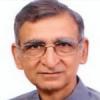
Mangaluru is a peaceful city; media focusing only on negative things: Top cop

coastaldigest.com news network
January 20, 2018

Mangaluru, Jan 20: Though the crime rate in Mangaluru is very less compared to other prominent cities of India, the coastal Karnataka’s port city is being defamed by certain vested interests through mass media and social media for reasons better known to themselves, said T R Suresh, the Commissioner of Mangaluru City Police.

Speaking at an interaction programme organized by the Bearys Chamber of Commerce and Industry (BCCI) at Hotel Ocean Pearl in the city on Friday, the top cop said the reaction of Hindu and Muslim communities in general following the recent coldblooded murders Deepak Rao and Ahmed Basheer – two innocent members of respective communities – has once again proved that Mangalureans are peace lovers and not communals.

Reiterating that Mangaluru is one of the best places to live in India, he said that the contributions of coastal district of Dakshina Kannada district towards education, banking and tourism sectors are remarkable. “People from across the state, country and other parts of the world come here seeking better education and health care. There are over two lakh students in the city. Almost half of Kerala is dependent on this city for various reasons,” he pointed.

“In spite of all these positive aspects, mass media and social media are focusing only on negative things and blowing the trivial issues and sporadic untoward incidents out of proportion,” Mr Suresh added.

He said that 99% of people in Mangaluru are peace lovers while very small number of people are indulging in anti-social activities. The police have been relentlessly trying to make Mangaluru a peaceful city by curbing rowdysim and drug menace. However, false rumours being spread through social media including WhatsApp groups destroying peace, he lamented.

He also warned stringent action against those who spread inflammatory messages and rumors on social media. “Some WhatsApp group admis that post provocative messages are not in the county. They operate from abroad. It is not easy to catch them immediately. Hence, we take immediate action against those who circulate such messages here,” he said.

Y Abdulla Kunhi, Vice Chancellor of Yenepoya University, speaking on the occasion, pointed out that Mangaluru had ranked as 48th best city in the world in terms of quality of life and ranked 12th in terms of health care in a recent international survey. However, recent untoward incidents and communal clashes have dented the image of the city. This has also affected business in the region. Hence, there is a need to put an end to communal goondaism in the region, he said.

BCCI president S M Rasheed Haji welcomed and presided over the function. BCCI vice president Abdul Rauoof Puthige read out the memorandum that was handed over to the city police chief. DK Wakf Advisory Committee chief Kanchur Monu, DK and Udupi Muslim Central Committee chief KS Mohammed Masood, BCCI general secretary Mohammed Imthiyaz were present among others.

Comments

Vinod
 - 
Saturday, 20 Jan 2018

Recently I saw one article, which says one lady sit middle of public without any reaction and provoded many object (includes soft flower to sharp edged knife) and ask public to do whatever they want. First people hesitated. People started with flower and later many people enjoyed her nudity. Some other tortured with knife and some people torned her cloth and touched evrywhere. She told she felt like brutally raping during that.
The point is - It is not the probelm with media. Problems with people only. They are too negative and if they are getting chances, they will utilise maximum. 

George
 - 
Saturday, 20 Jan 2018

I agree with Danish. 100% truth. Everything is business and they all have to survive.. so people' mentality should change

Danish
 - 
Saturday, 20 Jan 2018

Why media giving more importance to crimes..?


Media feeding whatever people want. Actually its not the problem with media. Its with people. If media giving coverage to only development things and good news, then the readership becomes less. and it end up in closing of that particular media org.


Mohan
 - 
Saturday, 20 Jan 2018

True.. Well said sir. Should control some media

Add new comment

  • Coastaldigest.com reserves the right to delete or block any comments.
  • Coastaldigset.com is not responsible for its readers’ comments.
  • Comments that are abusive, incendiary or irrelevant are strictly prohibited.
  • Please use a genuine email ID and provide your name to avoid reject.
News Network
January 22,2020

Jan 22: India's ranking in the latest global Democracy Index has dropped 10 places to the 51st spot out of 167 owing to violent protests and threats to civil liberties challenging freedoms across the country.

Prime Minister Narendra Modi's government has been criticized by rights groups and western governments after shutting off the internet and mobile phone networks and detaining opposition politicians in Kashmir.

Modi’s government has also responded harshly to ongoing protests against a controversial, religion-based citizenship law. Muslims have said their neighborhoods have been targeted, while the central government has attempted to ban protests and urged TV news channels not to broadcast “anti-national” content. Some leaders in Modi’s ruling party called for “revenge” against protesters. India’s score in 2019 was its worst ranking since the EIU’s records began in 2006, and has fallen gradually since Modi was elected in 2014.

The Economist Intelligence Unit’s 2019 Democracy Index, which provides an annual comparative analysis of political systems across 165 countries and two territories, said the past year was the bleakest for democracies since the research firm began compiling the list in 2006.

“The 2019 result is even worse than that recorded in 2010, in the wake of the global economic and financial crisis,” the research group said in releasing the report on Wednesday.

The average global score slipped to 5.44 out of a possible 10 -- from 5.48 in 2018 -- driven mainly by “sharp regressions” in Latin America, Sub-Saharan Africa, the Middle East and North Africa. Apart from coup-prone Thailand, which improved its score after holding an election last year, there were also notable declines in Asia after a tumultuous period of protests and new measures restricting freedom across the region’s democracies.

Asia Declines

Hong Kong, meanwhile, fell three places to rank 75th out of 167 as more than seven months of violent and disruptive protests rocked the Asian financial hub. An aggressive police response early in the unrest, when protests were mostly peaceful, led to a “marked decline in confidence in government -- the main factor behind the decline in the territory’s score in our 2019 index,” the group said.

In Singapore, which ranked alongside Hong Kong at 75th, a new “fake news” law led to a deteriorating score on civil liberties.

“The government claims that the law was enacted simply to prevent the dissemination of false news, but it threatens freedom of expression in Singapore, as it can be used to curtail political debate and silence critics of the government,” EIU analysts said.

China’s score fell to just 2.26 in the EIU’s ranking, placing it near the bottom of the list at 153, as discrimination against minorities, repression and surveillance of the population intensified. Still, in China “the majority of the population is unconvinced that democracy would benefit the economy, and support for democratic ideals is absent,” the EIU said.

Comments

Add new comment

  • Coastaldigest.com reserves the right to delete or block any comments.
  • Coastaldigset.com is not responsible for its readers’ comments.
  • Comments that are abusive, incendiary or irrelevant are strictly prohibited.
  • Please use a genuine email ID and provide your name to avoid reject.
News Network
July 21,2020

Mangaluru, Jul 21: Private hospitals cannot send back COVID-19 patients for any reason, district in-charge minister Kota Srinivas Poojary said on Monday.

The Minister was addressing a meeting at the Father Muller Medical College here on the arrangements made for COVID-19 patients.

Dakshina Kannada district is quite advanced in the medical field. Hence, the government will not tolerate COVID-19 patients wandering from one hospital to another for treatment. Refusing to admit COVID-19 patients in hospitals is unacceptable, he warned.

Comments

Add new comment

  • Coastaldigest.com reserves the right to delete or block any comments.
  • Coastaldigset.com is not responsible for its readers’ comments.
  • Comments that are abusive, incendiary or irrelevant are strictly prohibited.
  • Please use a genuine email ID and provide your name to avoid reject.
Ram Puniyani
June 29,2020

In Minneapolis, US an African American, George Floyd lost his life as the white policeman, Derek Chauvin, caught hold of him and put his knee on his neck. This is a technique developed by Israel police. For nine long minutes the knee of the while policeman was on the neck of George, who kept shouting, I can’t breathe.

Following this gruesome murder America erupted with protests, ‘Black lives matter’. The protestors were not just African Americans but also a large section of whites. Within US one police Chief apologized for the act of this. In a touching gesture of apology the police force came on its knees. This had reverberations in different parts of the World.

The act was the outcome of the remnants of the racial hatred against blacks by the whites. It is the hatred and the perceptions which are the roots of such acts of violence. What was also touching that the state of democracy in US is so deep that even the police apologized, the nation, whites and blacks, stood up as a sensitive collective against this violence.

US is not the only country where the brutal acts of violence torment the marginalized sections of society. In India there is a list of dalits, minorities and adivasis who are regularly subjected to such acts. But the reaction is very different. We have witnessed the case of Tabrez Ansari, who was tied to the pole by the mob and beaten ruthlessly. When he was taken to police station, police took enough time to take him to hospital and Tabrez died.

Mohsin Sheikh, a Pune techie was murdered by Hindu Rashtra Sena mob, the day Modi came to power in 2014. Afrazul was killed by Shambhulal Regar, videotaped the act released on social media. Regar believed that Muslims are indulging in love Jihad, so deserve such a fate. Mohammad Akhlaq is one among many names who were mob lynched on the issue of beef cow. The list can fill pages after pages.

Recently a young dalit boy was shot dead for the crime of entering a temple. In Una four dalits were stripped above waste and beaten mercilessly. Commenting on this act the Union Minister Ramvilas Paswan commented that it is a minor incident. Again the list of atrocities against dalits is long enough. The question is what Paswan is saying is the typical response to such gruesome murders and tortures. In US loss of one black life, created the democratic and humane response. In India there is a general silence in response to these atrocities. Some times after a good lapse of time, the Prime Minister will utter, ‘Mother Bharati has lost a son’. Most of the time victim is blamed. Some social groups raise their voice in some fora but by and large the deafening silence from the country is the norm.

India is regarded as the largest democracy. Democracy is the rule of law, and the ground on which the injustices are opposed. In America though the present President is insensitive person, but its institutions and processes of democratic articulations are strong. The institutions have deepened their roots and though prejudices may be guiding the actions of some of the officers like the killer of George, there are also police officers who can tell their President to shut up if he has nothing meaningful to say on the issue. The prejudices against Blacks may be prevalent and deep in character, still there are large average sections of society, who on the principles of ‘Black lives matter’. There are large sections of vocal population who can protest the violation of basic norms of democracy and humanism.

In India by contrast there are multiple reasons as to why the lives of Tabrez Ansari, Mohammad Akhlaq, Una dalit victims and their likes don’t matter. Though we claim that we are a democracy, insensitivity to injustices is on the rise. The strong propaganda against the people from margins has become so vicious during last few decades that any violence against them has become sort of a new normal. The large populace, though disturbed by such brutalities, is also fed the strong dose of biases against the victims. The communal forces have a great command over effective section of media and large section of social media, which generates Hate against these disadvantaged groups, thereby the response is muted, if at all.

As such also the process of deepening of our democracy has been weak. Democracy is a dynamic process; it’s not a fixed entity. Decades ago workers and dalits could protest for their rights. Now even if peasants make strong protests, dominant media presents it as blocking of traffic! How the roots of democracy are eroded and are visible in the form where the criticism of the ruling dispensation is labelled as anti National..

Our institutions have been eroded over a period of time, and these institutions coming to the rescue of the marginalized sections have been now become unthinkable. The outreach of communal, divisive ideology, the ideology which looks down on minorities, dalits and Adivasis has risen by leaps and bounds.

The democracy in India is gradually being turned in to a hollow shell, the rule of law being converted in to rule of an ideology, which does not have faith in Indian Constitution, which looks down upon pluralism and diversity of this country, which is more concerned for the privileges of the upper caste, rich and affluent. The crux of the matter is the weak nature of democracy, which was on way to become strong, but from decades of 1980s, as emotive issues took over, the strength of democracy started dwindling, and that’s when the murders of the types of George Floyd, become passé. One does complement the deeper roots of American democracy and its ability to protect the democratic institutions, which is not the case in India, where protests of the type, which were witnessed after George Floyd’s murder may be unthinkable, at least in the present times. 

Comments

Add new comment

  • Coastaldigest.com reserves the right to delete or block any comments.
  • Coastaldigset.com is not responsible for its readers’ comments.
  • Comments that are abusive, incendiary or irrelevant are strictly prohibited.
  • Please use a genuine email ID and provide your name to avoid reject.